They are China`s best and brightest, thousands of scientists, technicians, business managers and academics educated at prestigious universities in America, Europe and Japan. In the great leap forward that has carried the world`s most populous nation to the forefront of the global economy, few factors have been more crucial than the role of what Chinese call haiguipai, “returnees from overseas.”
Yet in the tightly closed upper ranks of Chinese politics and government, the haiguipai are almost entirely absent – as are fresh insights and well-informed policies that may have helped defuse China`s current crises in the rebellious regions of Tibet, western Sichuan and Xinjiang.
Disturbing questions are raised by the absence of the foreign-experienced from the inner circle of power, says Cheng Li, a senior fellow at Washington’s Brookings Institution. “Do China’s top leaders really trust Western-educated returnees? Can the Chinese political system genuinely open its doors to talented people returning from the outside world?”
In effect, the same high-achievers who are now the vanguard of economic modernization appear to be too suspect, too “corrupted” by their exposure to western ways and attitudes, to be trusted with major political responsibilities at home. In governing terms, the best and brightest are a lost generation, all but voiceless in the very decisions where their worldliness is essential.
THE BEIJING OLD BOYS SCHOOL
A survey of Chinese officialdom, drawing on sources in China itself and abroad, suggests that haiguipai have been systematically blocked from the most important leadership positions.
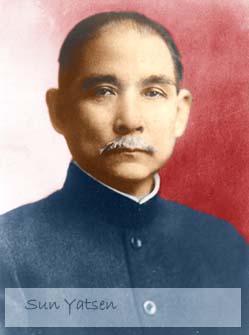
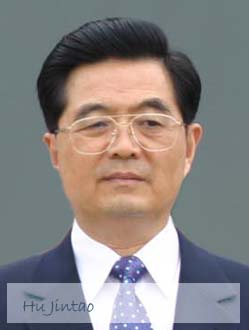
The all-powerful Standing Committee of the Communist Party Politburo today is comprised exclusively of men with no significant experience of life, customs and attitudes beyond China’s own borders. Hu Jintao, 66, the general secretary, is a hydraulic engineer educated in Beijing. Premier Wen Jiabao, 66, is a Beijing-trained geologist. Wu Bangguo, 67, chairman of the National People`s Congress, is an electrical engineer and a graduate of Beijing’s Tsingua University.
Indeed, eight out of ten members of the Standing Committee went to universities in Beijing, the center of Chinese political orthodoxy, and none of them has ever had a government appointment overseas.
Overall, according to a study published in 2005 by Cheng Li, just 61 of the 937 most powerful officials in China – including the Communist Party’s 356-member Central Committee, the top three posts in all 28 government ministries, and the top four posts in the nation’s 31 provinces — have any direct living experience outside of their country.
Even among those 61 mavericks, half spent no more than a brief time overseas as visiting scholars. Only 10 are graduates in law or the social sciences, fields which have a close bearing on national policy deliberations, especially in such controversial areas as minority rights.
One result is that a recent wave of anti-Beijing protests, involving dissident Tibetans in Sichuan and Tibet itself, and Muslims in the oil-rich province of Xinjiang, has been handled with a blunt military crackdown that belies China’s claims to social, as well as economic progress. It’s no accident that Party secretary Hu was first elevated to the Politburo in 1992, after directing an earlier four-year campaign in Tibet against followers of the Dalai Lama. It is no accident, either, that unrest has grown steadily worse, in the absence of new solutions that might draw on similar problems elsewhere.
In the frozen ruling circle’s response to crisis, as well as its collective background, very little has changed since that 1988 Tibetan campaign, or the bloody events at Tiananmen Square a year later.
RACING FORWARD ON ONE LEG
The slim profile of returnees in the Politburo is certainly not due to a shortage of qualified candidates. Since the early 1980s, when China’s doors were first opened to visitors from overseas and to students headed in the opposite direction, more than one million Chinese have attended foreign universities. They currently count nearly 200,000, with some 50,000 in the United States, and 30,000 in Canada.
By contrast with their near invisibility in politics, returnees are now heavily represented in non-government leadership roles. In Shanghai alone, more than 3,000 private enterprises have been established by foreign-educated Chinese, and nationwide more than half of all university administrators were at least partly educated abroad, mostly in the United States.
The disparity between rising worldliness in civil affairs and dogged xenophobia in governance raises another troubling question, closely related to those posed by Cheng Li. Can a nation race forward, without catastrophic stumbles, if one leg is at serious odds with the other?
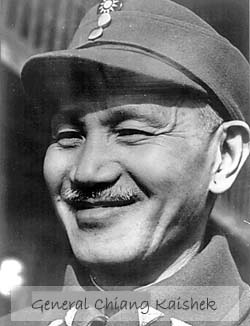
The de facto ban on haiguipai at the top level of government is also at odds with China`s own history. The founding father of the Republic of China, Sun Yatsen, was educated in Hawaii and held U.S. citizenship.
His principal successor, General Chiang Kaishek, attended schools in Japan and even served for three years in the Japanese Imperial Army. Chiang’s own chief heir as President of the Republic of China on Taiwan, Chiang Chingkuo, was educated in Moscow and had a Russian wife. Ma Jingyeou, the current president in Taiwan, is an alumnus of Harvard Law School.
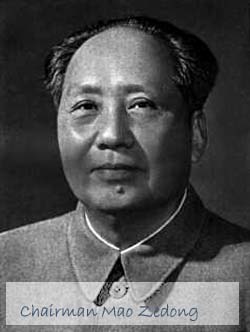
Communist Chinese leaders Zhou Enlai and Deng Xiaoping both spent many years in France. Scores of other major figures in the People’s Republic of China received university educations in the Soviet Union and Eastern Europe. A disastrous exception was Chairman Mao Zedong, who refused an offer to study in France in the 1920s, arguing that China`s problems could not be resolved with borrowed ideas.
It was under Mao’s autocratic leadership that the People’s Republic declined into violent oppression and extreme poverty – cut off from its own erstwhile socialist allies, as well as the West, in the name of resisting foreign corruption.
Frank Viviano – barganews staff reporter – World View CBS5
Just this morning in the UK Guardian was an article by Max Hastings extolling his readers to forget the clumsy Chinese rulers and instead think about China’s remarkable people. He too commented on the number of Chinese educated abroad:
This brought this article to mind as well: http://www.iht.com/articles/2008/03/27/europe/schools.php