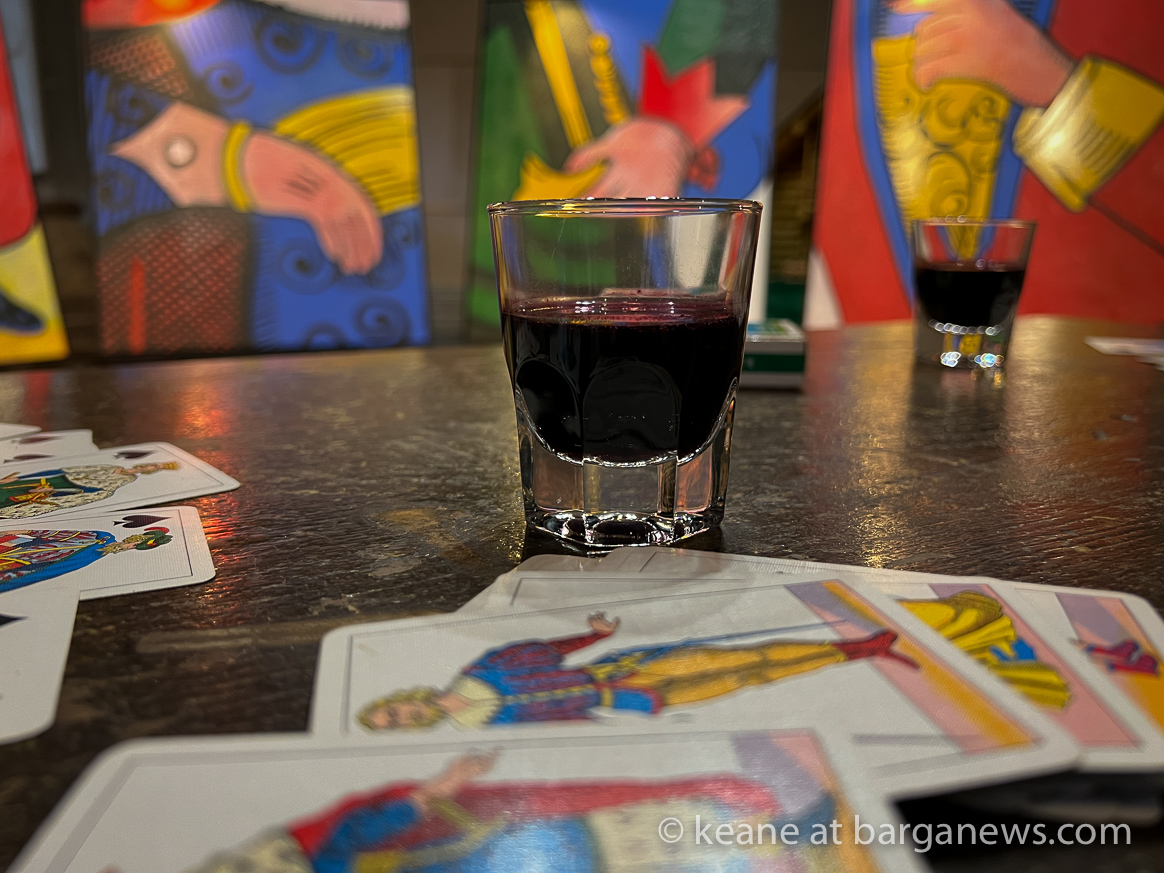
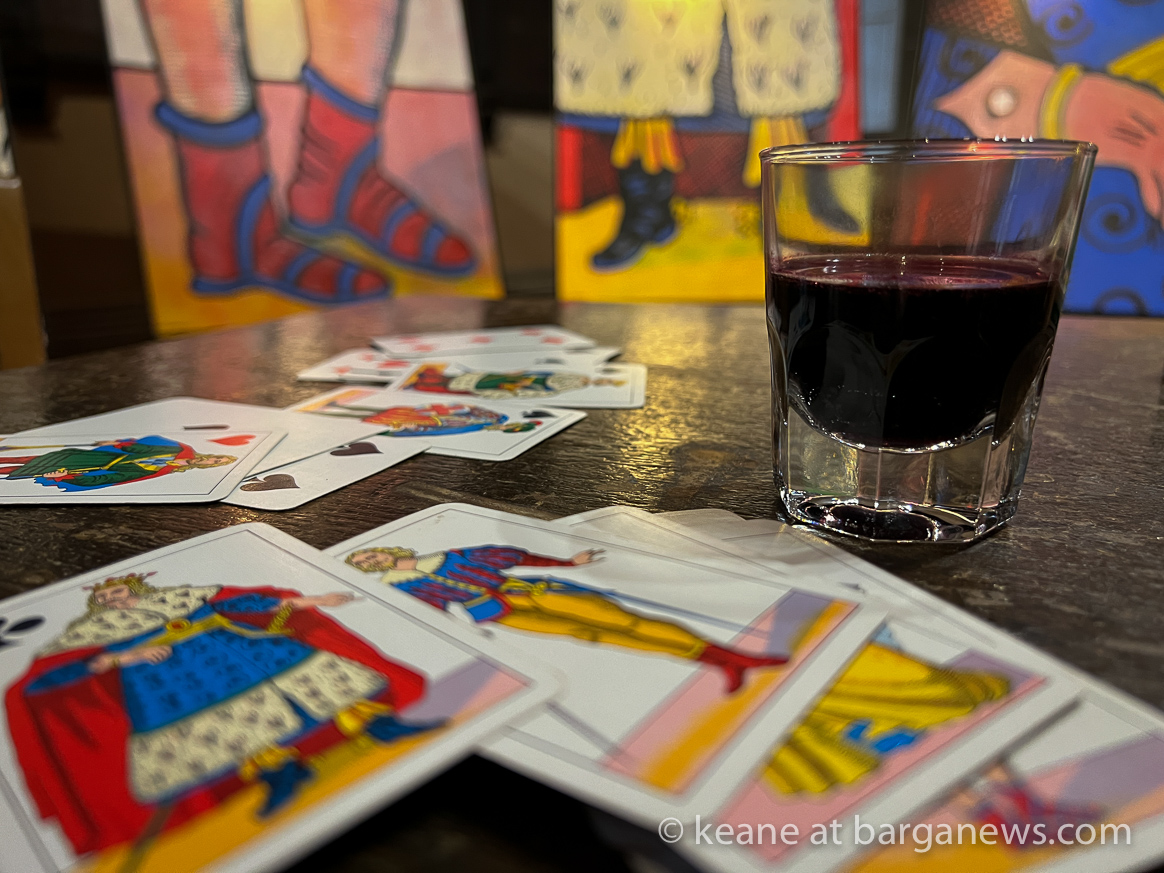
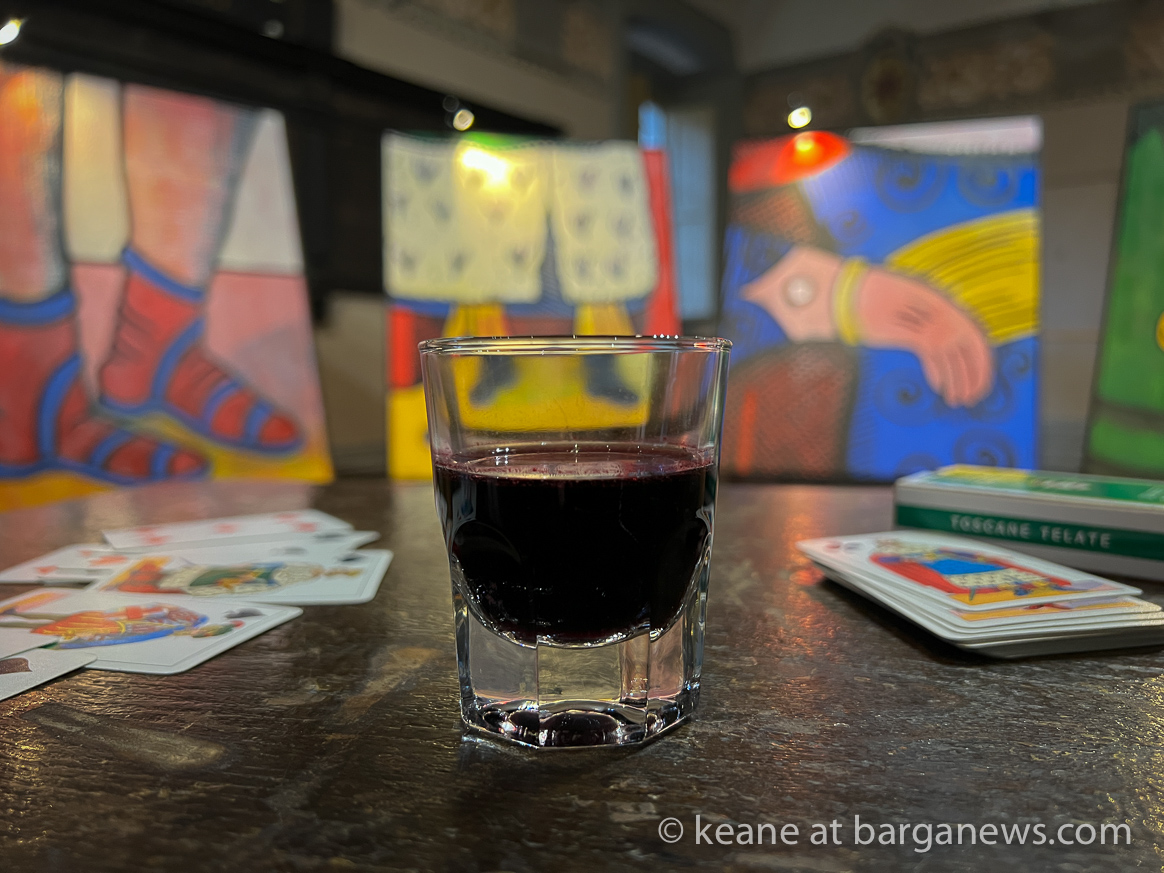
All paintings are oil paint, charcoal, acrylic, spray paint, chalk, marker pen on canvas 120 cms x 100 cms – The rest of the series of paintings based around playing cards can be seen here




Playing cards appeared in Italy in the second half of the 14th century; their presence seems to have been attested in Florence since 1377. The playing cards of Italy have many regional variations, both in the insignia and graphic aspect of the cards and in their number.
The Italian ‘Piacentine’ pattern has Italo-Spanish suit symbols and slightly narrow, elongated cards.
As Latin-suited cards, Italian and Spanish suited cards use swords (spade), cups (coppe), coins (denari), and clubs (bastoni). All Italian suited decks have three face cards per suit: the fante (Knave), cavallo (Knight), and re (King)
It was made in single-ended format until around the mid-20th century after which time double-ended versions are more usual. When this happens some features of the old cards are lost.
The Ace of Coins used to bear the tax stamp, and shows a single-headed, crowned eagle (as opposed to the Neapolitan double-headed eagle). Cards of Spanish design occur in those parts of Italy formerly under Spanish influence (Neapolitan, Piacentine, Romagnole, Sardinian and Sicilian patterns) although the ‘pintas’ or line-breaks in the outer frames have been lost.
Tutti i dipinti sono realizzati con olio, carboncino, acrilico, vernice spray, gesso e pennarello su tela, formato 120 x 100 cm. Il resto della serie di dipinti dedicata alle carte da gioco può essere visto qui.
Le carte da gioco comparvero in Italia nella seconda metà del XIV secolo; la loro presenza risulta attestata a Firenze già dal 1377. Le carte da gioco italiane presentano numerose varianti regionali, sia nei simboli dei semi e nell’aspetto grafico delle carte, sia nel loro numero.
Il modello italiano “Piacentine” utilizza simboli dei semi italo-spagnoli e carte leggermente strette e allungate.
Come carte a semi latini, le carte italiane e spagnole utilizzano spade, coppe, denari e bastoni. Tutti i mazzi italiani a semi latini hanno tre figure per seme: il fante, il cavallo e il re.
Fino a circa la metà del XX secolo venivano prodotte in formato a figura unica; successivamente sono diventate più comuni le versioni a doppia figura. Con questo passaggio, alcune caratteristiche delle carte più antiche sono andate perdute.
L’Asso di Denari riportava un tempo il bollo fiscale e raffigura un’aquila coronata a una sola testa (a differenza dell’aquila bicipite napoletana). Carte di disegno spagnolo si trovano nelle zone d’Italia che furono in passato sotto influenza spagnola (modelli napoletani, piacentini, romagnoli, sardi e siciliani), anche se le “pintas”, ovvero le interruzioni delle linee nelle cornici esterne, sono andate perdute.
Early examples of the Piacentine pattern also have features related to French Aluette cards. – source
The regional styles of north-western Italy use the French suits of Hearts (cuori), Diamonds (quadri, literally “squares”), Spades (picche, “pikes”) and Clubs (fiori, literally “flowers”).
They differ from French or international standard decks in that they generally don’t have numbered side pips, and have characteristic court card designs for the King (re or regio), Queen (donna) and Knave (Gobbo or Fante).
Toscane or Fiorentine playing cards feature single-headed court cards featuring a full portrait, whereas the other three styles feature double-headed court cards. Piemontese Ace cards feature a decorative wreath around the suit symbol – originally this was absent on the Ace of Hearts, but modern decks increasingly include the wreath on all four Aces.
Keane: THE PLAYING CARD PAINTINGS 2022 – #instaart #painting #art #contemporaryart #contemporaryartgallery #playingcards #cards #workinprogress #studio #keane #bargavecchia #barga #barganews #oxogallery #oxocollection #studio #procreate #oxocurators #digitalart