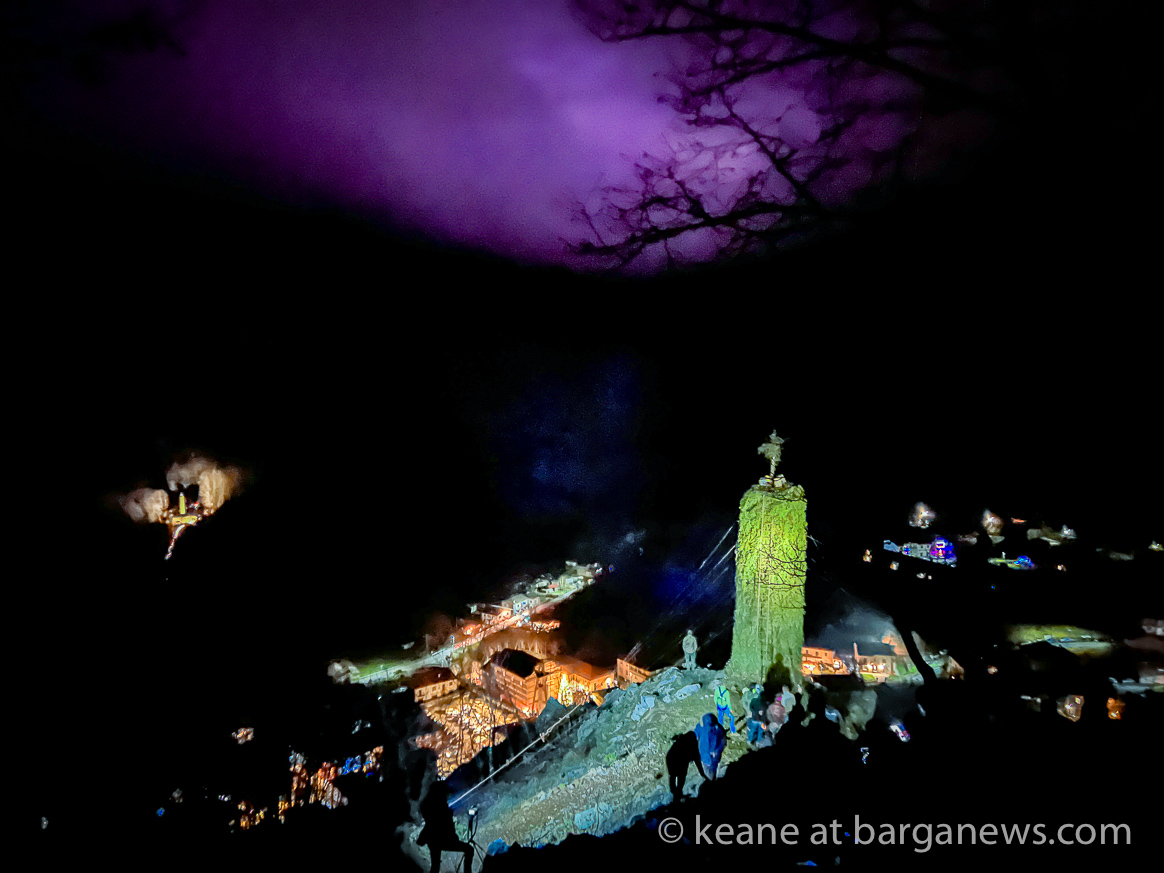
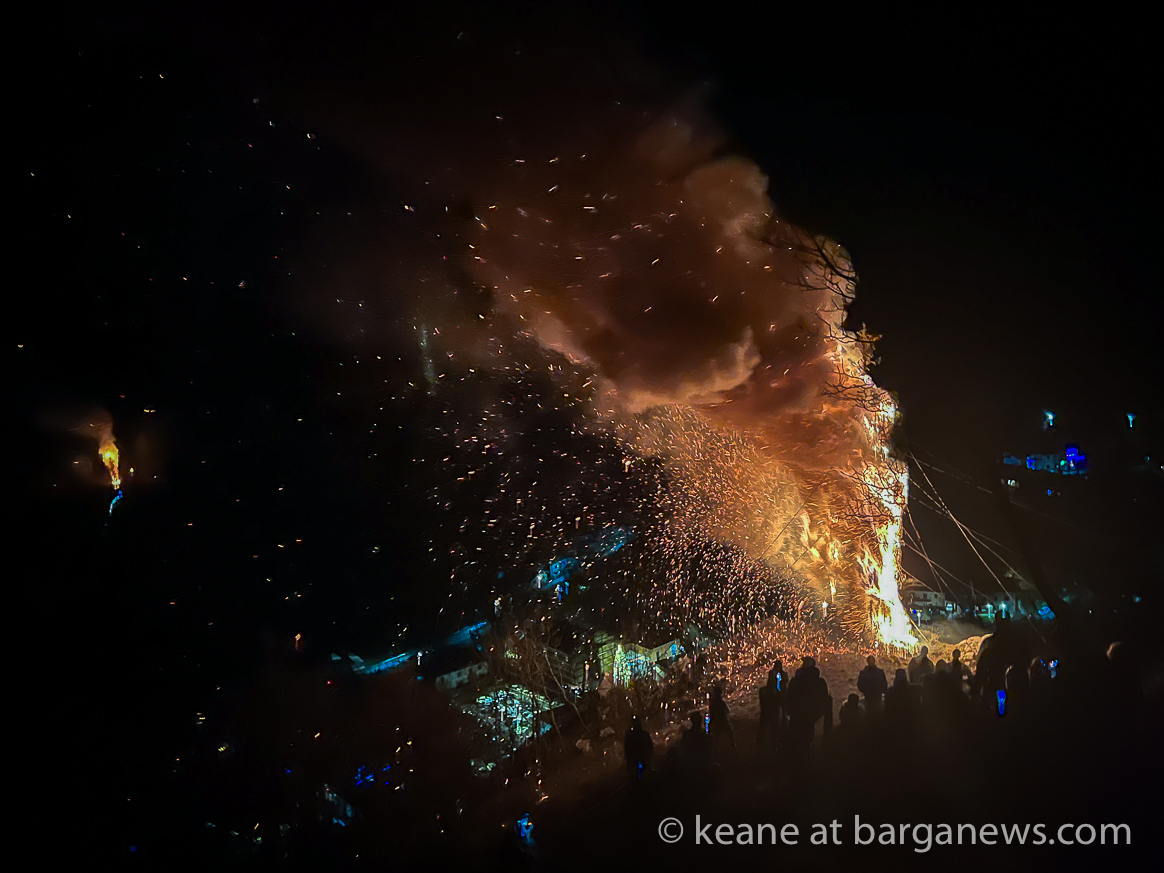
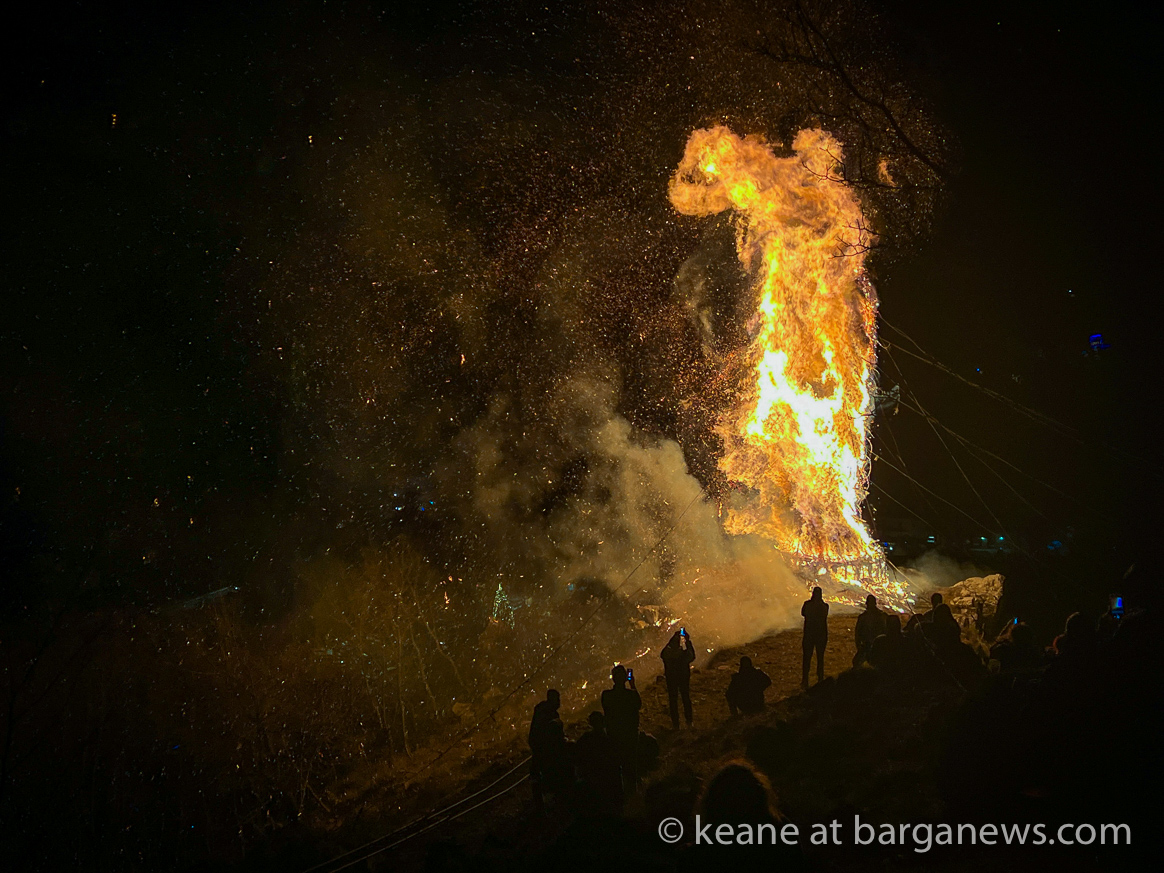
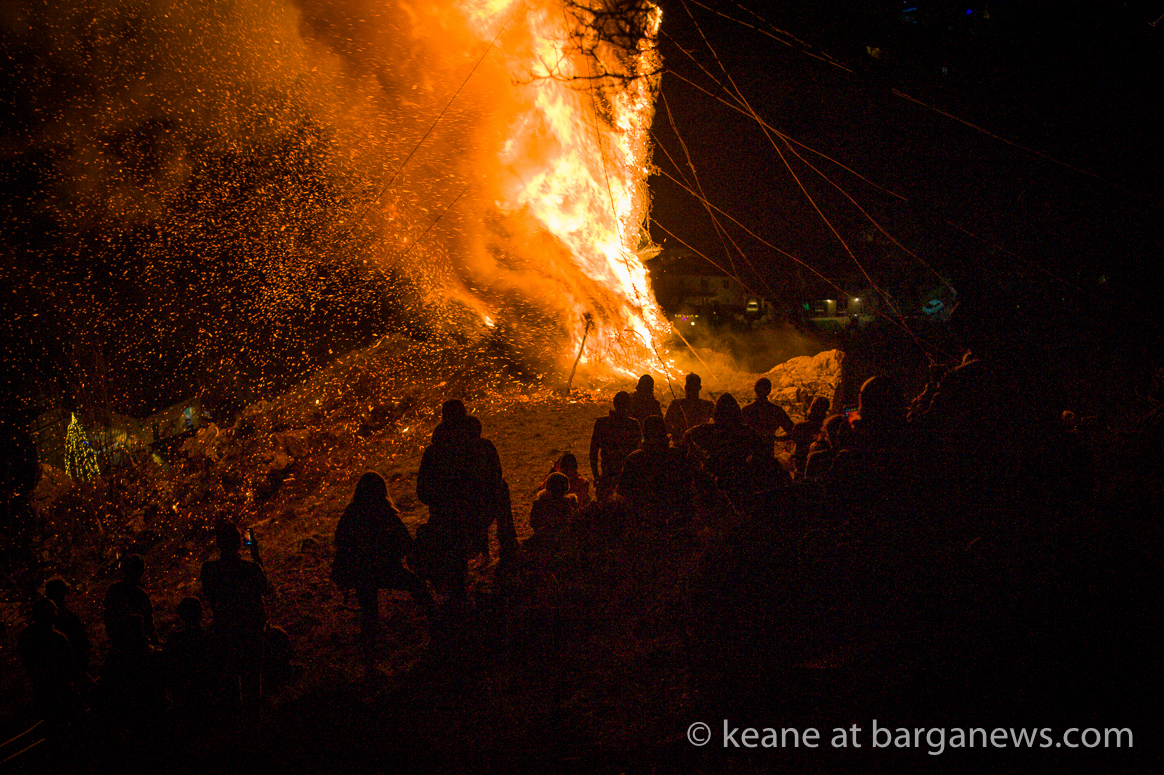
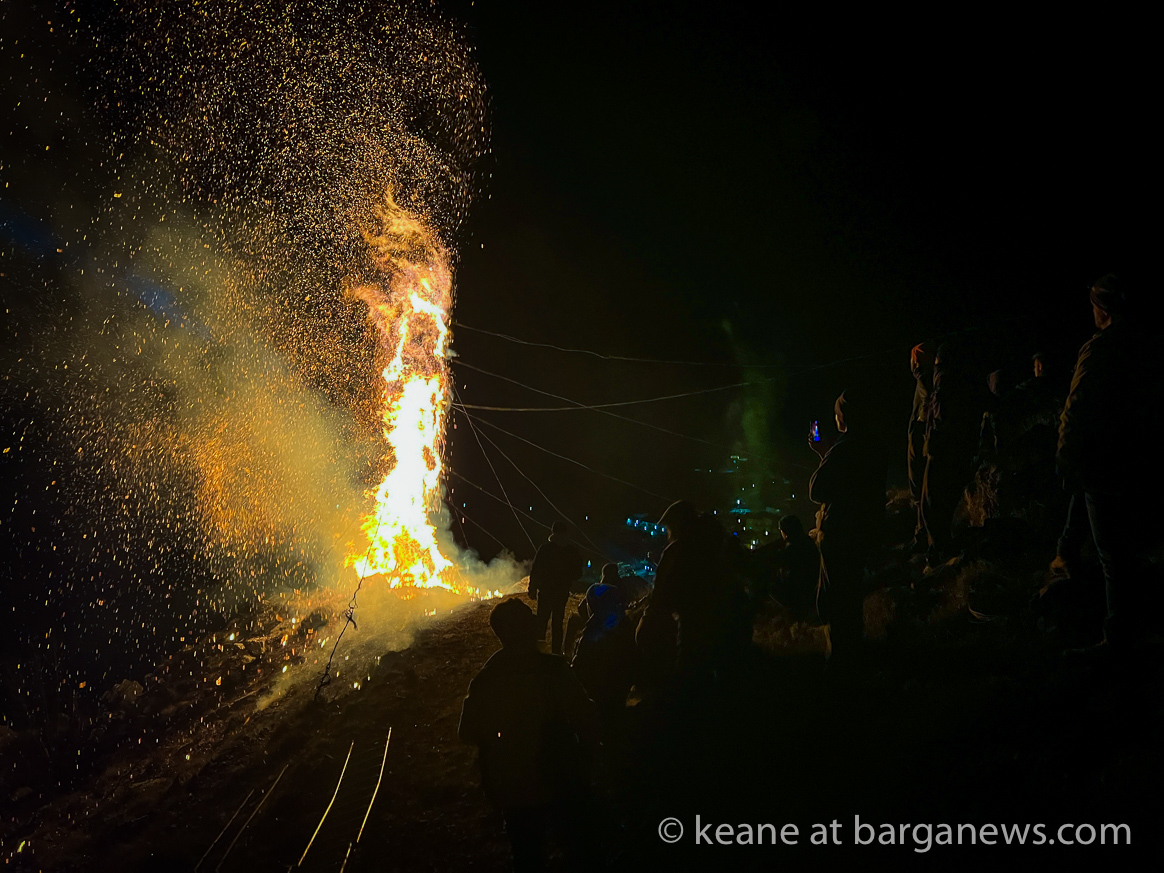
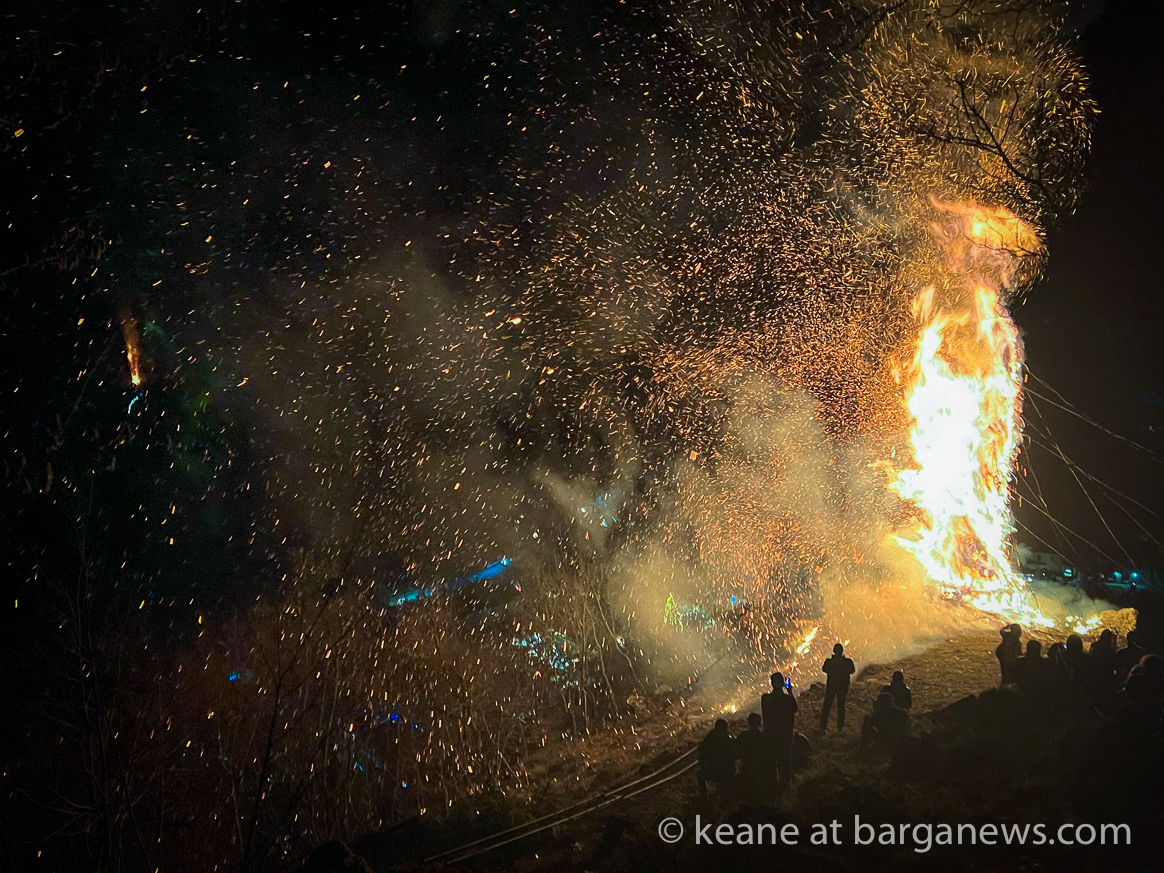
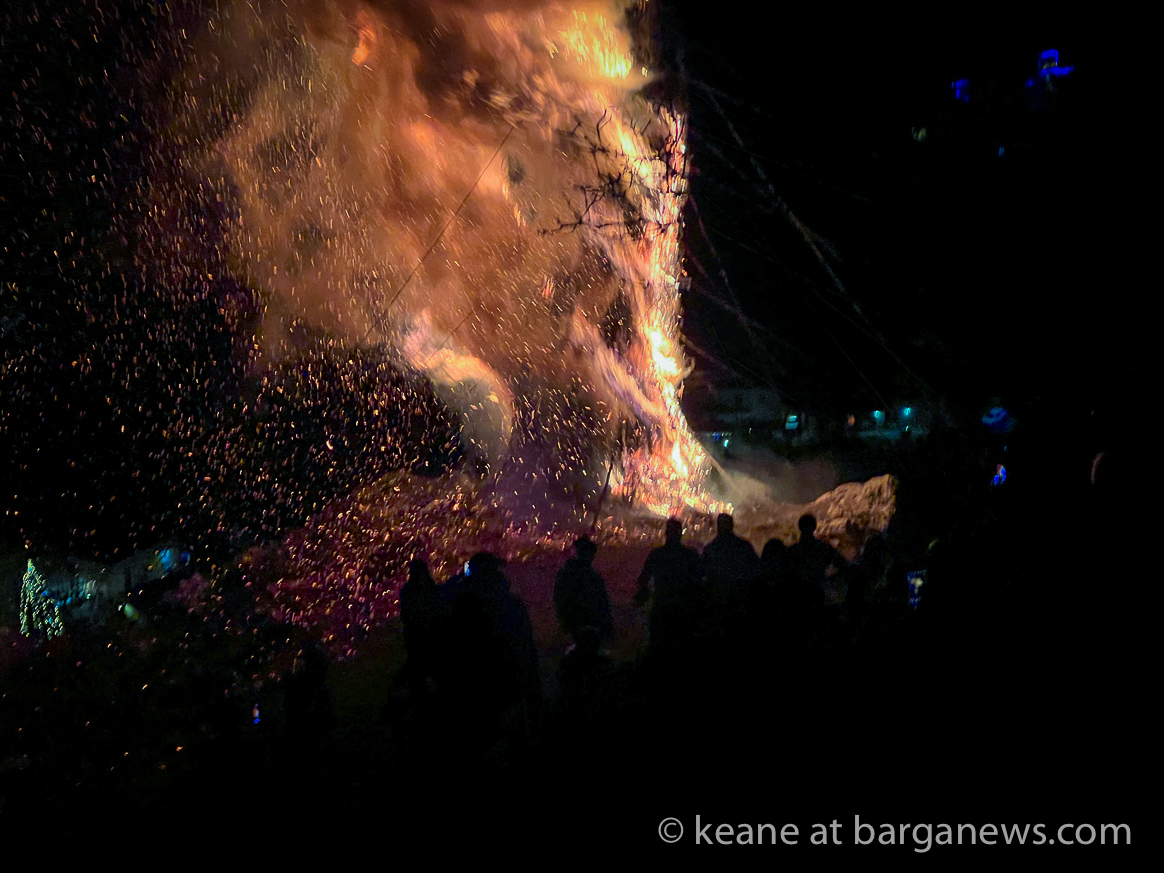
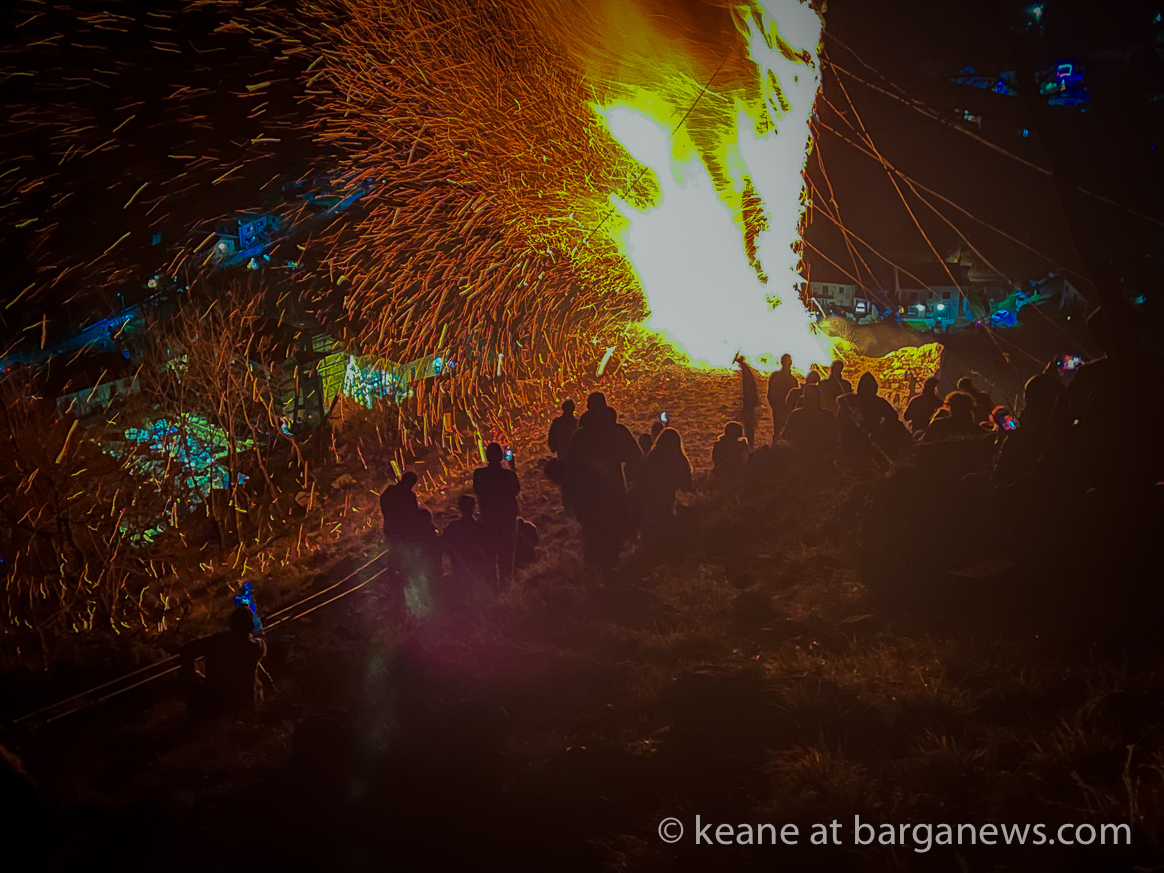
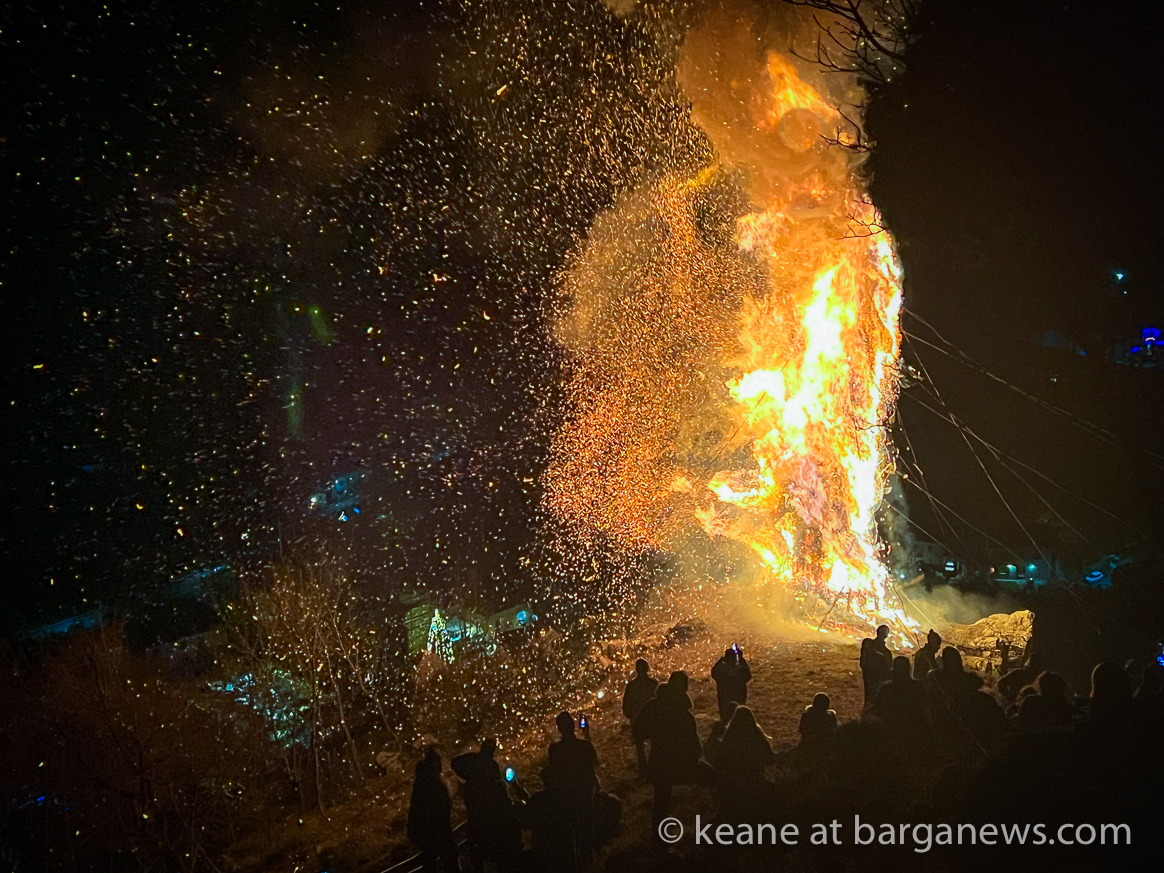
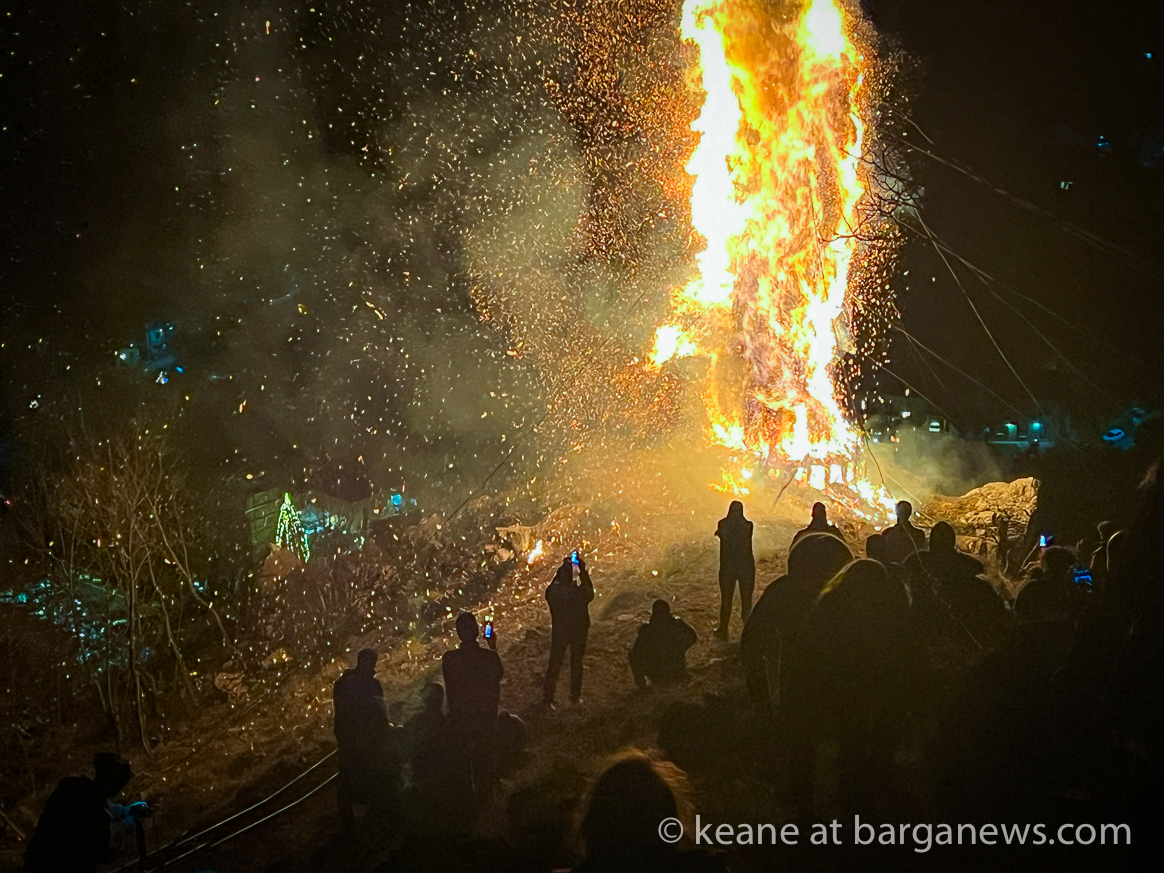
Palio dei Natalecci; every year on the 24th December the night sky in certain parts of Garfagnana is lit up with large fires. These are the Natalecci of Gorfigliano.
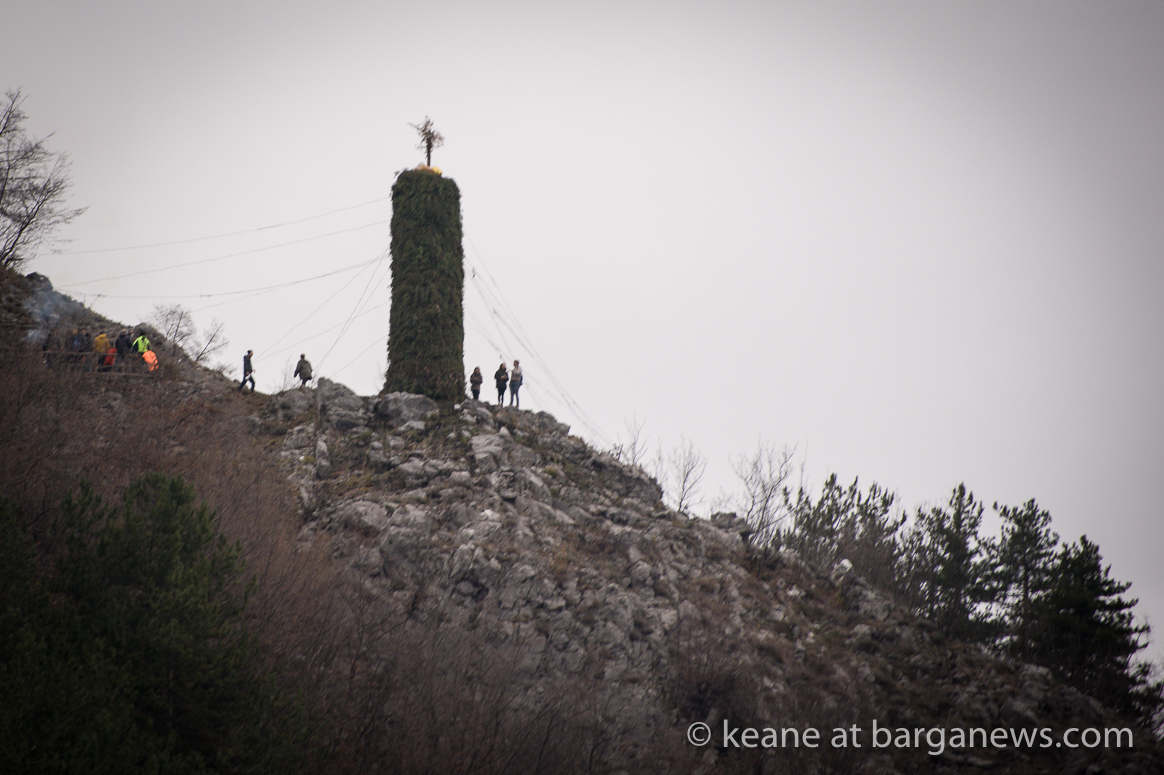
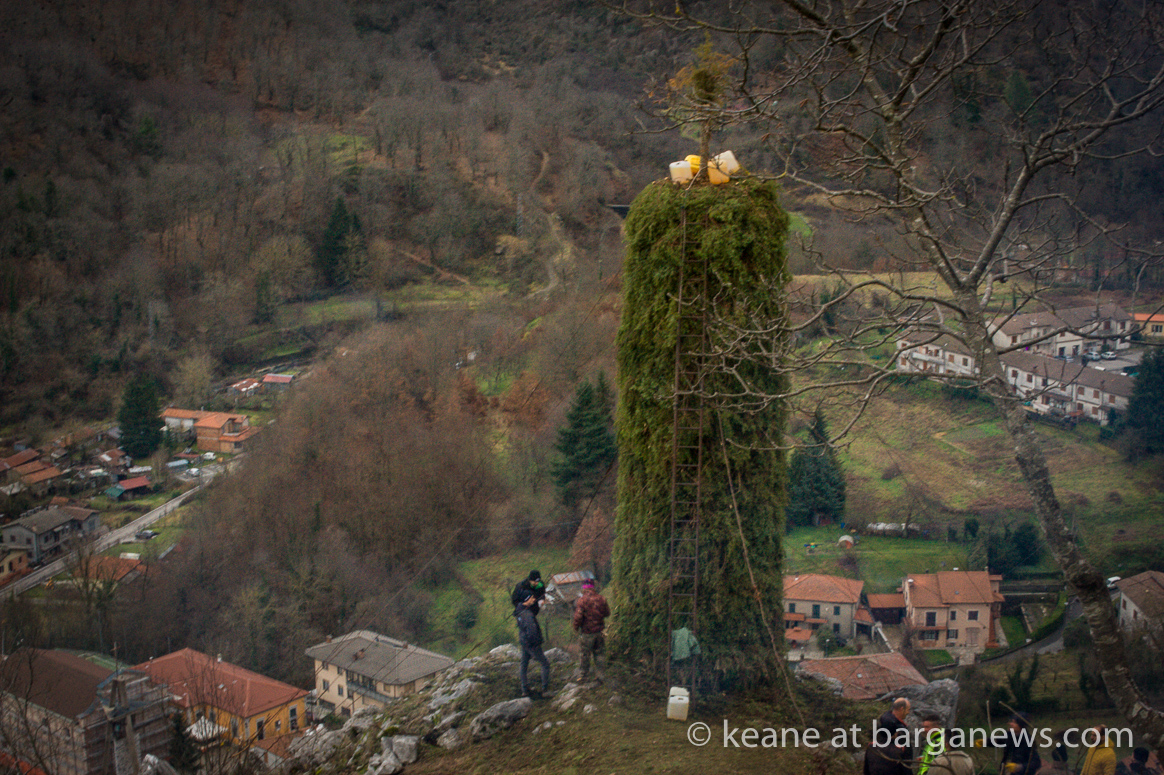
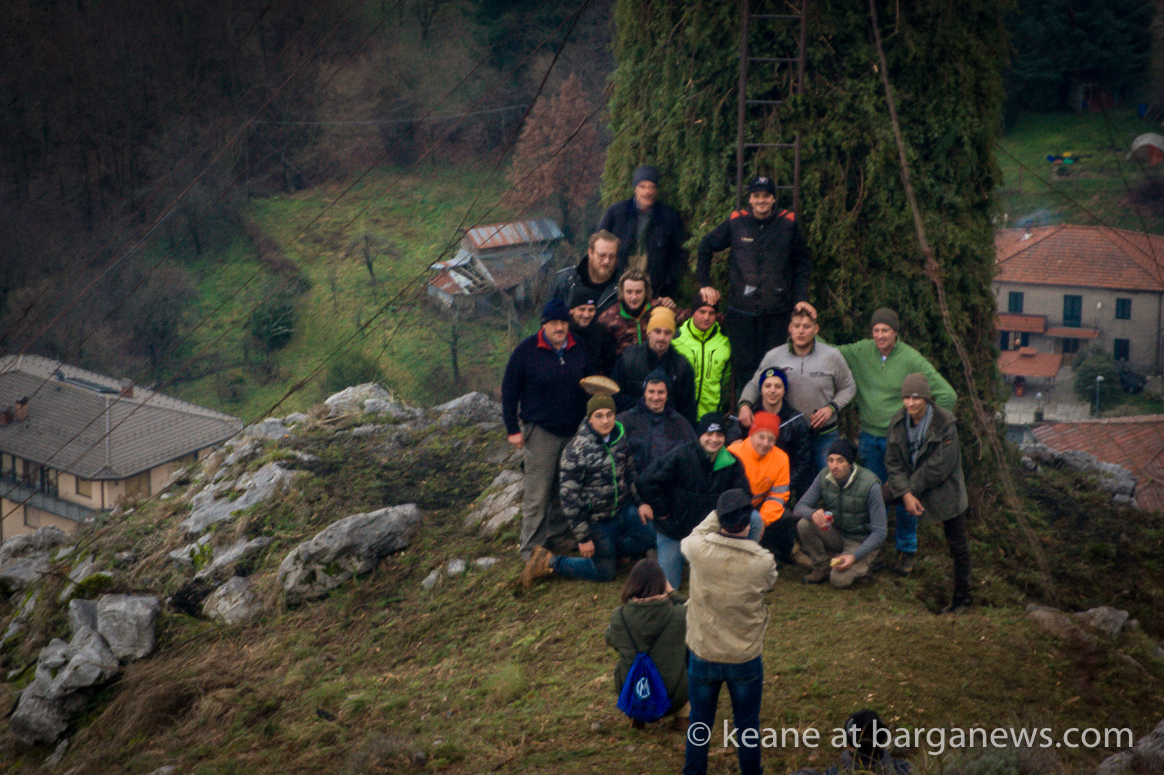
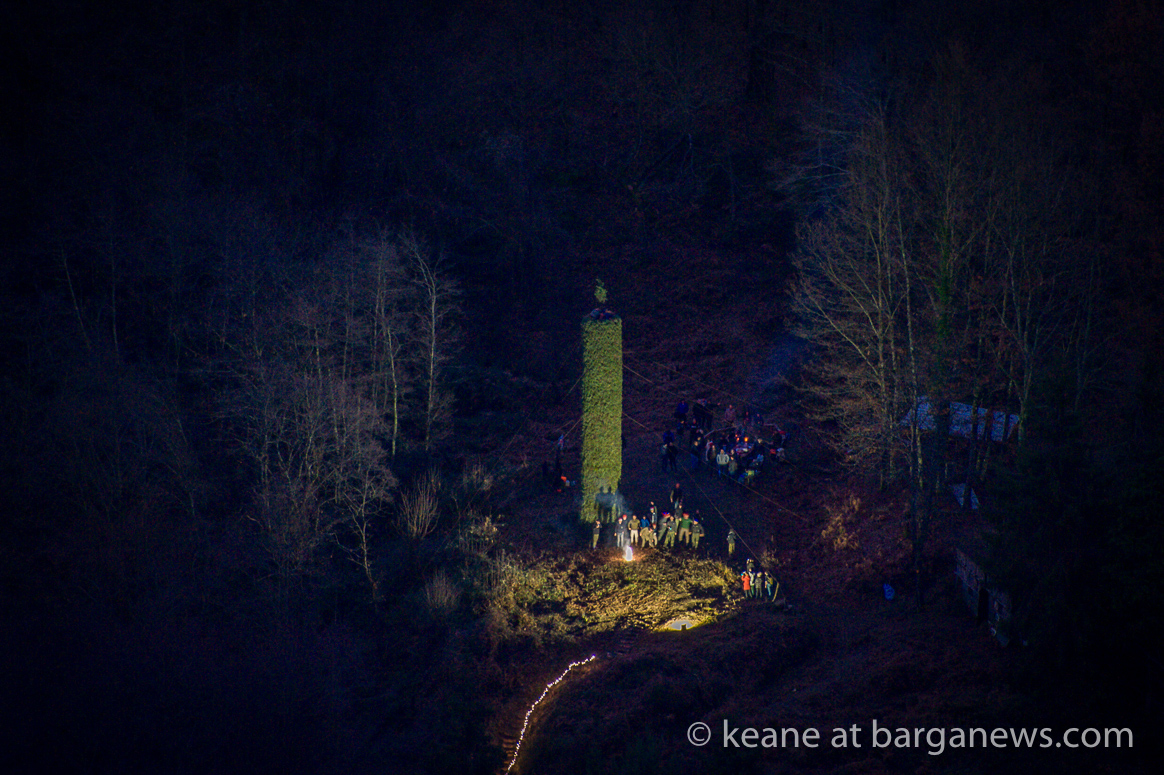
The Nataleccio is a cylindrical construction obtained by driving into the ground a wooden trunk which in the local dialect takes the name of “temple” and which can be made of chestnut, beech or Turkey oak, around which a large number of branches are “woven” Before starting the construction, however, a place is identified above the town to be clearly visible to all and after which the great work begins, where young and old will be busy assiduously for months, sweating and suffering. and built the cylinder which can usually exceed fifteen meters in height for a diameter of three to four meters.
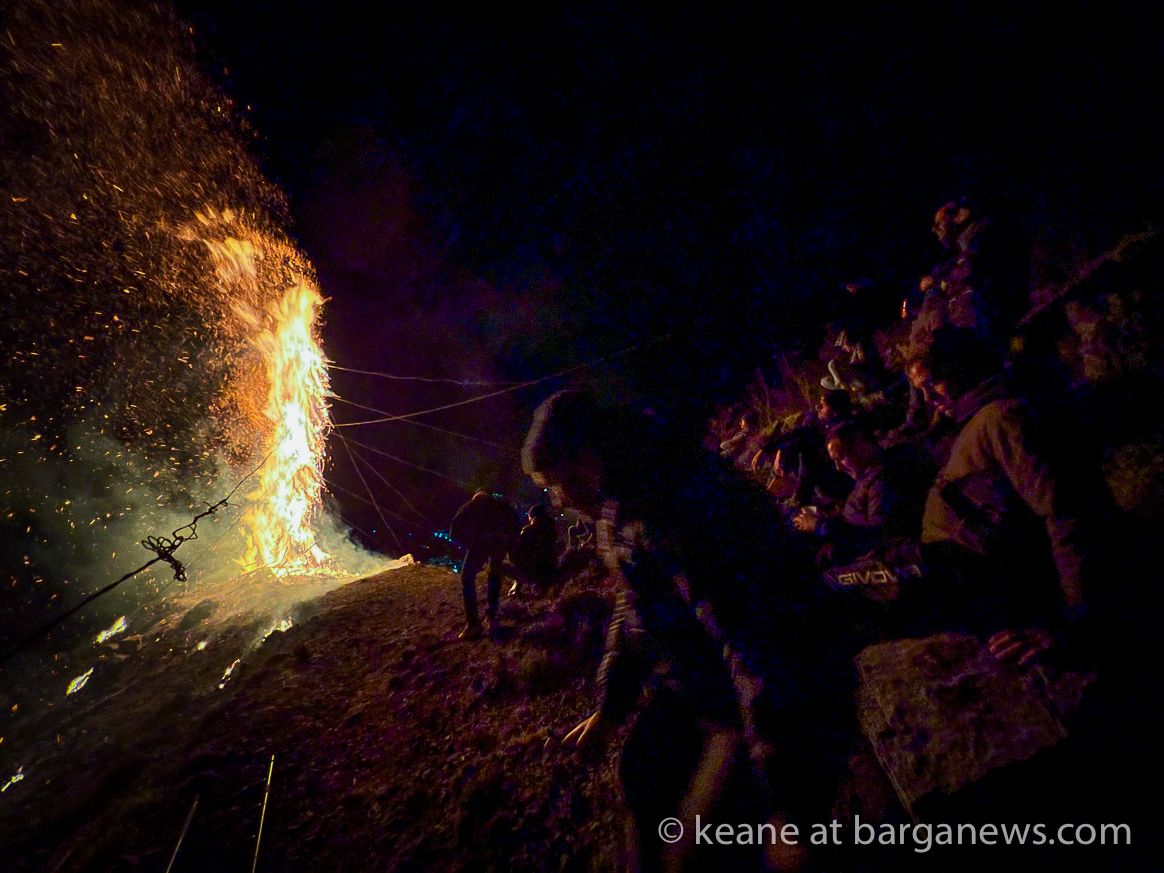
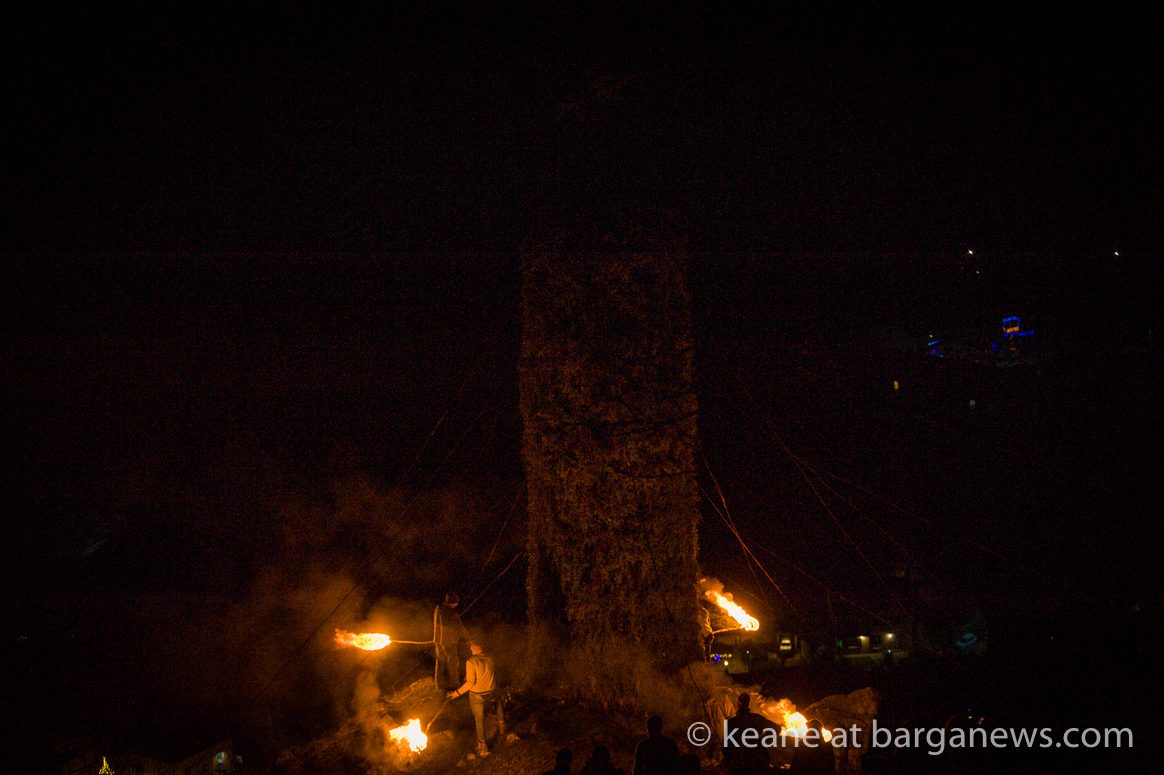
The skill lies in making this structure as stable as possible so that it does not fall and the same skill lies in the “texture” of the juniper which guarantees a lasting flame as the flame must last over twenty minutes, high, clearly visible and without smoke.
Many were the divinatory signals that the pagan God offered to his faithful through the fire: from the intensity of the glow of the sparks, from the direction of the smoke, from the crackling of the juniper plant, omens were drawn about crops, epidemics and famines, while the embers collected the next day were kept as precious amulets. From a pagan rite to a Christian-like rite, the step was short. , but in all those places where this persisted custom and it was thus that Pope Leo I in the sermon given on Christmas 460 said:
“This religion of the sun and fire is so highly esteemed that some Christians before entering St. Peter’s Basilica in the Vatican, after climbing the staircase, turn towards the sun and bow their heads in honour of the incandescent star. . We are anguished and we are saddened by this fact which is repeated for pagan mentality. Christians must refrain from any affiliation of respect to this cult of the gods “.
But we know how things are going and as an old and wise proverb says: “There is no enemy today, who cannot become a friend tomorrow” and so the Christian church began to associate the sun with the image of Jesus, the sentences were underlined of the gospel where Christ was compared to the sun, such as: “His face resembled the sun when it shines with all its strength” (Apocalypse of John), the monogram IHS incorporated in a blazing sun will be adopted, the monstrances will take the form of a solar disk and so many and many other examples could be given.
The origins of this ceremony have long since been lost but probably dates back to a pagan rite to the god Mitra but which was then appropriated by the Christian faith and given meaning with the fires now warming up the newly born Jesus
Mithra, also spelled Mithras, Sanskrit Mitra, in ancient Indo-Iranian mythology, the god of light, whose cult spread from India in the east to as far west as Spain, Great Britain, and Germany. The first written mention of the Vedic Mitra dates to 1400 bc. His worship spread to Persia and, after the defeat of the Persians by Alexander the Great, throughout the Hellenic world. In the 3rd and 4th centuries ad, the cult of Mithra, carried and supported by the soldiers of the Roman Empire, was the chief rival to the newly developing religion of Christianity.
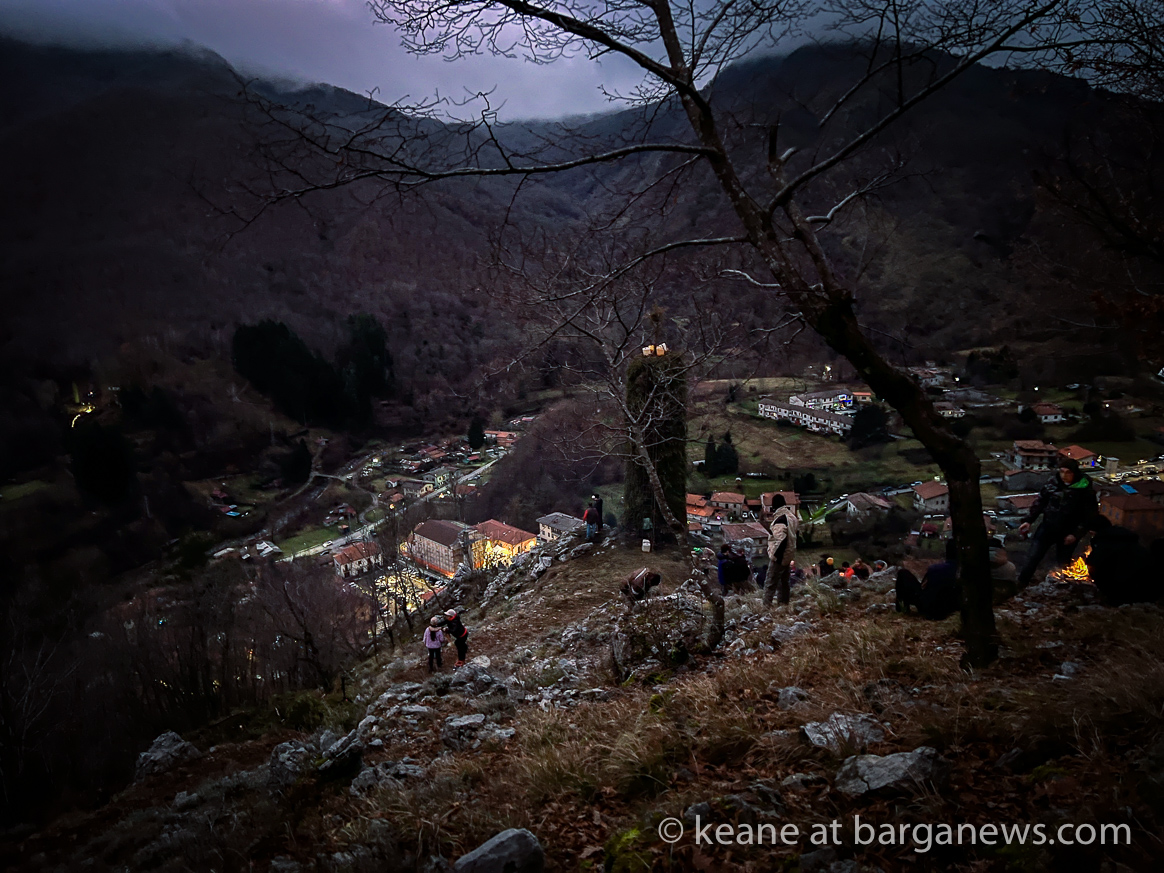
As the church bells ring out across the valley to announce the birth of The Messiah, the people around the Nataleccio start to sing “Oh! Oh! Nataleccio! Oh! Oh! Nataleccio!” and the fires are lit. The air is then rent with the sound of fireworks, sirens, shouts and the unmistakable sound of gunshots.
Natalecci 2021 | 2019 | 2017 | 2016 | 2015 | 2013 | 2010 | 2008 | 2007 |




Palio dei Natalecci; ogni anno, il 24 dicembre, il cielo notturno in alcune zone della Garfagnana si illumina di grandi fuochi. Sono i Natalecci di Gorfigliano.
Il Nataleccio è una costruzione cilindrica ottenuta conficcando nel terreno un tronco di legno che nel dialetto locale prende il nome di “tempio”, e che può essere di castagno, faggio o cerro, attorno al quale viene “intrecciato” un gran numero di rami. Prima di iniziare la costruzione, tuttavia, viene individuato un luogo sopra il paese, ben visibile a tutti, dopodiché ha inizio il grande lavoro, che vedrà impegnati giovani e anziani per mesi, con fatica e sacrificio, fino alla realizzazione del cilindro, che può solitamente superare i quindici metri di altezza per un diametro di tre o quattro metri.
L’abilità sta nel rendere questa struttura il più stabile possibile affinché non cada, e allo stesso modo nella “tessitura” del ginepro, che garantisce una fiamma duratura: la fiamma deve infatti durare oltre venti minuti, essere alta, ben visibile e senza fumo.
Molti erano i segnali divinatori che la divinità pagana offriva ai suoi fedeli attraverso il fuoco: dall’intensità del bagliore delle scintille, dalla direzione del fumo, dallo scoppiettio della pianta di ginepro si traevano presagi su raccolti, epidemie e carestie, mentre le braci raccolte il giorno seguente venivano conservate come preziosi amuleti. Dal rito pagano a quello di impronta cristiana il passo fu breve, ma in tutti quei luoghi dove questa usanza persisteva, accadde che Papa Leone I, nel sermone pronunciato a Natale del 460, disse:
«Questa religione del sole e del fuoco è talmente stimata che alcuni cristiani, prima di entrare nella Basilica di San Pietro in Vaticano, dopo aver salito la scalinata, si volgono verso il sole e chinano il capo in onore dell’astro incandescente. Siamo angosciati e addolorati da questo fatto che si ripete per mentalità pagana. I cristiani devono astenersi da ogni forma di rispetto verso questo culto degli dei».
Ma sappiamo come vanno le cose e, come dice un vecchio e saggio proverbio: “Non c’è nemico oggi che non possa diventare amico domani”, e così la Chiesa cristiana iniziò ad associare il sole all’immagine di Gesù; vennero sottolineati i passi del Vangelo in cui Cristo era paragonato al sole, come: «Il suo volto era simile al sole quando splende con tutta la sua forza» (Apocalisse di Giovanni); il monogramma IHS inserito in un sole raggiante venne adottato, le ostensori assunsero la forma di un disco solare e molti altri esempi potrebbero essere citati.
Le origini di questa cerimonia si sono ormai perse nel tempo, ma probabilmente risalgono a un rito pagano dedicato al dio Mitra, poi fatto proprio dalla fede cristiana e reinterpretato, con i fuochi che oggi scaldano simbolicamente il neonato Gesù.
Mitra, o Mithras, sanscrito Mitra, nella mitologia indo-iranica antica era il dio della luce, il cui culto si diffuse dall’India fino alla Spagna, alla Gran Bretagna e alla Germania. La prima menzione scritta del Mitra vedico risale al 1400 a.C. Il suo culto si diffuse in Persia e, dopo la sconfitta dei Persiani da parte di Alessandro Magno, in tutto il mondo ellenico. Nei secoli III e IV d.C., il culto di Mitra, portato e sostenuto dai soldati dell’Impero Romano, fu il principale rivale della nascente religione cristiana.
Quando le campane delle chiese risuonano nella valle per annunciare la nascita del Messia, le persone attorno al Nataleccio iniziano a cantare: «Oh! Oh! Nataleccio! Oh! Oh! Nataleccio!» e i fuochi vengono accesi. L’aria si riempie allora del fragore dei fuochi d’a