If a Tree Falls in the Forest, and There’s No One Around to Hear It, Does It Make a Sound?
The philosophical thought experiment of whether a falling tree makes a sound when there’s no one around to hear it exploits the tension between perception and reality.
The traditional answer is that it makes a sound but not a noise – noise being a subjective judgement. However Quantum Mechanics gives us the Observer Problem. Basically this means that as all events are essentially random (on a sub-atomic scale), until they have been observed we can’t be sure they’ve actually happened.
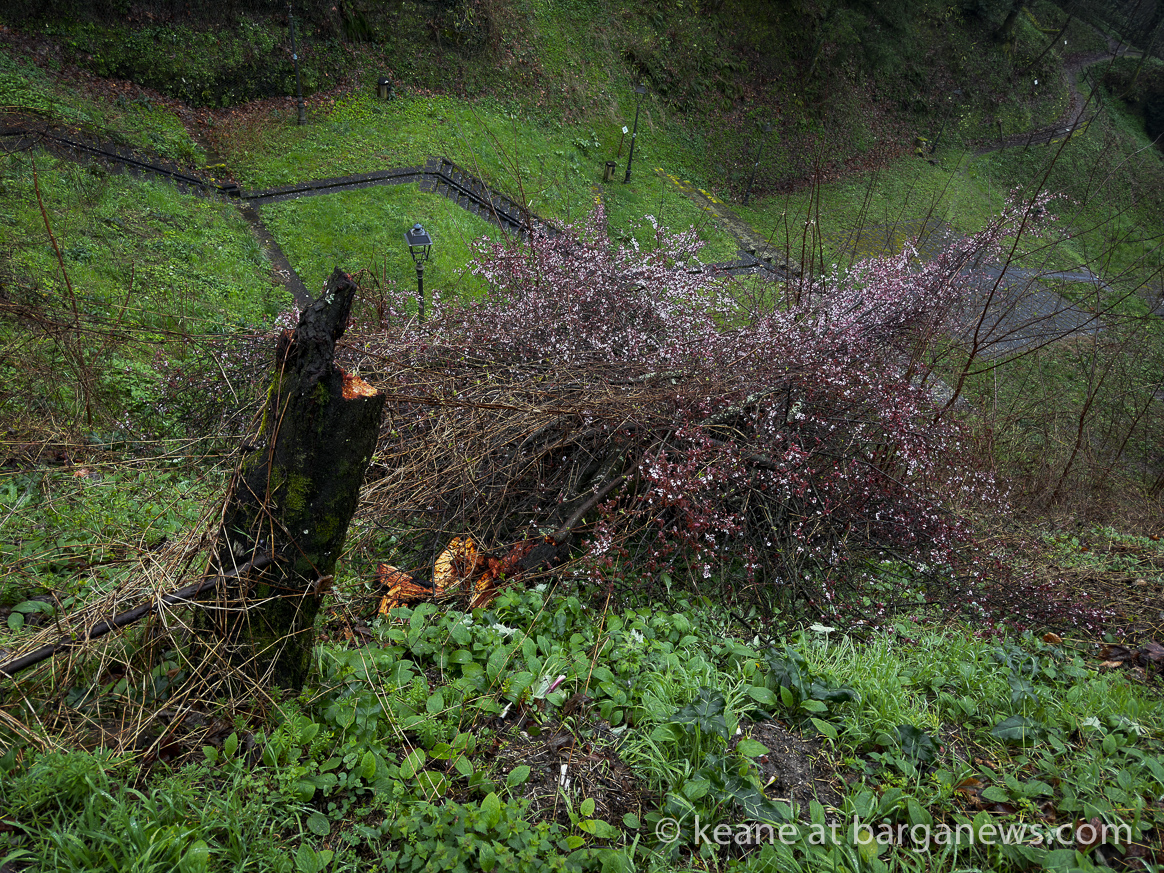
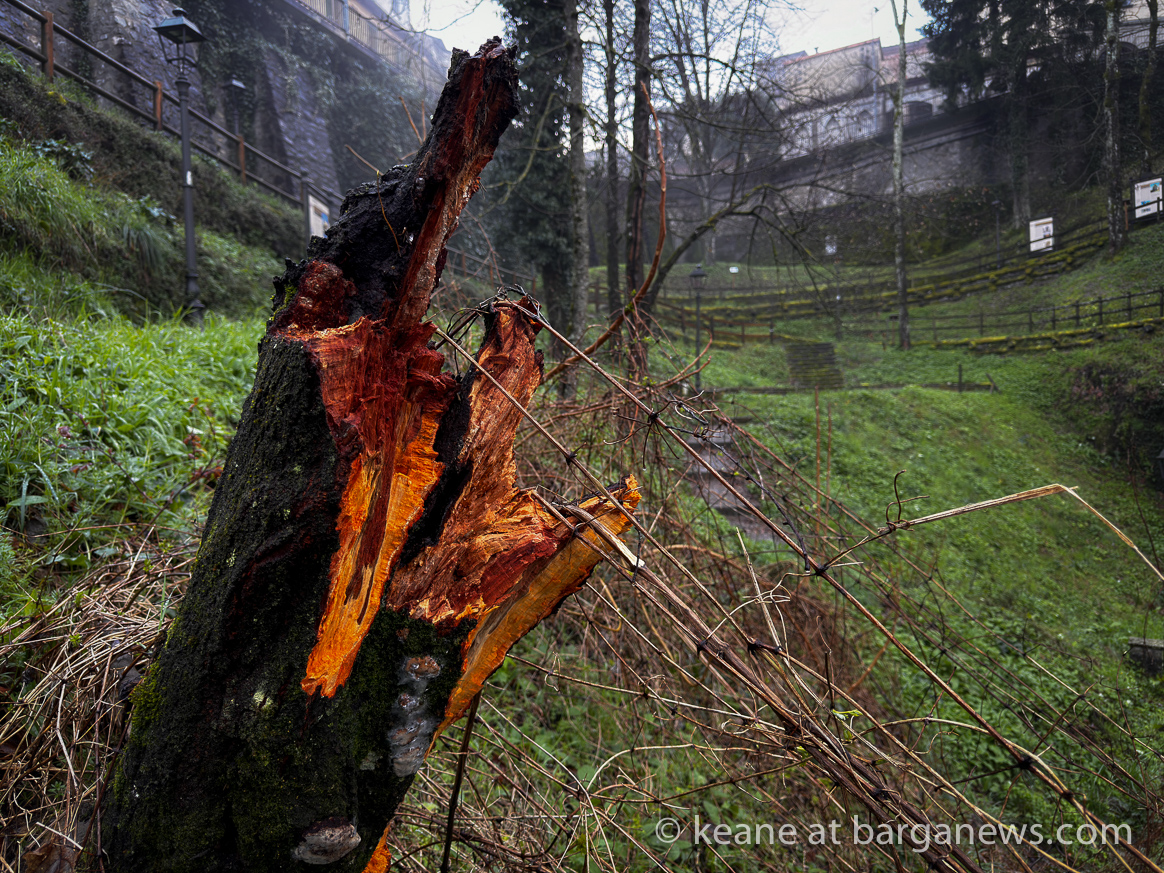
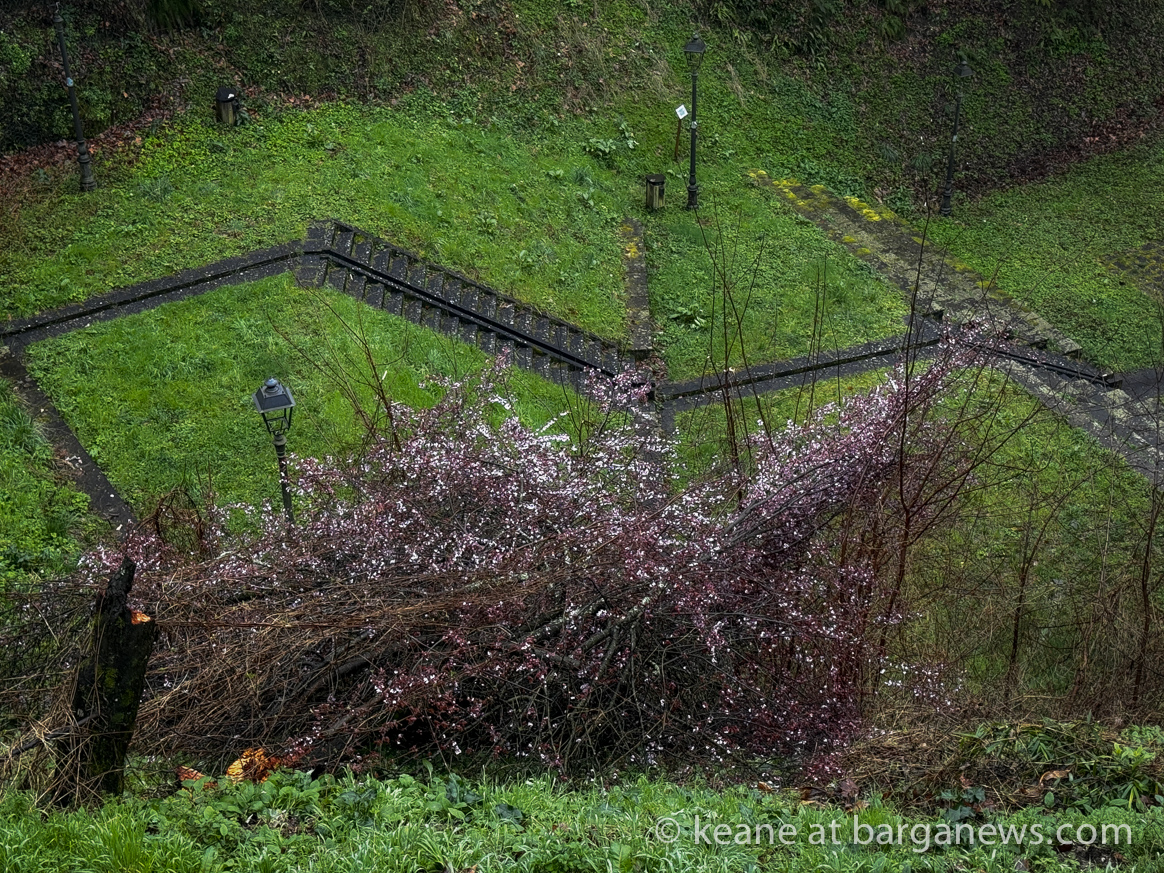
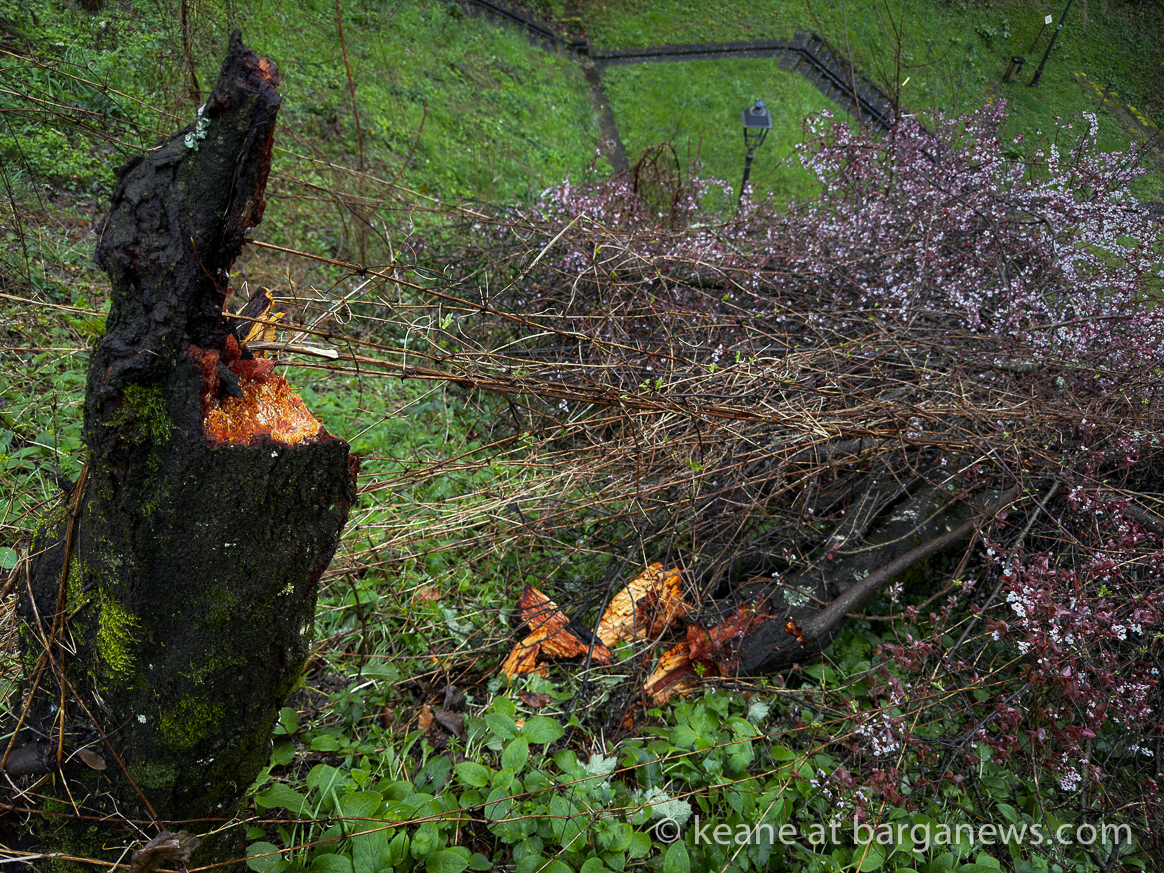
Well last night one did make a sound, a horrible creaking cracking sound as one of the most photographed tree in Parco Buozzi finally succumbed to the forces of gravity and fell to the ground.
It was a wild plum tree which blossomed early each and every year before all of the other trees in the Parco – an early visual sign that spring was on the way.
It had been leaning over precariously for some time and recent high winds had torn off large branches leaving it out of balance, unstable and weakened.
This morning its colourful welcome to the end of the winter is no more.
It will be missed.
 |
 |
 |
 |

Se un albero cade nella foresta, e non c’è nessuno nei dintorni a sentirlo, emette un suono?
L’esperimento filosofico su se un albero che cade emetta un suono quando non c’è nessuno nei dintorni a udirlo sfrutta la tensione tra percezione e realtà.
La risposta tradizionale è che produce un suono ma non un rumore – essendo il rumore un giudizio soggettivo. Tuttavia, la Meccanica Quantistica ci introduce al Problema dell’Osservatore. In sostanza, ciò significa che, poiché tutti gli eventi sono essenzialmente casuali (su una scala sub-atomica), finché non sono stati osservati non possiamo essere sicuri che siano effettivamente accaduti.
Ebbene, la scorsa notte uno ha fatto un suono, un orribile suono di scricchiolio e crepitio mentre uno degli alberi più fotografati nel Parco Buozzi ha finalmente ceduto alle forze di gravità e è caduto al suolo – un albero di susine selvatica che fioriva presto ogni anno, prima di tutti gli altri alberi nel Parco – un segnale visivo precoce che la primavera stava arrivando.
Era inclinato pericolosamente da un po’ di tempo e i recenti forti venti avevano strappato grandi rami lasciandolo squilibrato, instabile e indebolito.
Questa mattina, il suo colorato benvenuto alla fine dell’inverno non esiste più.
Ci mancherà.