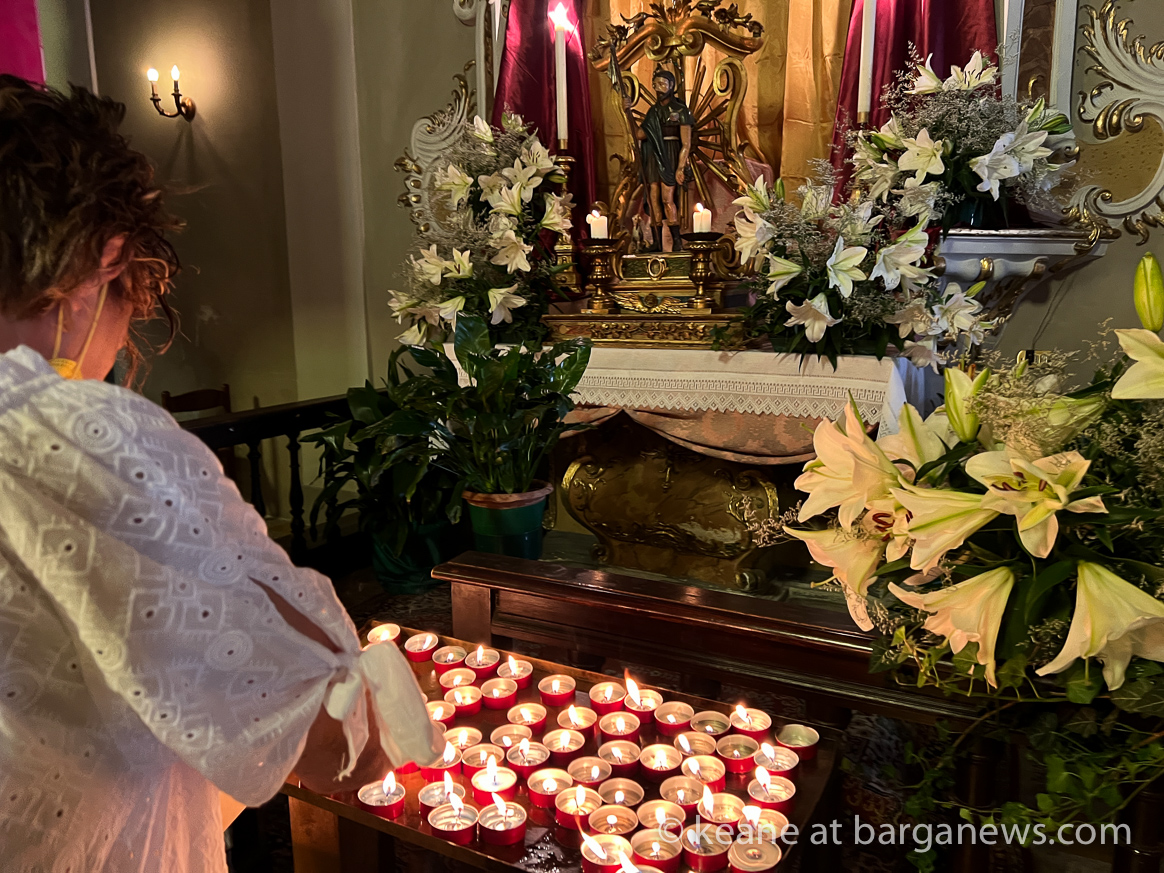
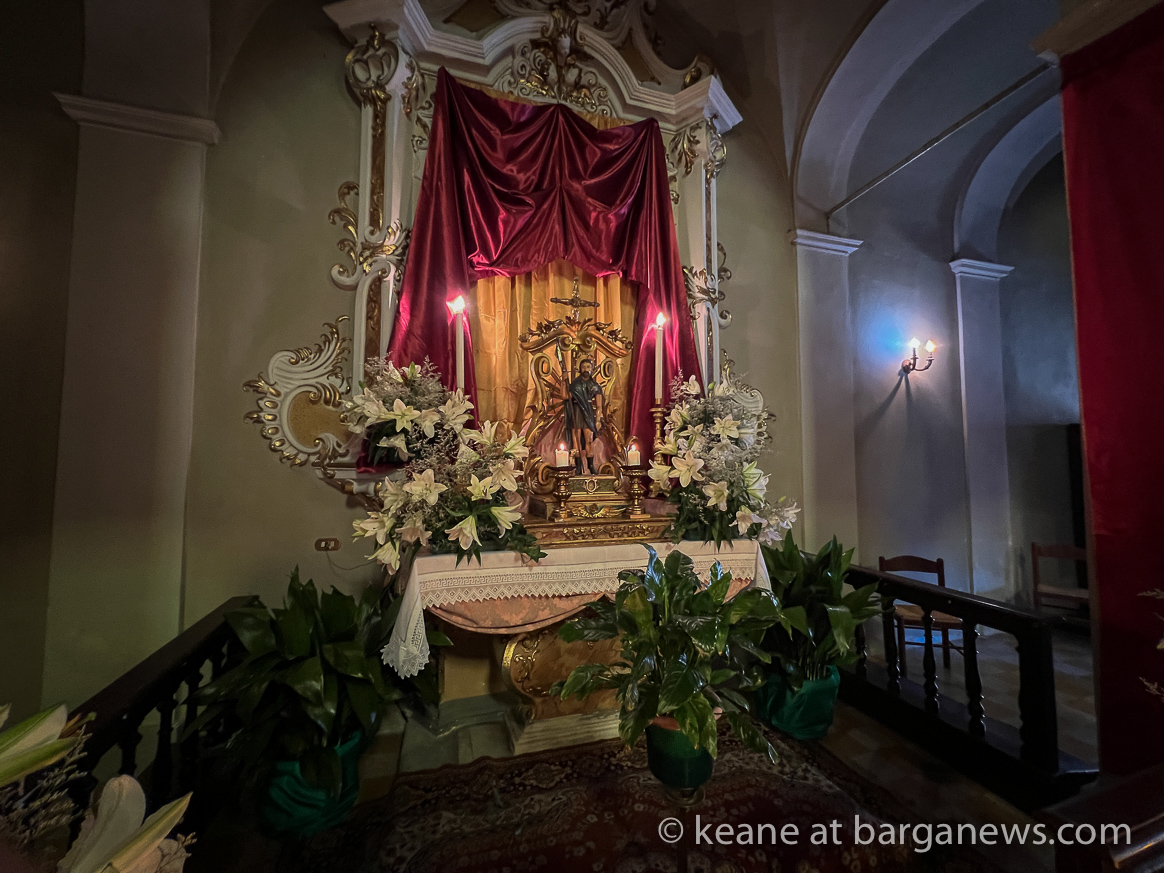
Ironically, as Barga celebrates its annual mid-August festa di San Rocco with dining and dancing under the stars and a lively outdoor market, it is also marking the inconceivable carnage of the Black Death – in which the Serchio Valley almost certainly played a critical role.
In the lengthy annals of European trauma, ranging from the collapse of the Roman Empire to the Second World War, probably none had greater impact on the collective memory than the Black Death. In the brief span of four years, beginning in 1348, the deadliest epidemic in recorded history carried off up to 60 percent of Europe’s entire population. More than 40,000 German villages and towns vanished forever, all of their inhabitants left dead. Within a few months, the population of Florence dropped from more than 120,000 to less than 50,000. Overall, epidemiologists believe, Europe as a whole may have lost half of its population. In Italy, Spain and southern France, the toll was more than three-fourths.
The starting point in this grim tale is San Rocco himself, thought to be a 14th century nobleman from Montpellier, France, who renounced his inherited wealth and left on a lifelong pilgrimage that ended in the Italian town of Voghera, now part of the Province of Pavia. Through the worst years of the plague, legend has it, Rocco worked tirelessly as an itinerant healer, tending to the dying and their families. When he fell sick himself, he moved to a simple hut of wood in an isolated forest glade. But to his own surprise, he lived on, sustained by a natural spring of fresh water that miraculously appeared in a nearby rock, and by a small dog who brought chunks of bread to the hut each morning.
Barga’s 17th century Chiesa di San Rocco, built on the foundations of a 14th-century chapel just beyond the lower bridge to the Giardino District, recalls this legend graphically in a statue over its entrance. It features the dog, as well as the saint, holding his pilgrim’s staff in one hand, and raising the tattered hem of his tunic with the other to bare the bubonic sores on his thigh.
The bells of San Rocco ringing out over Barga this morning All of these details, most notably the church’s location, speak to a tragic moment in local history: Barga was probably among the very first towns struck by the Black Death, and a de facto principal transmission node. Hence the construction of the chapel at a key entrance to the castle town, echoed in thousands of similar churches across Europe, and meant to ward off future epidemics.
Almost 600 years later, researchers regard the dispersion of these churches as a remarkably precise “map” of the plague’s most concentrated impact and extent The evidence regarding Barga’s role is circumstantial, but compelling. What is known, from scientific evidence, is that the great plague reached the shores of continental Europe when a galley from the Levant docked at the port of Pisa in January, 1348. Although its cargo manifest and passenger list have not survived, there is no doubt that its hold ferried a colony of migrating rodents – all ships did in those days – and that they in turn hosted Oriental rat fleas infected with the bacterium Yersinia pestis, source of the Black Death.
The legitimate cargo could well have been linked to the lucrative Mediterranean trade connections that 14th century Barga and Lucca enjoyed as major producers of silk. In all likelihood, the unidentified human passengers were pilgrims, flea-bitten after an uncomfortable voyage from the Holy Land. Their northern journey homeward, which few if any completed, would have taken them (and Yersina pestis) through Barga en route to the celebrated Apennine pilgrimage hostel at San Pellegrino and onward.
Together, silk and pilgrims accounted for the wealth that built the grand palazzi that still grace the streets and piazzas of Barga Vecchia.
But for much of the town’s population in the fatal winter of 1348, they were harbingers of a bitter and untimely death.
Article by Frank Viviano – all articles by Frank Viviano can be seen here
 |
 |
 |
 |

Paradossalmente, mentre Barga celebra la sua tradizionale festa di metà agosto di San Rocco con cene e danze sotto le stelle e un vivace mercato all’aperto, ricorda anche l’inconcepibile carneficina della Peste Nera — nella quale la Valle del Serchio ebbe quasi certamente un ruolo cruciale. Nei lunghi annali dei traumi europei, dal crollo dell’Impero Romano alla Seconda guerra mondiale, probabilmente nulla ha avuto un impatto più profondo sulla memoria collettiva della Peste Nera. Nel breve arco di quattro anni, a partire dal 1348, l’epidemia più letale della storia documentata spazzò via fino al 60% dell’intera popolazione del continente. Più di 40.000 villaggi e città tedeschi scomparvero per sempre, con tutti i loro abitanti morti.
Nel giro di pochi mesi, la popolazione di Firenze passò da oltre 120.000 a meno di 50.000. Nel complesso, ritengono gli epidemiologi, l’Europa potrebbe aver perso metà della sua popolazione. In Italia, Spagna e nel sud della Francia, il tributo superò i tre quarti.
Il punto di partenza di questo cupo racconto è lo stesso San Rocco, ritenuto un nobile del XIV secolo di Montpellier, in Francia, che rinunciò alle ricchezze ereditate e partì per un pellegrinaggio che durò tutta la vita, conclusosi nella città italiana di Voghera, oggi in “provincia di Pavia”.
Durante gli anni peggiori della peste, secondo la leggenda, Rocco lavorò instancabilmente come guaritore itinerante, assistendo i morenti e le loro famiglie. Quando si ammalò egli stesso, si ritirò in una semplice capanna di legno in una radura isolata. Ma, con sua sorpresa, sopravvisse, sostenuto da una sorgente naturale d’acqua fresca che sgorgò miracolosamente da una roccia vicina e da un cagnolino che ogni mattina portava alla capanna pezzi di pane.
La Chiesa di San Rocco di Barga, del XVII secolo, edificata sulle fondamenta di una cappella del XIV secolo poco oltre il ponte inferiore verso il quartiere del Giardino, richiama graficamente questa leggenda in una statua sopra l’ingresso. Vi compare il cane; il santo, con il bordone da pellegrino in una mano, solleva con l’altra l’orlo lacero della tunica per mostrare le piaghe bubboniche sulla coscia
.
Le campane di San Rocco che risuonano su Barga questa mattina Tutti questi elementi, in particolare la collocazione della chiesa, rimandano a un momento tragico della storia locale: Barga fu probabilmente tra le primissime città colpite dalla Peste Nera e, di fatto, un nodo principale di trasmissione.
Da qui la costruzione della cappella presso un ingresso chiave della città fortificata, soluzione ripetuta in migliaia di chiese analoghe in tutta Europa e pensata per scongiurare future epidemie. Quasi 600 anni dopo, i ricercatori considerano la dispersione di queste chiese come una “mappa” sorprendentemente precisa delle aree di maggiore impatto e dell’estensione della peste. Le prove sul ruolo di Barga sono indiziarie, ma convincenti.
È noto, sulla base di evidenze scientifiche, che la grande peste raggiunse le coste dell’Europa continentale quando una galea proveniente dal Levante attraccò al porto di Pisa nel gennaio del 1348. Sebbene il manifesto del carico e la lista dei passeggeri non siano pervenuti, non v’è dubbio che nella stiva viaggiasse una colonia di roditori in migrazione — come accadeva su tutte le navi dell’epoca — i quali a loro volta ospitavano pulci del ratto orientale infettate dal batterio Yersinia pestis, causa della Peste Nera.
Il carico legittimo poteva benissimo essere legato alle redditizie connessioni commerciali mediterranee di cui godevano nel XIV secolo Barga e Lucca come importanti produttrici di seta. Con ogni probabilità, i passeggeri umani non identificati erano pellegrini, coperti di punture di pulci dopo un scomodo viaggio dalla Terra Santa. Il loro viaggio di ritorno verso nord — che pochi, se non nessuno, completarono — li avrebbe condotti (insieme a Yersinia pestis) attraverso Barga, diretti verso il celebre ospizio appenninico dei pellegrini a San Pellegrino e oltre. Insieme, seta e pellegrini alimentarono la ricchezza che costruì i grandi palazzi che tuttora ornano le vie e le piazze di Barga Vecchia.
Ma per gran parte della popolazione della città, nel fatale inverno del 1348, furono presagi di una morte amara e prematura.
Articolo di Frank Viviano — tutti gli articoli di Frank Viviano si possono vedere qui