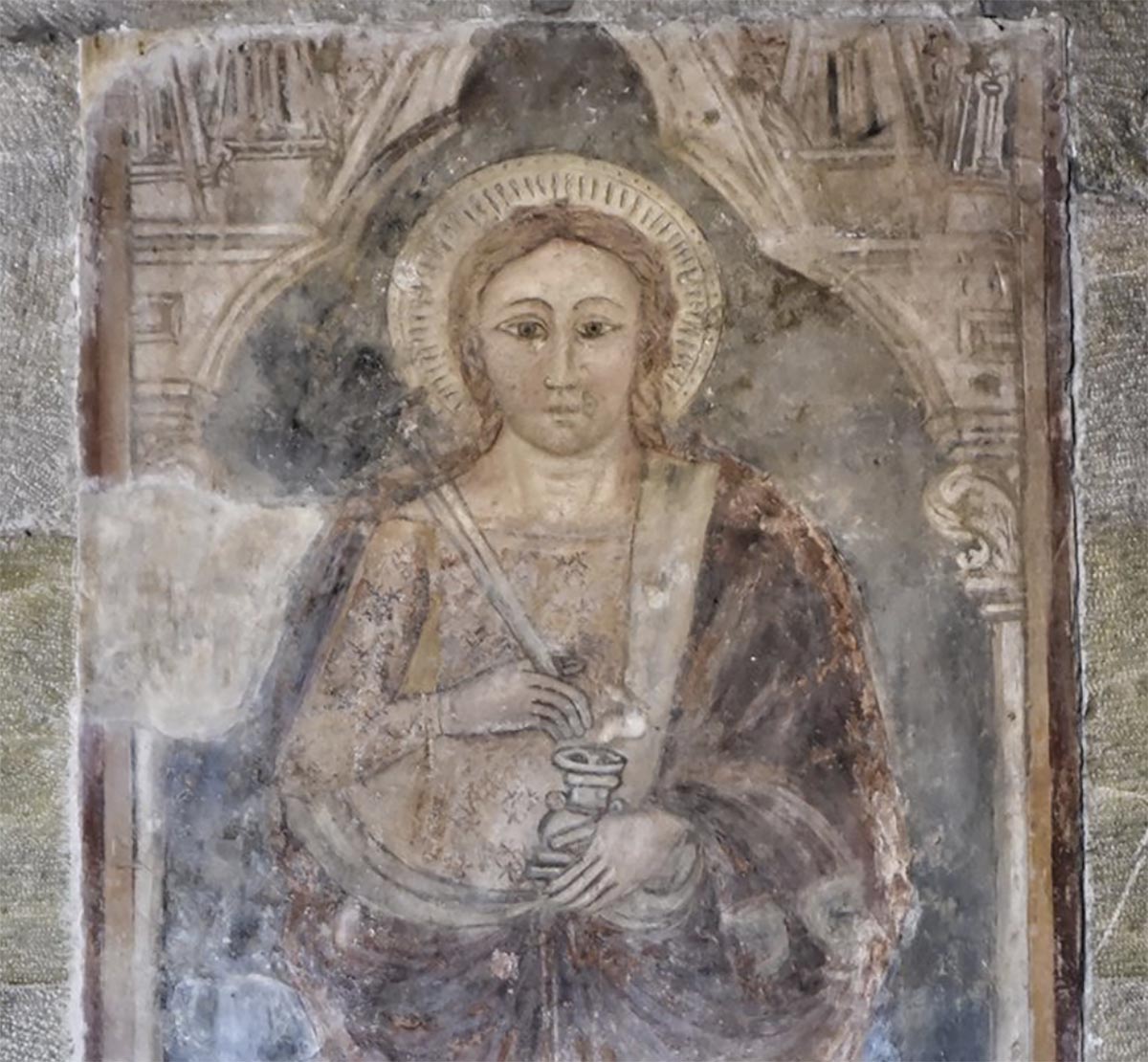
“Santa Lucia, il giorno più corto che ci sia” — Saint Lucia is the shortest day there is.
It is a rhyme many Italian children learn by heart, recited every year on 13 December, the feast day of Saint Lucia.
But is Saint Lucia really the shortest day of the year, the day with the fewest hours of daylight?
In fact, it is not. So where does this long-held tradition come from?
The name Lucia comes from lux, meaning light. Saint Lucia is the patron saint of the blind and of the eyes, as well as of electricians, oculists and stonemasons, and she is often invoked in cases of eye disease.
Lucia was born in Syracuse, Sicily, in the fourth century. According to tradition, she tore out her own eyes after their beauty attracted the unwanted attention of a pagan nobleman. Denounced as a Christian during the persecutions ordered by Emperor Diocletian, she was condemned to death and executed in Syracuse on 13 December 304.
Each year the city of Syracuse honours Saint Lucia with a week-long celebration, marked by processions, fireworks and sweets, and by the traditional vow not to eat pasta or bread during the festivities.
The origin of the saying lies not in legend, but in the calendar.
Until October 1582, Europe followed the Julian calendar, which gradually drifted out of alignment with the solar year because of inaccuracies in the calculation of leap years. Over time, this caused feast days to slide away from their original seasonal positions.
With the papal bull Inter gravissimas, Pope Gregory XIII introduced a new calendar to correct this drift. The reform was dramatic: Thursday 4 October 1582 was followed immediately by Friday 15 October. Ten days simply disappeared in order to bring the calendar back into line with the seasons.
Before this reform, the feast of Saint Lucia fell very close to the winter solstice — the shortest day of the year, which can occur between 20 and 22 December. After 1582, the solstice moved away, but the date of Saint Lucia remained fixed.
And so the rhyme endured, even after the calendar changed. The saying “Saint Lucia, the shortest day there is” is a small echo of a time when the calendar — and the light — were measured differently.

|
|

|

|

«Santa Lucia, il giorno più corto che ci sia».
È una filastrocca che molti bambini italiani imparano a memoria, ripetuta ogni anno il 13 dicembre, giorno della festa di Santa Lucia.
Ma Santa Lucia è davvero il giorno più corto dell’anno, quello con meno ore di luce?
In realtà no. Da dove nasce allora questa tradizione così radicata?
Il nome Lucia deriva da lux, luce. Santa Lucia è la patrona dei ciechi e della vista, ma anche degli elettricisti, degli oculisti e degli scalpellini, ed è spesso invocata per le malattie degli occhi.
Lucia nacque a Siracusa, in Sicilia, nel IV secolo. Secondo la tradizione, si strappò gli occhi perché la loro bellezza aveva attirato le attenzioni indesiderate di un nobile pagano. Denunciata come cristiana durante le persecuzioni ordinate dall’imperatore Diocleziano, fu condannata a morte ed eseguita a Siracusa il 13 dicembre del 304.
Ogni anno la città di Siracusa onora Santa Lucia con una celebrazione che dura una settimana, fatta di processioni, fuochi d’artificio, dolci tradizionali e del voto di non mangiare pasta né pane durante i festeggiamenti.
L’origine del detto non va cercata nella leggenda, ma nel calendario.
Fino all’ottobre del 1582, in Europa era in uso il calendario giuliano, che nel tempo si era progressivamente disallineato rispetto all’anno solare a causa di un errore nel calcolo degli anni bisestili. Questo slittamento aveva fatto sì che le festività si allontanassero dalle stagioni a cui erano originariamente legate.
Con la bolla Inter gravissimas, papa Gregorio XIII introdusse un nuovo calendario per correggere questa discrepanza. La riforma fu drastica: giovedì 4 ottobre 1582 fu seguito direttamente da venerdì 15 ottobre. Dieci giorni furono cancellati per riallineare il calendario con il ciclo solare.
Prima di questa riforma, la festa di Santa Lucia cadeva molto vicino al solstizio d’inverno — il giorno più corto dell’anno, che può verificarsi tra il 20 e il 22 dicembre. Dopo il 1582, il solstizio si spostò, ma la data di Santa Lucia rimase invariata.
E così la filastrocca è sopravvissuta al cambiamento del calendario. Il detto «Santa Lucia, il giorno più corto che ci sia» è una piccola eco di un tempo in cui il calendario — e la luce — venivano misurati in modo diverso.