A Hundred-Year-Old Piano Finds a New Home in Palazzo Balduini
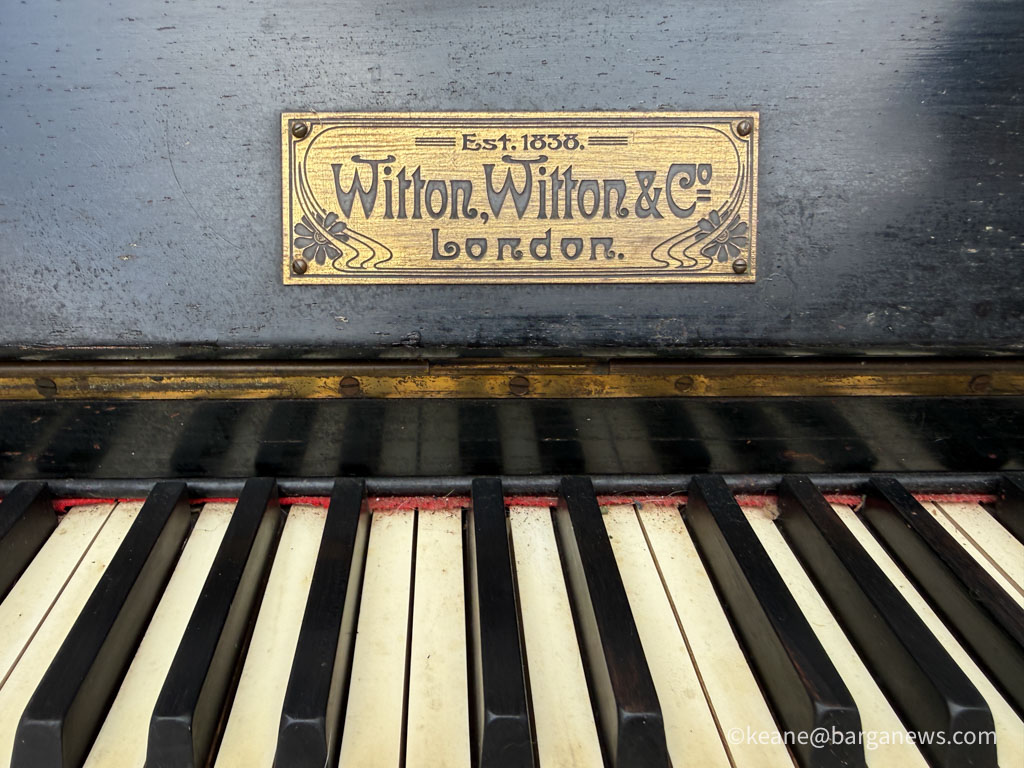
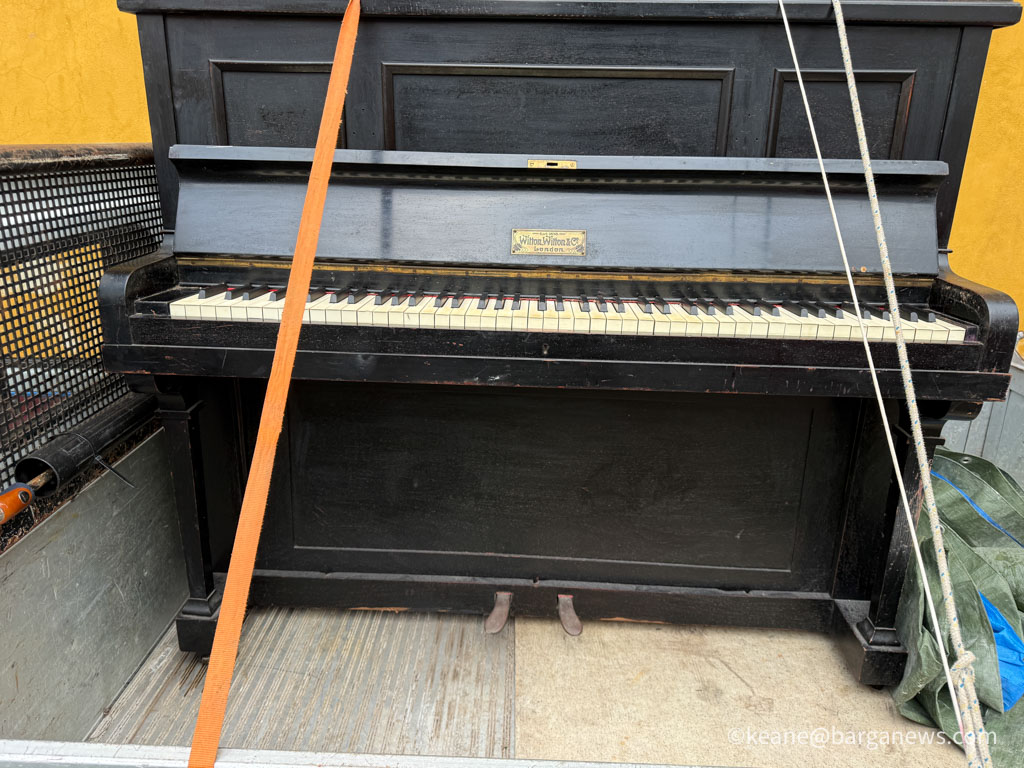
This morning, beneath a low winter sky in Barga Vecchia, a small truck made its slow, careful way through the narrow stone streets, carrying an unexpected passenger: a Witton, Witton & Co. upright piano, built in London more than a century ago.
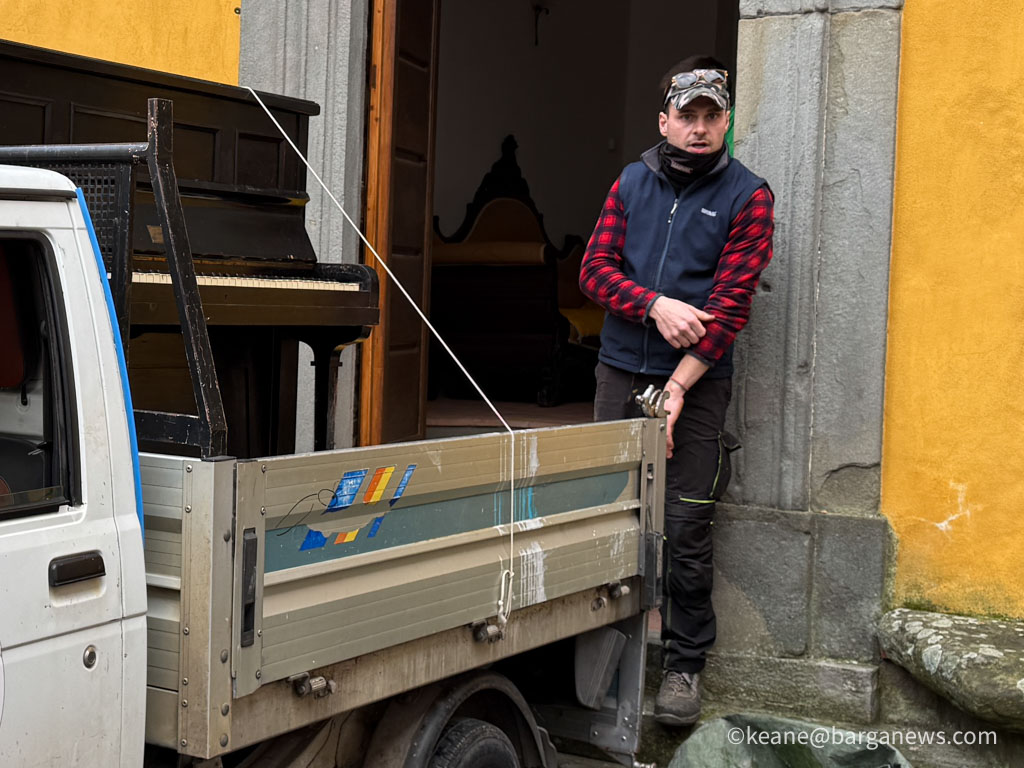
Its black wooden case — scuffed, worn, and undeniably proud — rattled softly against the straps as the vehicle climbed towards Palazzo Balduini, where five strong men were gathered for the day’s unusual task. Moving anything heavy through the medieval streets of Barga is always a negotiation between gravity and patience. Moving a piano, especially one that has already survived a hundred winters, is something bordering on theatre.
The instrument itself is a survivor of the Victorian and Edwardian age of British craftsmanship. Witton & Witton, a modest London maker active from the late 1800s to the early 1900s, specialised in sturdy domestic uprights — the kind found in parlours, schoolrooms and living rooms long before recorded music arrived to replace them. This piano carries all the quiet signatures of its era: the straight, formal lines of its casework, the darkened wood, and the ivory keytops now cracked and mellowed by generations of fingers that are long gone.
Witton, Witton & Co. was established around 1838 in London.
They produced upright and grand pianos, mainly for domestic use.
The firm belonged to a period of many small British piano makers in London (Victorian–Edwardian era) — a time when piano ownership was growing and lots of local makers sprang up.
It does not appear to have become a major or widely renowned maker compared to firms like Broadwood, Bechstein, or Collard & Collard; many surviving Witton & Witton pianos today are described as basic or modest instruments rather than high-end.
Surviving pianos typically date from 1880–1910.
The company did not survive into the major consolidation era of piano makers after WWI.
It is more than a piece of furniture. It is a reminder of another rhythm of life, when families made their own music in the evenings and instruments were cherished, not discarded. Even now, in its tired, travel-worn state, it retains a dignity that refuses to fade.
What role it will play inside Palazzo Balduini is not yet known. Perhaps it will be restored, tuned, and coaxed gently back into voice. Perhaps it will become a companion to exhibitions or intimate gatherings. Or perhaps it will remain simply as it arrived today — a handsome relic, honest in its scars, content to lend its silent presence to the old rooms of the palazzo.
Whatever its future, one thing is certain: the piano has begun a new chapter in its long and improbable journey, and Barga, with its quiet habit of absorbing history into everyday life, has gained another story to tell.

|
|

|

|

Un Pianoforte Centenario Trova Casa a Palazzo Balduini
Questa mattina, sotto un cielo invernale basso e cupo su Barga Vecchia, un piccolo camion ha percorso lentamente e con cautela le strette strade di pietra trasportando un passeggero inatteso: un pianoforte verticale Witton, Witton & Co., costruito a Londra più di un secolo fa.
La sua cassa nera in legno — segnata, consumata eppure indiscutibilmente fiera — vibrava leggermente contro le cinghie mentre il mezzo saliva verso Palazzo Balduini, dove cinque uomini robusti attendevano per l’insolito compito della giornata. Spostare qualcosa di pesante tra le strade medievali di Barga è sempre una negoziazione fra gravità e pazienza. Spostare un pianoforte, soprattutto uno che ha già superato cento inverni, è qualcosa che sfiora il teatro.
Lo strumento è un sopravvissuto dell’epoca vittoriana ed edoardiana della manifattura britannica. Witton & Witton, un modesto costruttore londinese attivo dalla fine dell’Ottocento ai primi del Novecento, era specializzato in solidi pianoforti verticali domestici — quelli che un tempo si trovavano nei salotti, nelle aule scolastiche e nei soggiorni, molto prima che la musica registrata arrivasse a sostituirli. Questo pianoforte porta con sé tutti i segni silenziosi della sua epoca: le linee dritte e formali della cassa, il legno scurito, i tasti d’avorio ora crepati e ammorbiditi da generazioni di dita ormai scomparse.
La Witton, Witton & Co. fu fondata intorno al 1838 a Londra. Produsse pianoforti verticali e a coda, destinati principalmente all’uso domestico. L’azienda apparteneva a quel periodo in cui a Londra operavano molti piccoli produttori britannici di pianoforti (era vittoriana–edoardiana), un’epoca in cui il possesso di un pianoforte stava diventando sempre più comune e nascevano numerose ditte locali.
Non sembra essere diventata un marchio importante o particolarmente rinomato, soprattutto se paragonato a case come Broadwood, Bechstein o Collard & Collard; molti dei pianoforti Witton & Witton superstiti oggi sono considerati strumenti semplici o modesti, piuttosto che di alto livello.
Gli esemplari ancora esistenti risalgono generalmente al periodo 1880–1910.
La ditta non superò la grande fase di consolidamento dei produttori di pianoforti che ebbe luogo dopo la Prima guerra mondiale.
Non è solo un mobile. È un richiamo a un altro ritmo di vita, quando le famiglie producevano la propria musica nelle sere e gli strumenti erano custoditi con cura, non scartati. Anche ora, nel suo stato stanco e segnato dal viaggio, conserva una dignità che rifiuta di svanire.
Quale ruolo avrà all’interno di Palazzo Balduini non è ancora chiaro. Forse verrà restaurato, accordato e lentamente riportato alla voce. Forse diventerà compagno di mostre o di incontri intimi. Oppure rimarrà semplicemente così com’è arrivato oggi — un elegante reperto, onesto nelle sue cicatrici, contento di offrire la propria presenza silenziosa alle antiche stanze del palazzo.
Qualunque sia il suo futuro, una cosa è certa: il pianoforte ha iniziato un nuovo capitolo della sua lunga e improbabile storia, e Barga, con la sua quieta abitudine di assorbire la storia nella vita quotidiana, ha guadagnato un altro racconto da condividere.