Eclipse of the Sun from the Duomo in Barga
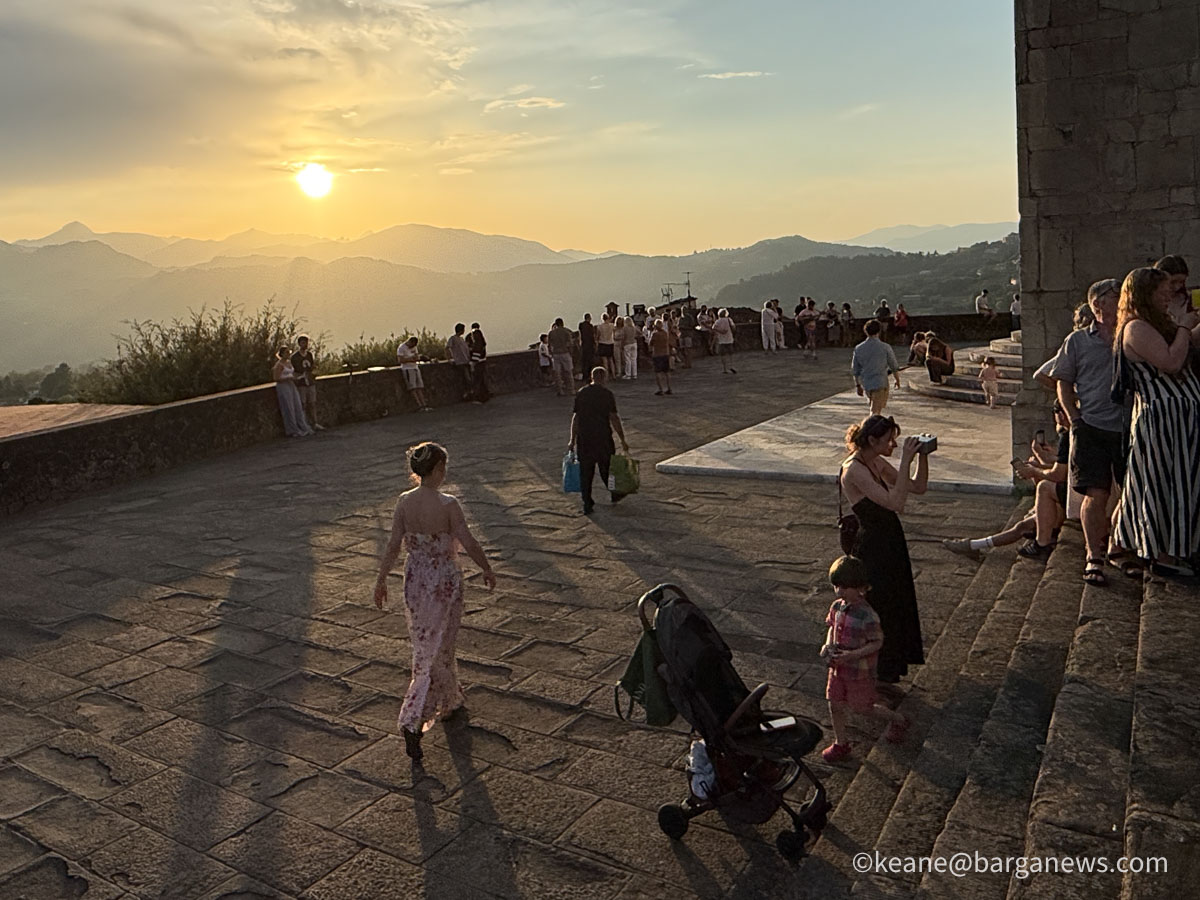
For a short time on Wednesday evening, the steps and terrace outside the Duomo di San Cristoforo became one of the best seats in Barga for watching an astronomical spectacle.
The partial eclipse of the Sun on 12 August brought people to the highest point of the city, where the open view towards the mountains offered a chance to follow the event as the Sun descended towards the western horizon.
Across Italy the eclipse was only partial, although Tuscany was among the regions where a large proportion of the solar disc was obscured. The phenomenon began at around 7.30pm, with the Moon gradually moving across the face of the Sun. The timing made this particular eclipse especially difficult to see: the Sun was already very low and, in mountainous areas, could easily disappear behind the landscape before the most dramatic stages were reached.
From the Duomo, however, there was a clear view across the Serchio Valley towards the mountains.
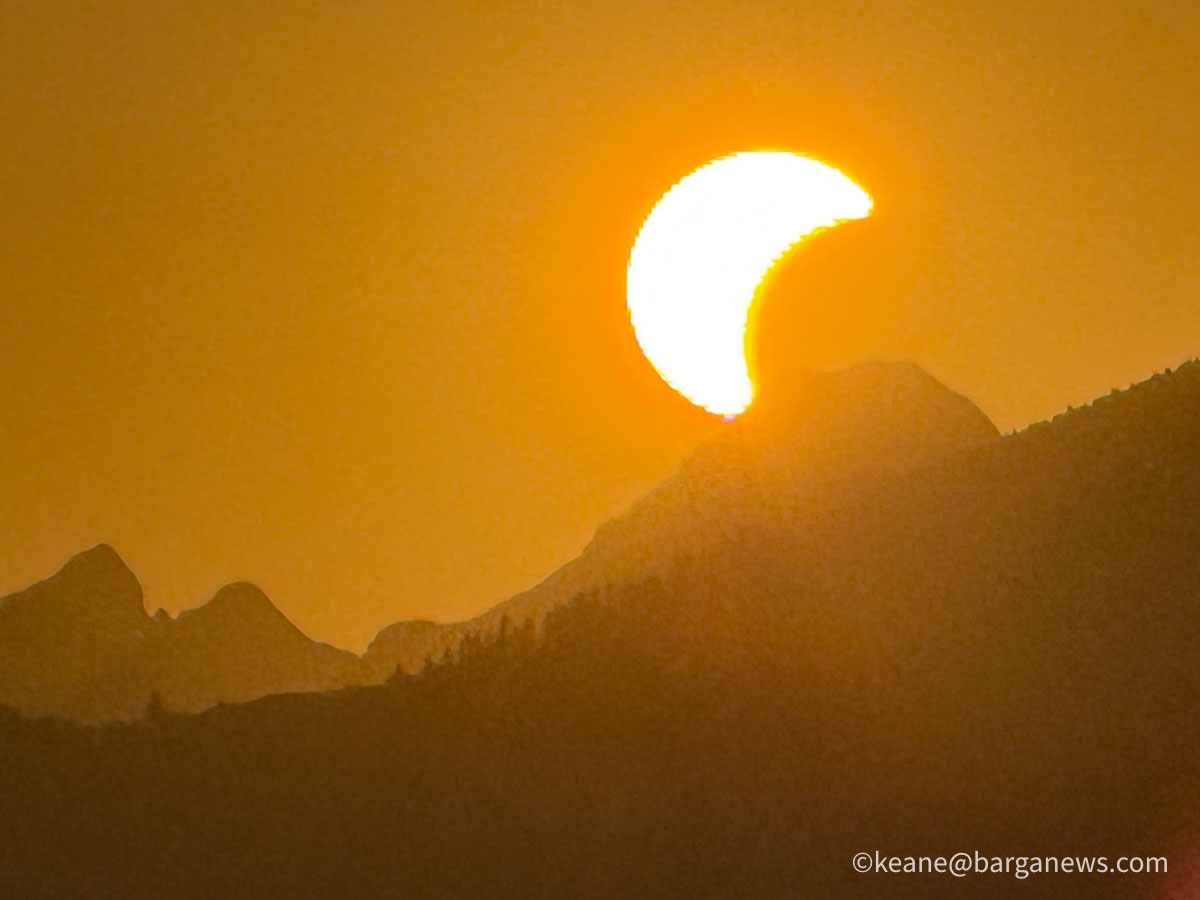
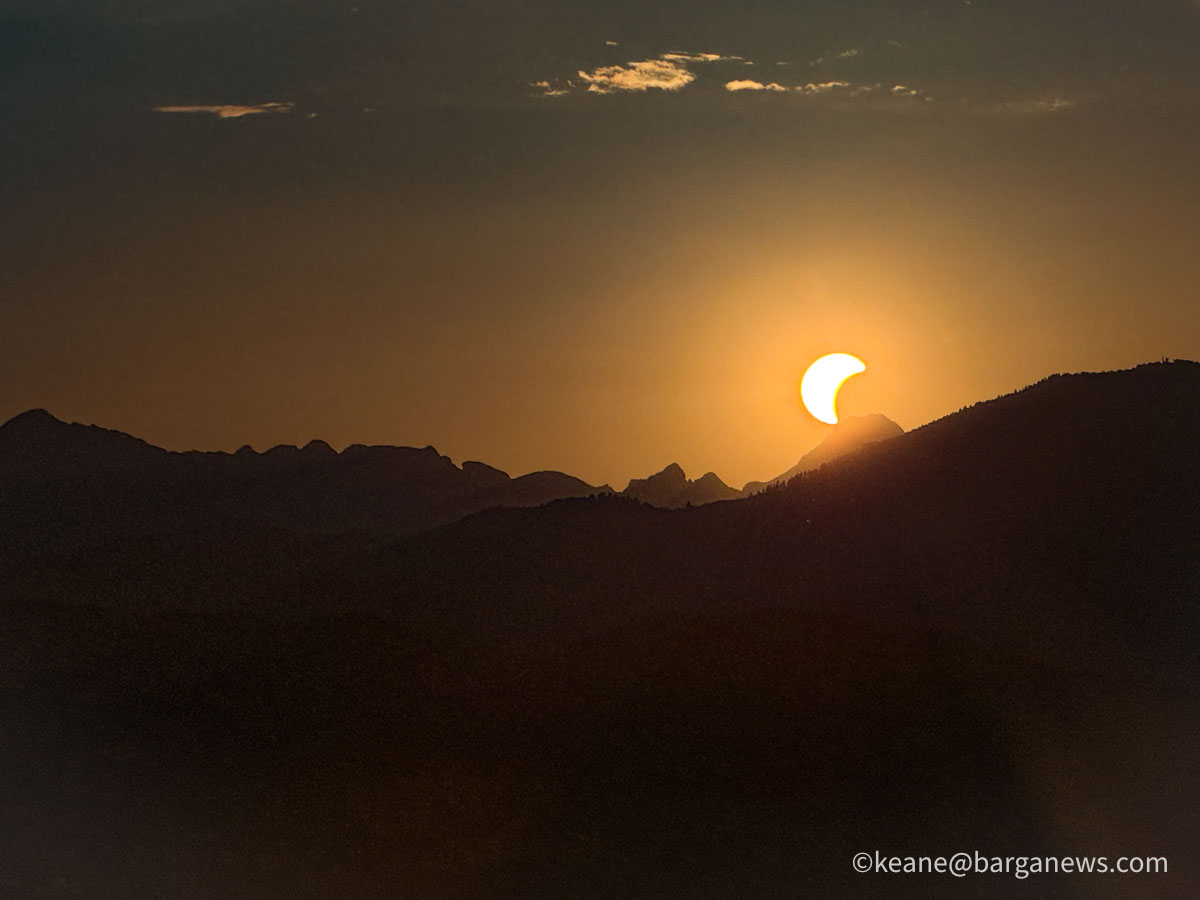
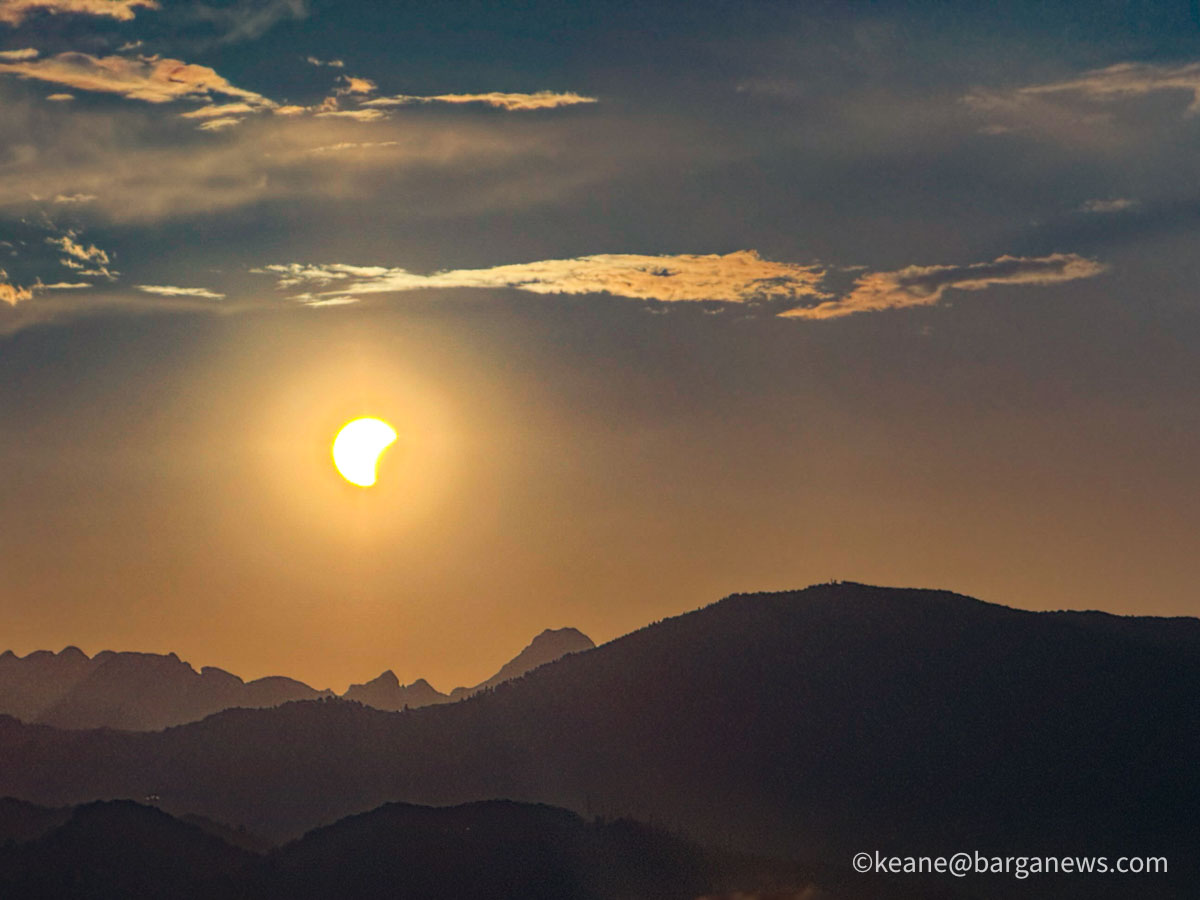
As the evening progressed, the familiar orange disc of the setting Sun was transformed into a brilliant crescent, suspended for a few minutes immediately above the dark outline of the mountains.
But the eclipse itself was only part of the scene.
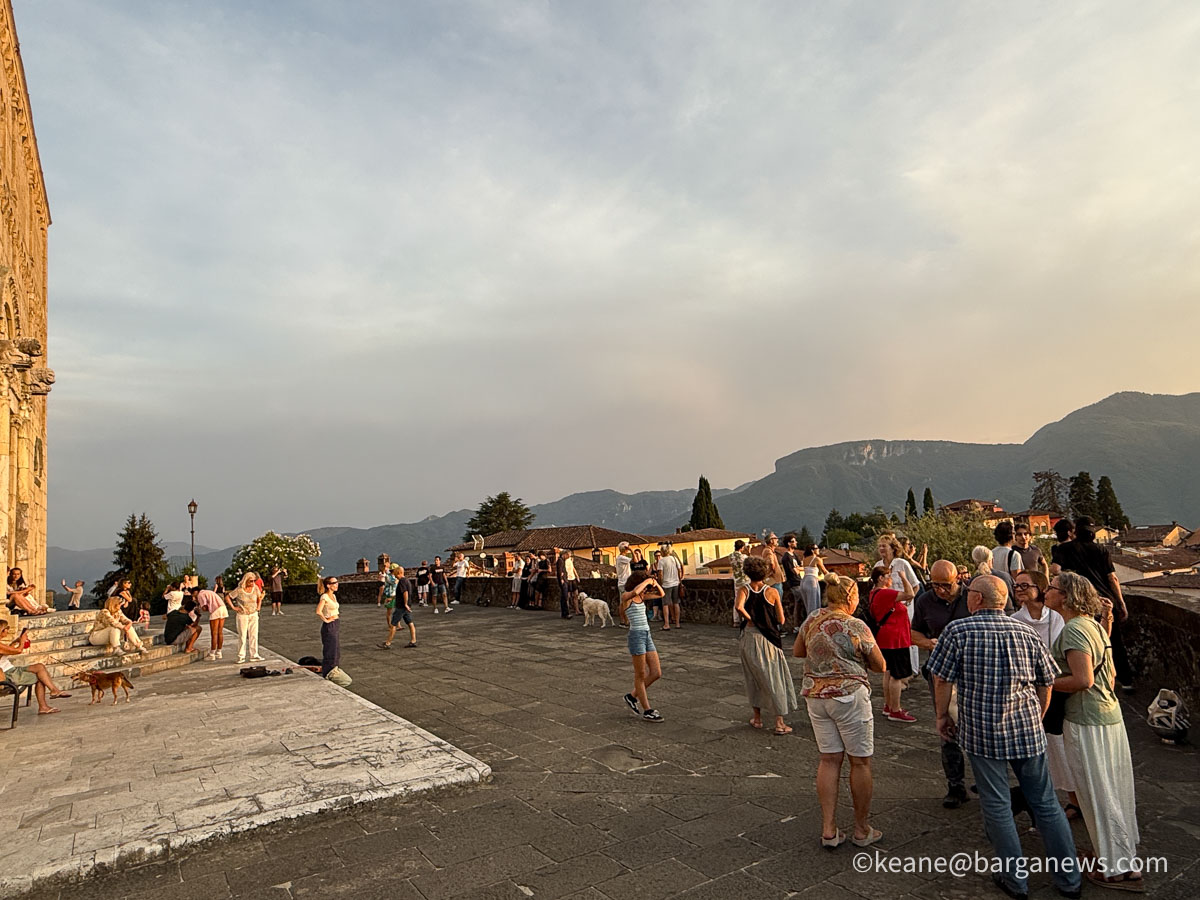
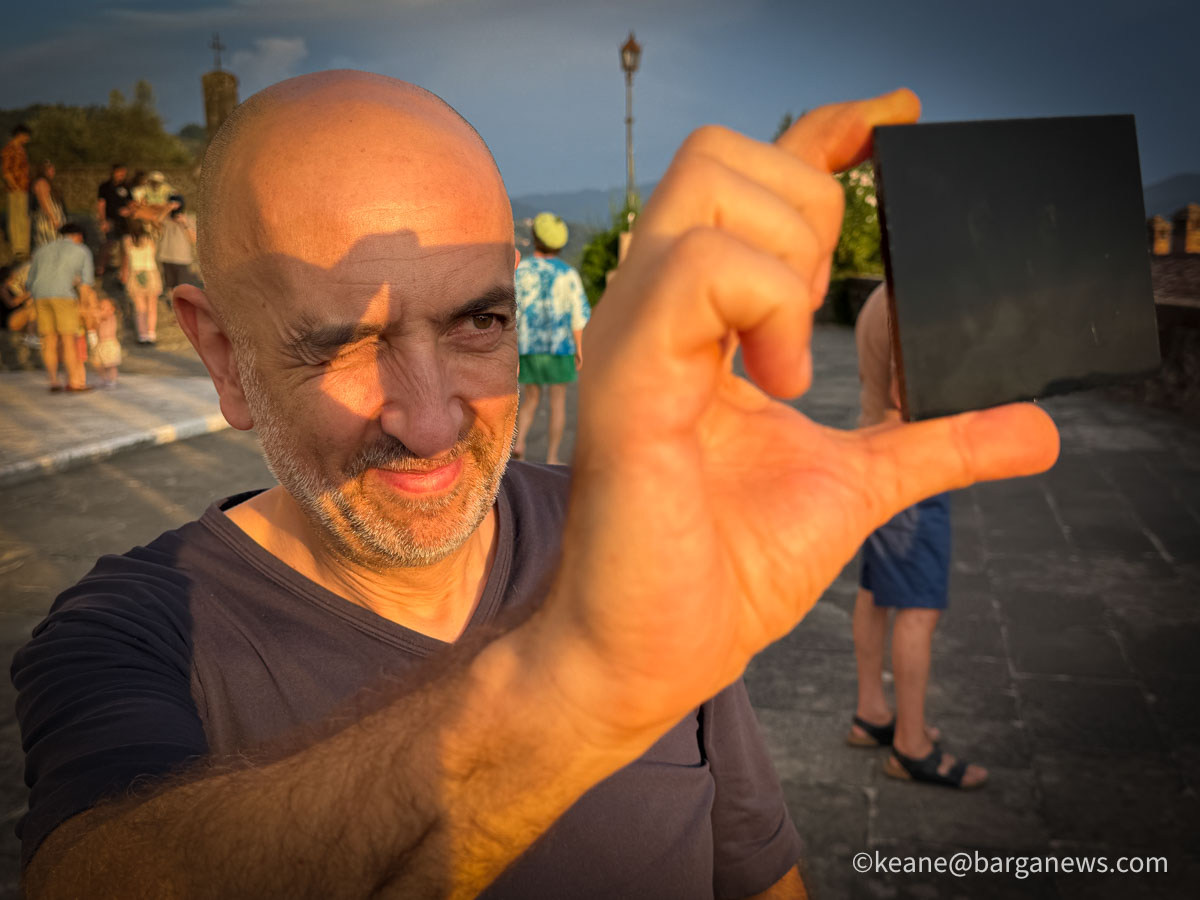
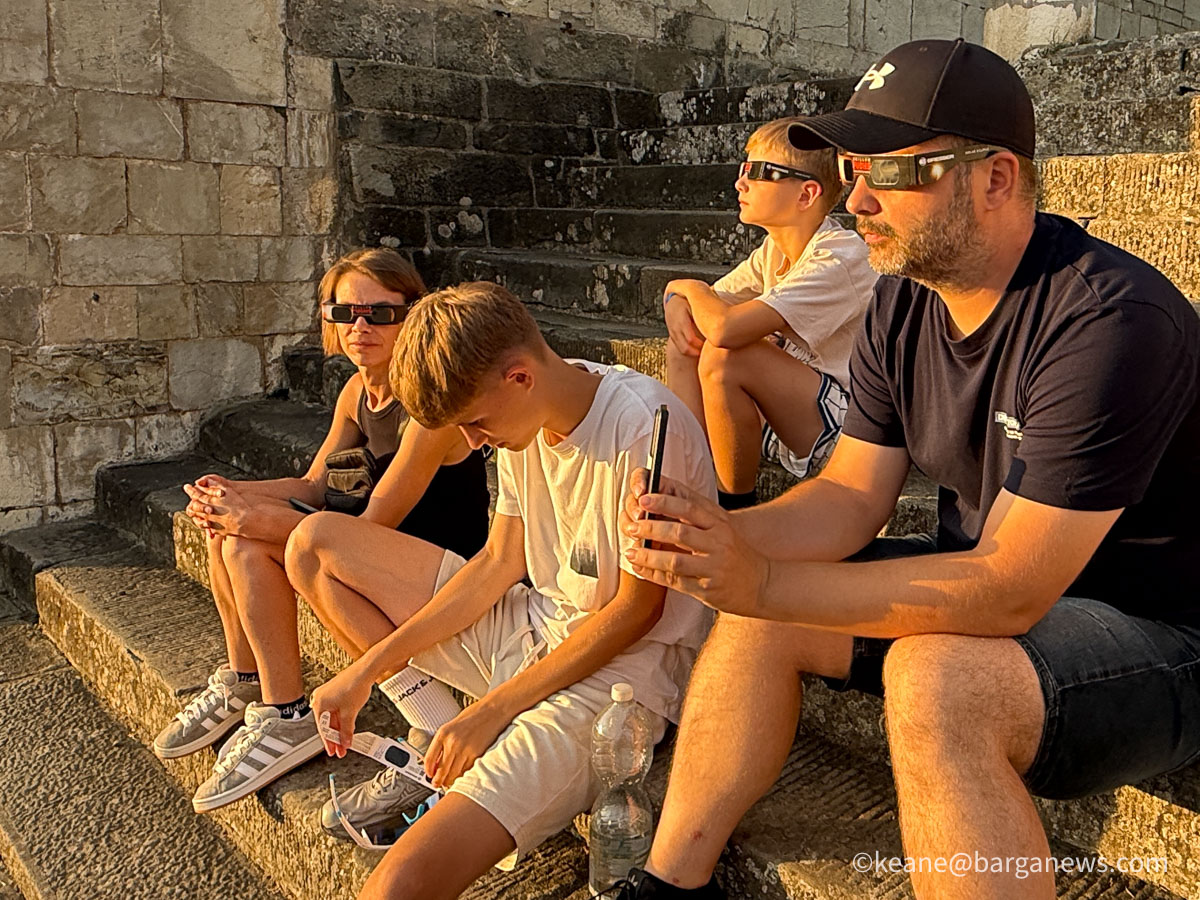
People gradually gathered across the piazza and along the walls outside the cathedral, sharing eclipse glasses and filters and finding their own ways of watching safely. Some had come prepared with proper viewing glasses, while others brought photographic filters and improvised ways of projecting or observing the changing shape of the Sun.
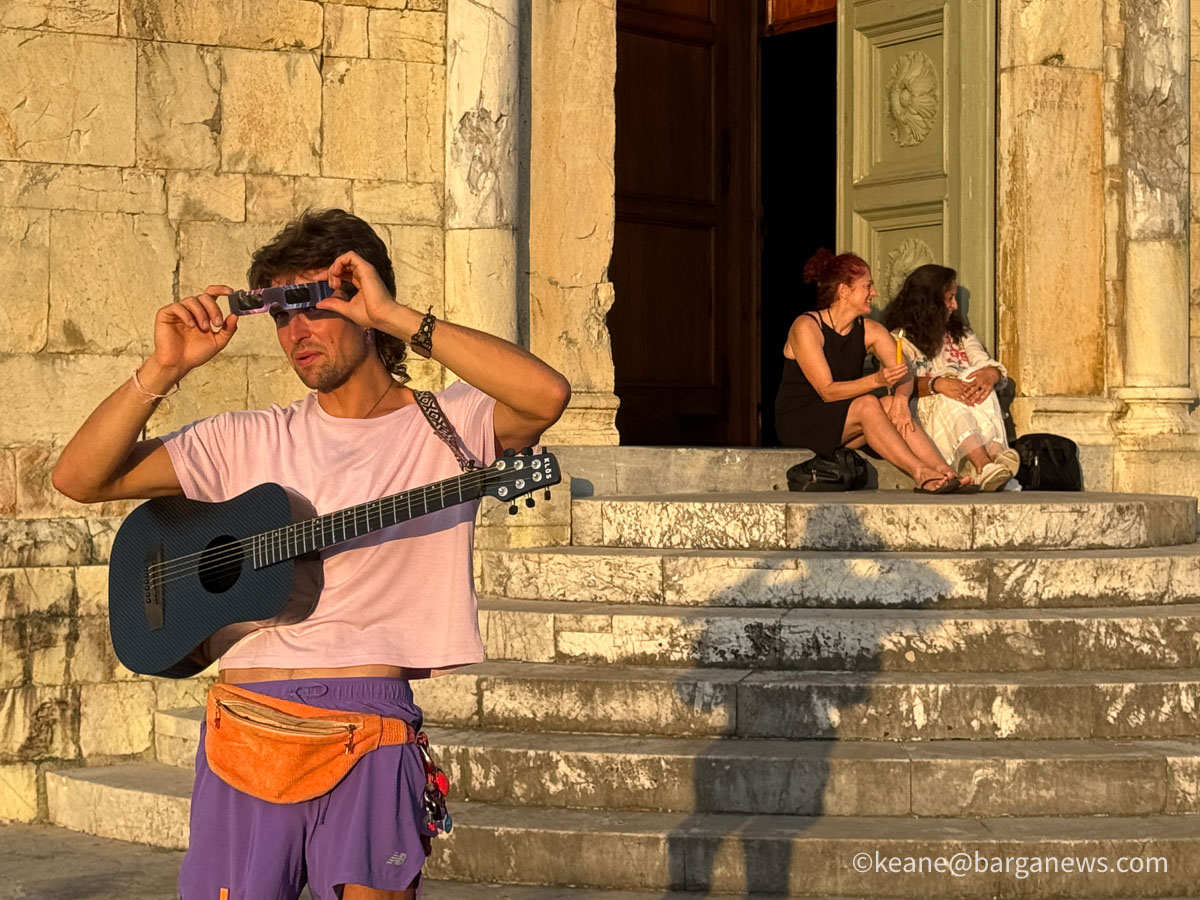
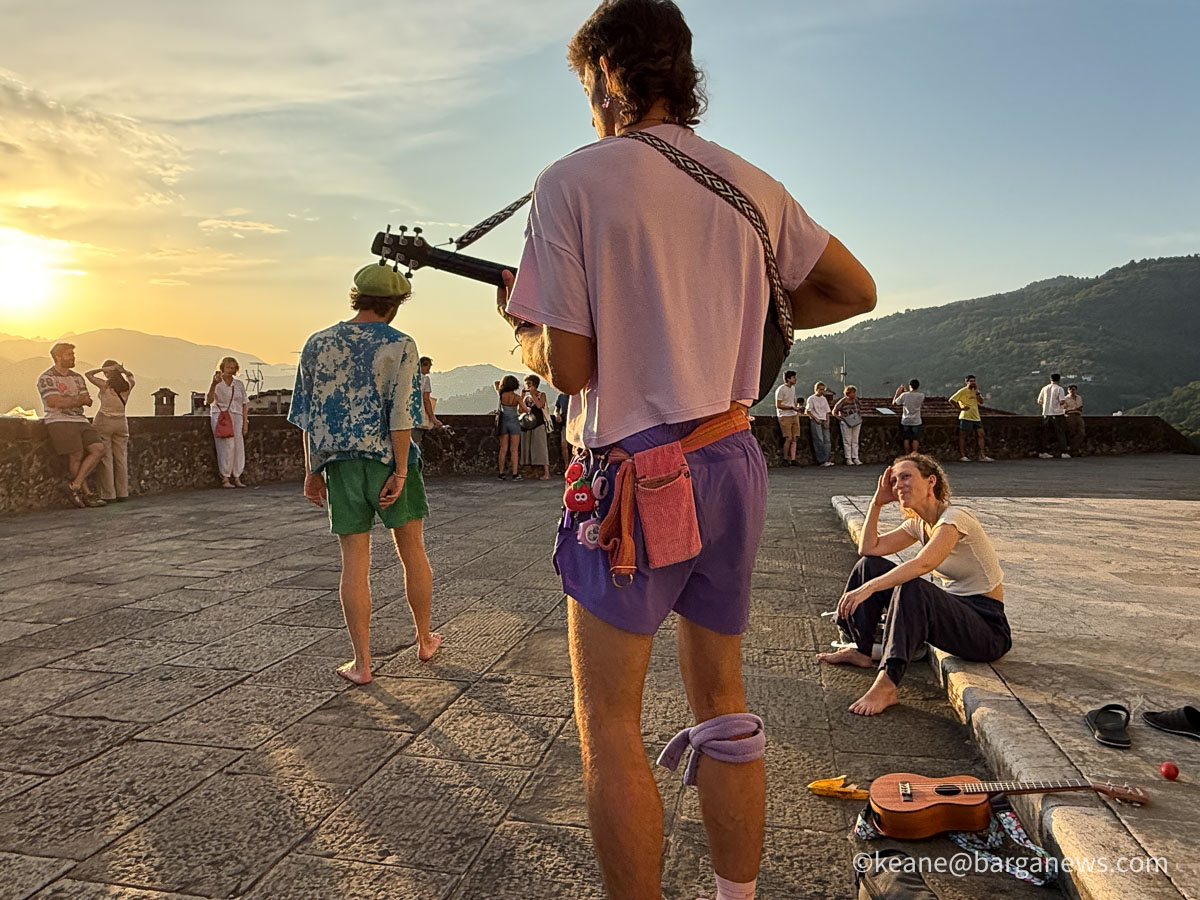
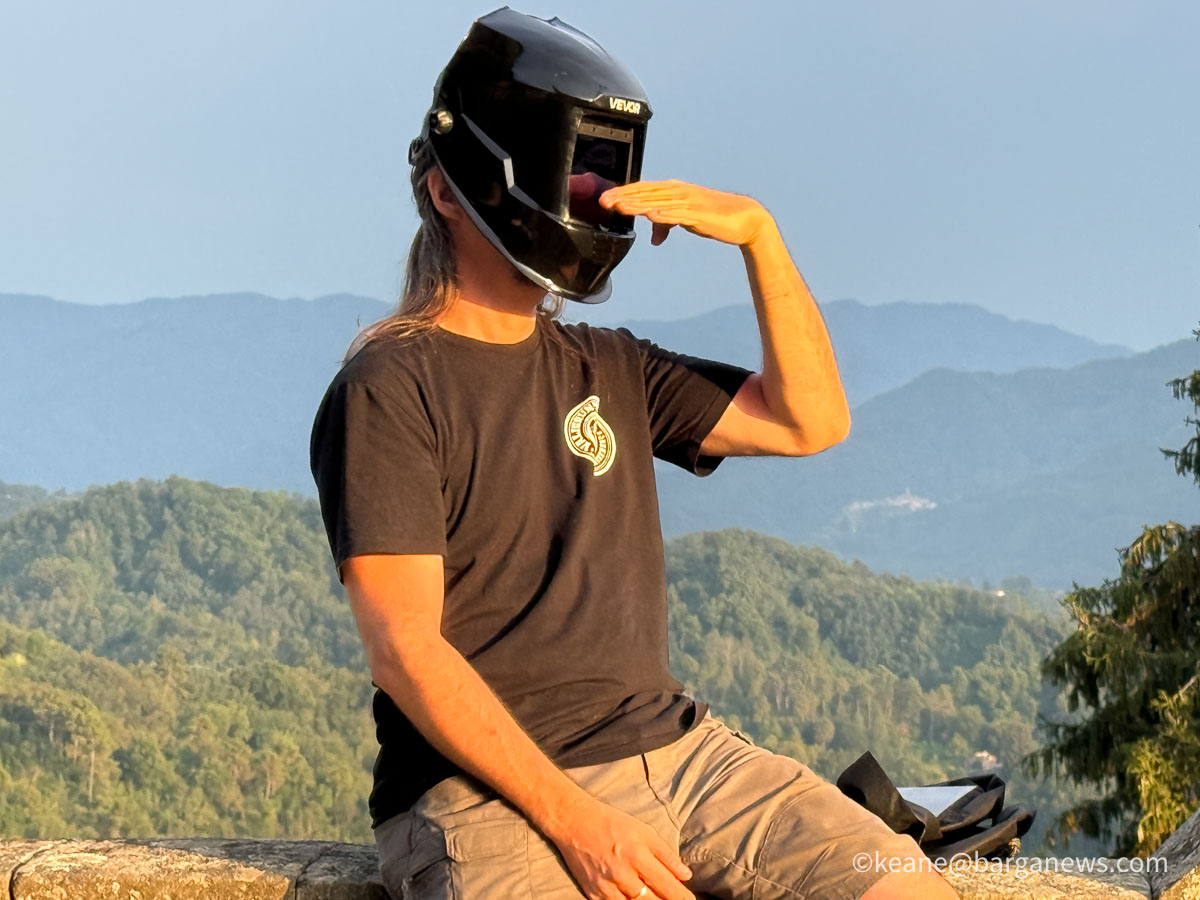
There was an appropriately informal Barga atmosphere to the whole thing. A guitarist wandered across the piazza, occasionally stopping to look through eclipse glasses, while families, visitors and residents compared views and pointed towards the slowly disappearing Sun. One particularly well-prepared observer even arrived wearing what appeared to be a welding mask.
For photographers, the position of the Sun created another spectacle altogether. Seen through a long lens, the partially eclipsed disc appeared enormous against the ridges of the Apuan Alps, its brilliant crescent seeming for a moment to balance directly on the mountain peaks.
The light across the Duomo terrace also changed as the eclipse progressed. Already softened by the approaching sunset, it became an extraordinary golden light, throwing long shadows across the ancient paving stones and illuminating the stone façade of the cathedral.
The 12 August eclipse was total along a narrow path crossing Greenland, Iceland and Spain, but from Italy it remained partial. Northern and western regions, including Tuscany, were particularly well placed in terms of the percentage of the Sun covered, although the low position of the Sun made finding an unobstructed western horizon essential.
In Barga, the geography worked in our favour.
For a summer evening, the Duomo was not simply a place from which to admire the mountains and the sunset. It became an impromptu astronomical observatory, with dozens of people standing together beneath San Cristoforo watching the Moon slowly take a bite out of the setting Sun.




L’eclissi di Sole vista dal Duomo di Barga
Per un breve periodo, mercoledì sera, la scalinata e il piazzale davanti al Duomo di San Cristoforo sono diventati uno dei punti migliori di Barga per assistere a uno spettacolo astronomico.
L’eclissi parziale di Sole del 12 agosto ha richiamato diverse persone nel punto più alto della città, da dove l’ampia vista verso le montagne offriva la possibilità di seguire il fenomeno mentre il Sole scendeva verso l’orizzonte occidentale.
In Italia l’eclissi era soltanto parziale, anche se la Toscana era tra le regioni dove una parte considerevole del disco solare veniva oscurata. Il fenomeno è iniziato intorno alle 19.30, con la Luna che gradualmente si è spostata davanti al Sole. L’orario rendeva questa particolare eclissi piuttosto difficile da osservare: il Sole era già molto basso e, nelle zone montuose, poteva facilmente scomparire dietro il profilo del paesaggio prima delle fasi più spettacolari.
Dal Duomo, però, la vista sulla Valle del Serchio e verso le montagne era libera.
Con il passare dei minuti, il familiare disco arancione del Sole al tramonto si è trasformato in una brillante falce, sospesa per qualche istante appena sopra il profilo scuro delle montagne.
Ma l’eclissi stessa era soltanto una parte della scena.
Poco a poco le persone si sono radunate sul piazzale e lungo le mura davanti alla cattedrale, condividendo occhiali e filtri e trovando diversi modi per osservare il fenomeno in sicurezza. Alcuni erano arrivati preparati con appositi occhiali per le eclissi, altri avevano portato filtri fotografici e sistemi improvvisati per osservare il cambiamento della forma del Sole.
L’intera scena aveva quell’atmosfera informale tipicamente barghigiana. Un chitarrista girava per il piazzale, fermandosi ogni tanto per guardare attraverso gli occhiali protettivi, mentre famiglie, visitatori e residenti confrontavano ciò che vedevano e indicavano il Sole che lentamente cambiava forma. Un osservatore particolarmente ben attrezzato era arrivato addirittura con quella che sembrava essere una maschera da saldatore.
Per i fotografi, la posizione del Sole ha creato uno spettacolo ulteriore. Visto attraverso un teleobiettivo, il disco parzialmente eclissato appariva enorme contro le creste delle Alpi Apuane, con la sua falce luminosa che per un momento sembrava appoggiarsi direttamente sulle cime delle montagne.
Anche la luce sul piazzale del Duomo è cambiata con il procedere dell’eclissi. Già ammorbidita dall’avvicinarsi del tramonto, ha assunto una straordinaria tonalità dorata, proiettando lunghe ombre sull’antica pavimentazione e illuminando la facciata in pietra della cattedrale.
L’eclissi del 12 agosto era totale lungo una stretta fascia che attraversava la Groenlandia, l’Islanda e la Spagna, mentre dall’Italia il fenomeno rimaneva parziale. Le regioni settentrionali e occidentali, compresa la Toscana, si trovavano in una posizione particolarmente favorevole per quanto riguardava la percentuale del Sole coperta, anche se la sua posizione molto bassa rendeva essenziale avere un orizzonte occidentale libero.
A Barga, la geografia ha giocato a nostro favore.
Per una sera d’estate, il Duomo non è stato soltanto un luogo dal quale ammirare le montagne e il tramonto. Si è trasformato in un improvvisato osservatorio astronomico, con decine di persone riunite sotto San Cristoforo a guardare la Luna che lentamente sembrava mordere il Sole al tramonto.