Ferragosto in Barga – the traditions of the August market
One of the great holiday occasions of the Italian year has arrived. People are on the move, families are gathering, the roads are busy and, for many, work has stopped completely.
It is the height of summer.
This is Ferragosto.
In Barga, the 15th of August also means the return of traditions which have marked this particular moment of the year for generations. Today was the Fiera di Santa Maria, followed tomorrow, 16 August, by the Fiera di San Rocco.
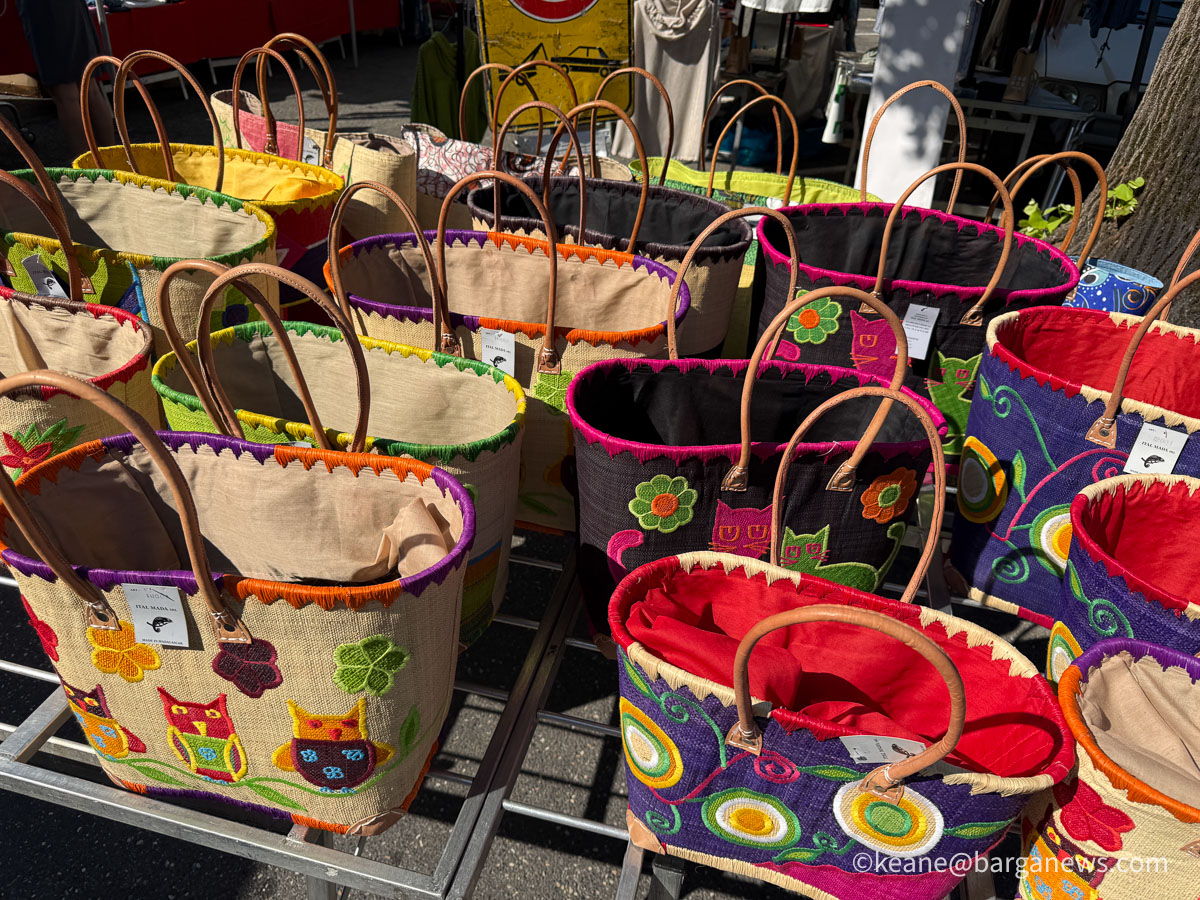
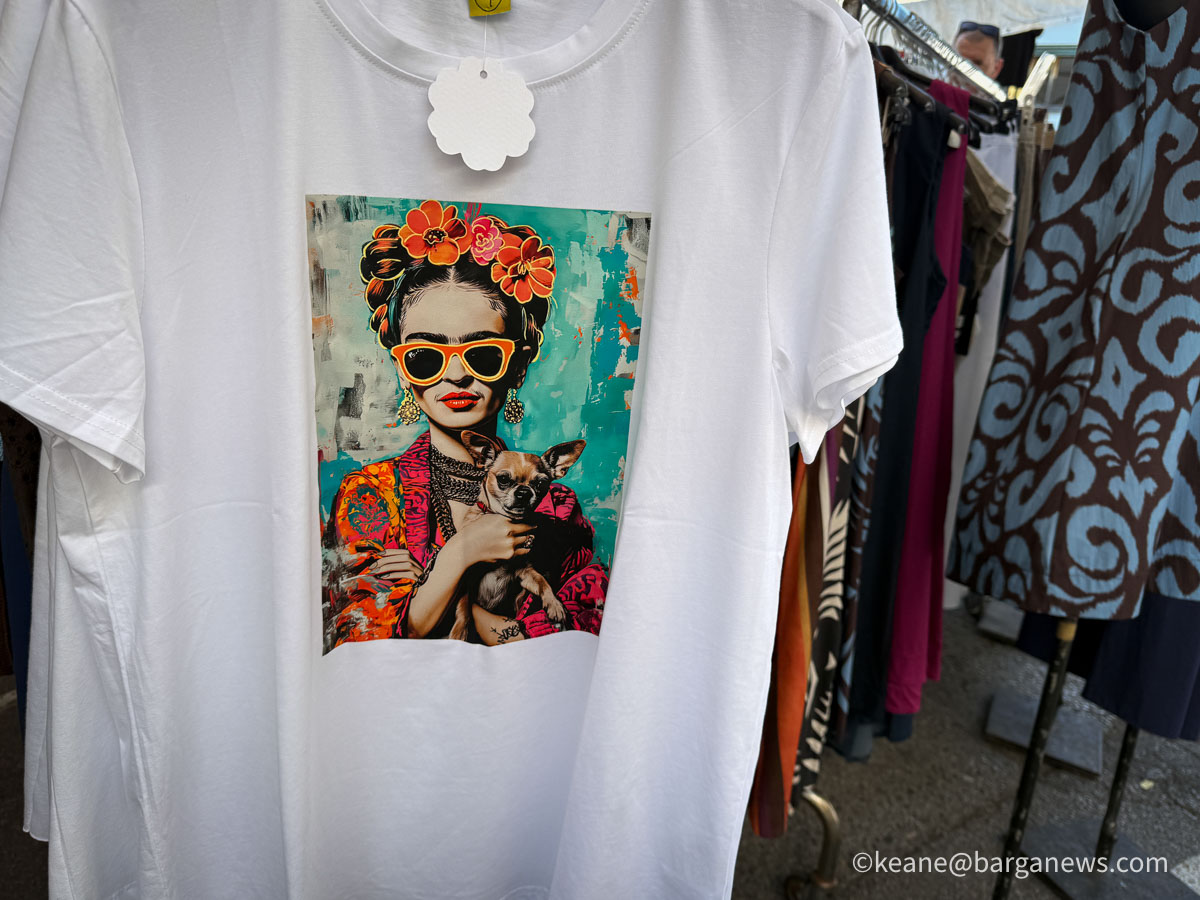
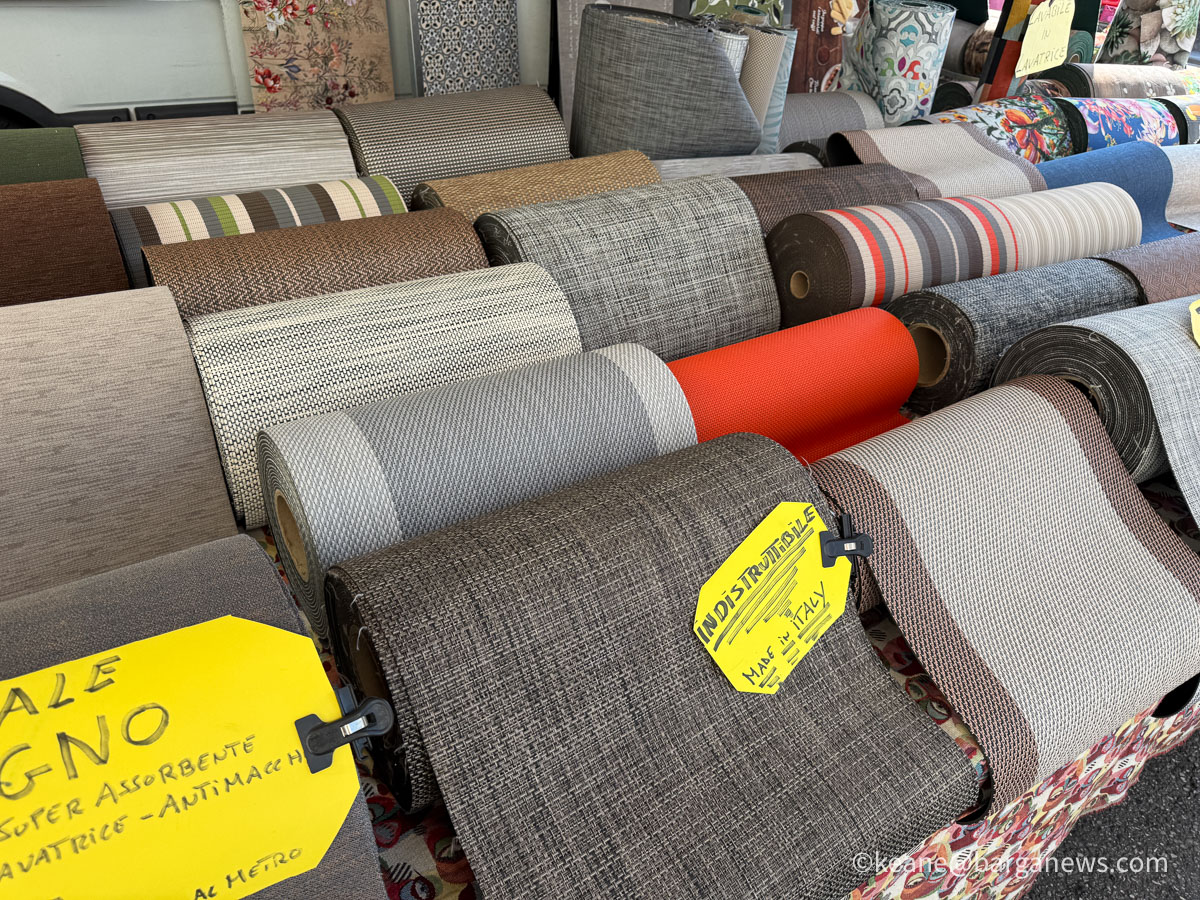
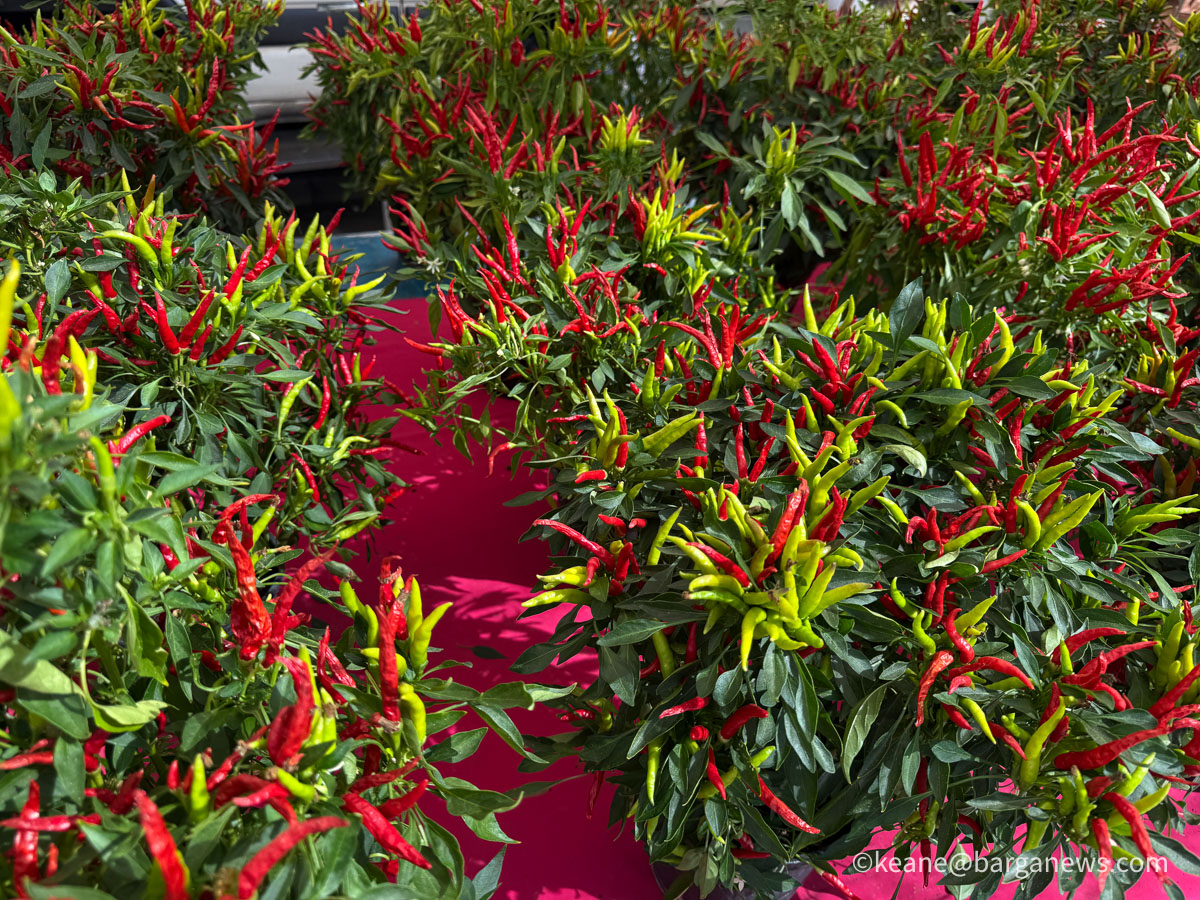
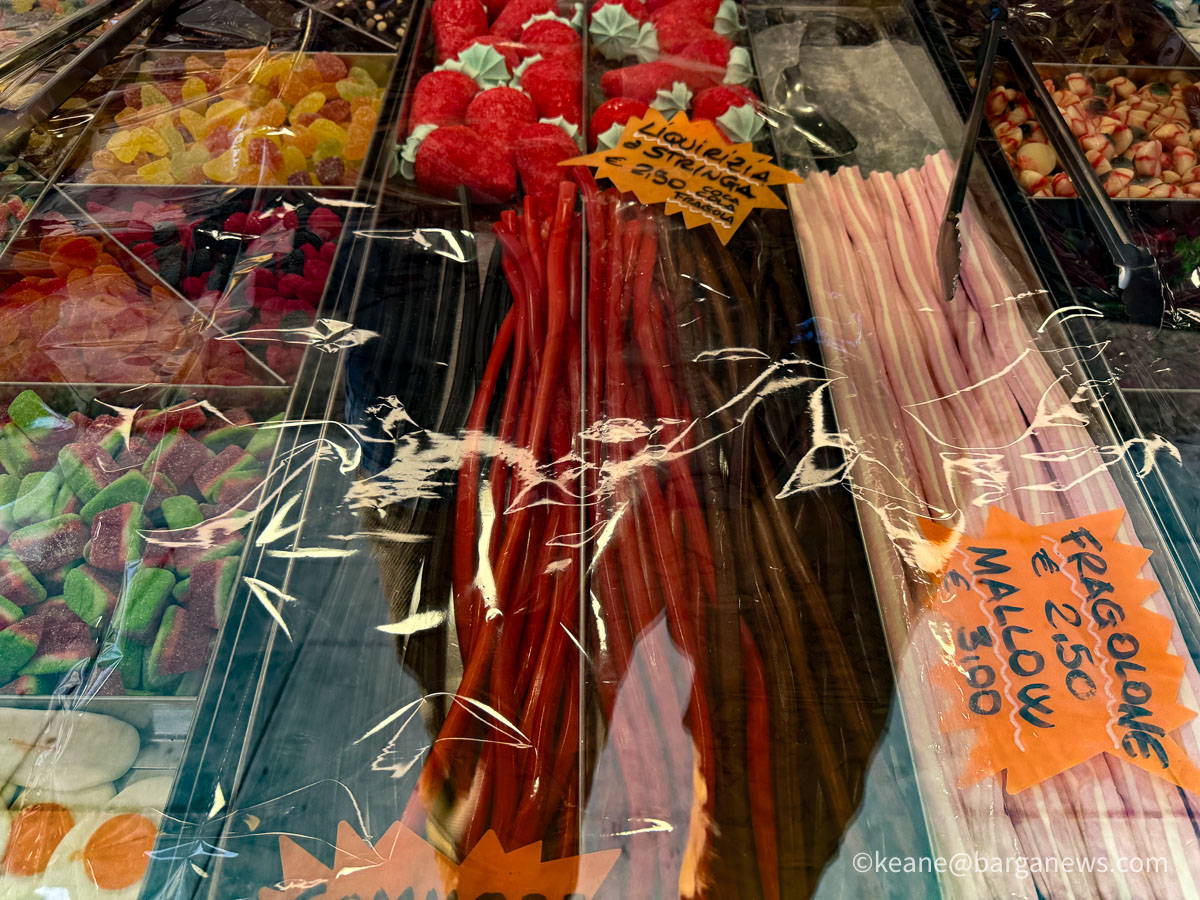
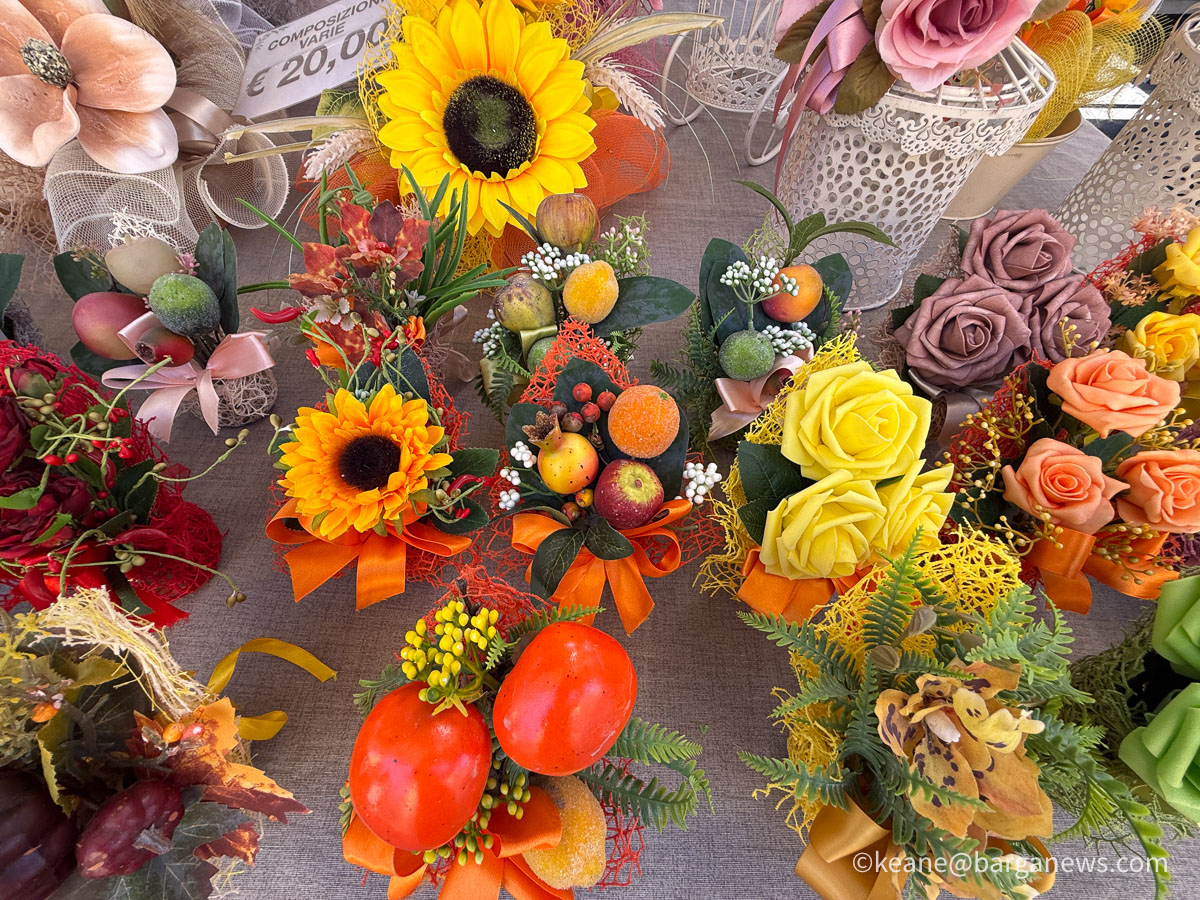
Down at Barga Giardino, the market stretched through the streets with stalls selling almost everything imaginable. Clothes and jeans, dried fruit and sweets, household goods, plants and animals all competed for attention, accompanied by the voices of the stallholders and music playing across the market.
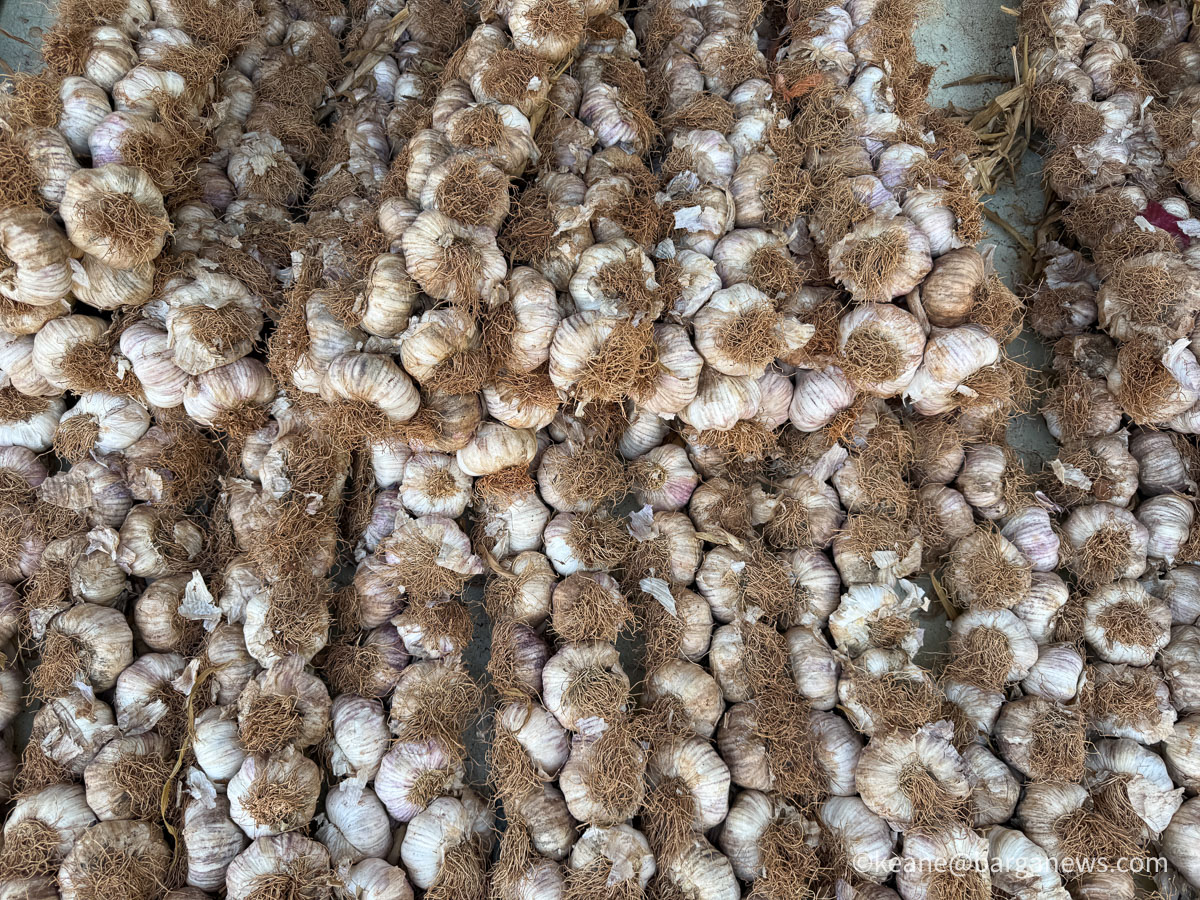
Among the piles of produce were two of the things traditionally associated with this August market in Barga: onions and garlic.
This was once the moment to buy them in quantity and take them home to be stored for the winter months. Even today, great piles of locally grown garlic are a reminder that the market has its roots in something much older than the modern summer fair.
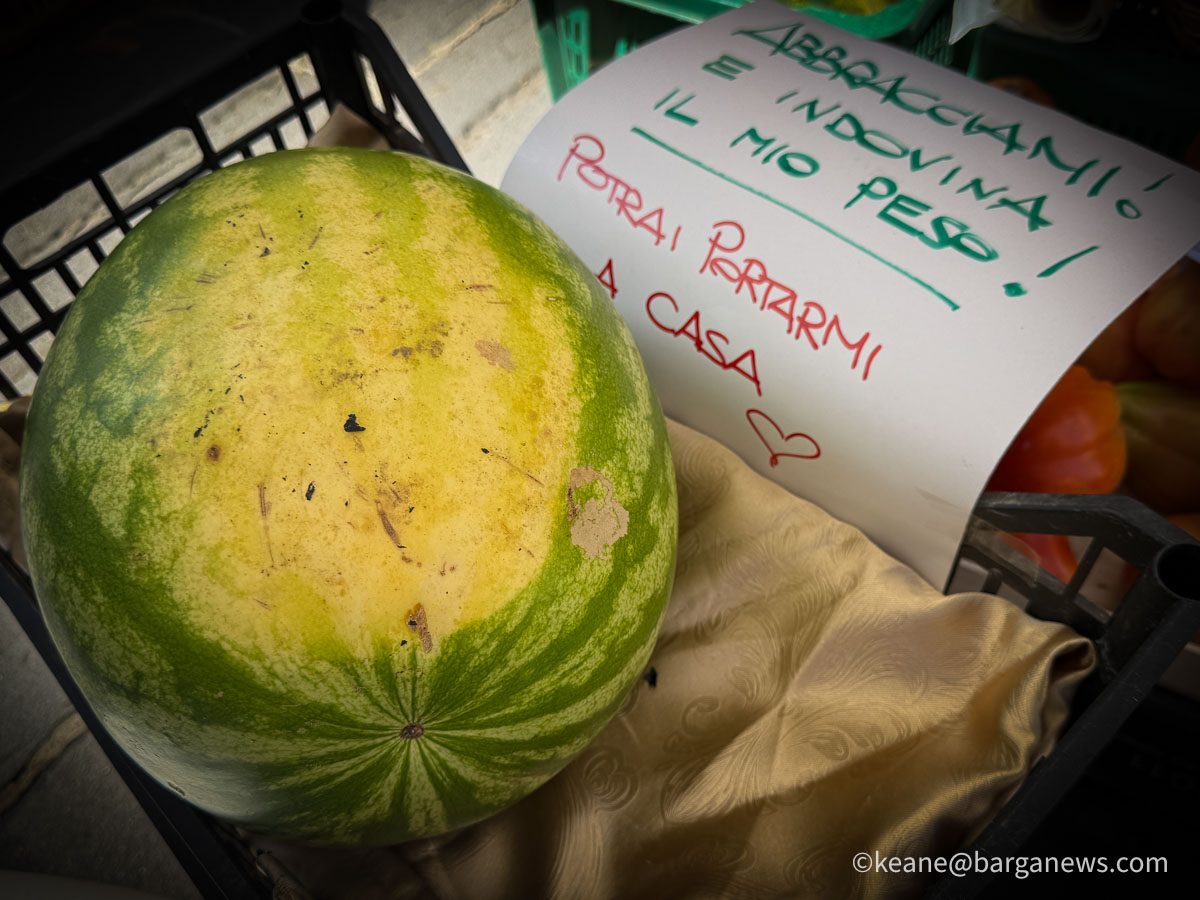
There were watermelons too, including one offered with a wonderfully simple sign: “Assaggiami! E indovina il mio peso!” — taste me and guess my weight. The prize was equally straightforward: take it home.
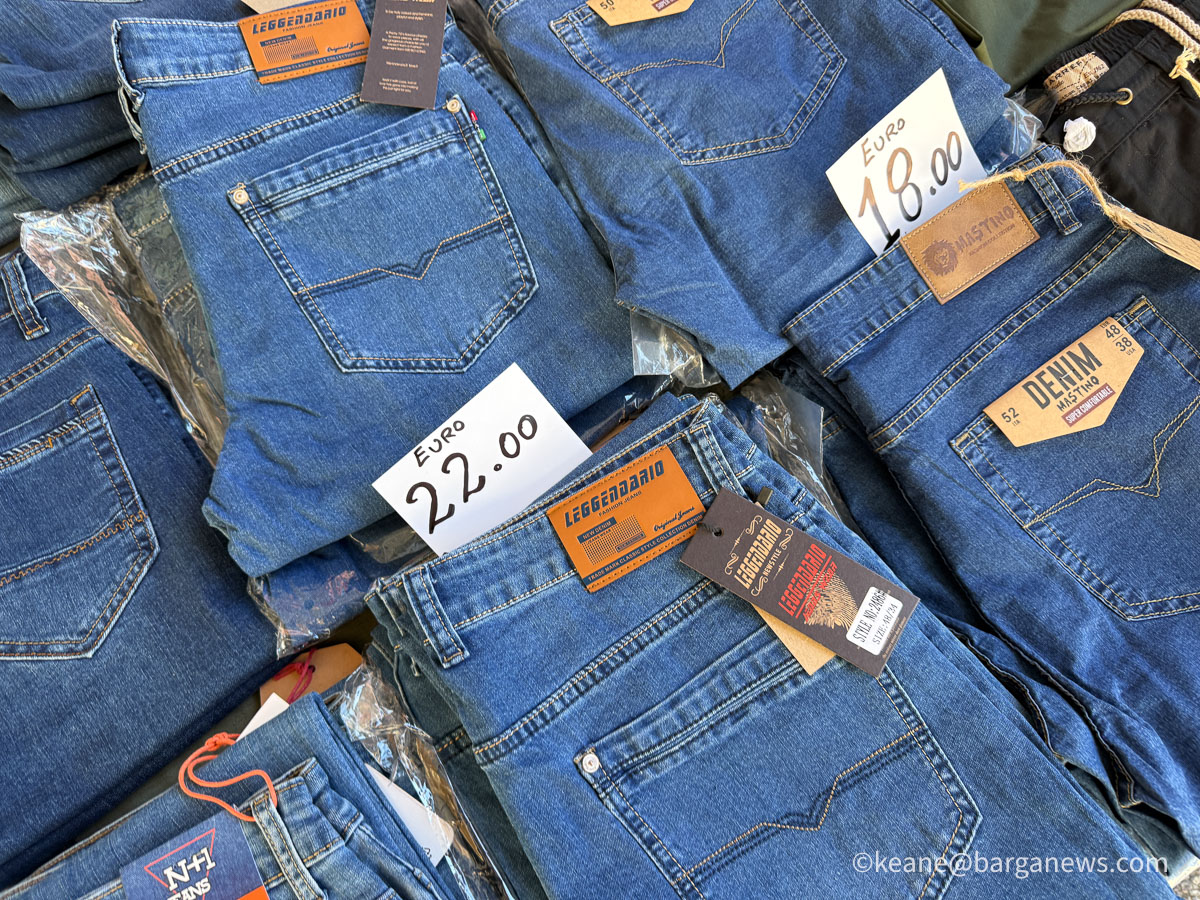
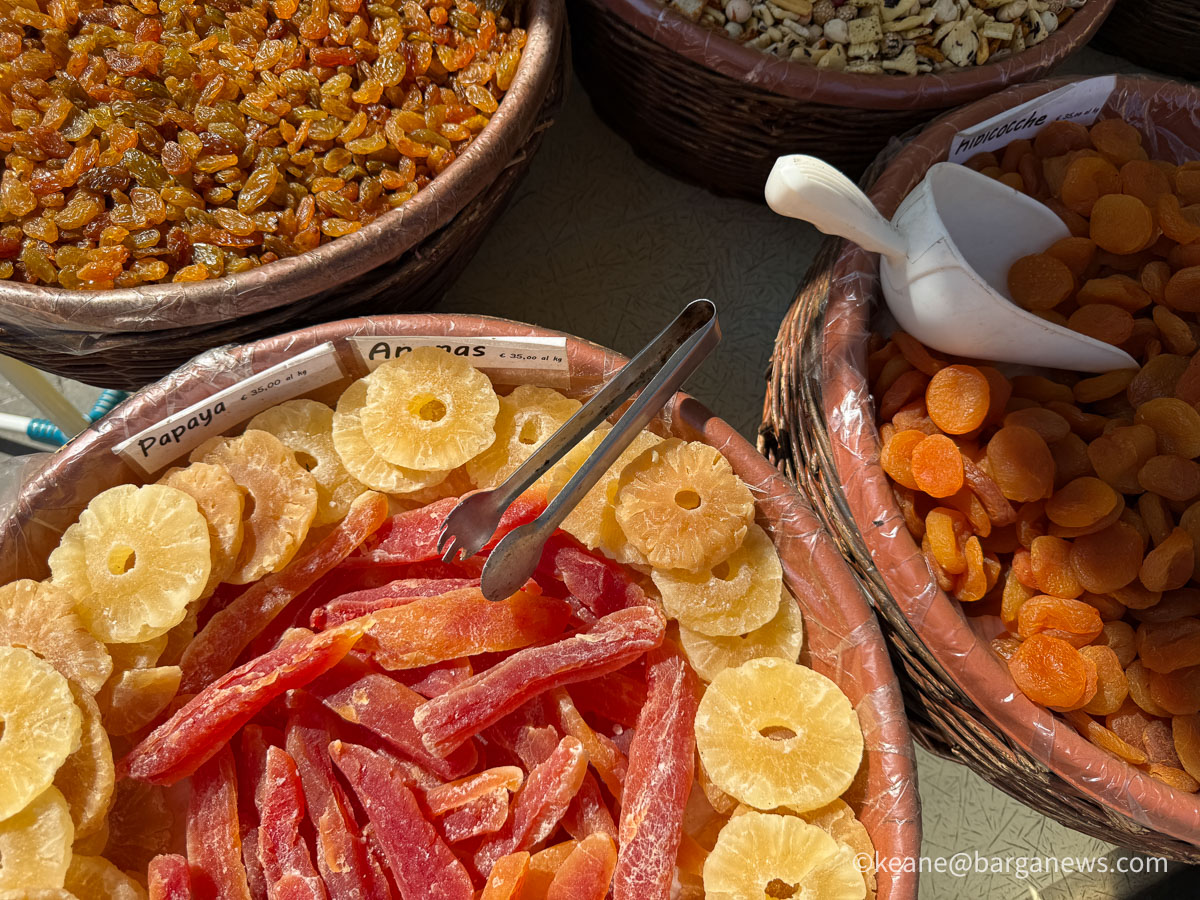
Elsewhere there were baskets filled with dried apricots, pineapple, papaya, raisins and other fruits, while another stall offered the almost compulsory market bargain of stacks of blue jeans.
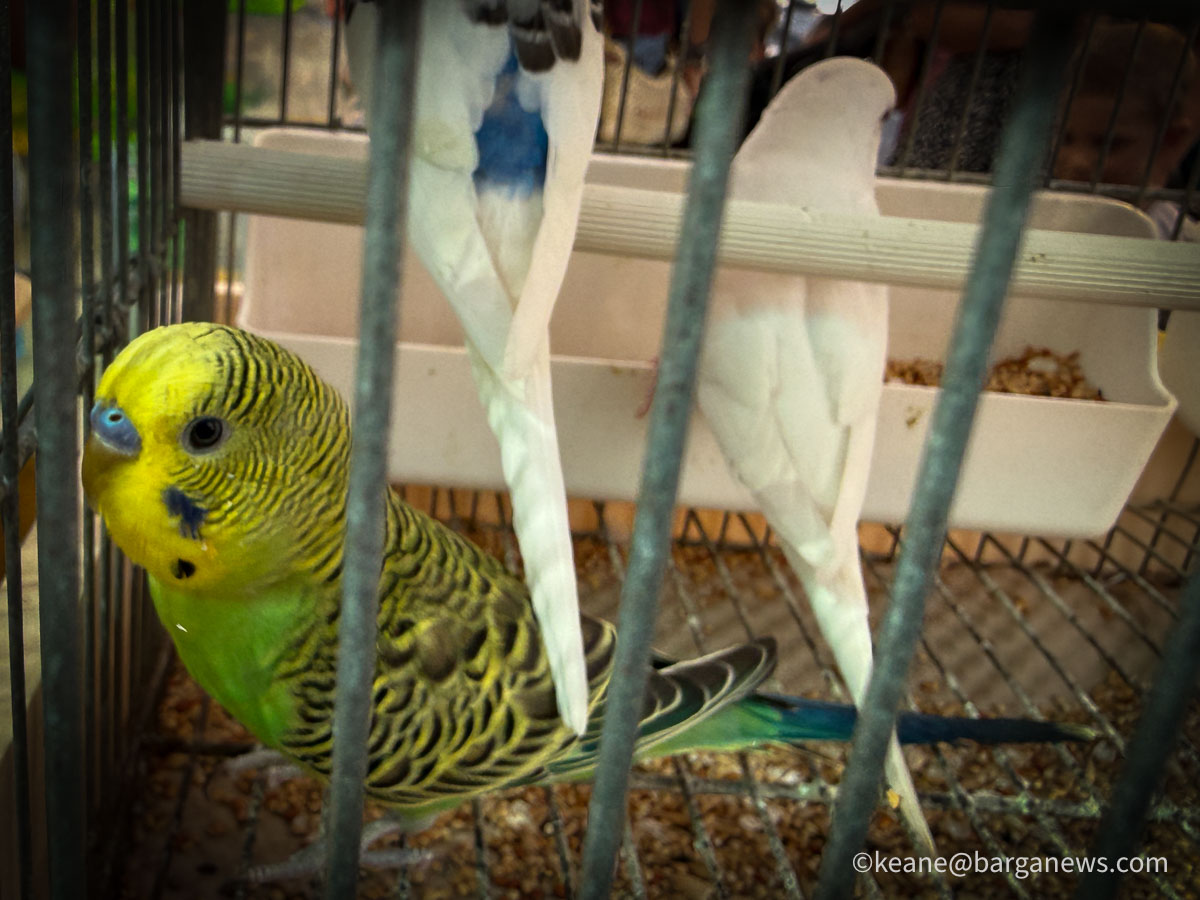
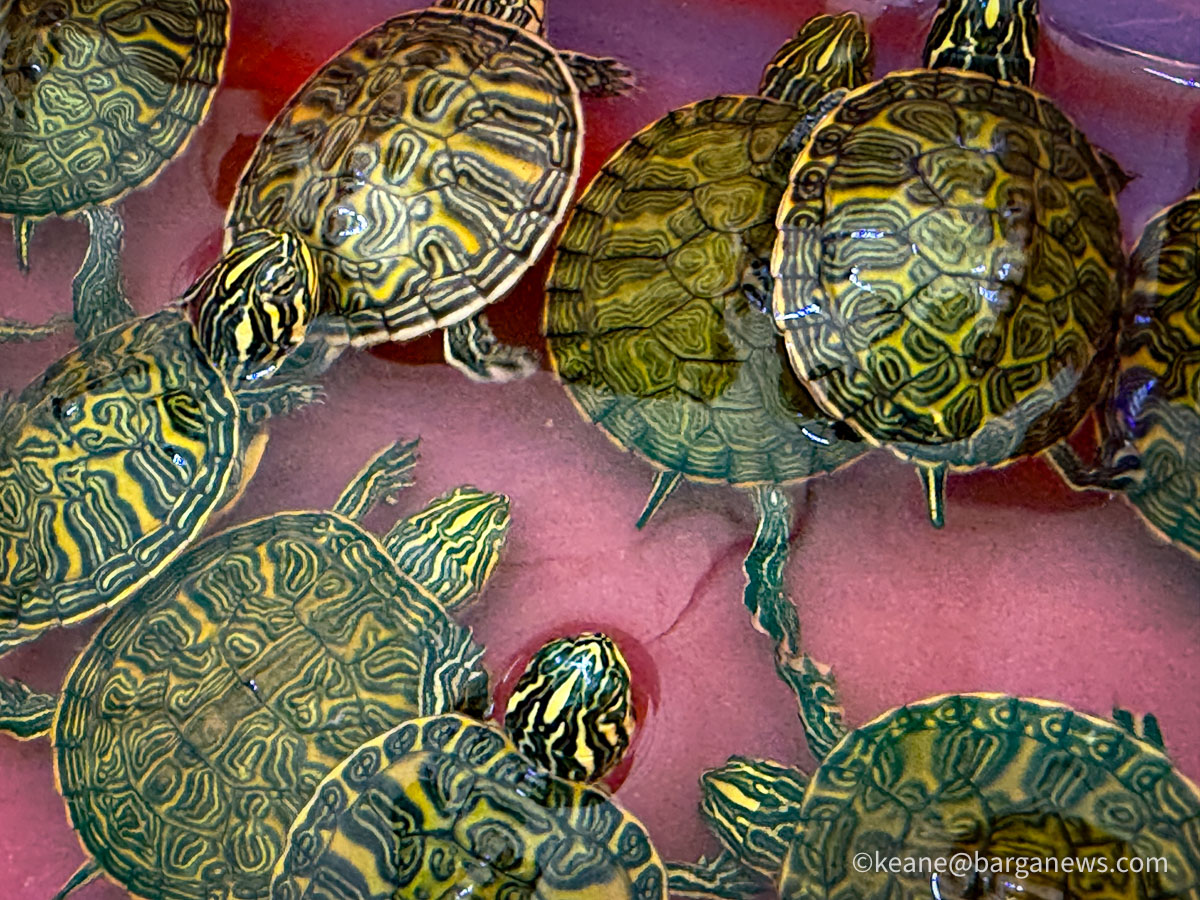
And some sights remain more controversial reminders of an older kind of Italian market. Small animals were still on sale, including turtles, rodents, birds and goldfish — something which has largely disappeared from many markets but can still occasionally be encountered here.
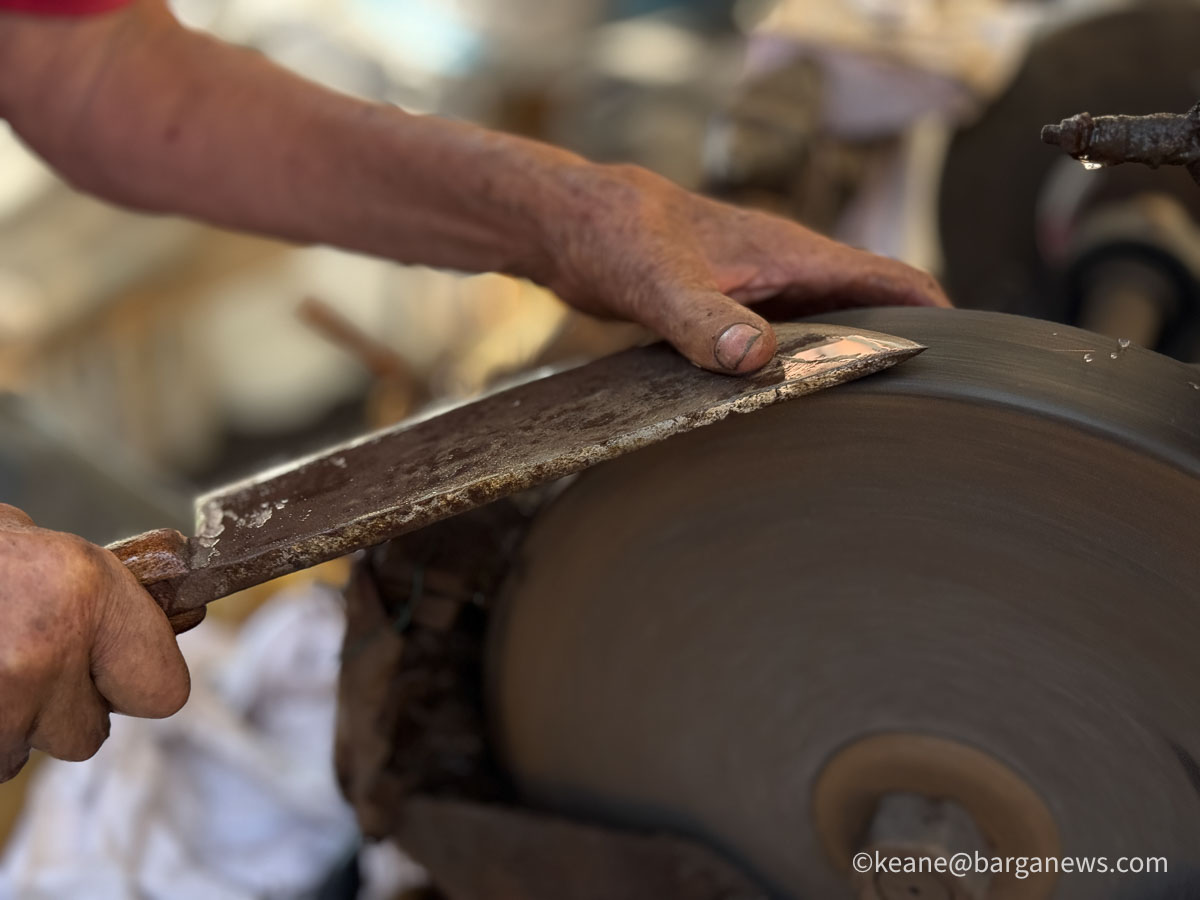
Perhaps the most traditional figure of all, however, was once again the arrotino — the knife grinder.
For generations people came to the August market carrying blunt kitchen knives and scissors, sometimes wrapped in newspaper or tucked into shopping bags, to have them sharpened while they waited. Once there would have been travelling knife sharpeners working throughout the area. Today the trade has almost disappeared, overtaken by a world in which it is often easier to throw something away and buy another.
Yet at the San Rocco market the sound of the grinding wheel remains part of Ferragosto.
It is one of those small details which connects today’s crowded market with the Barga of decades ago.
And above all the noise of the stalls, another sound marks these two days.
The bells.
Over Ferragosto and San Rocco, bells ring from different parts of the city. Today they could be heard from the little church of Santa Maria della Fornacetta, at the top of the Fornacetta, from the church of San Rocco in Barga Giardino, and, of course, from the Duomo of San Cristoforo high above in Barga Vecchia.
Their pealing becomes part of the soundtrack of these August days.
Ferragosto itself is one of the most deeply rooted dates in the Italian calendar.
The name comes from the Latin Feriae Augusti — the festivals or rest of Augustus — associated with the period of celebration introduced under the Emperor Augustus. The holiday fell into a much older agricultural rhythm: the heat of midsummer, the completion of demanding work in the fields and a moment of rest before the next stage of the farming year.
Long before Christianity, this period of the year was associated with harvest, fertility and the changing agricultural cycle.
Christian tradition later gave 15 August another and now central significance. It became the Feast of the Assumption of the Blessed Virgin Mary, celebrating the belief that Mary was taken, body and soul, into Heaven. In Italy it remains one of the major religious feast days of the year.
But Ferragosto has also become something broader than either its Roman or religious origins.
It is the day when Italy seems to stop.
Families eat together. Towns empty and beaches fill. People travel into the mountains, restaurants prepare enormous lunches and anyone who can possibly arrange not to work generally does exactly that.
Here in Barga, though, Ferragosto still has its own particular rhythm.
Go down to the market. Buy the garlic and onions for winter. Look through the stalls. Listen to the cries of the traders and the music. Take those kitchen knives and scissors to be sharpened.
And every now and then, above all that noise, listen.
The bells are ringing.
Tomorrow it all continues with San Rocco.




Ferragosto a Barga – le tradizioni del mercato d’agosto
È arrivata una delle grandi feste dell’anno italiano. La gente è in movimento, le famiglie si ritrovano, le strade sono affollate e, per molti, il lavoro si ferma completamente.
Siamo nel cuore dell’estate.
Questo è Ferragosto.
A Barga, il 15 agosto significa anche il ritorno di tradizioni che da generazioni accompagnano questo particolare momento dell’anno. Oggi si è svolta la Fiera di Santa Maria, seguita domani, 16 agosto, dalla Fiera di San Rocco.
A Barga Giardino, il mercato si è allungato lungo le strade con bancarelle che vendevano praticamente di tutto. Vestiti e jeans, frutta secca e dolciumi, articoli per la casa, piante e animali si contendevano l’attenzione dei visitatori, accompagnati dalle voci dei venditori e dalla musica che risuonava per tutta la fiera.
Tra i prodotti in vendita c’erano anche due protagonisti tradizionalmente legati al mercato d’agosto di Barga: cipolle e aglio.
Un tempo questo era il momento dell’anno in cui se ne acquistavano grandi quantità da portare a casa e conservare per i mesi invernali. Ancora oggi, le grandi distese di aglio appena raccolto ricordano che questa fiera affonda le sue radici in qualcosa di molto più antico del moderno mercato estivo.
Non mancavano neppure le angurie, tra cui una accompagnata da un cartello tanto semplice quanto invitante: “Assaggiami! E indovina il mio peso!”. Il premio era altrettanto diretto: portarsela a casa.
Altrove, grandi ceste erano colme di albicocche, ananas, papaya, uvetta e altra frutta secca, mentre un’altra bancarella proponeva uno dei classici affari da mercato: pile e pile di jeans.
E c’erano anche immagini più controverse, che ricordano un tipo di mercato ormai quasi scomparso. Erano ancora in vendita piccoli animali, tra cui tartarughe, roditori, uccelli e pesci rossi — una presenza che è ormai sparita da molte fiere, ma che qui si può ancora occasionalmente incontrare.
Forse la figura più tradizionale di tutte, però, era ancora una volta l’arrotino.
Per generazioni la gente è arrivata al mercato d’agosto portando coltelli da cucina e forbici ormai senza filo, qualche volta avvolti nella carta di giornale o tirati fuori da una borsa della spesa, per farli affilare sul posto.
Un tempo gli arrotini ambulanti che percorrevano queste zone erano numerosi. Oggi questo mestiere è quasi scomparso, superato da un mondo nel quale spesso è più facile buttare via un oggetto e comprarne uno nuovo.
Eppure, alla Fiera di San Rocco, il rumore della mola continua a far parte del Ferragosto.
È uno di quei piccoli dettagli che collegano il mercato affollato di oggi con la Barga di molti decenni fa.
E sopra tutto il rumore delle bancarelle c’è un altro suono che caratterizza questi due giorni.
Le campane.
Durante Ferragosto e San Rocco, le campane suonano da diversi punti della città. Oggi si potevano sentire dalla piccola chiesa di Santa Maria della Fornacetta, in cima alla Fornacetta, dalla chiesa di San Rocco a Barga Giardino e, naturalmente, dal Duomo di San Cristoforo, lassù a Barga Vecchia.
Il loro suono diventa parte della colonna sonora di queste giornate d’agosto.
Ferragosto stesso è una delle date con le radici più profonde nel calendario italiano.
Il nome deriva dal latino Feriae Augusti — le feste o il riposo di Augusto — legate al periodo di celebrazioni introdotto sotto l’imperatore Augusto. La festa si inseriva in un ritmo agricolo ancora più antico: il caldo di metà estate, la conclusione dei lavori più faticosi nei campi e un momento di riposo prima della fase successiva dell’anno agricolo.
Molto prima del Cristianesimo, questo periodo dell’anno era quindi già legato al raccolto, alla fertilità e al ciclo delle stagioni.
La tradizione cristiana diede poi al 15 agosto un altro significato, oggi centrale. Divenne la Festa dell’Assunzione della Beata Vergine Maria, che celebra la fede secondo cui Maria fu assunta, anima e corpo, in Cielo. In Italia rimane una delle principali festività religiose dell’anno.
Ma Ferragosto è diventato anche qualcosa di più ampio rispetto alle sue origini romane o religiose.
È il giorno in cui l’Italia sembra fermarsi.
Le famiglie mangiano insieme. Le città si svuotano e le spiagge si riempiono. La gente parte per la montagna, i ristoranti preparano pranzi interminabili e chiunque riesca a non lavorare, generalmente, fa esattamente quello.
Qui a Barga, però, Ferragosto conserva ancora un ritmo tutto suo.
Scendere al mercato. Comprare l’aglio e le cipolle per l’inverno. Curiosare tra le bancarelle. Ascoltare le voci dei venditori e la musica. Portare i coltelli e le forbici da affilare.
E ogni tanto, sopra tutto quel rumore, fermarsi ad ascoltare.
Le campane stanno suonando.
Domani si continua con San Rocco.