Barga Through Aristo’s Glasses — a quieter look
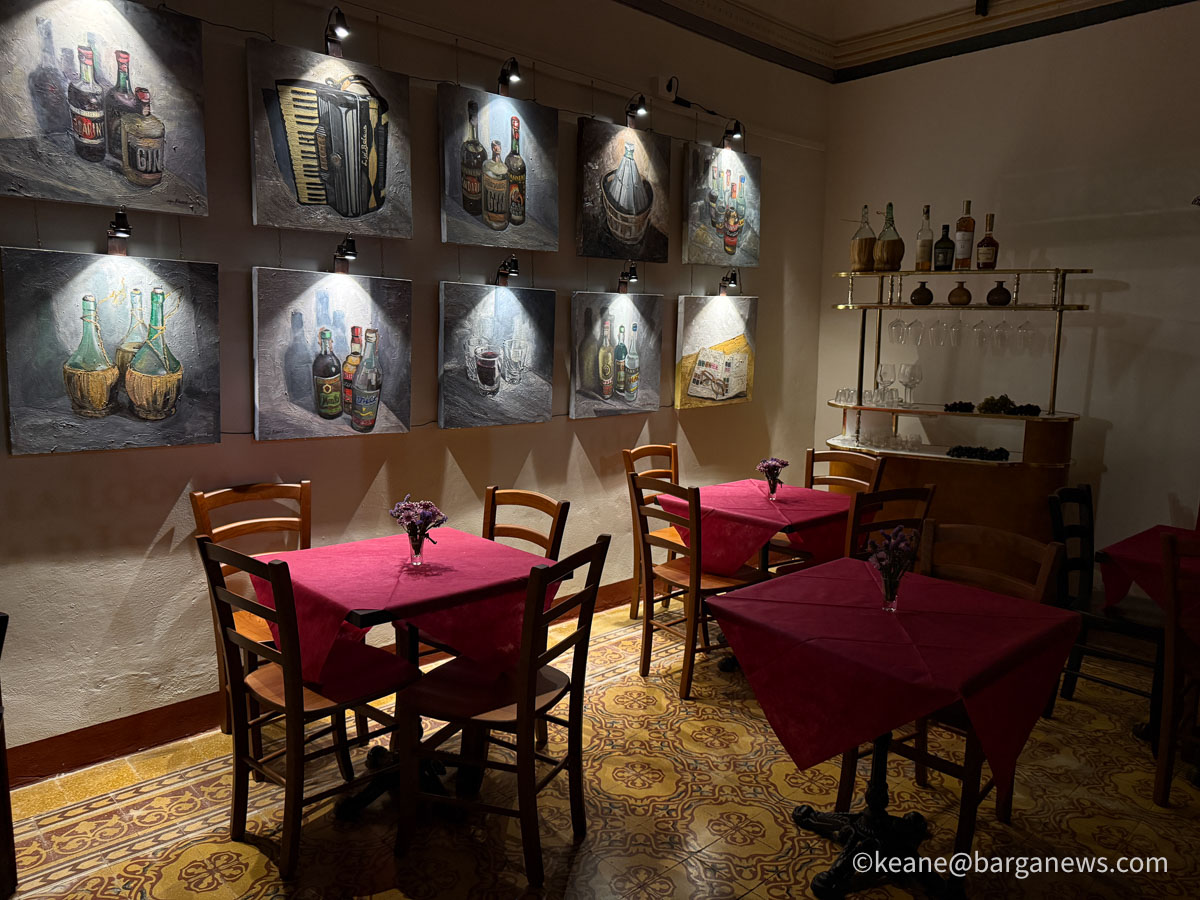
The installation “Barga Through Aristo’s Glasses — Barga attraverso gli occhiali di Aristo” has occupied the new room at Da Aristo in Barga Vecchia since July.
But perhaps now is the right time to really experience it.
Through July and August, Barga Vecchia was filled with visitors, festivals, concerts and events. Da Aristo itself was rarely quiet and, with so much happening around the city, the installation almost disappeared into the intensity of the summer.
Now, as we move towards the end of September, things have slowed down.
There is more time to enter the room, stop for a while, look — and listen.
At first sight, attention is drawn to Keane’s paintings: bottles standing on tables, an accordion, a glass demijohn, an old ledger and a pair of spectacles.
But these are not objects chosen at random.
They belonged to the world of Aristodemo Casciani — Aristo — and together they form a quiet portrait of him and of the bar that carried his name.
The glasses are Aristo’s own. The old ledger recorded the quantities of cheese that passed through the business and the taxes paid on them. The accordion belonged to him too. Bottles with familiar names such as Nannini and Puccini recall what once stood behind the bar and will bring back memories for generations of people who knew the place.
There are no portraits of Aristo. Instead, his presence is suggested through the things he touched, used and lived with.
But the paintings are only one part of the installation.
Running quietly in the background is a soundtrack recorded inside Da Aristo around 25 years ago.
It is not music added to create an atmosphere. It is the atmosphere.
The sounds of the bar itself — voices, conversations and the everyday noises of people coming and going — have travelled across a quarter of a century and returned to the place where they were originally recorded.
Suddenly the objects in the paintings are no longer quite so still.
The bottles belong once again to a working bar. The glasses, the ledger and the accordion become part of a place inhabited by voices. What we are hearing actually happened here, captured as part of the ordinary life of Da Aristo long before this installation existed.
This combination of painting, place and sound is at the centre of “Barga Through Aristo’s Glasses.” The room is not simply somewhere in which the work is displayed. The room itself is part of the work.
That perhaps explains why the installation feels different now from when it opened in July.
In the middle of summer, with Barga Vecchia at its busiest, there was always somewhere to go and something else about to happen. In late September there is more space — and more time — to notice the smaller things.
The worn glasses lying across an old ledger. The label on a bottle. The shape of an accordion. A voice from 25 years ago drifting quietly through the room.
“Barga Through Aristo’s Glasses” brings together paintings, objects, sound and place to reflect on Aristo and the world that once surrounded him.




Barga attraverso gli occhiali di Aristo — uno sguardo più tranquillo
L’installazione “Barga Through Aristo’s Glasses — Barga attraverso gli occhiali di Aristo” occupa da luglio la nuova sala di Da Aristo, a Barga Vecchia.
Ma forse è proprio adesso il momento giusto per viverla davvero.
Durante luglio e agosto Barga Vecchia era piena di visitatori, festival, concerti ed eventi. Anche Da Aristo era raramente tranquillo e, con così tante cose che accadevano in città, l’installazione è quasi scomparsa nell’intensità dell’estate.
Ora, mentre ci avviciniamo alla fine di settembre, tutto ha cominciato a rallentare.
C’è più tempo per entrare nella sala, fermarsi un momento, guardare — e ascoltare.
A prima vista, l’attenzione è attirata dai dipinti di Keane: bottiglie appoggiate sui tavoli, una fisarmonica, una damigiana di vetro, un vecchio registro e un paio di occhiali.
Ma non sono oggetti scelti a caso.
Appartenevano al mondo di Aristodemo Casciani — Aristo — e insieme compongono un ritratto discreto di lui e del bar che portava il suo nome.
Gli occhiali sono quelli di Aristo. Il vecchio registro annotava le quantità di formaggio che passavano attraverso l’attività e le relative imposte pagate. Anche la fisarmonica apparteneva a lui. Bottiglie dai nomi familiari, come Nannini e Puccini, ricordano ciò che un tempo si trovava dietro il bancone e riporteranno alla memoria qualcosa per generazioni di persone che hanno conosciuto quel luogo.
Non ci sono ritratti di Aristo. La sua presenza viene invece suggerita attraverso le cose che ha toccato, usato e con cui ha vissuto.
Ma i dipinti sono soltanto una parte dell’installazione.
In sottofondo scorre, a basso volume, una traccia sonora registrata all’interno di Da Aristo circa 25 anni fa.
Non è musica aggiunta per creare un’atmosfera. È l’atmosfera stessa.
I suoni del bar — le voci, le conversazioni e i rumori quotidiani delle persone che entravano e uscivano — hanno attraversato un quarto di secolo e sono tornati nel luogo esatto in cui furono registrati.
Improvvisamente, gli oggetti nei dipinti non sembrano più così immobili.
Le bottiglie tornano a far parte di un bar in piena attività. Gli occhiali, il registro e la fisarmonica diventano parte di un luogo nuovamente abitato dalle voci. Quello che ascoltiamo è realmente accaduto qui, catturato come parte della vita quotidiana di Da Aristo molto prima che questa installazione esistesse.
Questa combinazione di pittura, luogo e suono è al centro di “Barga Through Aristo’s Glasses”. La sala non è semplicemente uno spazio nel quale l’opera viene presentata. La sala stessa fa parte dell’opera.
Forse è proprio per questo che oggi l’installazione si percepisce in modo diverso rispetto a quando è stata aperta a luglio.
Nel pieno dell’estate, quando Barga Vecchia viveva il suo periodo più intenso, c’era sempre un posto dove andare e qualcos’altro che stava per accadere. A fine settembre ci sono più spazio — e più tempo — per accorgersi delle piccole cose.
Gli occhiali consumati dal tempo appoggiati su un vecchio registro. L’etichetta di una bottiglia. La forma di una fisarmonica. Una voce di 25 anni fa che attraversa silenziosamente la stanza.
“Barga Through Aristo’s Glasses” riunisce pittura, oggetti, suono e luogo per riflettere su Aristo e sul mondo che un tempo lo circondava.