HeART of Gaza: children’s drawings bring the reality of Gaza to Barga
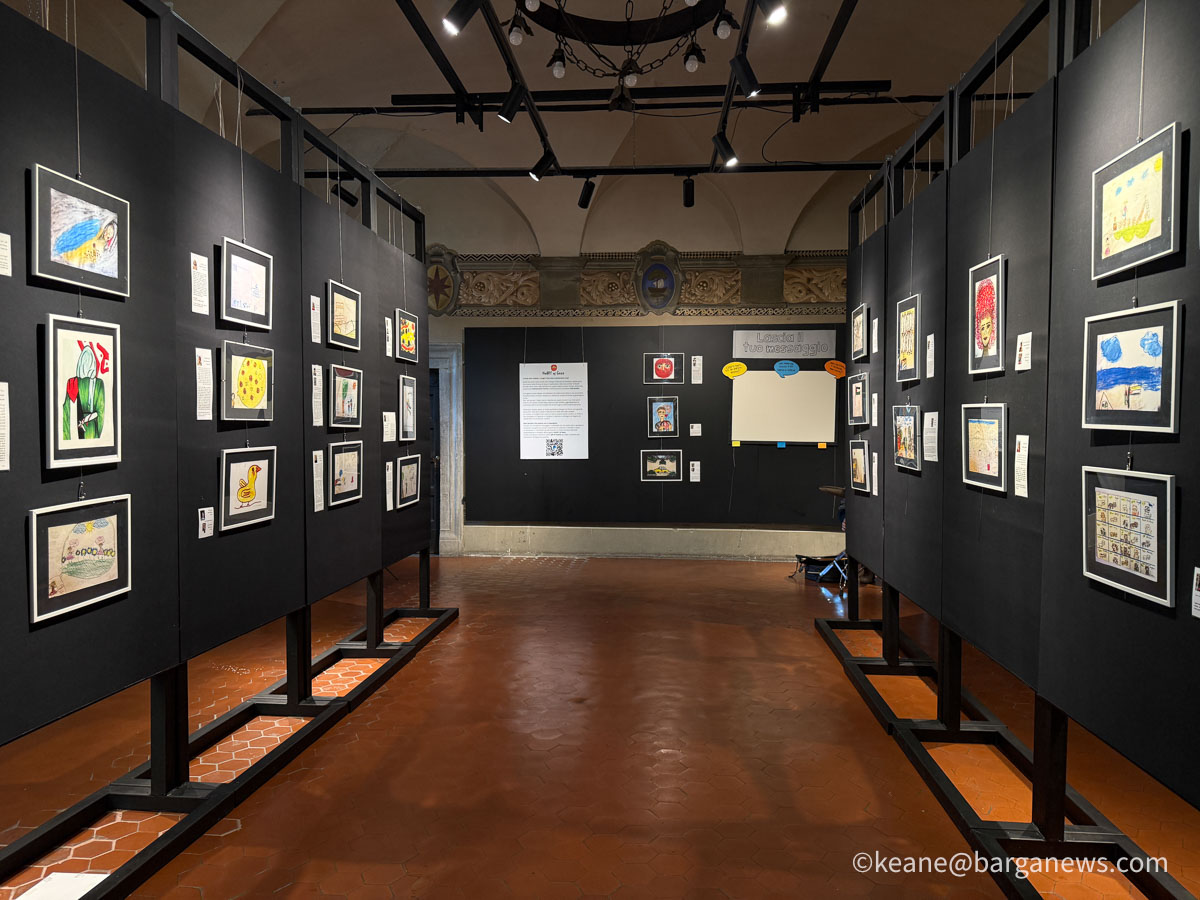
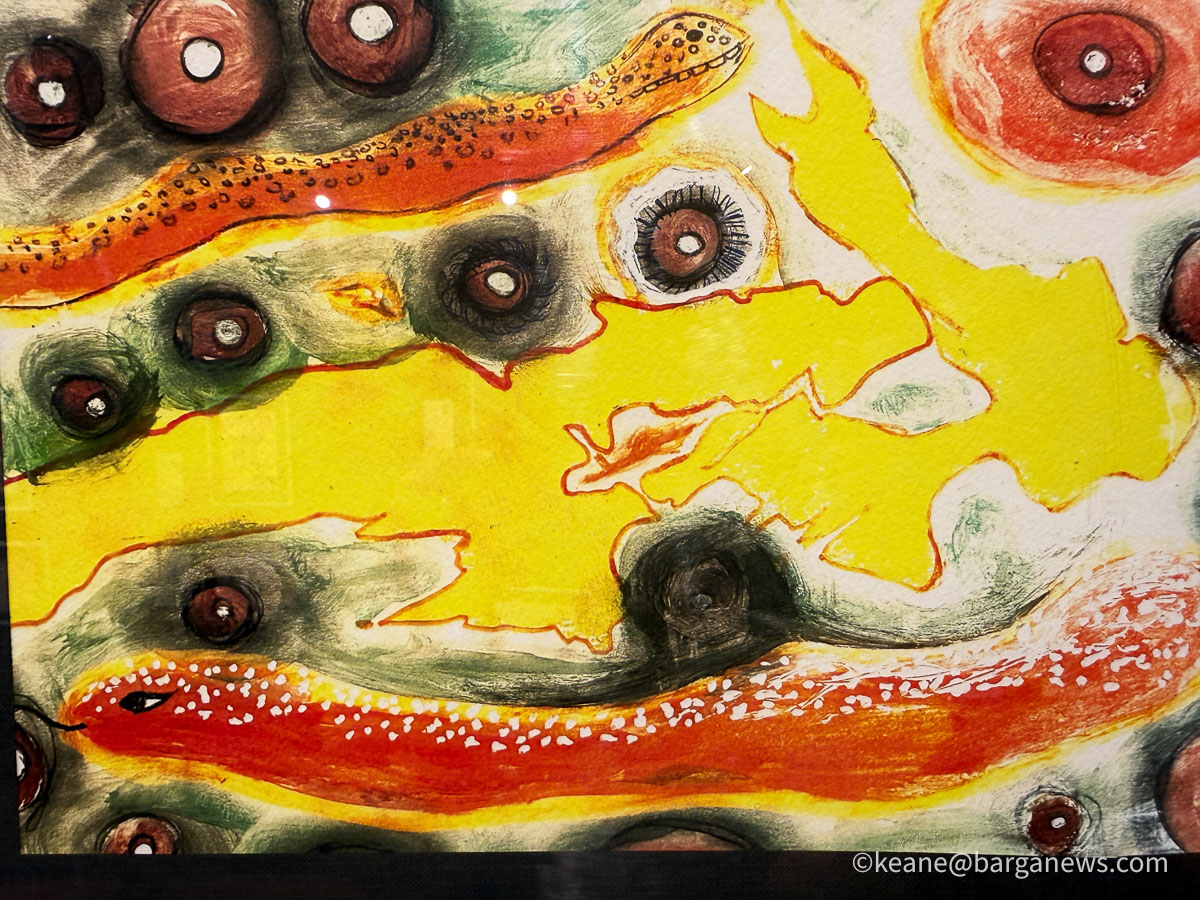
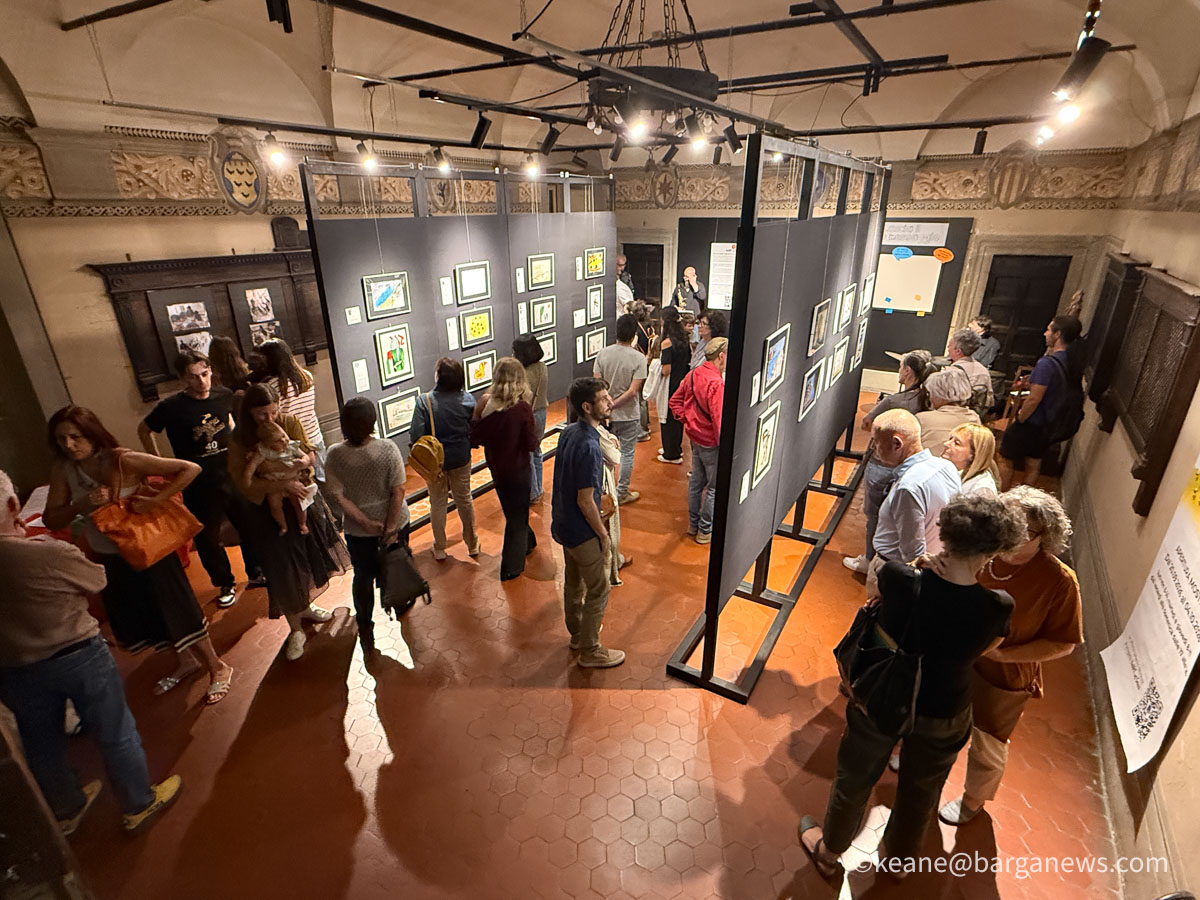
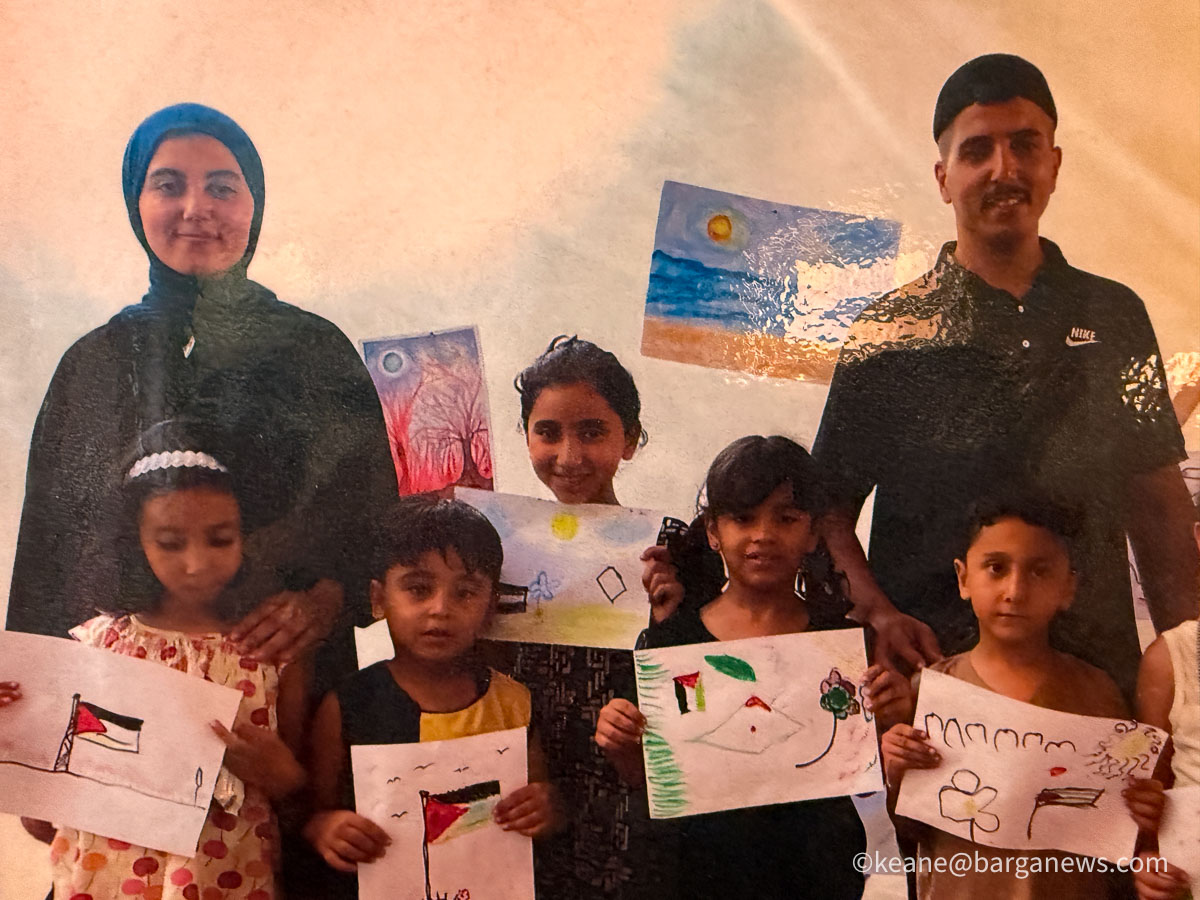
Drawings made by children and teenagers living through the war in Gaza came to Barga with the opening of HeART of Gaza, an exhibition bringing together 45 works by young artists between the ages of three and seventeen.
At the centre of the project was Palestinian artist Mohammed Timraz, who was present at the opening and is currently living in Modena on a scholarship.
The drawings originated in the Gaza Strip, particularly in the area of Deir Al-Balah, where protected creative spaces were established to give children somewhere to draw, express themselves and try to process their experiences of war.
The project developed through the collaboration between Timraz and Irish illustrator Féile Butler. Images of the children’s work were initially shared through WhatsApp, but from that exchange came the idea that the drawings should be seen beyond Gaza. They subsequently became the basis of an exhibition which has already travelled to a number of Italian and European cities.
In Barga, the drawings were not displayed anonymously. Many were accompanied by the young artist’s name, age and a short text giving some indication of the life behind the image.
That context sometimes completely changed the way a drawing was seen.
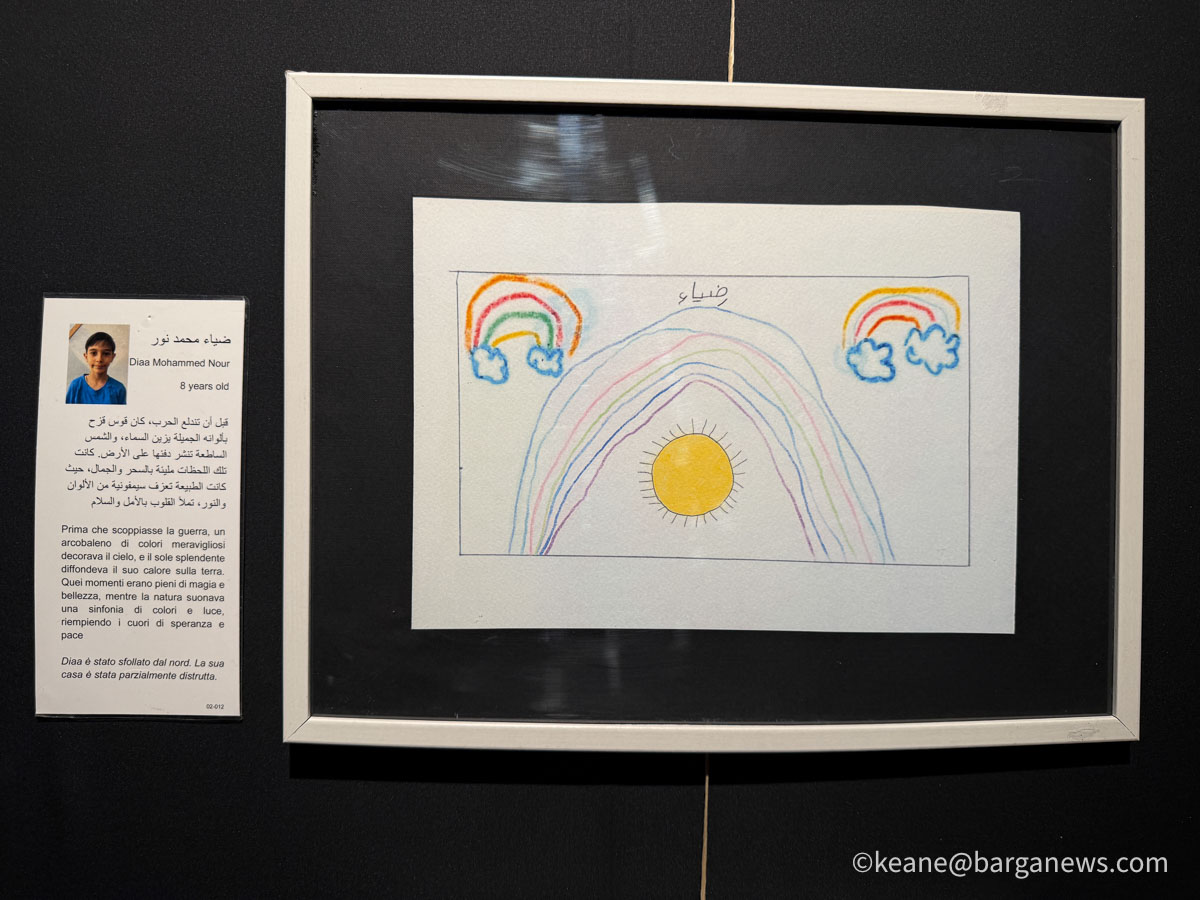
Eight-year-old Diaa Mohammed Nour, for example, drew rainbows and a sun, remembering the colours of the sky before the war. The accompanying text explained that he had been displaced from northern Gaza and that his home had been partially destroyed.
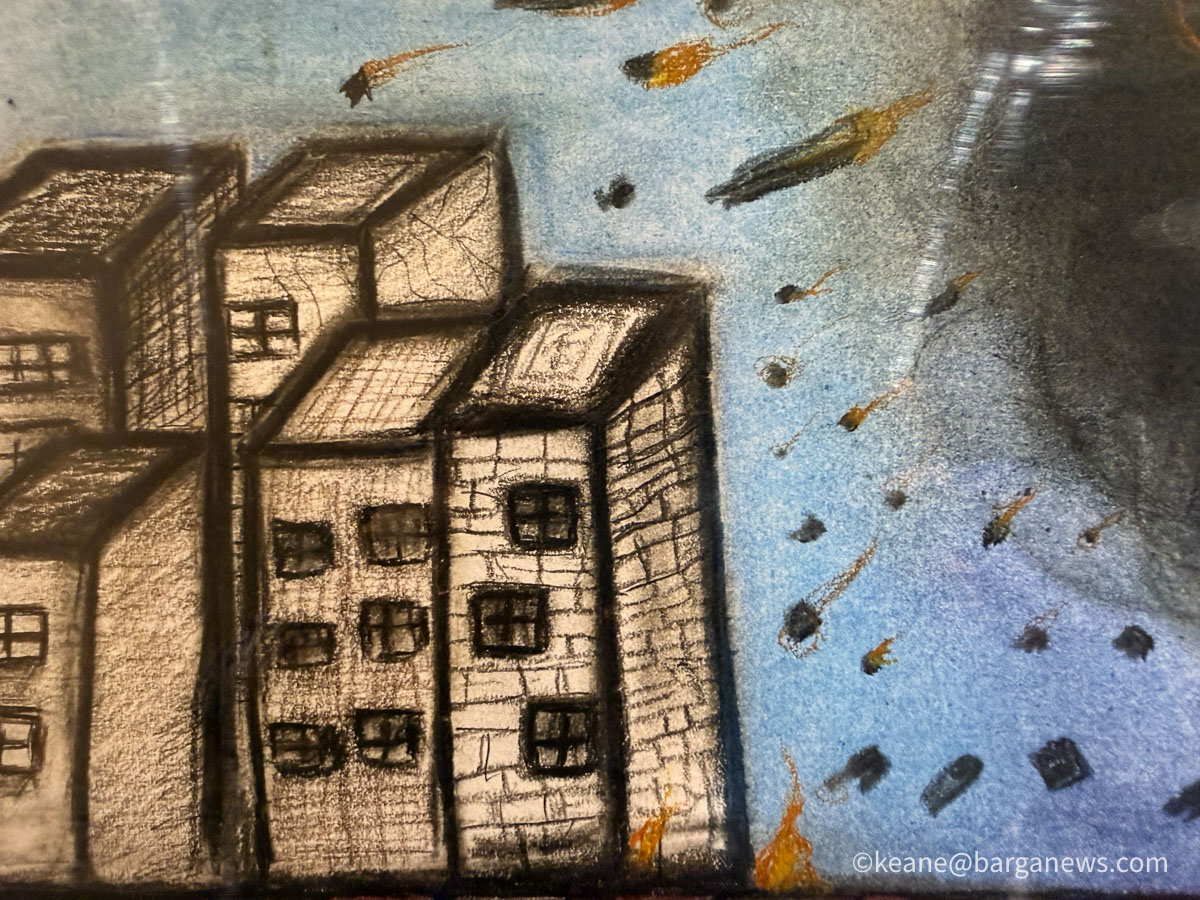
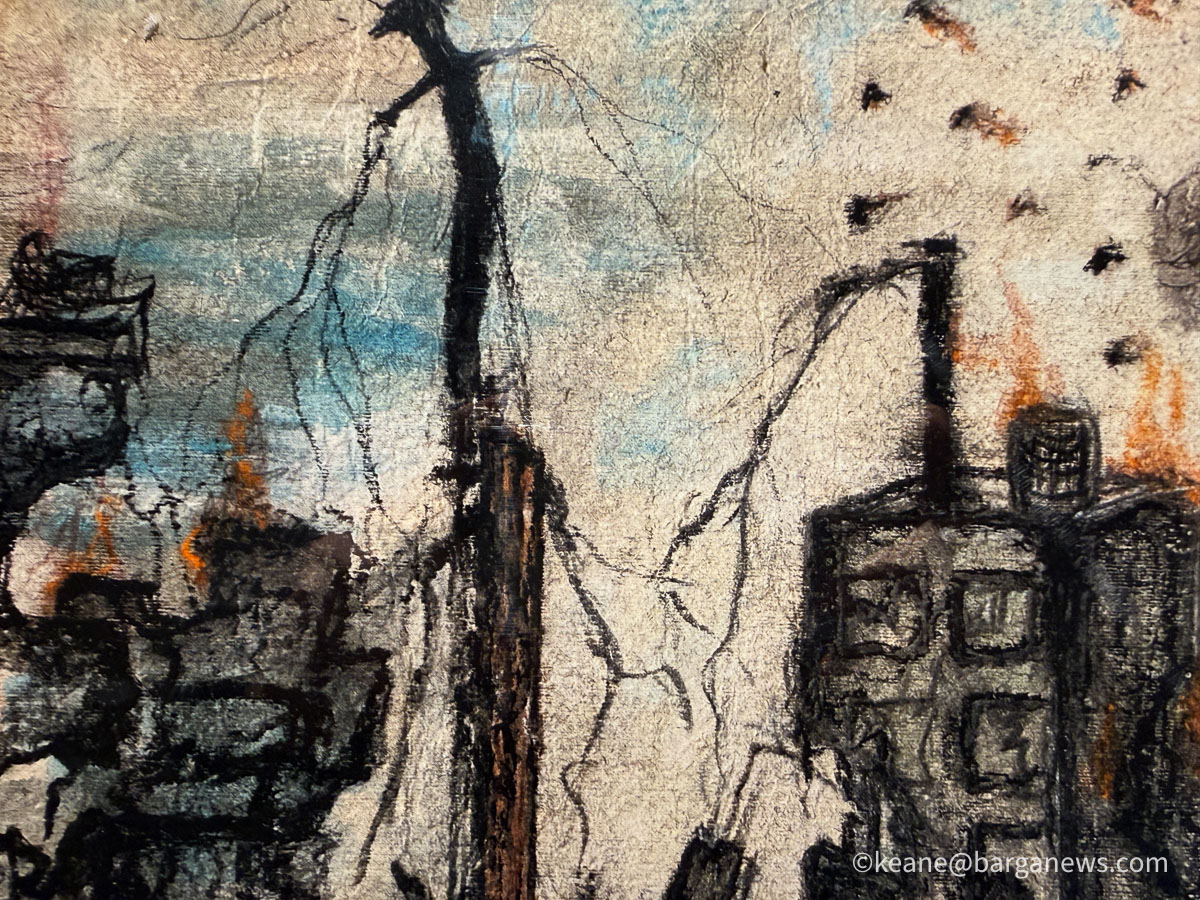
Other works were much more direct. Buildings appeared under bombardment, fires burned beneath darkened skies and bombs fell between houses.
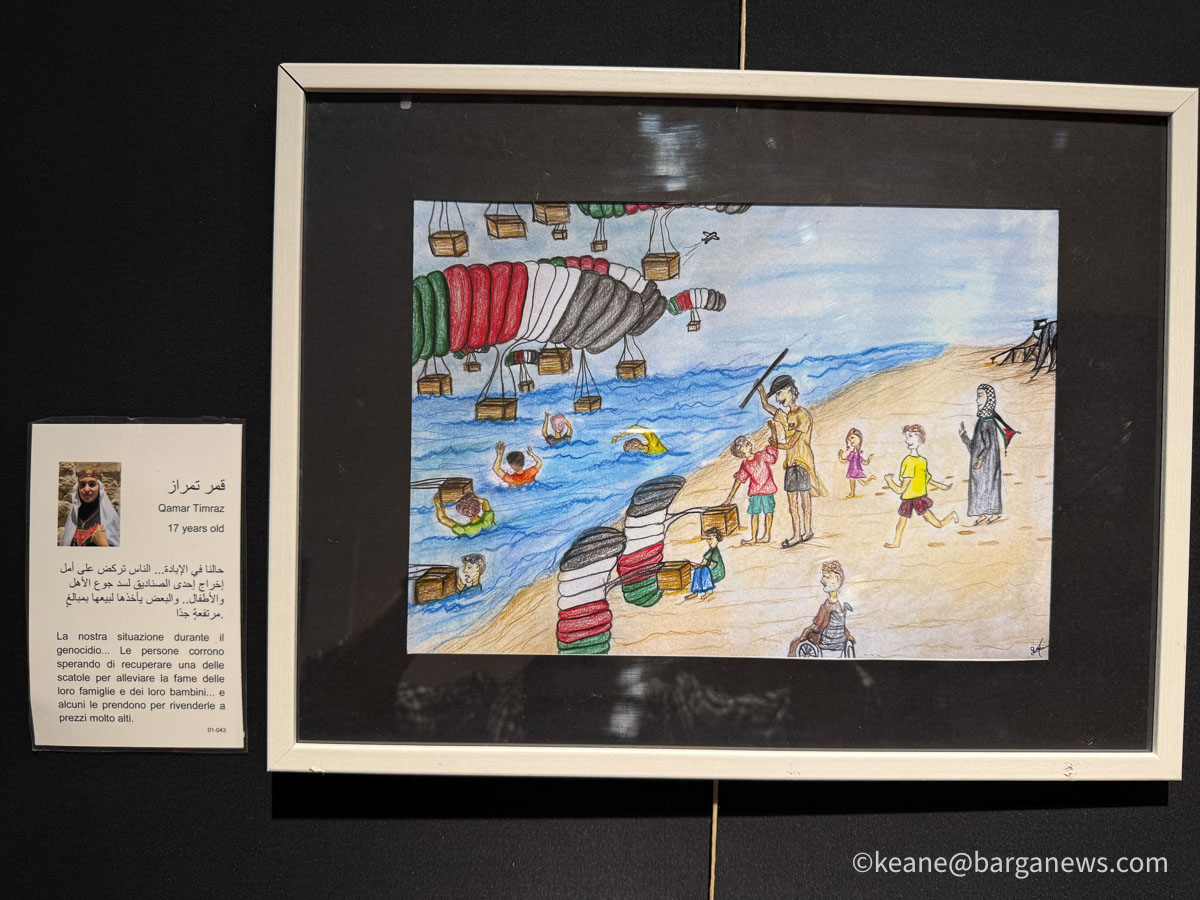
In a drawing by 17-year-old Qamar Timraz, people gathered on a beach while aid packages descended by parachute into the sea. Her accompanying words described people waiting desperately for boxes of food for their families.
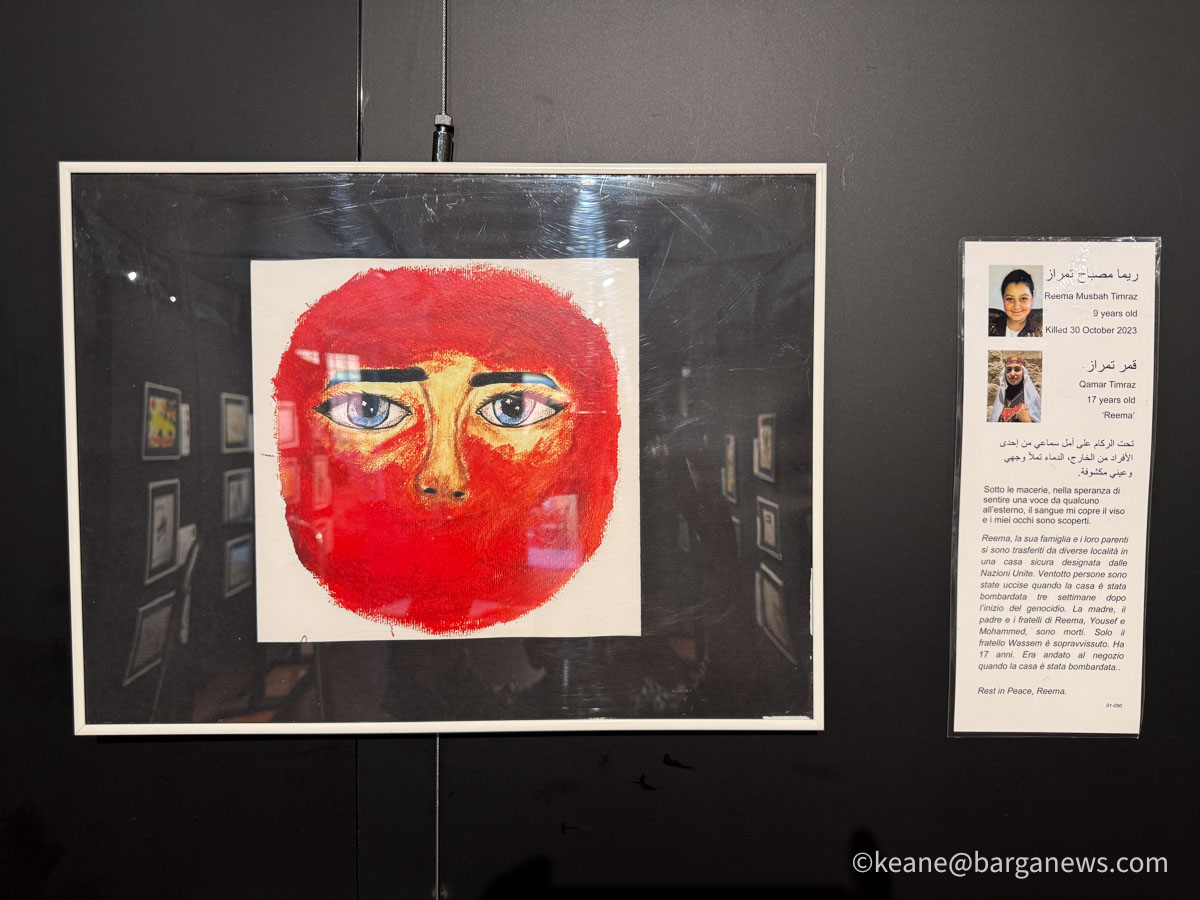
One of the most affecting works in the exhibition was accompanied by the story of nine-year-old Reema Musbah Timraz, who was killed on 30 October 2023. Her image, dominated by a vivid red face and large open eyes, hung beside a text recounting what had happened to her and her family.
Walking through the exhibition, the difference between the work of the younger children and that of the teenagers became increasingly apparent.
The younger artists often returned to an ordinary world: flowers, rainbows, playgrounds, the sea and memories of life before the war. One girl drew an athletics track, recalling a sport she could no longer practise.
Among the older children, the imagery frequently became darker. Death, bombs, blood, ruined buildings and displacement entered the drawings more explicitly.
Yet the two worlds existed side by side. Images of destruction hung only a few steps from drawings filled with colour, flowers and sunshine. The children’s memories of ordinary life, and their hopes of recovering some part of it, remained present throughout the exhibition.
The organisers described the project as a way of using art for emotional expression and as a means of bearing witness to what the children were experiencing. The exhibition text also described the project as an act of resistance and solidarity in response to what the organisers termed the ongoing genocide in Gaza.
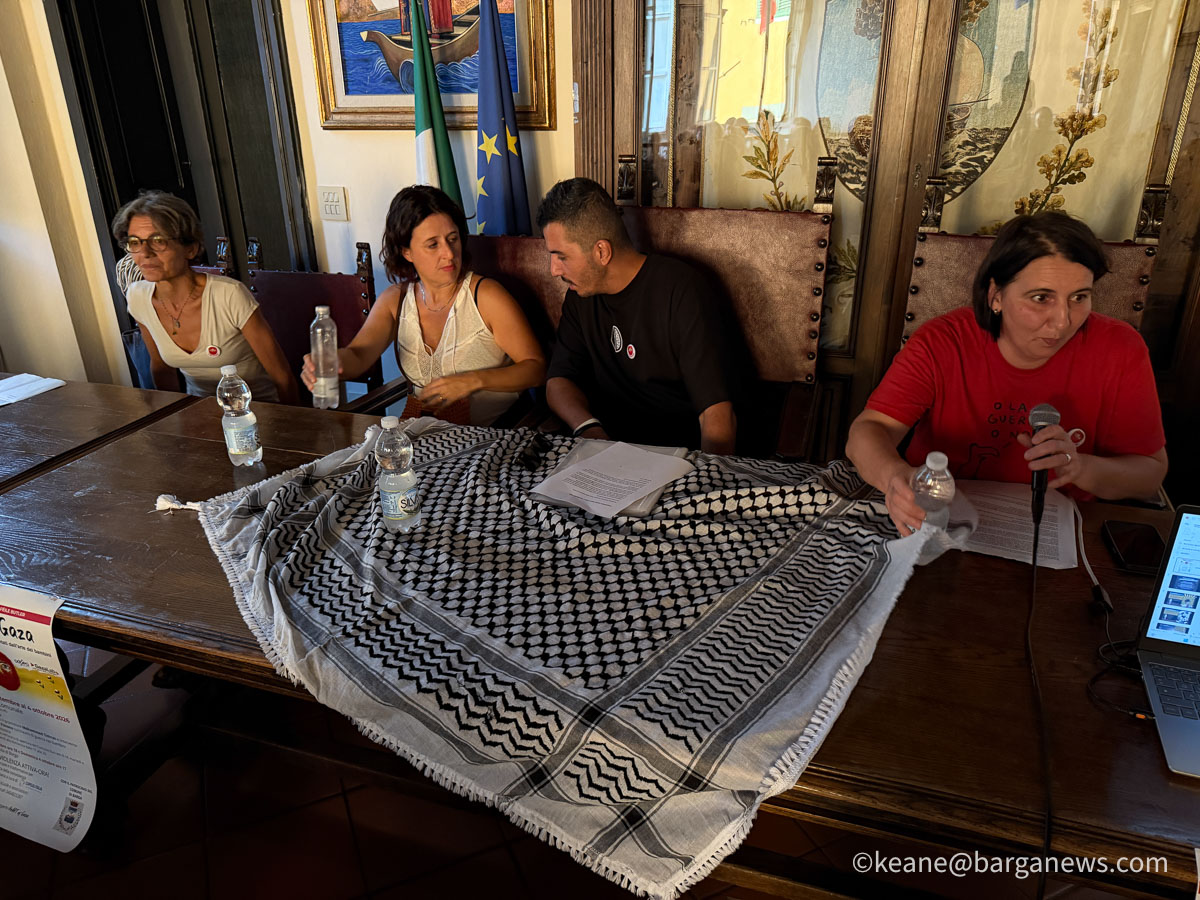
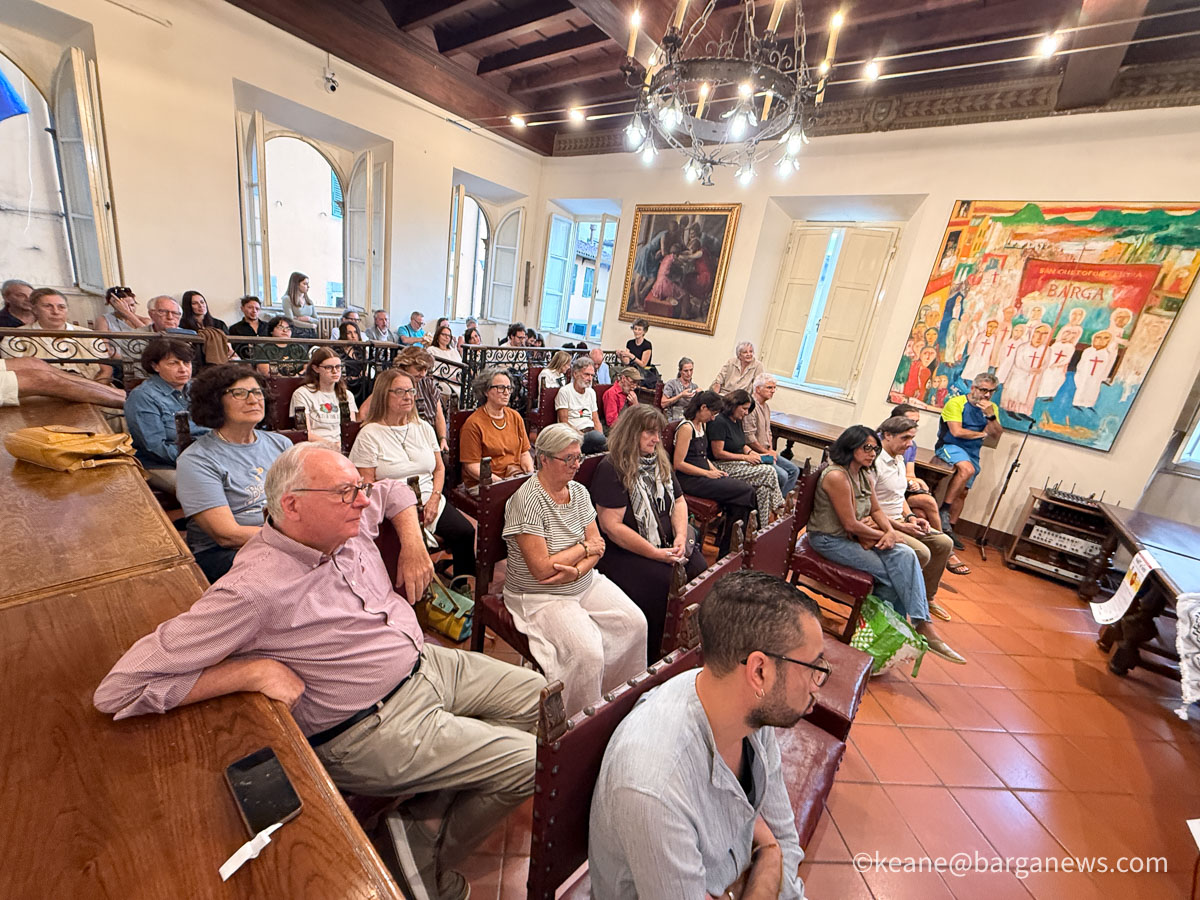
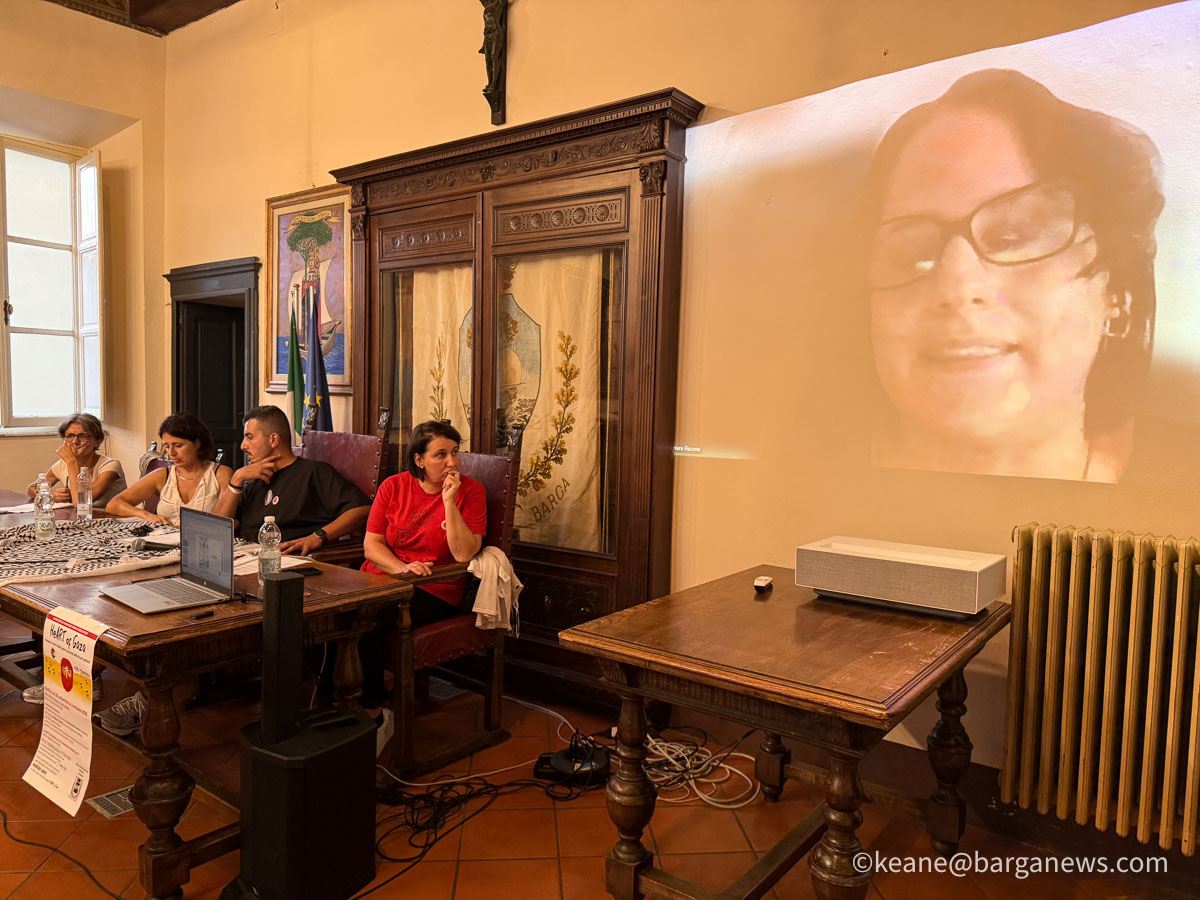
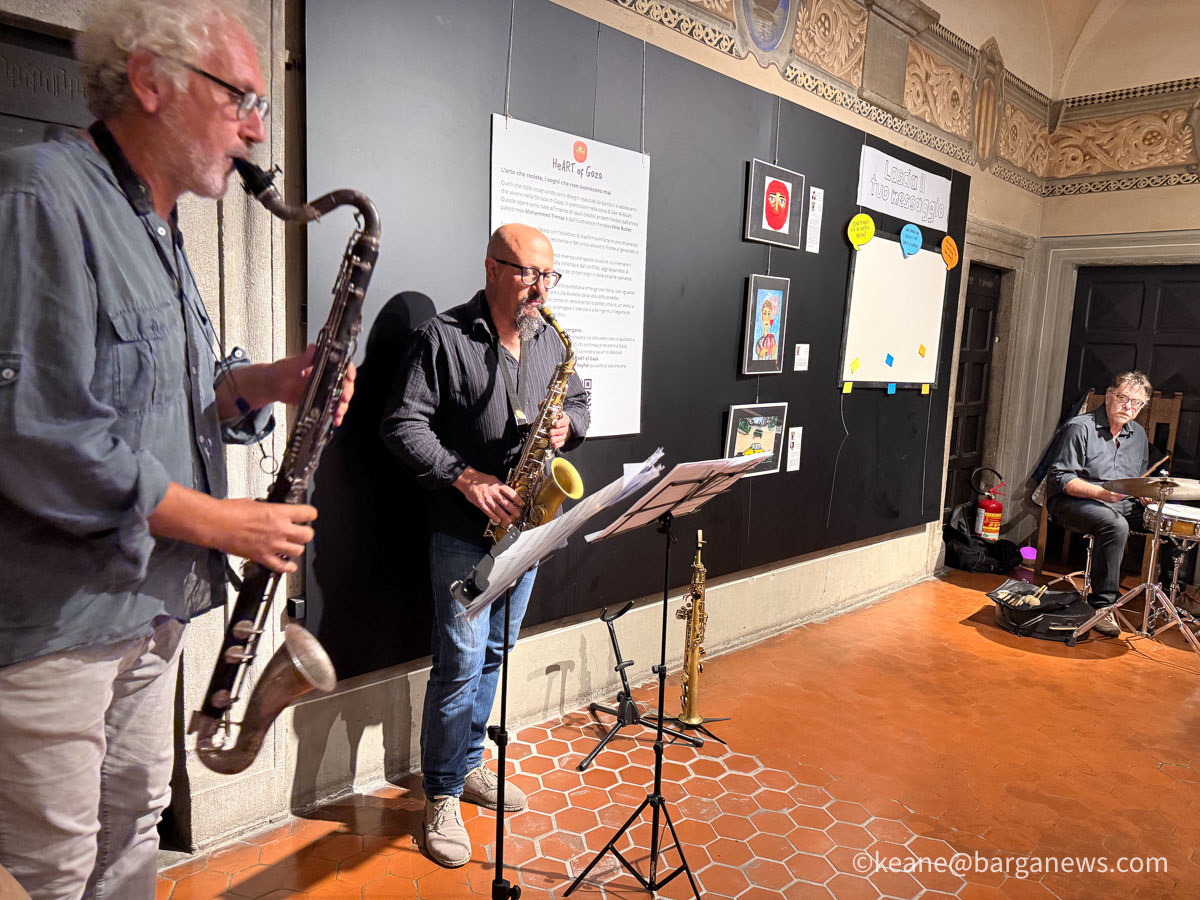
The opening in Barga extended beyond the pictures themselves. Timraz took part in the presentation, another contribution was made remotely by video link, and live music with saxophones and percussion was performed among the works.
An important part of the Barga project was also its connection with schools.
Teachers were invited to bring classes to the exhibition over the following weeks, with workshops prepared for different age groups. Younger visitors could consider the things children share despite living in radically different circumstances, while older students were encouraged to reflect on peace, conflict and the way art can become a testimony to events taking place around us.
Inside the exhibition, a board carrying the words Lascia il tuo messaggio — Leave your message — invited visitors to add their own thoughts on coloured notes.
The intention was eventually to bring those responses together with work produced by visiting school groups and send the feedback back to the creative project in Gaza — completing an exchange which began with children drawing there and continued with people looking and responding here in Barga.
The 45 works on display represented only part of the larger HeART of Gaza collection. The prints were made available through a solidarity group in the Valtiberina area, which had prepared the material so that the exhibition could be hosted elsewhere free of charge.
Donations collected during the exhibition were destined entirely for the HeART of Gaza project and its work on the ground.
Perhaps the most important thing about HeART of Gaza was that the drawings came with names.
These were not anonymous images arriving from a distant war. They belonged to Diaa, Qamar, Reema and dozens of other children and teenagers, each using a sheet of paper to show something of the world in which they were living.




HeART of Gaza: i disegni dei bambini raccontano Gaza a Barga
I disegni realizzati da bambini e adolescenti che stanno vivendo la guerra a Gaza sono arrivati a Barga con l’apertura di HeART of Gaza, una mostra che raccoglie 45 opere di giovani artisti di età compresa tra i tre e i diciassette anni.
Al centro del progetto c’è l’artista palestinese Mohammed Timraz, presente all’inaugurazione e attualmente a Modena grazie a una borsa di studio.
I disegni sono nati nella Striscia di Gaza, in particolare nella zona di Deir Al-Balah, all’interno di spazi creativi protetti dove i bambini hanno potuto disegnare, esprimersi e cercare di elaborare ciò che stanno vivendo durante la guerra.
Il progetto si è sviluppato attraverso la collaborazione tra Timraz e l’illustratrice irlandese Féile Butler. Inizialmente le immagini dei disegni venivano condivise tramite WhatsApp, ma proprio da quello scambio è nata l’idea che quelle opere dovessero essere viste anche fuori da Gaza. Da lì ha preso forma una mostra che ha già raggiunto diverse città italiane ed europee.
A Barga i disegni non sono stati esposti in forma anonima. Molti erano accompagnati dal nome e dall’età del giovane autore e da un breve testo che raccontava qualcosa della vita che stava dietro all’immagine.
E in alcuni casi proprio quelle poche righe cambiavano completamente il modo di guardare il disegno.
Diaa Mohammed Nour, otto anni, per esempio, ha disegnato arcobaleni e un grande sole, ricordando i colori del cielo prima della guerra. Il testo accanto all’opera spiegava che Diaa era stato sfollato dal nord di Gaza e che la sua casa era stata parzialmente distrutta.
Altri lavori erano molto più diretti. Palazzi sotto bombardamento, incendi, cieli scuri e bombe che cadevano tra le case.
In un disegno della diciassettenne Qamar Timraz, alcune persone si trovano sulla spiaggia mentre pacchi di aiuti scendono con i paracadute verso il mare. Nel testo che accompagna l’opera, Qamar racconta di persone che aspettano disperatamente una scatola di cibo per le proprie famiglie.
Tra le opere più difficili da dimenticare c’era quella accompagnata dalla storia di Reema Musbah Timraz, nove anni, uccisa il 30 ottobre 2023. La sua immagine, dominata da un volto rosso intenso e da grandi occhi aperti, era esposta accanto a un testo che raccontava ciò che era accaduto a lei e alla sua famiglia.
Percorrendo la mostra diventava evidente anche la differenza tra i lavori dei bambini più piccoli e quelli degli adolescenti.
I più piccoli tornavano spesso a un mondo quotidiano: fiori, arcobaleni, giochi, il mare e ricordi della vita prima della guerra. Una bambina, per esempio, aveva disegnato una pista di atletica, ricordando uno sport che non poteva più praticare.
Nei ragazzi più grandi, invece, le immagini diventavano spesso più dure. Nei disegni entravano in maniera più esplicita la morte, le bombe, il sangue, gli edifici distrutti e lo sfollamento.
Eppure i due mondi rimanevano continuamente uno accanto all’altro. Immagini di distruzione erano esposte a pochi passi da disegni pieni di colori, fiori e sole. Per tutta la mostra continuavano ad emergere i ricordi di una vita normale e il desiderio di poterla ritrovare.
Gli organizzatori hanno presentato il progetto come uno spazio in cui l’arte può diventare uno strumento di espressione emotiva e, allo stesso tempo, una testimonianza di ciò che questi bambini stanno vivendo. Nel testo della mostra il progetto viene inoltre descritto come un atto di resistenza e solidarietà di fronte a quello che gli organizzatori definiscono il genocidio in corso a Gaza.
L’inaugurazione a Barga non si è limitata alle opere esposte. Timraz ha partecipato alla presentazione, mentre un altro intervento è arrivato a distanza tramite collegamento video. La giornata è stata accompagnata anche dalla musica dal vivo, con sassofoni e percussioni suonati all’interno dello spazio espositivo.
Una parte importante del progetto a Barga è stata inoltre pensata per il mondo della scuola.
Gli insegnanti sono stati invitati a prenotare visite con le proprie classi nelle settimane successive, con laboratori preparati per le diverse fasce d’età. Per i bambini più piccoli l’idea era quella di riflettere su ciò che accomuna i bambini anche quando vivono in realtà profondamente diverse; per i ragazzi più grandi, invece, il percorso proponeva una riflessione sulla pace, sulla guerra e sulla capacità dell’arte di diventare testimonianza di ciò che accade intorno a noi.
All’interno della mostra, una lavagna con la scritta Lascia il tuo messaggio invitava inoltre i visitatori a lasciare un pensiero su piccoli foglietti colorati.
L’intenzione era quella di raccogliere queste risposte insieme ai lavori realizzati dalle scolaresche e far arrivare il materiale al progetto creativo a Gaza: un modo per completare uno scambio iniziato con i bambini che disegnavano lì e proseguito con le persone che guardavano e rispondevano qui, a Barga.
Le 45 opere esposte rappresentavano soltanto una parte della più ampia raccolta di HeART of Gaza. Le stampe erano state messe a disposizione da un gruppo di solidarietà della Valtiberina, che aveva preparato il materiale affinché la mostra potesse essere ospitata gratuitamente anche in altre località.
Le donazioni raccolte durante la mostra erano destinate interamente al progetto HeART of Gaza e alle sue attività sul campo.
Forse l’aspetto più importante di HeART of Gaza era proprio il fatto che quei disegni avessero dei nomi.
Non erano immagini anonime arrivate da una guerra lontana. Erano i disegni di Diaa, Qamar, Reema e di decine di altri bambini e adolescenti, ognuno dei quali aveva utilizzato un foglio di carta per raccontare qualcosa del mondo in cui stava vivendo.