How to wear the great kilt in Barga
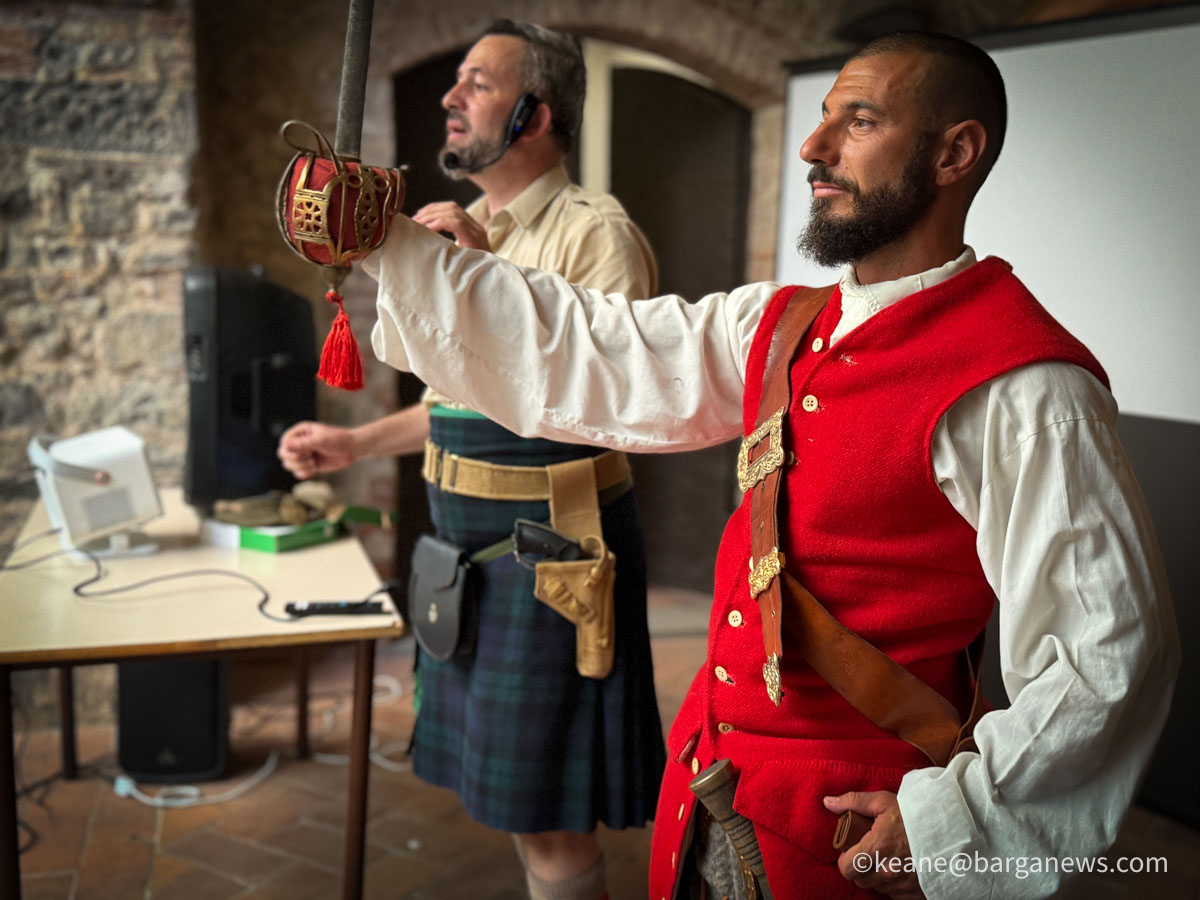
Among the many Scottish traditions on display during the Barga Scottish Festival was a practical demonstration by Nick McVicar of something that today might appear deceptively simple: how to put on a traditional great kilt.
Unlike the modern tailored kilt, the great kilt began as a large, unstitched length of tartan which had to be arranged around the wearer each time it was put on.
Nick began the demonstration with the tartan spread out on the ground. The material was then gathered into a series of rough pleats by hand, leaving part of the cloth free.
As he worked, McVicar explained that this was not a process that needed to be perfectly measured. A man accustomed to wearing the garment would once have gone through the same procedure regularly and would have become considerably quicker at arranging the folds.
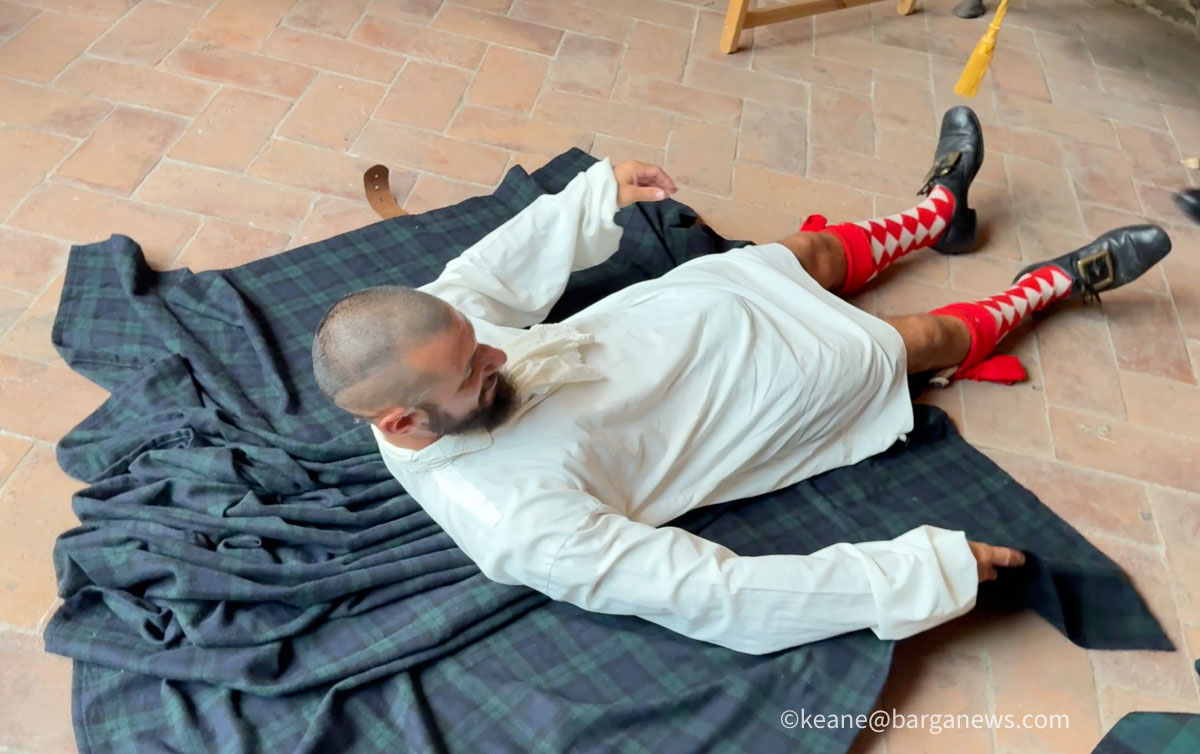
A belt was placed underneath the tartan before Davide, who was taking the role of the wearer, lay down across the material with the belt positioned roughly where it would eventually sit around his waist.
The two sides of the tartan were then folded across his body, first from one direction and then the other, before the belt was fastened tightly around his waist. Once secured, the lower part of the material formed the kilt, falling to around knee level.
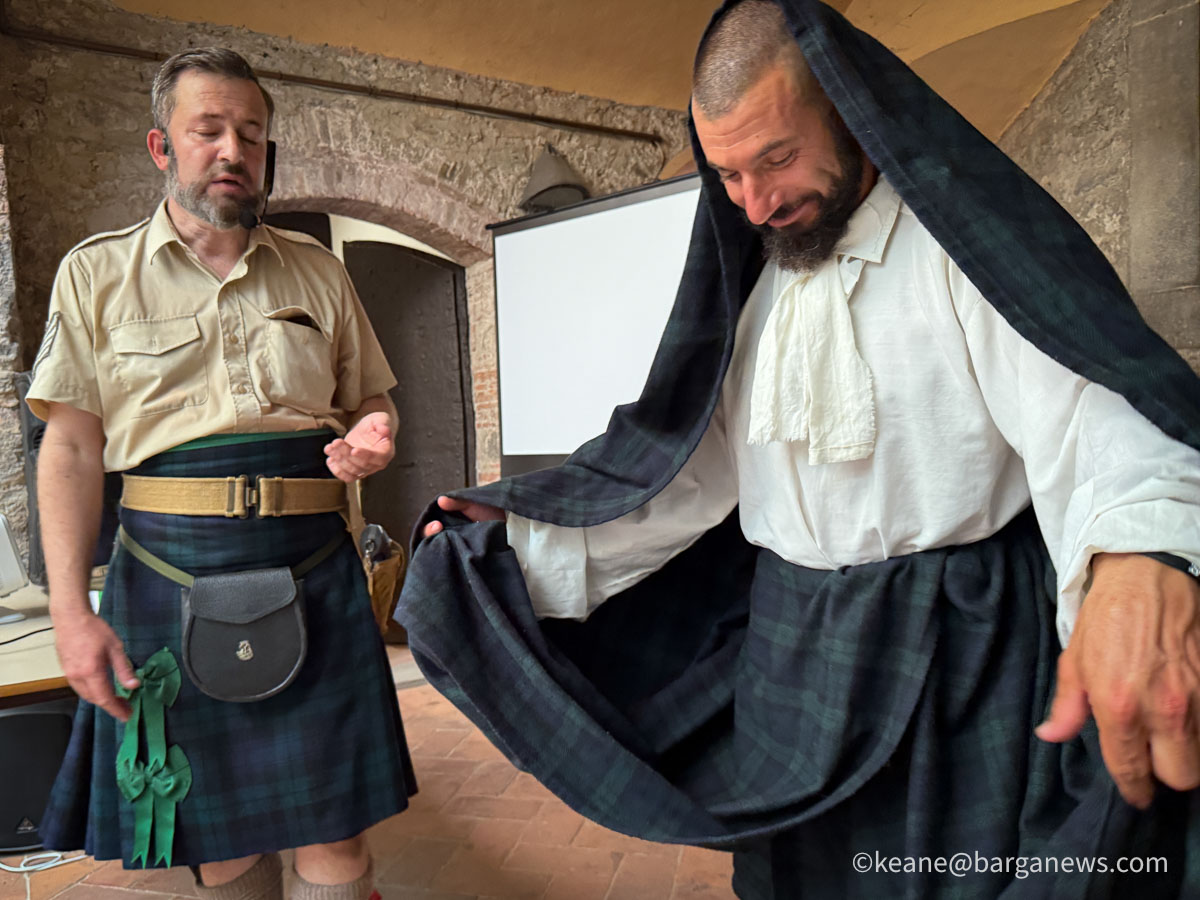
Davide then stood up and what, only moments earlier, had been a large piece of tartan lying on the ground had become a wearable garment.
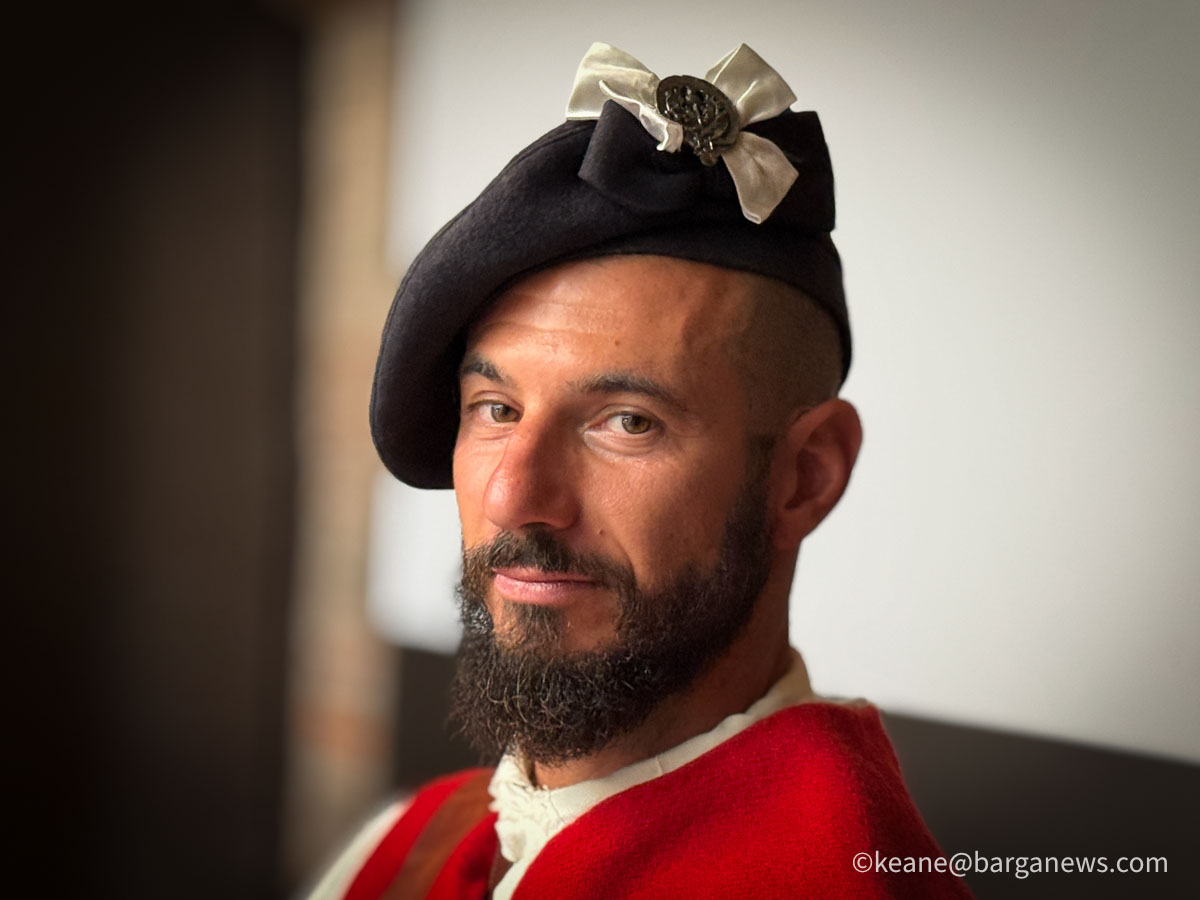
McVicar also placed the great kilt in its historical context. Davide wore a traditional-style shirt representing clothing of the 18th century, although Nick explained that this way of arranging and wearing cloth could be traced back into the 17th century and possibly earlier.
Davide was also no stranger to historical clothing, as the group involved in the demonstration takes part in 18th-century historical re-enactment.
It was a simple but effective demonstration, showing the difference between the familiar modern kilt and its much larger predecessor — and how a length of tartan, a belt and a little practice were all that was needed to get dressed in Highland style.




Come indossare il Great Kilt a Barga
Tra le numerose tradizioni scozzesi presentate durante il Barga Scottish Festival, Nick McVicar ha proposto una dimostrazione pratica dedicata a qualcosa che oggi potrebbe sembrare relativamente semplice: come si indossa il tradizionale Great Kilt.
A differenza del moderno kilt confezionato e cucito su misura, il Great Kilt nasceva da un grande pezzo di tartan non cucito, che doveva essere sistemato intorno al corpo ogni volta che veniva indossato.
Nick ha iniziato la dimostrazione stendendo il tartan a terra. Il tessuto è stato quindi raccolto a mano formando una serie di pieghe, lasciandone libera una parte.
Come ha spiegato McVicar mentre lavorava, non era necessario che le pieghe fossero perfettamente misurate. Un uomo abituato a indossare questo tipo di abbigliamento avrebbe ripetuto regolarmente la stessa operazione, diventando naturalmente molto più rapido nel sistemare il tessuto.
Una cintura è stata quindi posizionata sotto il tartan prima che Davide, che faceva da modello per la dimostrazione, si sdraiasse sopra il tessuto, con la cintura collocata all’incirca all’altezza della vita.
I due lati del tartan sono stati poi ripiegati sopra il corpo, prima da una parte e poi dall’altra, quindi la cintura è stata stretta intorno alla vita. Una volta fissato, il tessuto nella parte inferiore formava il kilt, scendendo fino all’incirca all’altezza delle ginocchia.
Davide si è quindi alzato in piedi e quello che soltanto pochi istanti prima era un grande pezzo di tartan steso a terra si era trasformato in un vero e proprio capo di abbigliamento.
McVicar ha anche inserito il Great Kilt nel suo contesto storico. Davide indossava una camicia tradizionale che richiamava l’abbigliamento del XVIII secolo, anche se Nick ha spiegato che questo modo di sistemare e indossare il tessuto poteva essere fatto risalire al XVII secolo e forse anche a periodi precedenti.
Davide, inoltre, non era nuovo all’abbigliamento storico: il gruppo coinvolto nella dimostrazione partecipa infatti anche a rievocazioni storiche dedicate al Settecento.
Una dimostrazione semplice ma efficace, che ha permesso di comprendere la differenza tra il familiare kilt moderno e il suo predecessore molto più grande — mostrando come un lungo pezzo di tartan, una cintura e un po’ di pratica fossero tutto ciò che serviva per vestirsi secondo la tradizione delle Highlands.