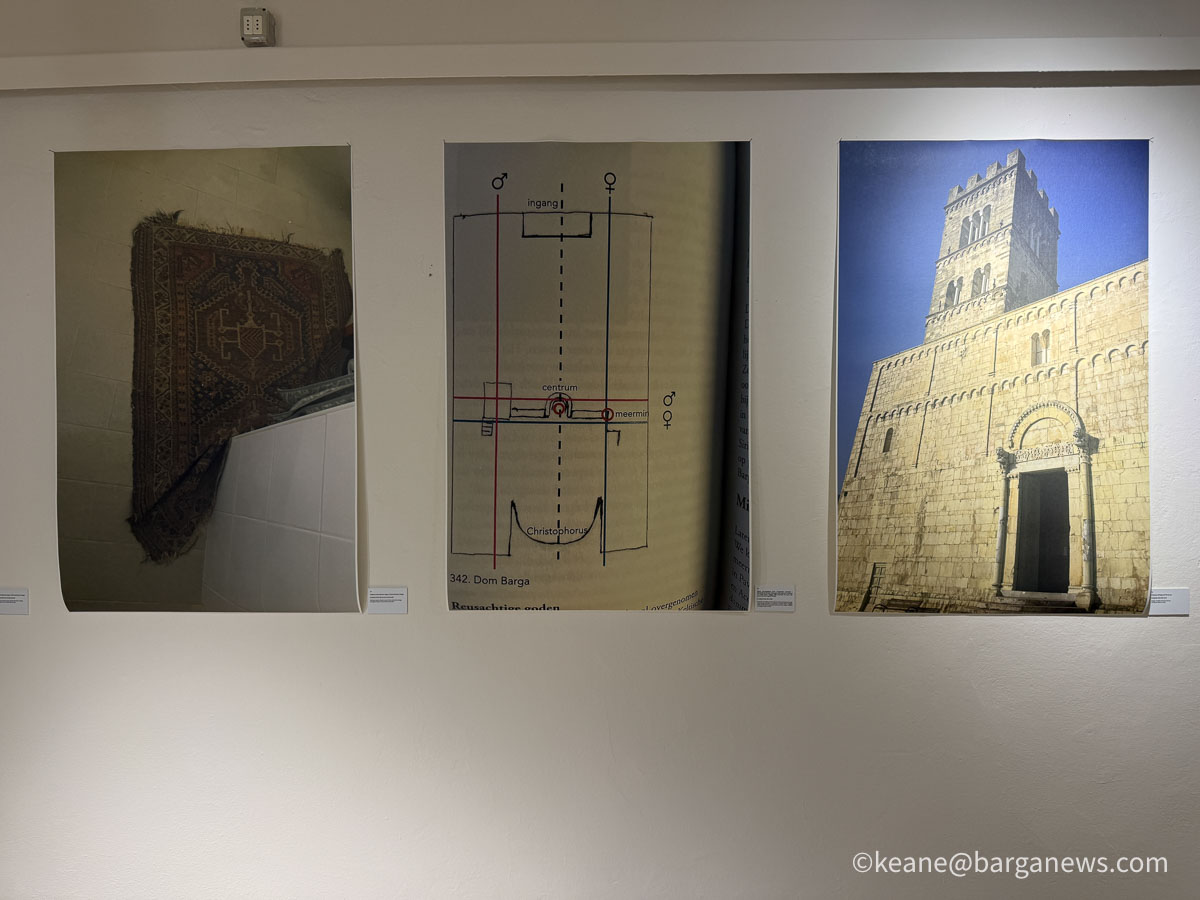
For a brief moment, twice a year, sunlight enters Barga Cathedral and illuminates the wall where a small pagan image of a two-tailed mermaid is carved into the stonework.
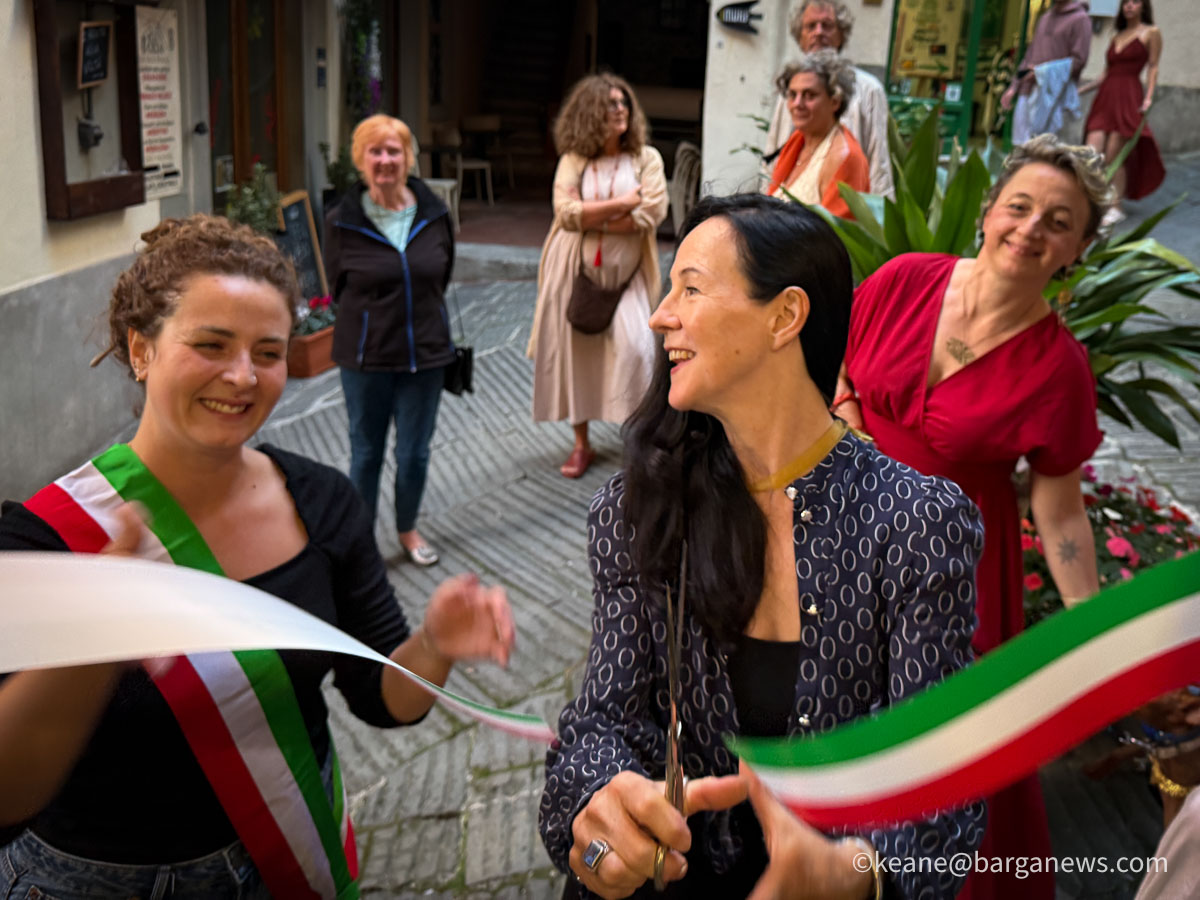
That extraordinary meeting of landscape, light and medieval sculpture lies at the heart of “Sirena Cristo”, an installation by Anglo-Irish sculptor and photographer Sarah Danays which opened on 19 September at the Galleria Comunale and 3.1 Spazio Liminale in Via di Borgo.
Part of the Comune di Barga’s Barga Castello dell’Arte programme, the exhibition explored the layers of pagan and Christian symbolism that have accumulated inside the Duomo over centuries. But its origins also lay in a much more personal and unexplained event.
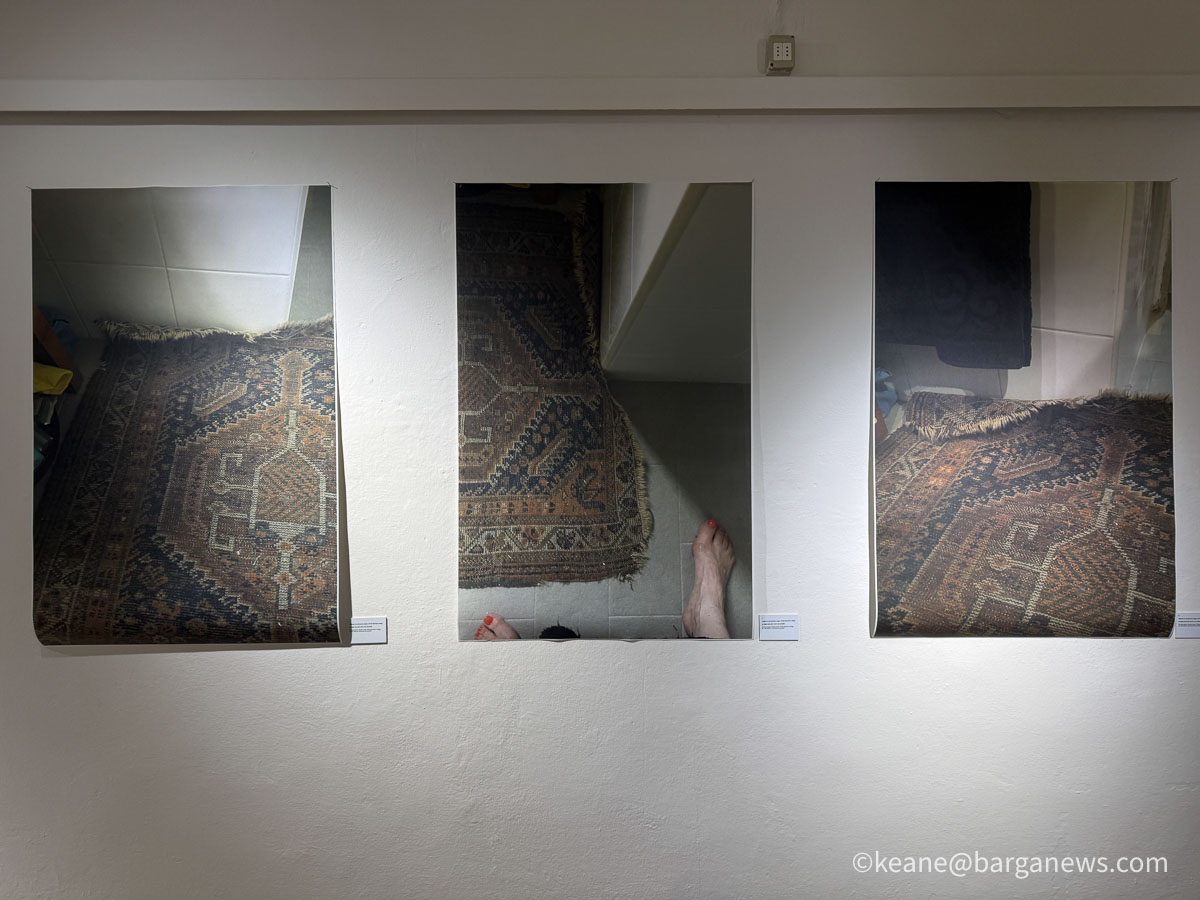
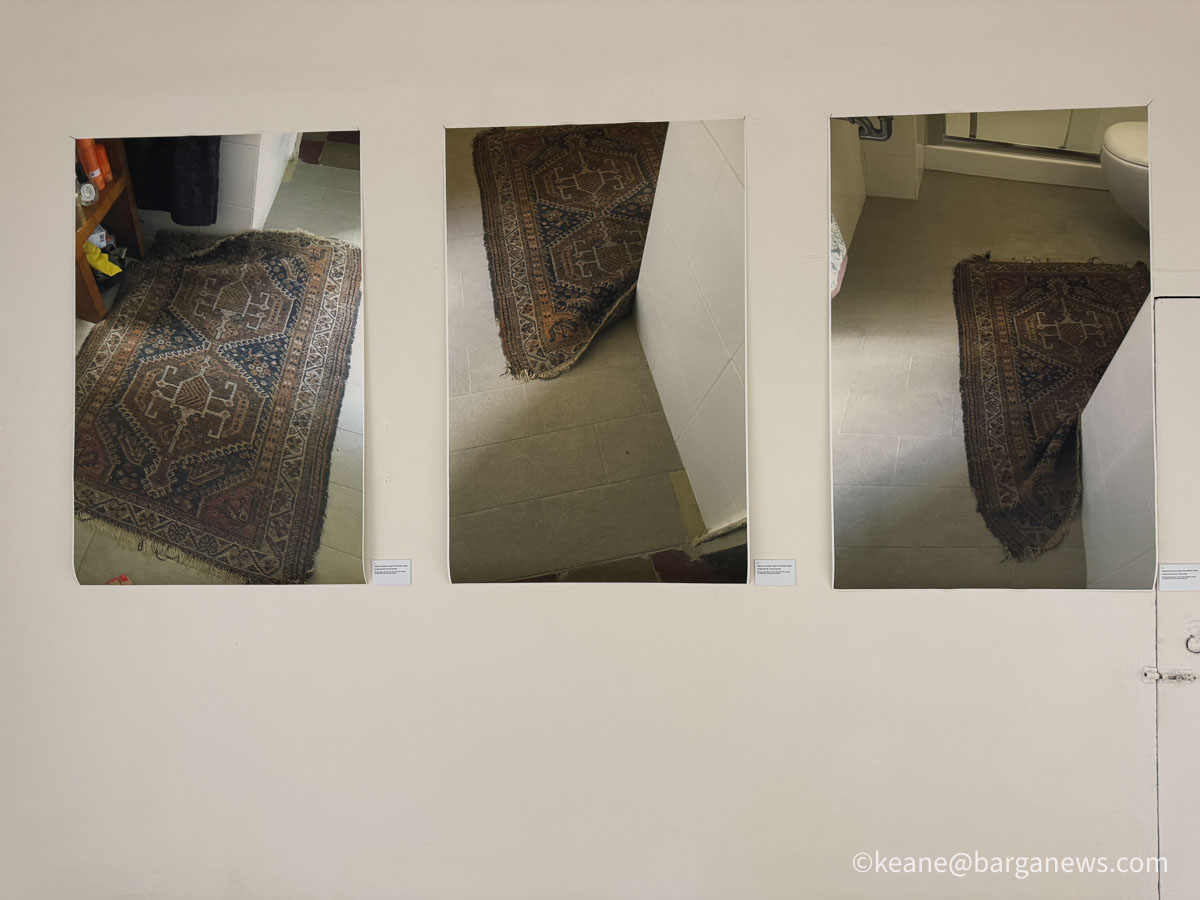
During the summer of 2023, while Danays was living in Barga, a carpet in her house apparently began moving by itself.
She contacted Roger Clarke, researcher and author of A Natural History of Ghosts, and feminist scholar Selma Sevenhuijsen, whose work has explored the history and symbolism of the two-tailed mermaid.
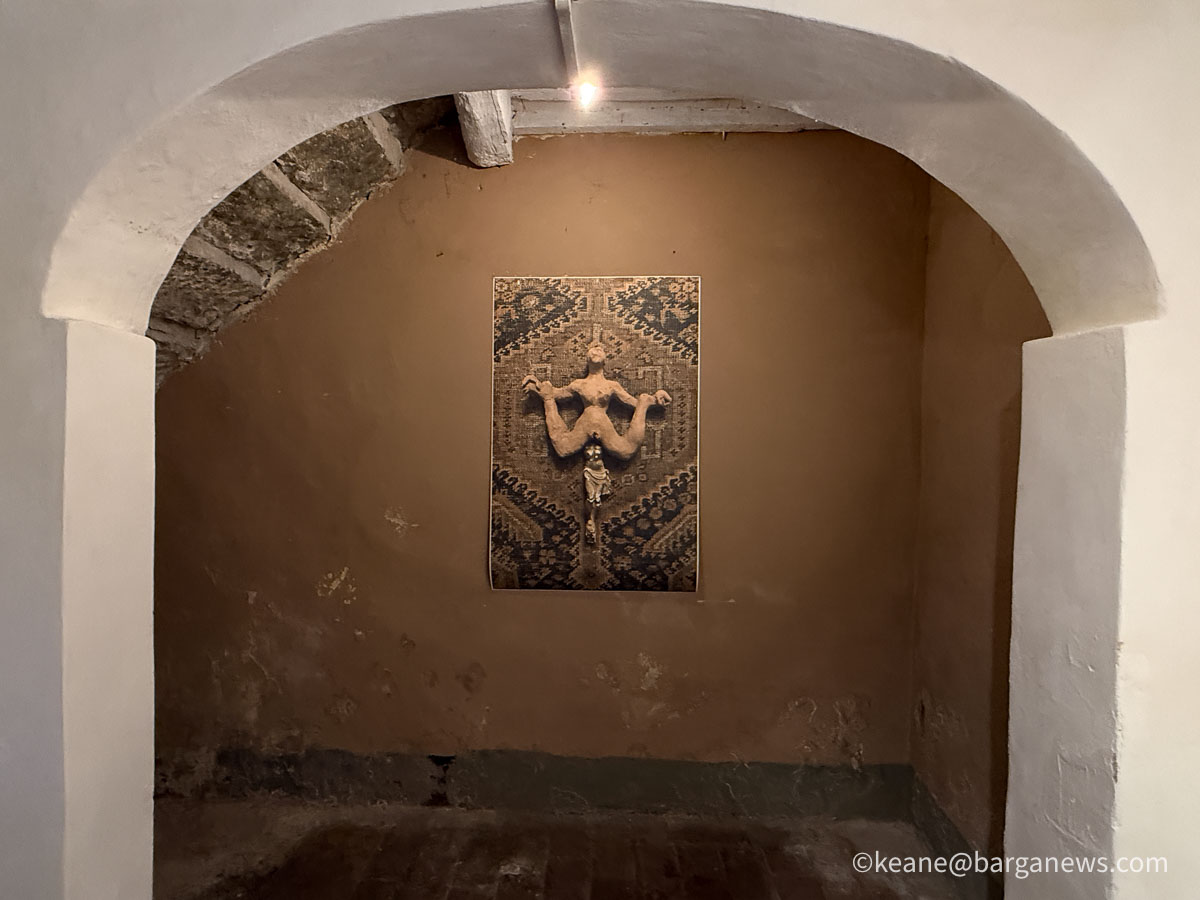
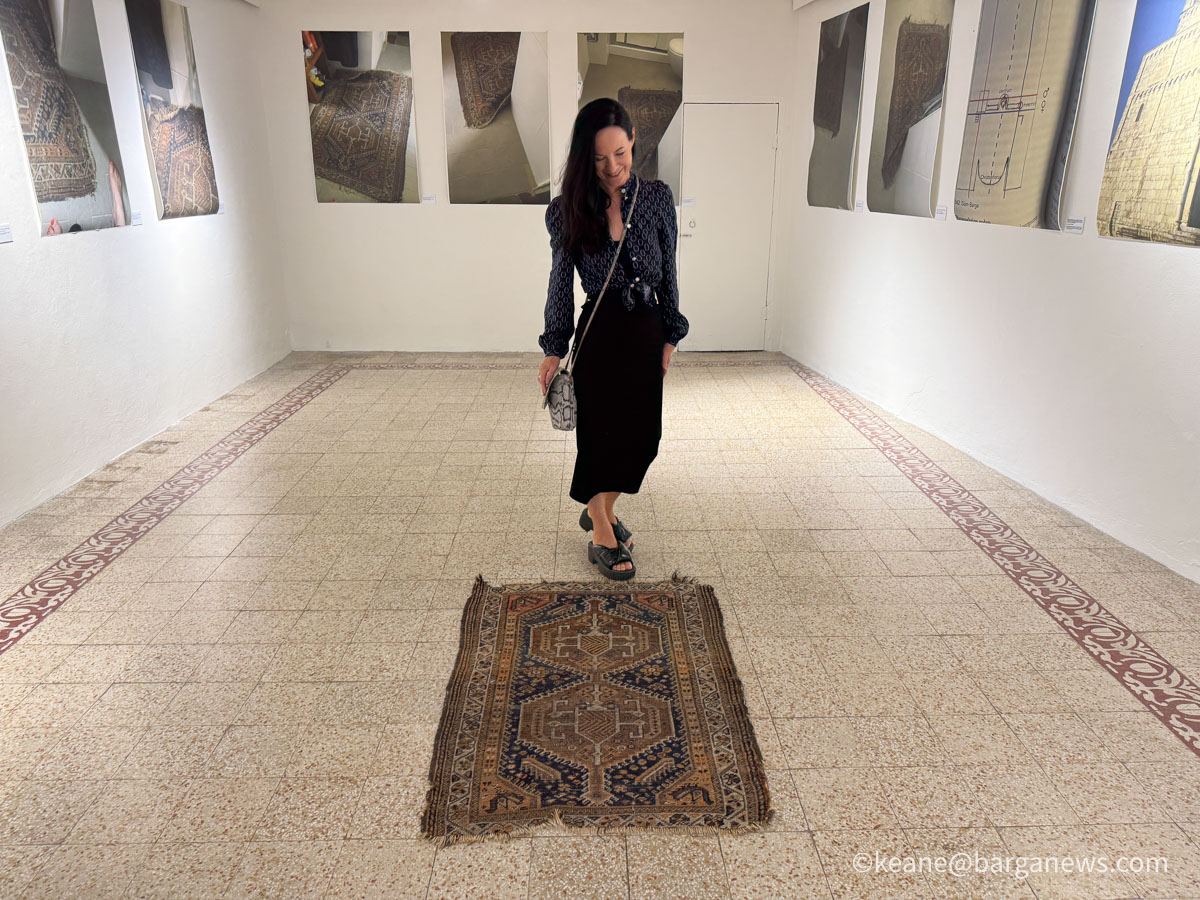
On their advice, Danays took the carpet into the Duomo on 23 August 2023 and placed it at a point she identified through the relationship between the mermaid, the Madonna, San Cristoforo and the crucified Christ.
The date was significant. It was the first anniversary of her mother’s death and the day on which she would have celebrated her 84th birthday.
Danays’ father had been a Church of England vicar and an exorcist, and the idea of an unseen presence within everyday life had been familiar to her from an early age. She said that after prayer inside the cathedral the energy she associated with the carpet disappeared. According to the artist, it never moved again.
The experience led Danays back to the imagery of the Duomo and particularly to the two-tailed mermaid, an ancient female symbol that pre-dates Christianity but survived within the visual language of the cathedral.
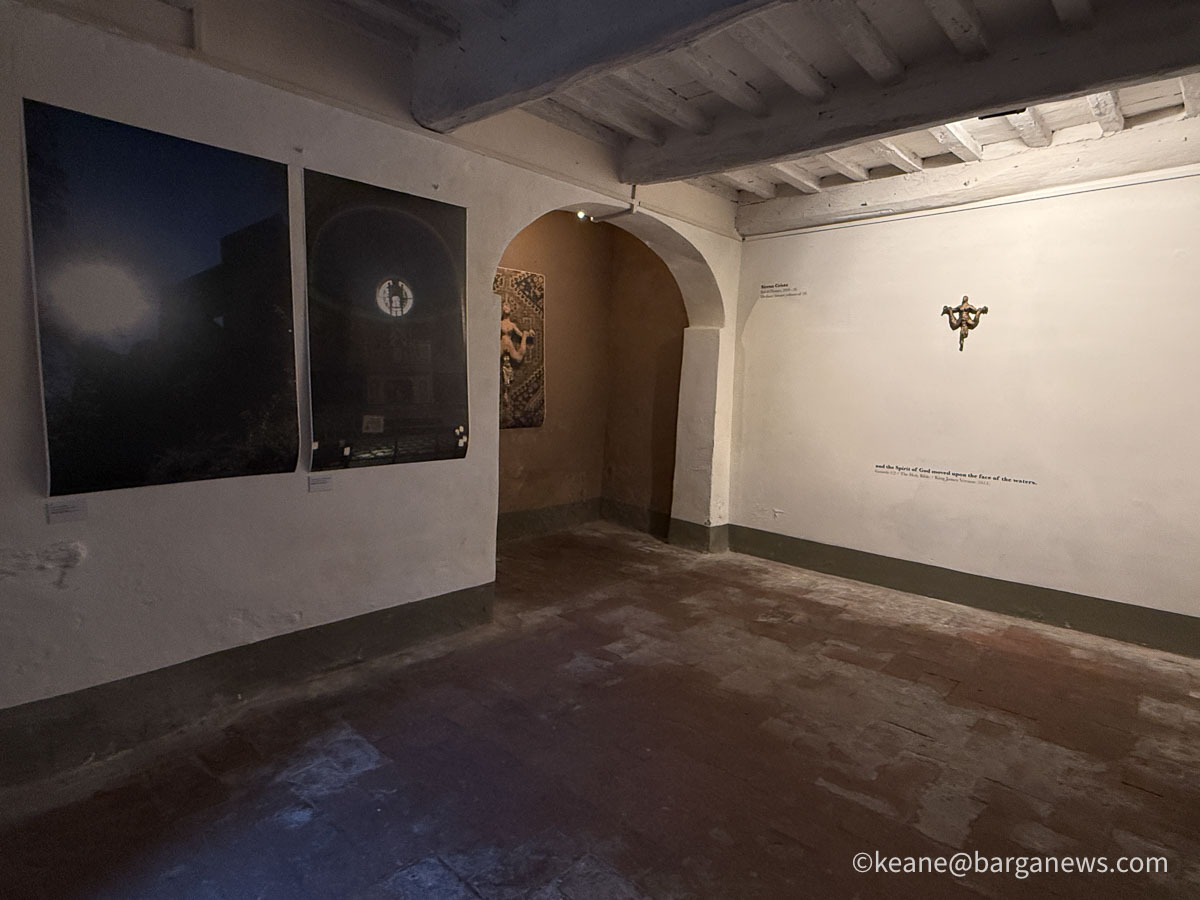
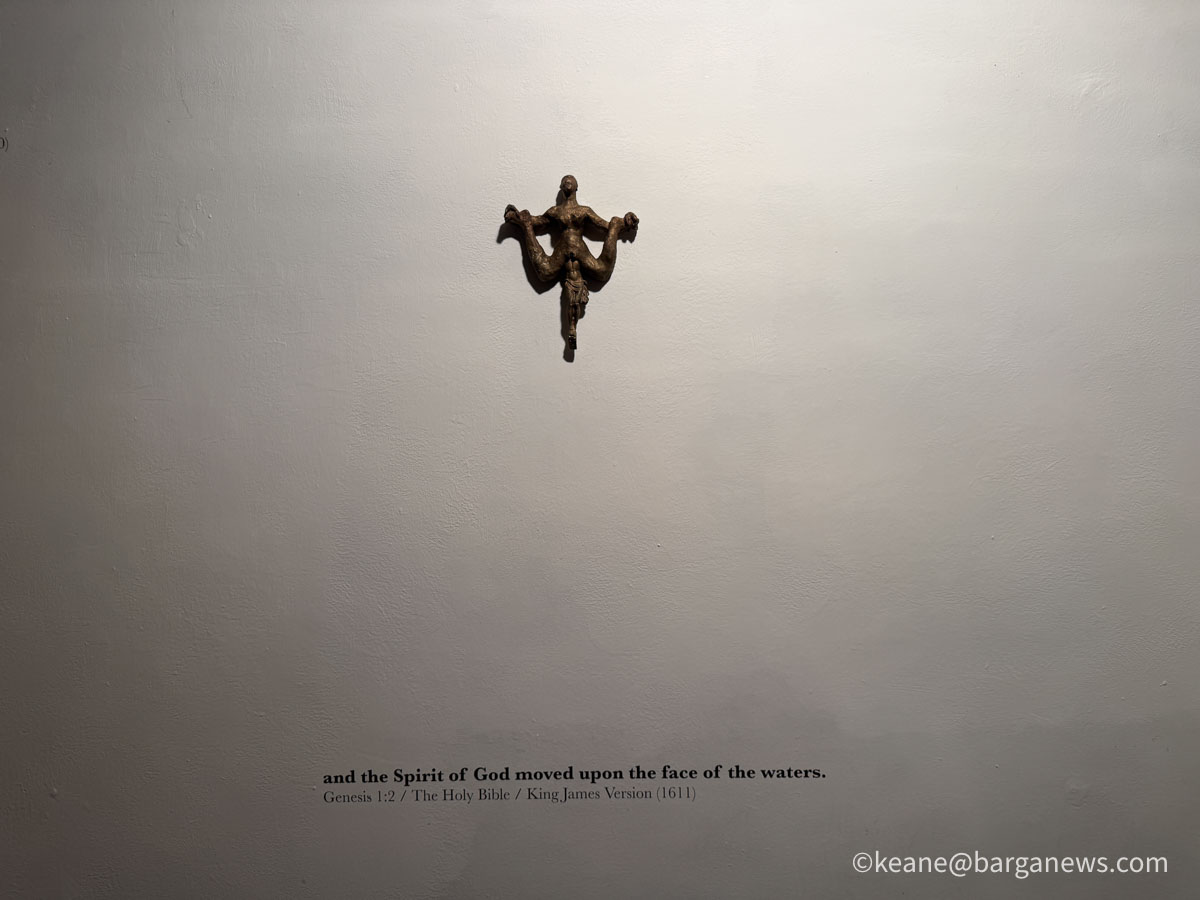
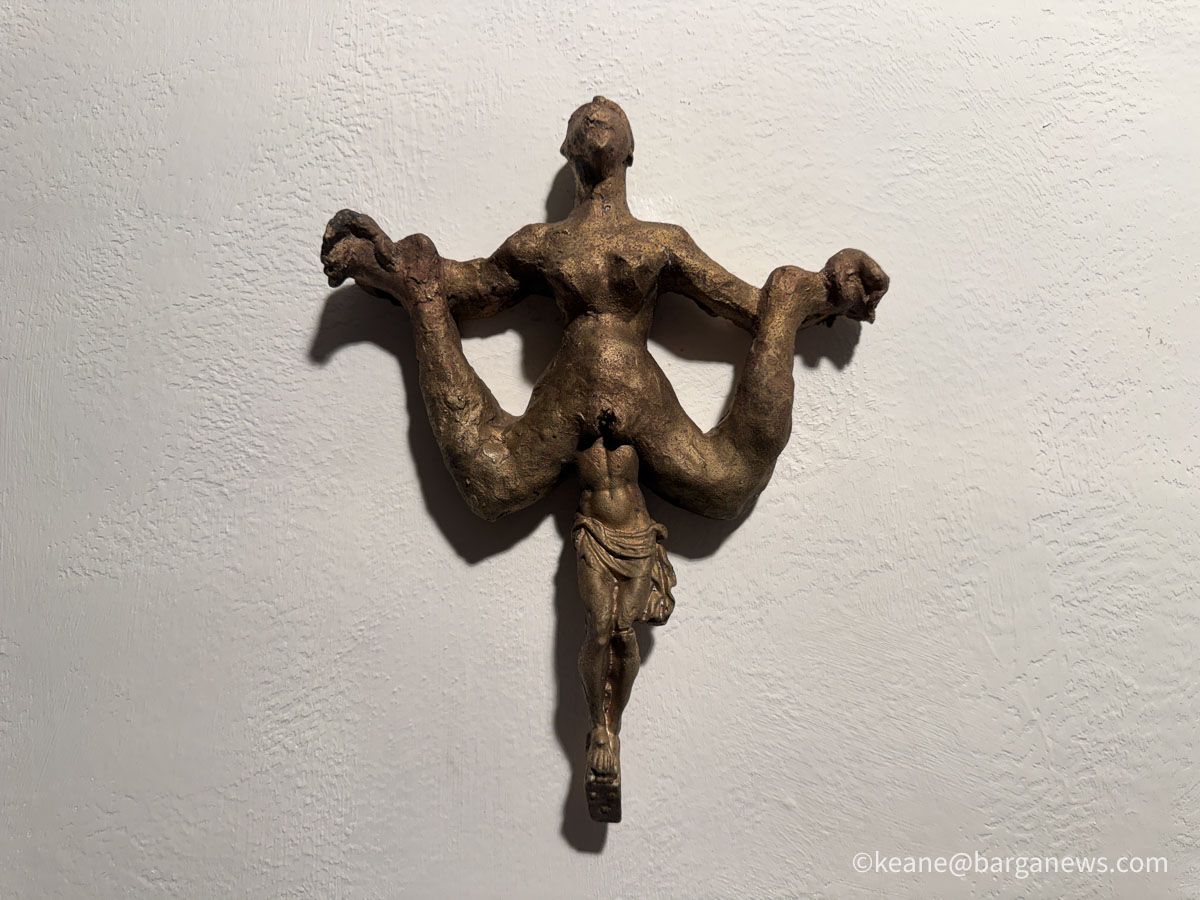
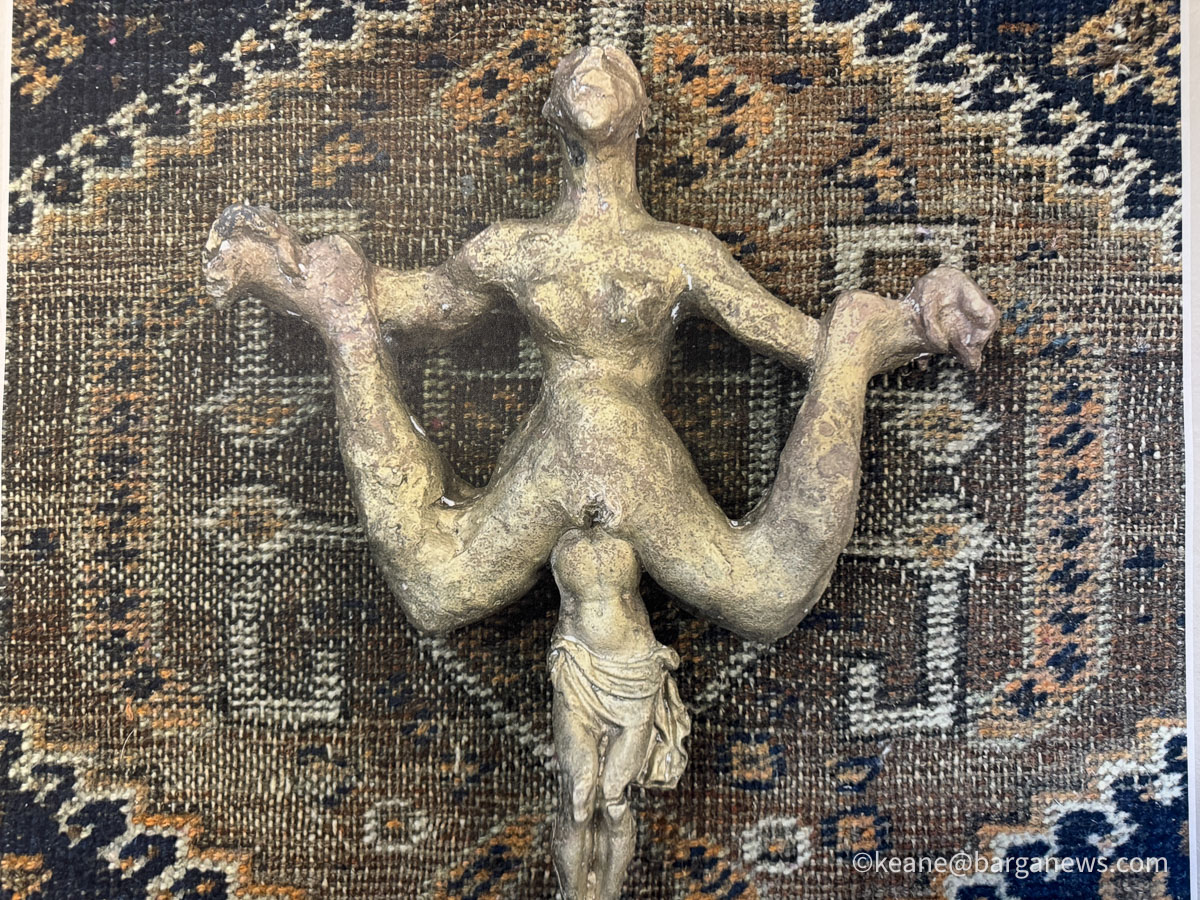
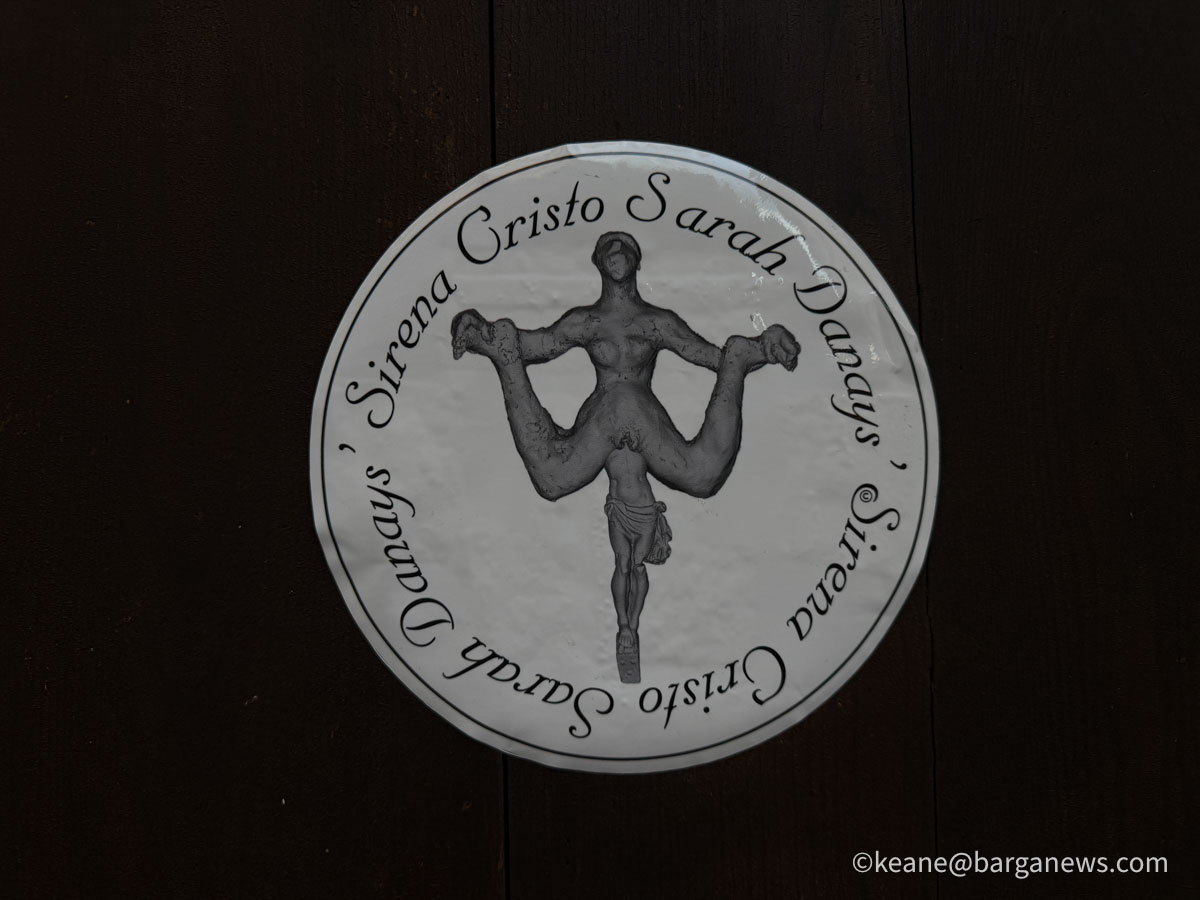
That overlap between different traditions became central to Sirena Cristo. The sculpture that gave the exhibition its name brought the mermaid and Christ together in a single form, while the installation also included 22 large-format photographs and the carpet itself.
The work moved between personal memory, ancient symbolism and the unexplained, asking what might remain hidden within objects and images that have become so familiar that they are no longer really seen.
Danays, born in 1965, is an Anglo-Irish sculptor and photographer whose work has been exhibited internationally and entered public and private collections in Europe, the United States and Australia.
Her practice often focuses on objects carrying traces of damage, history or previous lives. Working with researchers and academic institutions, she has sometimes repaired or transformed damaged objects through a process she describes as “metaphysical surgery”. She is currently a Leverhulme Fellow at the Royal College of Art in London.
In “Sirena Cristo”, those longstanding interests found their focus in Barga — in the Duomo, a medieval stone carving and a strange event inside a house in the city.
The work is explicitly feminist. The figure of the two-tailed siren is shown giving birth to Christ, rather than holding or supporting him. An important detail is that Christ’s feet project away from the wall: if the figure were pressed flat against it, the relationship between the two bodies could be read very differently, almost as though Christ were supporting the female figure. Instead, the intention is that he is emerging from her.
For the artist, the piece is concerned with life, death and rebirth, and with the spiritual significance of particular places. She wanted to make the work in a location that she regarded as having a strong sense of healing, spirituality and goodness. Barga was chosen partly because of its association with what is sometimes called the St Michael line — the supposed alignment of a series of ancient religious sites dedicated to the Archangel Michael.
Her research also led her into the history of Christianity and the changing position of women, sexuality and the family within the Church. She referred particularly to the period in which clerical celibacy became increasingly enforced in the medieval Western Church, replacing an earlier situation in which some priests had wives and families. For her, that history forms part of a much broader examination of institutional religion, the body and the separation of sexuality from spiritual authority.
That connects with another continuing strand in her work: violence against women and, more broadly, gender-based violence and the abuse of power. She also spoke about sexual abuse within religious institutions and contemporary cases of sexual exploitation. These concerns place the sculpture in a deliberately uncomfortable territory, bringing together the female body, birth, Christianity, sexuality, violence and spiritual renewal.
The result is not intended as a conventional religious image. The pagan siren gives birth to Christ, deliberately collapsing two apparently opposing traditions into a single body. The work asks the viewer to consider what happens when the feminine and the sacred, pagan symbolism and Christianity, birth and death are no longer kept separate.
That also makes the line beneath the sculpture — “and the Spirit of God moved upon the face of the waters” — particularly significant. Water, the siren, birth and the Christian idea of creation all begin to overlap.
Sirena Cristo remained open at the Galleria Comunale and 3.1 Spazio Liminale, Via di Borgo, until 4 October, on Fridays, Saturdays and Sundays from 17.00 to 20.00, in collaboration with 3.1 Spazio Liminale, Barga IT and Saissac FR.




Per un breve istante, due volte all’anno, la luce del sole entra nel Duomo di Barga e illumina la parete dove, nella pietra, è scolpita una piccola figura pagana: una sirena a due code.
Questo straordinario incontro tra paesaggio, luce e scultura medievale è al centro di Sirena Cristo, l’installazione della scultrice e fotografa anglo-irlandese Sarah Danays, inaugurata il 19 settembre alla Galleria Comunale e a 3.1 Spazio Liminale in Via di Borgo.
Inserita nel programma Barga Castello dell’Arte del Comune di Barga, la mostra esplora i diversi strati di simbolismo pagano e cristiano che si sono sedimentati nel Duomo nel corso dei secoli. Ma all’origine del progetto c’è anche un episodio molto più personale e difficile da spiegare.
Durante l’estate del 2023, mentre viveva a Barga, Danays racconta che un tappeto nella sua casa avrebbe cominciato a muoversi da solo.
L’artista si rivolse a Roger Clarke, ricercatore e autore di A Natural History of Ghosts, e alla studiosa femminista Selma Sevenhuijsen, che ha approfondito la storia e il simbolismo della sirena bicaudata.
Su loro consiglio, il 23 agosto 2023 Danays portò il tappeto nel Duomo, collocandolo in un punto individuato attraverso il rapporto tra la sirena, la Madonna, San Cristoforo e il Cristo crocifisso.
La data aveva un significato particolare: era il primo anniversario della morte della madre dell’artista e il giorno in cui avrebbe compiuto 84 anni.
Il padre di Danays era stato vicario della Chiesa d’Inghilterra ed esorcista, e l’idea di una presenza invisibile nella vita quotidiana aveva quindi accompagnato l’artista fin da giovane. Danays racconta che, dopo la preghiera all’interno della cattedrale, l’energia che associava al tappeto scomparve. Da allora, secondo l’artista, non si è più mosso.
Quell’esperienza riportò Danays verso l’iconografia del Duomo e in particolare verso la sirena bicaudata, antico simbolo femminile precedente al cristianesimo ma sopravvissuto nel linguaggio visivo della cattedrale.
Proprio la sovrapposizione tra tradizioni diverse divenne il nucleo di Sirena Cristo. La scultura che dà il titolo alla mostra riunisce la sirena e Cristo in un’unica forma, mentre l’installazione comprende anche 22 fotografie di grande formato e il tappeto stesso.
Il lavoro si muove così tra memoria personale, simbolismo antico e inspiegabile, interrogandosi su ciò che può rimanere nascosto all’interno di oggetti e immagini diventati così familiari da non essere più realmente osservati.
Sarah Danays, nata nel 1965, è una scultrice e fotografa anglo-irlandese le cui opere sono state esposte a livello internazionale e sono entrate in collezioni pubbliche e private in Europa, Stati Uniti e Australia.
La sua ricerca si concentra spesso su oggetti che portano con sé tracce di danni, storia o vite precedenti. Collaborando con studiosi e istituzioni accademiche, Danays ha talvolta riparato o trasformato oggetti danneggiati attraverso un processo che definisce “chirurgia metafisica”. Attualmente è Leverhulme Fellow al Royal College of Art di Londra.
In Sirena Cristo, questi interessi hanno trovato il loro punto d’incontro proprio a Barga — nel Duomo, nel Monte Forato, in una scultura medievale e in uno strano episodio avvenuto in una casa della città.
L’opera è esplicitamente femminista. La figura della sirena a due code è rappresentata mentre dà alla luce Cristo, anziché sorreggerlo. Un dettaglio importante è che i piedi di Cristo si staccano dalla parete: se la figura fosse completamente appoggiata al muro, il rapporto tra i due corpi potrebbe essere letto in modo molto diverso, quasi come se fosse Cristo a sostenere la figura femminile. L’intenzione, invece, è che Cristo stia emergendo da lei.
Per l’artista, l’opera parla di vita, morte e rinascita, ma anche del significato spirituale di determinati luoghi. Voleva realizzare il lavoro in un luogo che percepisse come particolarmente forte, legato alla guarigione, alla spiritualità e al bene. Barga è stata scelta anche per la sua associazione con quella che viene talvolta chiamata la linea di San Michele, il presunto allineamento di una serie di antichi luoghi religiosi dedicati all’Arcangelo Michele.
La sua ricerca l’ha portata anche ad approfondire la storia del Cristianesimo e il cambiamento del ruolo delle donne, della sessualità e della famiglia all’interno della Chiesa. Ha fatto riferimento in particolare al periodo in cui, nella Chiesa occidentale medievale, il celibato ecclesiastico cominciò ad essere imposto con maggiore rigidità, sostituendo una situazione precedente nella quale alcuni sacerdoti avevano mogli e famiglie. Per l’artista, questa storia fa parte di una riflessione molto più ampia sulla religione istituzionale, sul corpo e sulla separazione tra sessualità e autorità spirituale.
Questo si collega a un altro tema costante del suo lavoro: la violenza contro le donne e, più in generale, la violenza di genere e l’abuso di potere. L’artista ha parlato anche degli abusi sessuali all’interno delle istituzioni religiose e di casi contemporanei di sfruttamento sessuale. Sono temi che collocano volutamente la scultura in un territorio scomodo, mettendo insieme il corpo femminile, la nascita, il Cristianesimo, la sessualità, la violenza e la possibilità di una rinascita spirituale.
Il risultato non vuole essere un’immagine religiosa convenzionale. È la sirena pagana a dare alla luce Cristo, facendo convergere deliberatamente due tradizioni apparentemente opposte in un unico corpo. L’opera invita così a riflettere su cosa accade quando il femminile e il sacro, il simbolismo pagano e il Cristianesimo, la nascita e la morte non vengono più tenuti separati.
In questo contesto acquista un significato particolare anche la frase posta sotto la scultura: «e lo Spirito di Dio aleggiava sulla superficie delle acque». L’acqua, la sirena, la nascita e l’idea cristiana della creazione finiscono così per sovrapporsi e diventare parte della stessa immagine.
Sirena Cristo rimarrà aperta alla Galleria Comunale e a 3.1 Spazio Liminale, in Via di Borgo, fino al 4 ottobre, il venerdì, sabato e domenica dalle 17 alle 20, in collaborazione con 3.1 Spazio Liminale, Barga IT e Saissac FR.