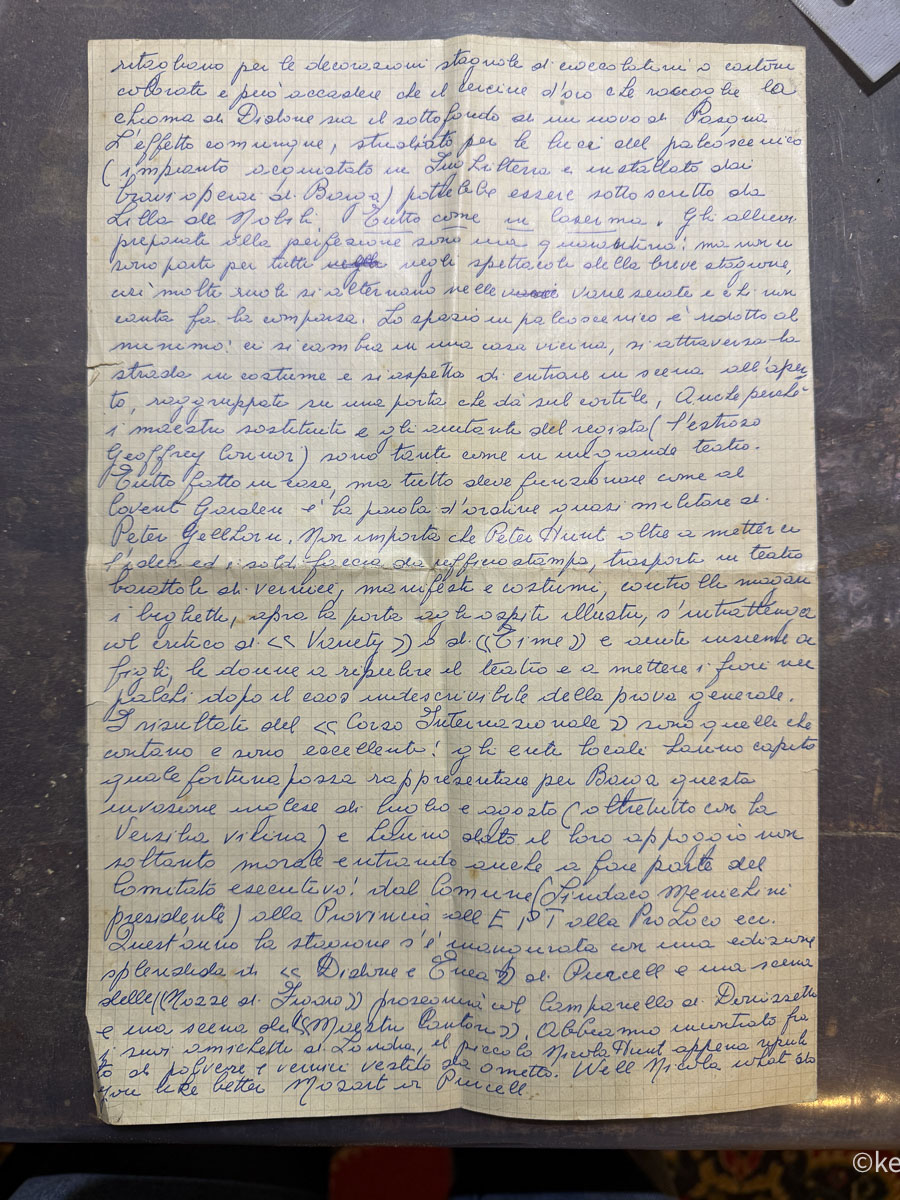
A Forgotten Handwritten Article Found Inside a Book in Barga Vecchia Reveals the Early Days of Opera Barga
Sometimes the history of Barga turns up in the most unexpected places.
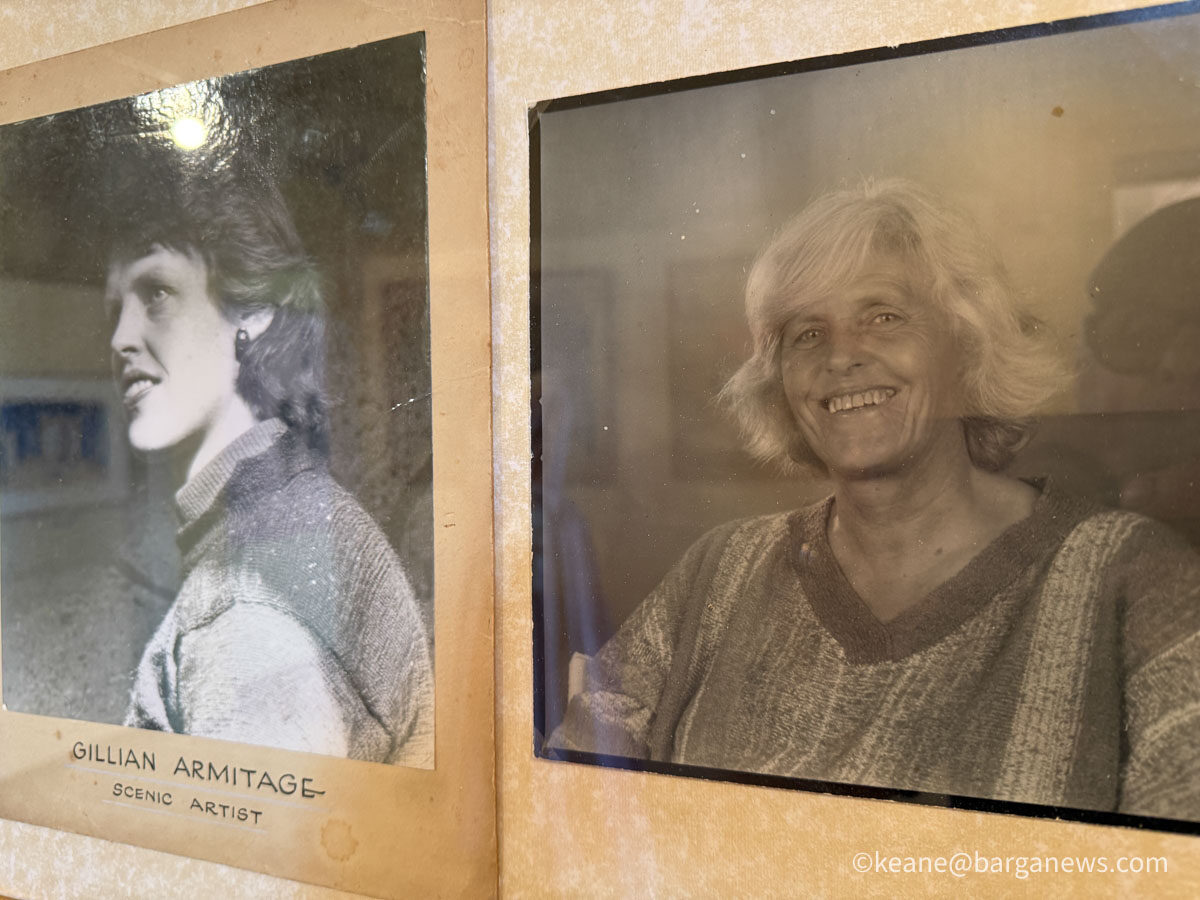
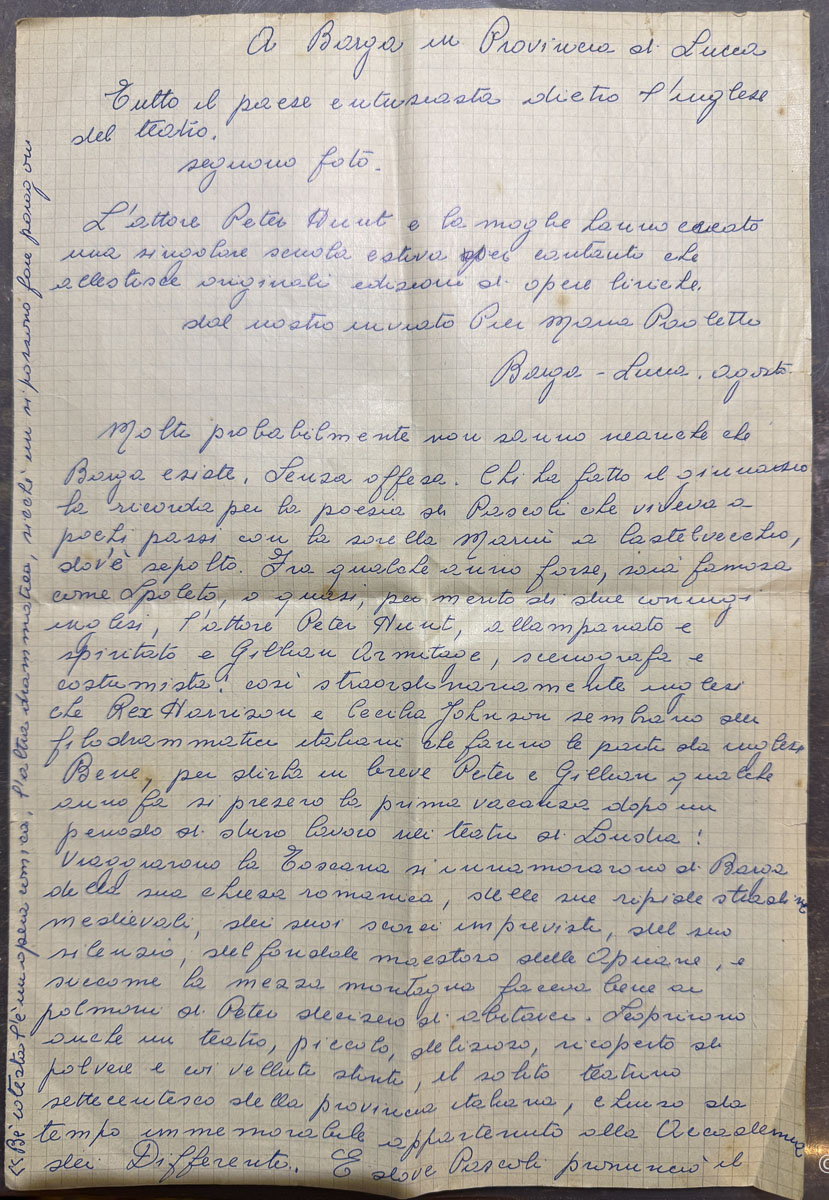
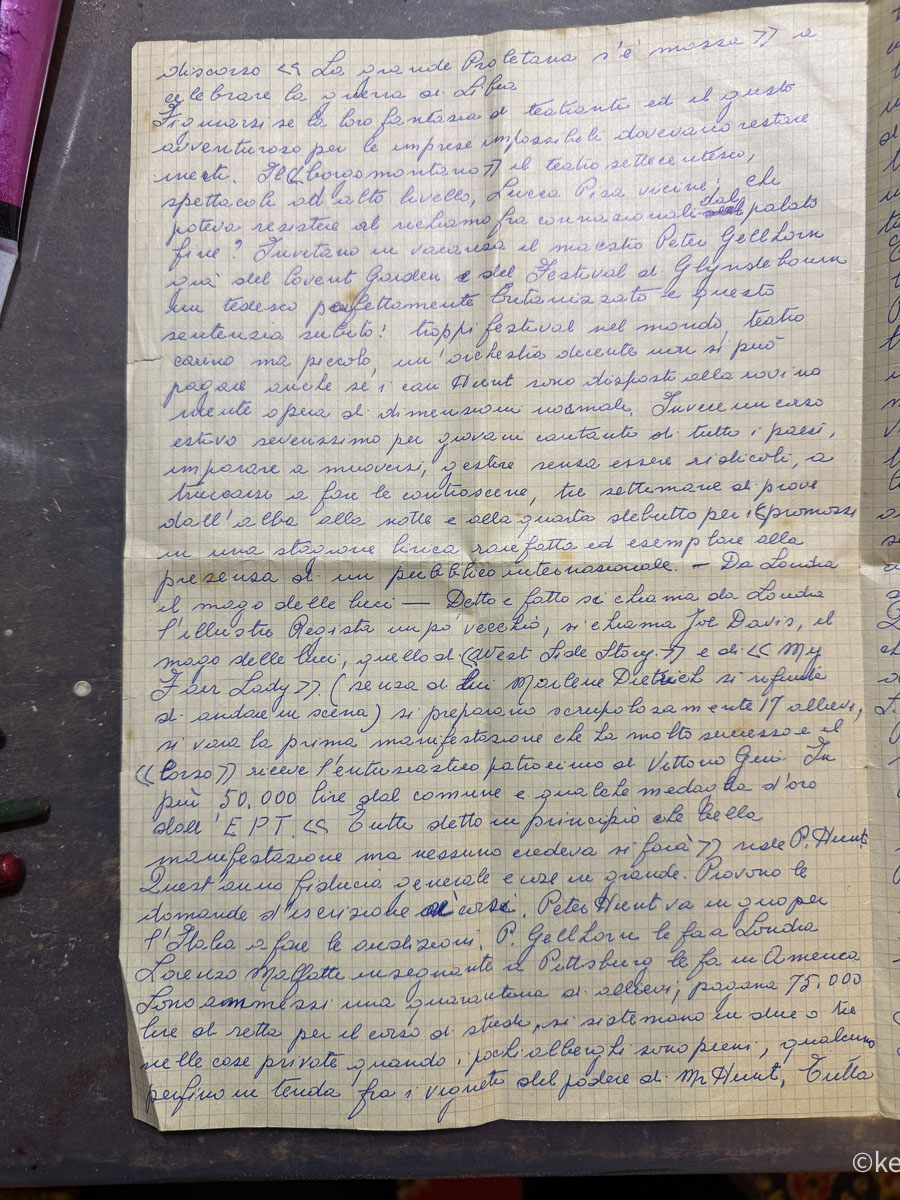
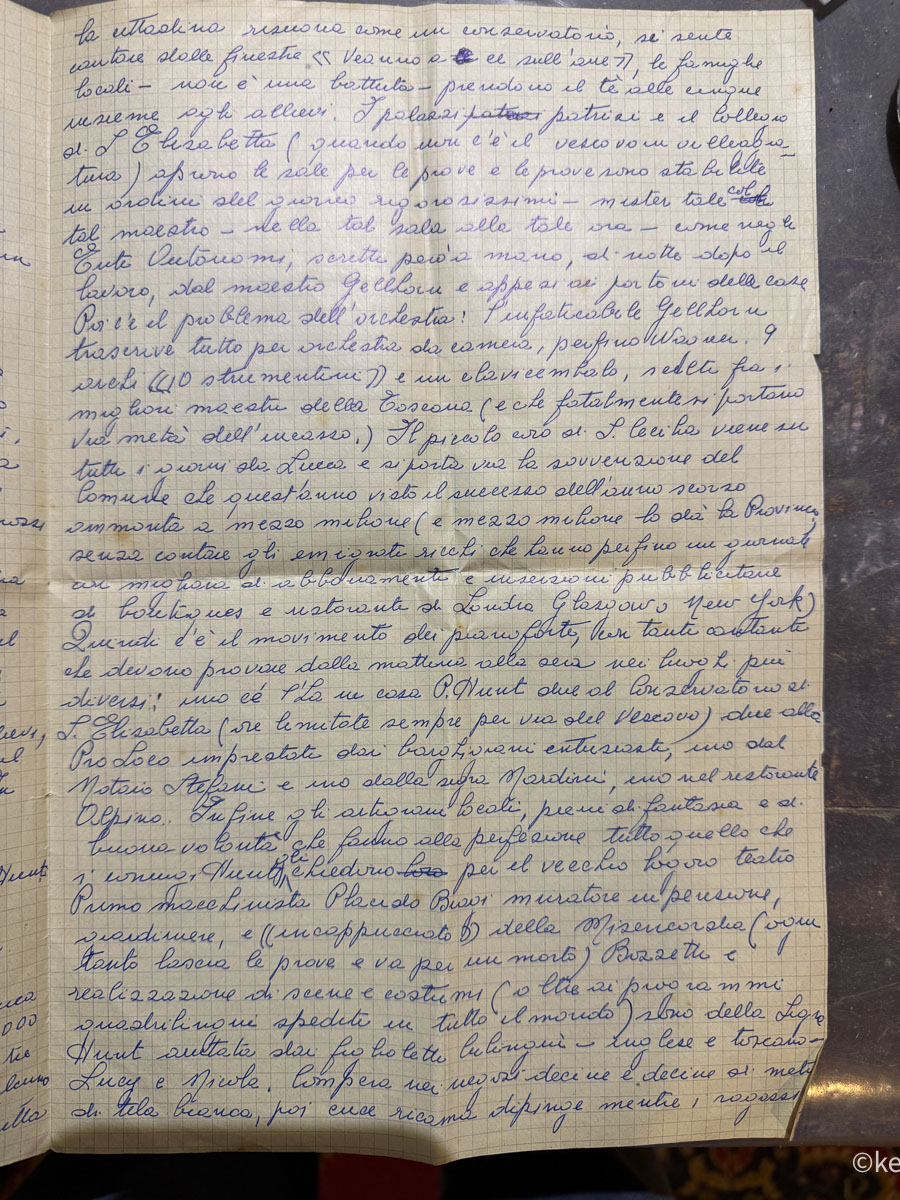
This week, tucked away between the pages of an old book in Barga Vecchia, a four-page handwritten document came to light. Written in Italian, it tells the story of two English theatre professionals, Peter Hunt and Gillian Armitage, and their ambitious plans to bring international theatre to Barga.
The document appears to be a draft of a newspaper article, written at a time when the Teatro dei Differenti was being brought back to life through an extraordinary combination of professional theatrical experience, local enthusiasm and considerable improvisation.
It begins by suggesting that very few people outside the area would even know where Barga was. But perhaps, the writer speculates, the city might one day become almost as famous as Spoleto, thanks to the work of these two English visitors.
The story begins with a holiday.
After a demanding period working in the London theatre, Peter Hunt and Gillian Armitage came to Tuscany and discovered Barga. They were captivated by its Romanesque Duomo, the steep medieval streets, the unexpected views, the silence and the magnificent backdrop of the Apuan Alps.
The mountain air apparently suited Peter’s health, and the couple decided to stay.
They also discovered the Teatro dei Differenti.
The small historic theatre, with its faded velvet furnishings and dusty interior, had seen better days. But where others might have seen an ageing building with limited facilities, Hunt and Armitage saw the possibility of creating something quite remarkable.
Their idea was to establish an international summer theatre school, bringing young performers to Barga to work alongside experienced professionals and stage productions in the little theatre.
The handwritten account describes the enormous practical difficulties involved.
There was hardly any room backstage. Performers sometimes had to move through the narrow streets in costume while waiting to make their entrances. Scenery had to be constructed, costumes found, lighting arranged and accommodation organised for visiting students.
Peter Hunt himself was apparently involved in everything from moving furniture and scenery to dealing with the countless small problems that accompany a theatrical production.
Gillian Armitage, a set and costume designer, was equally involved in the artistic and practical preparations, including the complicated business of organising musicians for the performances.
The document also refers to connections with the British theatrical world, including Covent Garden and the Glyndebourne Festival, while productions such as West Side Story and My Fair Lady are mentioned in the account.
But perhaps the most interesting part of the discovery is not the theatrical programme itself.
It is the description of how Barga responded.
Families opened their homes to visiting performers. Local carpenters, electricians and craftsmen helped prepare the theatre. Businesses and private individuals offered assistance, while the municipality, the Province and local organisations provided financial support.
The writer also mentions contributions from people with connections to Barga living abroad, including in London, Glasgow and New York.
What had begun as the enthusiasm of two English theatre professionals was becoming a project involving much of the city.
There is something particularly appealing about the way the document describes the contrast between the ambitions of the organisers and the physical limitations of the Teatro dei Differenti.
International theatrical experience was being brought into a small historic theatre where almost everything had to be improvised, adapted or constructed by hand.
And somehow it worked.
The document itself raises almost as many questions as it answers.
It is undated, and although it appears to have been written for publication, it is not yet known whether the article ever appeared in a newspaper or magazine. Several names, dates and details remain difficult to decipher in the handwriting.
Nor do we know how the four pages came to be left inside the book, or how long they had been there.
But their discovery offers a fascinating glimpse into a period when the Teatro dei Differenti was attracting international attention and when the people of Barga were helping to make an ambitious theatrical experiment possible.
The letter has survived quietly between the pages of a book, while the theatre it describes remains very much part of the cultural life of Barga.
A small piece of paper history, unexpectedly returned to the city where the story began.




Un articolo dimenticato, scritto a mano e ritrovato in un libro a Barga Vecchia, racconta i primi anni di Opera Barga
A volte la storia di Barga riemerge nei luoghi più inaspettati.
Questa settimana, tra le pagine di un vecchio libro a Barga Vecchia, è stato ritrovato un documento di quattro pagine scritto a mano. Redatto in italiano, racconta la storia di due professionisti inglesi del teatro, Peter Hunt e Gillian Armitage, e del loro ambizioso progetto di portare il teatro internazionale a Barga.
Il documento sembra essere la bozza di un articolo di giornale, scritto in un periodo in cui il Teatro dei Differenti stava tornando a nuova vita grazie a una straordinaria combinazione di esperienza teatrale professionale, entusiasmo locale e una buona dose di improvvisazione.
Il testo si apre suggerendo che ben poche persone, al di fuori della zona, sapessero persino dove si trovasse Barga. Ma forse, ipotizza l’autrice, un giorno la città sarebbe potuta diventare famosa quasi quanto Spoleto, grazie al lavoro di questi due inglesi.
La storia comincia con una vacanza.
Dopo un intenso periodo di lavoro nei teatri londinesi, Peter Hunt e Gillian Armitage arrivarono in Toscana e scoprirono Barga. Rimasero affascinati dal suo Duomo romanico, dalle ripide strade medievali, dagli scorci inaspettati, dal silenzio e dal magnifico scenario delle Alpi Apuane.
A quanto pare, l’aria di montagna faceva bene alla salute di Peter, e la coppia decise di fermarsi.
Scoprirono anche il Teatro dei Differenti.
Il piccolo teatro storico, con i suoi velluti sbiaditi e gli interni impolverati, aveva conosciuto tempi migliori. Ma dove altri avrebbero visto un edificio invecchiato e con strutture limitate, Hunt e Armitage intravidero la possibilità di realizzare qualcosa di davvero straordinario.
La loro idea era quella di creare una scuola internazionale estiva di teatro, portando a Barga giovani interpreti che avrebbero potuto lavorare accanto a professionisti esperti e mettere in scena spettacoli nel piccolo teatro.
Il racconto manoscritto descrive le enormi difficoltà pratiche che un’impresa del genere comportava.
Dietro le quinte lo spazio era praticamente inesistente. A volte gli interpreti dovevano attraversare in costume le strette vie di Barga mentre aspettavano il momento di entrare in scena. Bisognava costruire le scenografie, trovare i costumi, predisporre le luci e organizzare l’alloggio per gli studenti arrivati da fuori.
A quanto racconta il documento, Peter Hunt si occupava personalmente di tutto, dallo spostamento dei mobili e delle scenografie fino agli innumerevoli piccoli problemi che accompagnano qualsiasi produzione teatrale.
Gillian Armitage, scenografa e costumista, era altrettanto coinvolta nella preparazione artistica e pratica degli spettacoli, compresa la complessa organizzazione dei musicisti necessari per le rappresentazioni.
Il documento fa riferimento anche ai legami con il mondo teatrale britannico, tra cui Covent Garden e il Festival di Glyndebourne, mentre nel racconto vengono citate produzioni come West Side Story e My Fair Lady.
Ma forse l’aspetto più interessante di questa scoperta non riguarda il programma teatrale in sé.
È il racconto di come Barga reagì all’iniziativa.
Le famiglie aprirono le proprie case per ospitare gli artisti in visita. Falegnami, elettricisti e artigiani locali contribuirono alla preparazione del teatro. Attività commerciali e privati cittadini offrirono il loro aiuto, mentre il Comune, la Provincia e le organizzazioni locali garantirono un sostegno economico.
L’autrice menziona anche contributi da parte di persone legate a Barga che vivevano all’estero, tra cui Londra, Glasgow e New York.
Quello che era cominciato con l’entusiasmo di due professionisti inglesi del teatro stava diventando un progetto che coinvolgeva gran parte della città.
C’è qualcosa di particolarmente affascinante nel modo in cui il documento descrive il contrasto tra le ambizioni degli organizzatori e i limiti materiali del Teatro dei Differenti.
L’esperienza del teatro internazionale arrivava in un piccolo teatro storico dove quasi tutto doveva essere improvvisato, adattato o costruito a mano.
E, in qualche modo, funzionò.
Il documento stesso solleva quasi tante domande quante sono le risposte che offre.
Non è datato e, sebbene sembri essere stato scritto per la pubblicazione, non si sa ancora se l’articolo sia mai apparso su un giornale o una rivista. Diversi nomi, date e particolari rimangono difficili da decifrare nella scrittura a mano.
Non sappiamo nemmeno come quelle quattro pagine siano finite all’interno del libro, né per quanto tempo siano rimaste lì.
Ma la loro scoperta offre uno sguardo affascinante su un periodo in cui il Teatro dei Differenti attirava l’attenzione internazionale e gli abitanti di Barga contribuivano a rendere possibile un ambizioso esperimento teatrale.
Il documento è rimasto silenziosamente custodito tra le pagine di un libro, mentre il teatro che descrive continua a essere una parte importante della vita culturale di Barga.
Un piccolo frammento di storia conservato sulla carta, tornato inaspettatamente alla luce proprio nella città in cui tutto ebbe inizio.