L’anno scorso, nel mese di febbraio, pubblicammo un articolo che oggi riproponiamo integralmente perché, a volte, la vita sa regalare delle belle sorprese e, ogni tanto, è anche giusto concedersi un piccolo momento di soddisfazione.
In quell’articolo avevamo pubblicato un fotomontaggio che mostrava la cabina telefonica rossa di Barga trasformata in una piccola biblioteca. L’immagine era piuttosto convincente, anche se qualche lettore più attento si accorse subito che doveva trattarsi di un falso: la porta della cabina si apriva dal lato sbagliato.
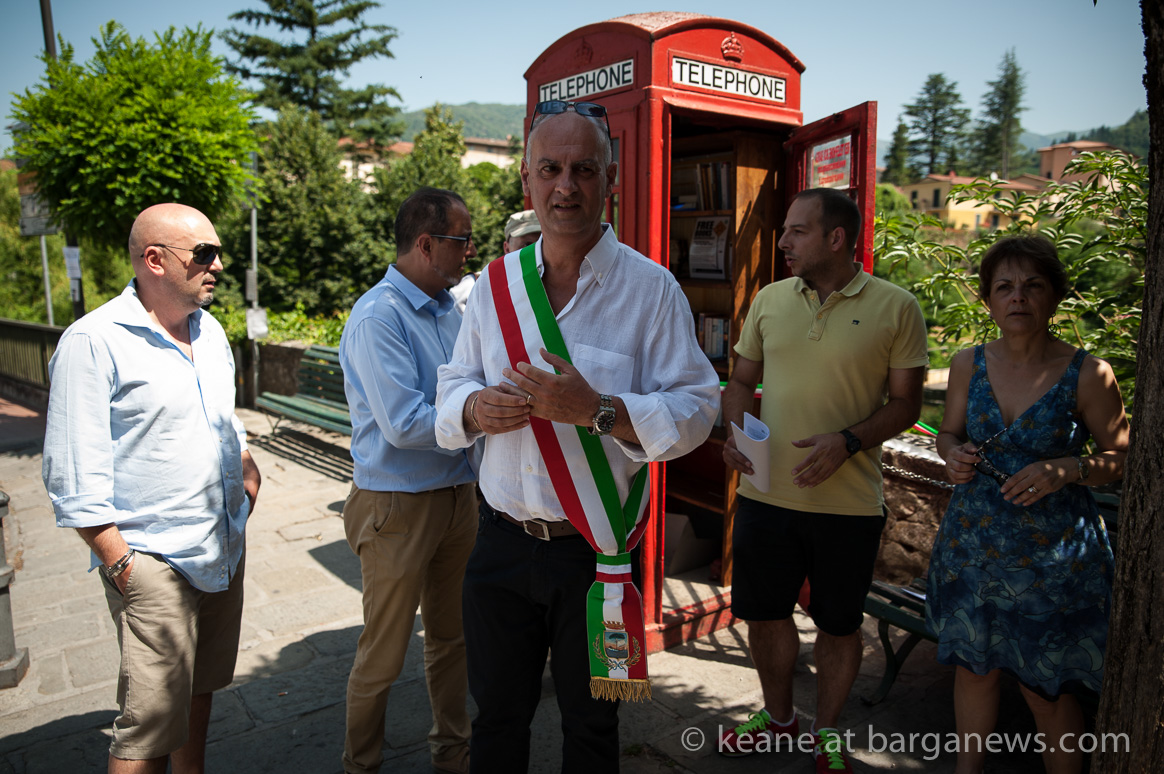
Questa mattina, però, la realtà ha finito per imitare l’immaginazione. La vera cabina telefonica rossa sul ponte è stata trasformata in qualcosa di molto simile a quell’immagine creata al computer e oggi può fregiarsi del titolo di più piccola biblioteca della Toscana.
Grazie ad un progetto nato dalla collaborazione tra la Pro Loco di Barga, il Comune di Barga, Poli Edicola e naturalmente barganews, all’interno della cabina trovano già posto ottanta libri in italiano e in inglese. Tutti i volumi sono stati registrati e inseriti nel circuito internazionale del BookCrossing e altri libri continuano ad arrivare ogni giorno.
Che cos’è il BookCrossing?
È una comunità internazionale dedicata ai libri e alla lettura. L’idea è semplice: ogni libro riceve un codice identificativo che permette di seguirne il percorso mentre passa da un lettore all’altro. In questo modo non si condividono soltanto libri, ma si creano anche collegamenti tra persone che forse non si incontreranno mai.
Attualmente il network conta oltre 1.454.389 BookCrossers e più di 10.981.235 libri che viaggiano in 132 paesi del mondo.
Il punto BookCrossing della cabina telefonica rossa di Barga si trova qui.
Come si può ascoltare nel breve intervento del Sindaco di Barga, Marco Bonini, pronunciato questa mattina durante l’inaugurazione, questa iniziativa rappresenta probabilmente l’ultima possibilità di dare una nuova vita alla cabina telefonica, costantemente vandalizzata sin dalla sua installazione nel 2008.
Già nelle prime ore sono comparsi sui social commenti piuttosto pessimisti. Alcuni sostengono che gli atti vandalici continueranno, altri prevedono che entro poche settimane i libri finiranno gettati nel torrente.
Speriamo sinceramente che questa visione pessimistica venga smentita dai fatti.
Quando è troppo, è troppo: la cabina telefonica rossa
La cabina arrivò a Barga nell’ottobre del 2008 come dono di Mauro Cecchini, ex proprietario di un negozio di fish and chips di Edimburgo, la cui famiglia era originaria di Barga. La storia della sua installazione è raccontata in questo articolo.
Da allora, però, la splendida cabina telefonica K6 in ghisa che collega simbolicamente Barga nuova e Barga vecchia è stata oggetto di continui atti vandalici.
Più volte i tecnici comunali sono intervenuti per ripararla, come documentato qui e qui, sostituendo vetri rotti e pannelli danneggiati. Nulla, invece, è stato possibile fare per il telefono originale, la cui cornetta è scomparsa da tempo.
Con il passare degli anni la cabina è diventata parte integrante del paesaggio cittadino ed è stata fotografata da migliaia di visitatori. Vederla ridotta ad un simbolo di incuria non giova certo all’immagine della città.
Nel settembre del 2013 scrivevamo che la cabina era stata nuovamente restaurata e ridipinta, chiedendoci quanto sarebbe durata questa volta.
La risposta arrivò molto rapidamente: poche settimane.
I vetri furono nuovamente infranti o spinti all’interno e la cabina tornò ad apparire trascurata e abbandonata.
L’iconica cabina telefonica rossa in ghisa, con la sua caratteristica corona e le piccole finestre, fu progettata dal celebre architetto Sir Giles Gilbert Scott. Commissionata per celebrare il Giubileo d’Argento di Re Giorgio V, la cabina K6 divenne uno dei simboli più riconoscibili del Regno Unito. Maggiori informazioni sul modello K6 sono disponibili qui.
In tempi economicamente difficili non è più realistico continuare a spendere denaro, tempo e risorse per restaurare continuamente una struttura che viene sistematicamente danneggiata.
Forse è arrivato il momento di pensare in modo diverso.
È possibile che alcuni dei responsabili dei vandalismi siano giovani che frequentano la zona del ponte mentre attendono l’autobus.
Forse, per alcuni di loro, questa cabina telefonica britannica è sempre stata percepita come un oggetto estraneo nel paesaggio toscano. Nell’epoca degli smartphone e della connessione permanente ad Internet, una cabina telefonica può sembrare un reperto di un altro tempo. Inoltre, sin dal giorno della sua installazione, la porta è sempre rimasta chiusa, impedendo di fatto qualsiasi utilizzo dello spazio interno.
Perdonate il gioco di parole, ma forse era giunto il momento di iniziare a pensare davvero “fuori dalla cabina” prima che diventasse un semplice monumento all’era analogica.
E così nacque una serie di idee.
Una piccola biblioteca
Installare alcune mensole e trasformare la cabina in un punto di scambio libri.
Una piccola serra
Utilizzare tutta quella superficie vetrata per ospitare fiori o persino un piccolo limone.
Un punto informazioni
Una bacheca permanente dedicata ai visitatori.
Una linea diretta con la Befana
Perché non reinstallare il telefono e creare una linea immaginaria con la Befana?
Uno sportello bancomat
Forse poco pratico, ma certamente originale.
Un punto Wi-Fi
Una connessione gratuita per residenti e visitatori.
Oggi, a distanza di tempo, una di quelle idee è diventata realtà.
La cabina telefonica rossa è diventata una biblioteca.
E forse, proprio grazie ai libri, ha finalmente trovato la sua vera funzione.




Back in February of last year we published an article which we now publish again in full below as sometimes life does offer some nice surprises and every now and again it is good to bang ones own drum.
In that article we included a photoshopped image of the red telephone box in Barga transformed into a small library. Although the photoshop was quite effective, one or two readers did notice it had to be fake as the door opened on the wrong side of the box.
This morning “life followed art” as the real red telephone on the bridge was transformed into almost a mirror image of that original fake image and today stands proud as the smallest library in Tuscany.
In a joint project with the Pro Loco, the Comune of Barga, Poli Edicola and of course, barganews there are now 80 books in English and Italian already installed in the box, all registered and ready to take part in the what is now a book crossing zone and more books arriving each day.
What is BookCrossing?
It’s a smart social networking site. It’s a celebration of literature and a place where books get new life. BookCrossing is the act of giving a book a unique identity so, as the book is passed from reader to reader, it can be tracked and thus connecting its readers. There are currently 1,454,389 BookCrossers and 10,981,235 books travelling throughout 132 countries.
The Barga Red telephone box book crossing site is here
As you can here in the short speech (in Italiano) by the Mayor of Barga, Marco Bonini outside the box at this mornings opening, this is probably the last chance for the telephone box as it has been constantly vandalised ever since it was installed in 2008.
Already some comments are arriving on various social medias that this vandalism will probably continue and some have even said that in less than a month all the books will be found thrown over the bridge.
Let’s hope that this pessimistic view of modern life can be proved wrong.
—————-
Enough is enough with the red telephone box
It was a gift to the people of Barga in October of 2008 (article here) from retired fish and chip shop owner Mauro Cecchini – who’s family were originally from Barga but who has been living and working in Edinburgh Scotland for many years but over the past six years the pristine antique K6 cast iron telephone box that has been standing on the bridge between old and new Barga has been under constant attack.
Technicians from the comune again and again have replaced the broken glass panes in the side of the box but unfortunately nothing could be done to repair the telephone itself – the handset long gone, removed by person or persons unknown.
There was some skepticism when the box first appeared on the bridge but since then it has been accepted as a part of the local landscape and has been photographed many times by visitors to Barga and locals alike. To see it reduced to a vandalised box does nothing for the image of the city or society in general here.
Back in September 2013 we published an article (here) about the box saying that it has just been renovated (again), repainted (again) and once again it is looking good but also asking, how long would it last this time ?
The answer came swifly – just a bare few weeks. The glass and perspex panels have once more been pushed in or smashed and the box is looking decidedly dingy, grubby and downright unloved once again.
The iconic cast iron red painted box with its distinctive small window design, crown and telephone panel, was the idea of noted architect Sir Giles Gilbert Scott. He was commissioned to design the box in order to commemorate George V’s Silver Jubilee Year, which heralded a policy to install the so called ‘jubilee kiosks’ into every town or village with a post office. The design, which built upon various prototypes from the 1920s became known as the ‘K6’ and soon became a welcome sight at the roadside across the United Kingdom – more information about the K6 design here
In these times of economic hardship it is no longer possible or feasible to spend money, time and resources in constantly repairing and restoring this telephone box.
Maybe now’s the time to start thinking in a totally different direction.
It would appear that the main culprits for this constant vandalism could well be some of the students from the local schools who use the area by the bridge as they wait for their buses to take them home.
Maybe just maybe, part of the problem is that for some of them this British telephone box is perceived as an intruder into their Tuscan landscape and in the days of smartphones and constant internet connection, is also viewed as a complete anomaly. Added to which, right from the first day that it is installed back in 2008, the door has been rigourously kept shut, making entry into the box absolutely impossible.
Please pardon the pun, but now maybe it is time to start to think “outside of the box” before it turns into a mausoleum for the analogue age
So let’s run one or two ideas past you and see between us what we can come up with.
First of all the box will have to be renovated once again and this time, the door could be left open.
A small book exchange
It would cost very little to install some shelves inside the box and fill them with books which can be readily exchanged.
A small green house
How about making use of all that glass and turning it into a small greenhouse for flowers or even a medium sized lemon tree. There is after all the water source not 2 metres from the box.
An information point
The title says it all,
A direct telephone line to the Befana
Reinstall the telephone and have a direct line to the Befana.
An ATM cash machine
Probably not such a practical idea but then again why not?
WiFi point
A free Wi-Fi point for locals and visitors to Barga alike.