Wouter van Leeuwen War experiences 1944–1945

A visitor to Barga this week had a very interesting and complicated story to tell about his grandfather . 

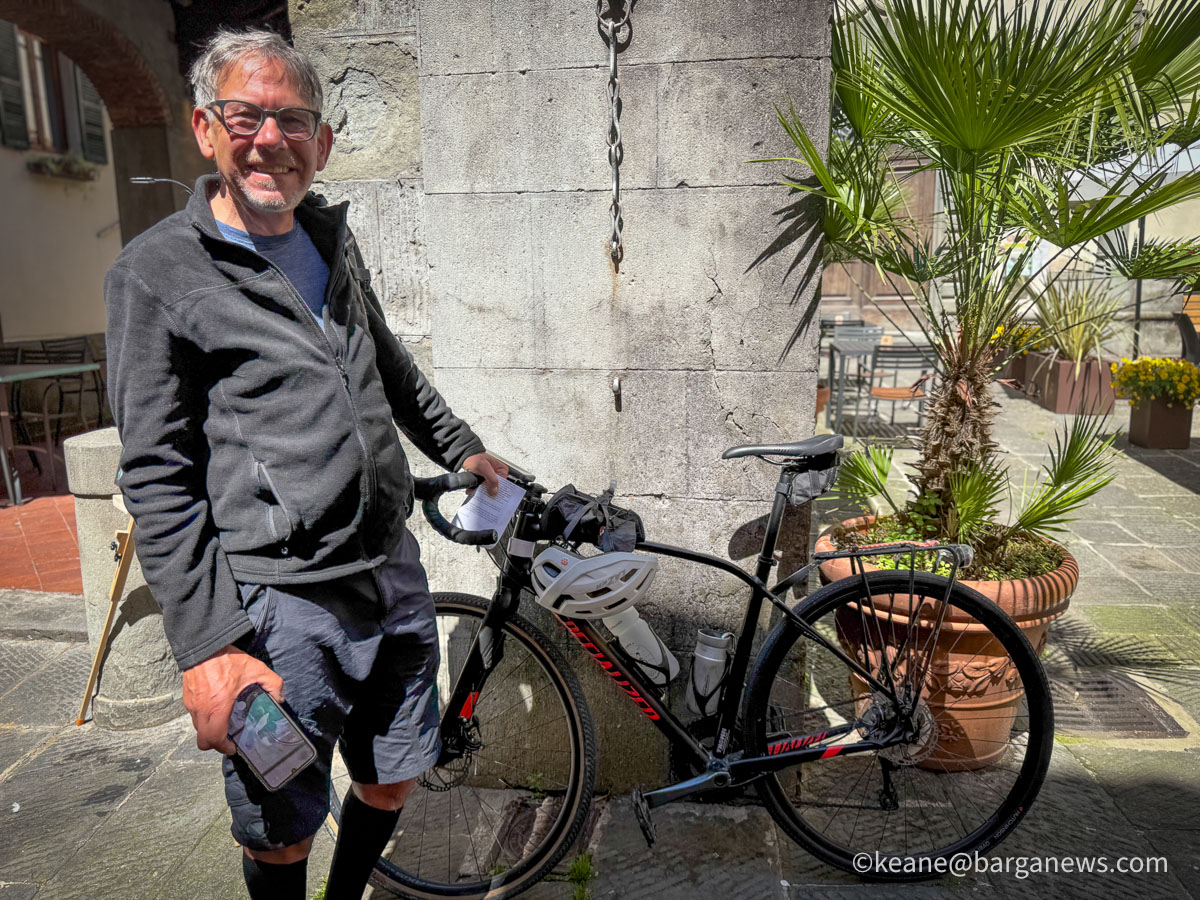
Martin van Leeuwen pedalled into Barga researching places which has grandfather, Wouter (Wout) van Leeuwen had talked about from his wartime experience.

In a long and varied series of events and places during 1944- 1945 , the Christmas he spent with the African-American soldiers serving in the American army made a deep impression on him.

AmsterdamLeidseplein
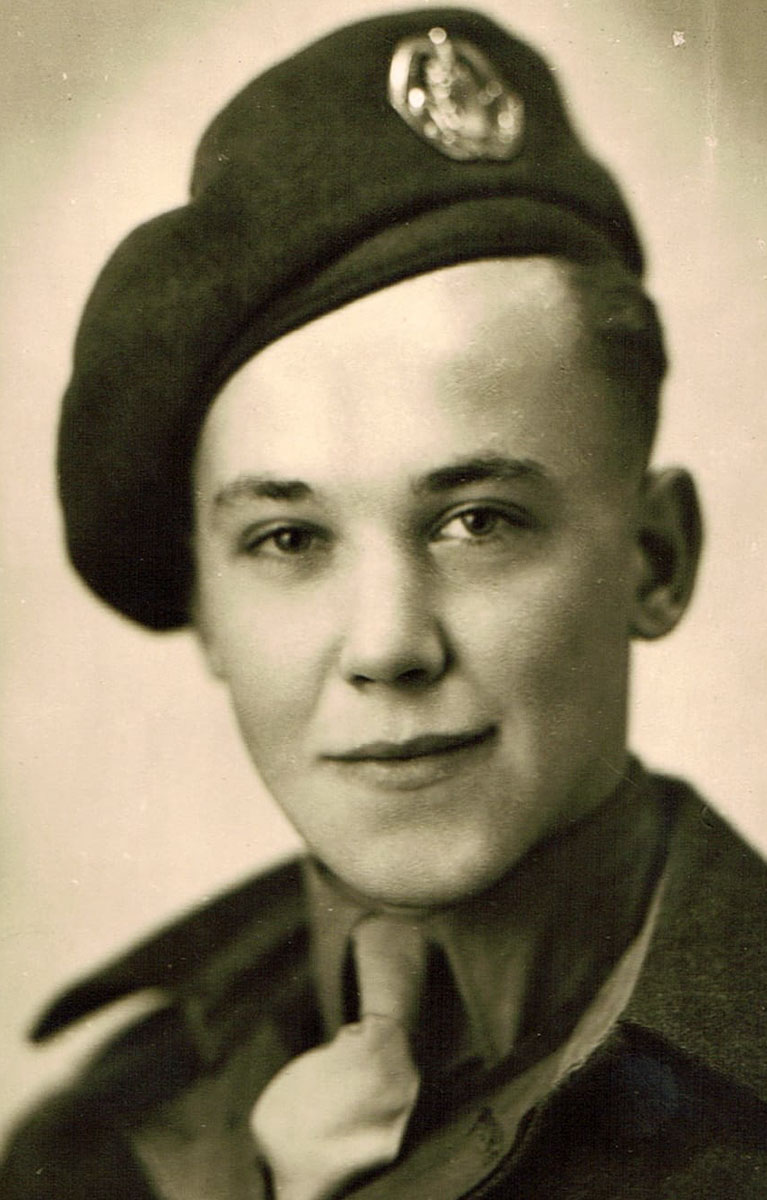
Wouter (Wout) van Leeuwen. War experiences in 1944–1945.
Recorded by his son Martin, around 2014.

On 2 September 1944, Wout was arrested in the centre of Amsterdam. He had just turned 17 years old. It happened in broad daylight, close to the Hotel Americano on Leidseplein. An unknown man asked him to show identification papers. With the remark, “this is not a public performance”, Wout managed to run away. When the man shouted “stop the thief!”, passers-by restrained him. The man was apparently working for the German occupiers.

Wout was taken away and immediately sent by train to Nikolassee (Berlin). His mother and two sisters were not informed.

At Nikolassee he was forced to “unterzeichnen” (register/sign up) for service with what he believed to be the Speer Organisation (presumably the continuation of the Organisation Todt, which supplied labour for the war effort). He was given a German uniform and a booklet containing his personal details.

He was then sent to Frankfurt an der Oder, where he had to carry out repair work on trucks in some kind of camp. There was little food, so petrol cans were secretly stolen, smuggled outside the compound and hidden. Apparently there was a small concealed opening beneath the fence through which the cans could be passed and covered with soil. During the night, local inhabitants exchanged the petrol for food, which was then collected before dawn. Wout took part in this operation.

Unfortunately, the superiors discovered the scheme and those considered involved were sent by train to Lienz carrying a sealed letter (perhaps a service order). Looking back, Wout’s involvement may actually have saved his life, as the camp in Frankfurt was probably later captured or destroyed by the Russians in 1945.

During the train journey, the boys eventually dared to open the letter; one of them could read some German. The destination of Lienz sounded ominous — perhaps a concentration camp.

Upon arrival in Lienz, four of them, including Wout, decided not to wait for their fate and escaped. Their German uniforms made the escape relatively easy, although they were vulnerable because they spoke almost no German. Two of them believed Switzerland was the best option; Wout and another companion thought they had better chances heading towards the Italian front. Wout had heard that Switzerland was completely sealed off, which later proved true.

From Lienz the boys walked towards Innichen, a march of nearly 50 kilometres taking about a day. At the border the German customs official asked where they were going (“Milan”), but caused no further problems.

From Innichen, Wout and his companion managed to hitch rides southwards on military trucks heading towards the front. After two days, his companion abandoned the journey, unwilling or afraid to continue. Wout carried on alone, speaking German when necessary as best he could.

According to Wout himself, his method of survival was simply “to be bold”, a strategy he had already used successfully in earlier years when dealing with farmers in Slotervaart to obtain work and food.

Along the route he ate at kitchens set up for travelling soldiers on their way to the front. The uniform did its work; no awkward questions were asked. He slept during the journeys. He remembered little of the route itself, but sometime during the third or fourth week of September 1944 the driver transporting him warned that they were nearing the front and that it was dangerous to continue. Wout got out and proceeded on foot.

In the evenings, if he came across a hut or abandoned barn, he would sleep on the straw despite the sound of machine-gun fire nearby.

The following morning, to his astonishment, he witnessed an American military advance. American soldiers arrested him while they tried to determine who exactly they had found. Wout spoke little English and encountering the Americans was the last thing he expected.

The military arranged transport to Naples, from where operations at the front were coordinated. An officer who spoke Dutch fluently interviewed him. Although Wout’s story sounded almost unbelievable — travelling from the Netherlands to the Italian front in two and a half weeks — they believed him. However, it was also made clear that he would probably be interned for the remainder of the war.

This would have meant being sent to a large camp at Aversa, north of Naples, mainly holding German prisoners of war. But the officer told him he also had another choice: he could assist the American army by working on transport convoys, although unarmed. He would, however, have to accept that this service gave him no legal rights and imposed no obligations on the Americans after the war.

As internment did not appeal to him at all, he chose the second option, unaware of what awaited him.

At first things seemed manageable. Wout was considered the youngest member of the unit and was treated with sympathy and protection. Among other duties, he served as a co-driver. They called him “Dutchy”.

However, the transport vehicles supplied the front line and therefore became prime targets for German artillery and air attacks. One such attack nearly killed Wout. After 48 hours of continuous bombardment, almost nothing remained of the vehicle. Wout was one of only two or three survivors.

The experience haunted him for the rest of his life in the form of nightmares. Fortunately these became less frequent when, around his fiftieth birthday, he finally decided to speak openly about what he had experienced.

After the horror of the German attack came another experience for which a 17-year-old boy was perhaps not yet prepared — the American world of relaxation and entertainment. Soldiers recovering from traumatic experiences were often sent for a few days to “leave centres”. Wout was no exception. A girl who had become infatuated with him was apparently surprised that he spent the night with her wanting nothing in return.

After a major battle for Naples, the front gradually moved northwards. Wout later described Livorno as an important supply port. He spent Christmas with African-American soldiers serving in the American army. Their singing made a deep impression on him.

Only in April 1945 was all of Italy finally conquered. Yet Wout had to wait until January 1946 before returning home.

Before that he took part in transporting prisoners of war. During the arrests of German POWs he witnessed distressing scenes, and on one occasion was beaten by an American colleague after trying to stop the confiscation of a German prisoner’s watch — a family heirloom. The German prisoner was deeply grateful to him.

Most prisoners seemed relieved when captured, having themselves suffered terribly. The only prisoners who resisted arrest were members of the SS. They could be identified by blood-group tattoos beneath their arms. They were transported separately and treated much more harshly.

Wout also accompanied a transport of Hungarian prisoners of war to the Hungarian border. He had the opportunity to attend a performance at La Scala in Milan (featuring Gigli), and he saw the bodies of Benito Mussolini and his mistress hanging in a small village.

The return journey was interrupted many times, including stays in Mulhouse and Paris. In Paris, Wout gratefully used extra money he had received from the Americans to visit places such as the Moulin Rouge.

Eventually he was taken to the Dutch border and effectively abandoned there by the Americans, who washed their hands of him completely.

At the border, the Dutch authorities arranged his repatriation, though not before confiscating all foreign currency he carried and subjecting him to a lengthy interrogation about his past. The interrogator, who was Jewish, insinuated that Wout’s father had been a member of the NSB in 1943. Furious, Wout hurled a paperweight at his head. Nothing could have been further from the truth.

His father had committed suicide early in the war, driven by fear of the consequences of his activities for the Communist Party in the Netherlands. Those activities were known to the German occupiers because, it later emerged, a German spy had been living opposite their home for months before the invasion.

On 6 July 1940, the day of Wout’s thirteenth birthday, his father hanged himself in the attic of their home in Woubruggestraat. The tragedy deeply affected the neighbourhood.

When Wout finally returned home, the local community paid him much attention. His mother greeted him by saying she had always believed he would come back. The only thing she wanted to know was whether he had behaved himself with girls.

Once again, Wout had to seek help from the American Consulate because the Dutch agency responsible for tracing war criminals (POD) would not leave him alone. Officials had already visited his home, forcing his mother and sisters to testify that he truly was their son and brother because his story sounded so improbable. After his appeal to the consulate, the POD no longer bothered him.

It was the last gesture from his American “employers” after the war. Wout himself never again tried to trace his role within the American army.




Un visitatore arrivato a Barga questa settimana aveva una storia molto interessante e complessa da raccontare riguardo a suo nonno.

Martin van Leeuwen è arrivato a Barga in bicicletta, seguendo le tracce dei luoghi di cui suo nonno, Wouter (Wout) van Leeuwen, aveva parlato raccontando le sue esperienze durante la guerra.

Nel corso di una lunga e straordinaria serie di eventi e luoghi attraversati tra il 1944 e il 1945, il Natale trascorso insieme ai soldati afroamericani dell’esercito americano lasciò in lui un’impressione profonda.
AmsterdamLeidseplein
Wouter (Wout) van Leeuwen. Esperienze di guerra nel 1944-1945.
Registrazione a cura di suo figlio Martin, circa 2014.

Il 2 settembre 1944, Wout fu arrestato nel centro di Amsterdam. Aveva appena compiuto 17 anni. Accadde in pieno giorno, vicino all’Hotel Americano in Leidseplein. Uno sconosciuto gli chiese di mostrare i documenti d’identità. Con la frase «questo non è uno spettacolo pubblico», Wout riuscì a fuggire. Quando l’uomo gridò «fermate il ladro!», alcuni passanti lo bloccarono. L’uomo lavorava apparentemente per gli occupanti tedeschi.

Wout fu portato via e immediatamente inviato in treno a Nikolassee (Berlino). Sua madre e le sue due sorelle non vennero informate.

A Nikolassee fu costretto a “unterzeichnen” (registrarsi/firmare) per prestare servizio presso quella che lui riteneva fosse l’Organizzazione Speer (probabilmente la continuazione dell’Organizzazione Todt, incaricata dei lavori legati allo sforzo bellico). Gli vennero consegnati un’uniforme tedesca e un libretto con i suoi dati personali.

Successivamente fu inviato a Frankfurt an der Oder, dove dovette eseguire lavori di riparazione su camion in una sorta di campo. C’era pochissimo da mangiare, così venivano sottratte di nascosto delle taniche di benzina, fatte passare all’esterno del recinto e nascoste sottoterra. Pare vi fosse una piccola apertura ben celata sotto la recinzione attraverso cui le taniche potevano essere passate e poi ricoperte di terra. Durante la notte gli abitanti del luogo scambiavano la benzina con del cibo, che veniva recuperato all’alba. Anche Wout partecipò a questa attività.

Purtroppo i superiori scoprirono il piano e coloro che vennero considerati coinvolti furono mandati in treno a Lienz con una lettera sigillata (forse un ordine di servizio). Col senno di poi, il coinvolgimento di Wout potrebbe avergli salvato la vita, dato che il campo di Francoforte sull’Oder probabilmente fu successivamente conquistato o distrutto dai russi nel 1945.

Durante il viaggio in treno, i ragazzi trovarono infine il coraggio di aprire la lettera; uno di loro sapeva leggere un po’ di tedesco. La destinazione di Lienz sembrava presagire qualcosa di terribile — forse un campo di concentramento.

Arrivati a Lienz, quattro di loro, tra cui Wout, decisero di non attendere il proprio destino e fuggirono. Le uniformi tedesche resero la fuga relativamente semplice, anche se erano vulnerabili perché parlavano pochissimo tedesco. Due di loro pensavano che la Svizzera fosse la scelta migliore; Wout e un altro compagno vedevano invece maggiori possibilità dirigendosi verso il fronte italiano. Wout aveva sentito dire che la Svizzera fosse completamente sigillata, cosa che più tardi si rivelò vera.

Da Lienz i ragazzi si incamminarono verso Innichen, una marcia di quasi 50 chilometri che richiese circa un giorno. Al confine il doganiere tedesco chiese loro dove fossero diretti («Milano»), ma non creò ulteriori problemi.

Da Innichen, Wout e il suo compagno riuscirono a ottenere passaggi verso sud su camion militari diretti al fronte. Dopo due giorni il compagno abbandonò il viaggio, troppo timoroso di continuare. Wout proseguì da solo, parlando tedesco quando necessario, per quanto gli fosse possibile.

Secondo quanto raccontava lui stesso, il suo metodo per sopravvivere consisteva nell’«essere audace», una strategia che aveva già usato negli anni precedenti quando cercava lavoro e cibo presso i contadini di Slotervaart.

Durante il viaggio mangiava nelle cucine allestite per i soldati in movimento verso il fronte. L’uniforme faceva il suo effetto e nessuno gli poneva domande scomode. Dormiva durante gli spostamenti. Del percorso ricorda poco, ma verso la terza o quarta settimana di settembre 1944 l’autista con cui viaggiava gli disse che stavano avvicinandosi al fronte e che era pericoloso proseguire. Wout scese e continuò a piedi.

La sera, quando trovava una capanna o un fienile abbandonato, si sdraiava sulla paglia e si addormentava nonostante il rumore delle mitragliatrici nelle vicinanze.

La mattina seguente, con suo grande stupore, assistette all’avanzata delle truppe americane. I soldati americani lo arrestarono mentre cercavano di capire chi fosse realmente. Wout conosceva poco l’inglese e incontrare gli americani era l’ultima cosa che si aspettava.

I militari organizzarono il suo trasferimento a Naples, da dove venivano coordinate le operazioni sul fronte. Un ufficiale che parlava bene l’olandese lo interrogò. Sebbene la sua storia apparisse quasi incredibile — dai Paesi Bassi al fronte italiano in due settimane e mezzo — gli credettero. Tuttavia gli venne anche spiegato che probabilmente avrebbe dovuto trascorrere il resto della guerra internato.

Ciò avrebbe significato essere inviato in un grande campo ad Aversa, a nord di Napoli, dove erano detenuti soprattutto prigionieri di guerra tedeschi. Ma l’ufficiale gli disse anche che aveva un’altra possibilità: aiutare l’esercito americano lavorando nei convogli di trasporto, pur restando disarmato. Doveva però accettare che questo servizio non gli avrebbe garantito alcun diritto né alcun obbligo da parte degli americani dopo la guerra.

Poiché l’internamento non lo attirava affatto, scelse comunque quest’ultima opzione, ignaro di ciò che lo attendeva.

All’inizio tutto sembrò abbastanza sopportabile. Wout era considerato il più giovane del gruppo e godeva di simpatia e protezione. Tra le altre cose faceva il secondo autista. Lo chiamavano “Dutchy”.

Tuttavia quei mezzi servivano a rifornire il fronte e per questo erano bersagli privilegiati dell’artiglieria e degli attacchi aerei tedeschi. Uno di questi attacchi rischiò di costargli la vita. Dopo 48 ore di bombardamenti continui, del veicolo rimaneva ben poco; Wout fu uno dei soli due o tre sopravvissuti.

Quell’esperienza lo tormentò per il resto della vita sotto forma di incubi. Fortunatamente divennero meno frequenti quando, attorno ai suoi cinquant’anni, decise finalmente di parlare apertamente di ciò che aveva vissuto.

All’orrore dell’attacco tedesco seguì un’altra esperienza per la quale forse un ragazzo di 17 anni non era ancora preparato: il mondo americano del relax e del divertimento. I soldati che avevano vissuto esperienze traumatiche venivano spesso inviati per qualche giorno nei cosiddetti “leave centres”. Wout non fece eccezione. La ragazza che si era infatuata di lui rimase probabilmente sorpresa dal fatto che trascorse la notte con lei senza pretendere nulla in cambio.

Dopo una grande battaglia per Napoli, il fronte si spostò progressivamente verso nord. Wout ricordava Livorno come un importante porto di rifornimento. Trascorse il Natale insieme ai soldati afroamericani dell’esercito americano. Il loro canto lo colpì profondamente.

Solo nell’aprile del 1945 tutta l’Italia venne definitivamente conquistata. Tuttavia Wout dovette attendere fino al gennaio del 1946 prima di poter tornare a casa.

Prima di allora partecipò al trasporto di prigionieri di guerra. Durante gli arresti dei soldati tedeschi assistette a scene strazianti e in un’occasione venne persino picchiato da un collega americano per aver cercato di impedire la confisca di un orologio — un ricordo di famiglia — a un prigioniero tedesco. Il prigioniero gli fu profondamente riconoscente.

La maggior parte dei prigionieri sembrava sollevata al momento della cattura, poiché anche loro avevano sofferto terribilmente. Gli unici che opponevano resistenza erano i membri delle SS. Venivano identificati controllando il tatuaggio del gruppo sanguigno sotto le ascelle. Erano trasportati separatamente e trattati molto più duramente.

Wout accompagnò anche un convoglio di prigionieri di guerra ungheresi fino al confine con l’Ungheria. Ebbe inoltre l’opportunità di assistere a uno spettacolo alla La Scala di Milano (con Gigli) e vide i corpi di Benito Mussolini e della sua amante appesi in un piccolo villaggio.

Il viaggio di ritorno fu pieno di interruzioni, con soste a Mulhouse e Paris. A Parigi Wout utilizzò con gratitudine il denaro extra ricevuto dagli americani per visitare alcuni luoghi celebri, tra cui il Moulin Rouge.

Alla fine venne accompagnato fino al confine olandese e lì praticamente abbandonato dagli americani, che si lavarono completamente le mani di lui.

Al confine, le autorità olandesi organizzarono il suo rimpatrio, ma non prima di confiscargli tutta la valuta straniera che portava con sé e di sottoporlo a un lungo interrogatorio sul suo passato. L’interrogatore, che era ebreo, insinuò che il padre di Wout fosse stato membro dell’NSB nel 1943. Furioso, Wout gli lanciò contro un fermacarte sfiorandolo alla testa. Nulla poteva essere più falso.

Suo padre si era suicidato all’inizio della guerra, spinto dalla paura delle conseguenze delle sue attività per il Partito Comunista nei Paesi Bassi. Tali attività erano note agli occupanti tedeschi perché, come si scoprì in seguito, una spia tedesca aveva abitato di fronte alla loro casa per mesi prima dell’invasione dei Paesi Bassi.

Il 6 luglio 1940, proprio nel giorno del tredicesimo compleanno di Wout, suo padre si impiccò nella soffitta della loro casa in Woubruggestraat. La tragedia colpì profondamente anche il vicinato.

Quando Wout finalmente tornò a casa, ricevette molta attenzione dal quartiere. Sua madre lo accolse dicendogli che aveva sempre creduto nel suo ritorno. L’unica cosa che voleva sapere era se si fosse comportato bene con le ragazze.

Ancora una volta Wout dovette chiedere aiuto al Consolato americano perché il POD, l’agenzia olandese incaricata di rintracciare i criminali di guerra, continuava a perseguitarlo. Gli agenti erano già stati a casa sua, dove sua madre e le sorelle avevano dovuto testimoniare che fosse davvero loro figlio e fratello, perché la sua storia sembrava incredibile. Dopo l’intervento presso il consolato, il POD smise di disturbarlo.

Fu l’ultimo gesto da parte dei suoi “datori di lavoro” americani dopo la guerra. Wout non cercò mai più di ricostruire il proprio ruolo all’interno dell’esercito americano.
