American artists open the doors at Quattro Archi
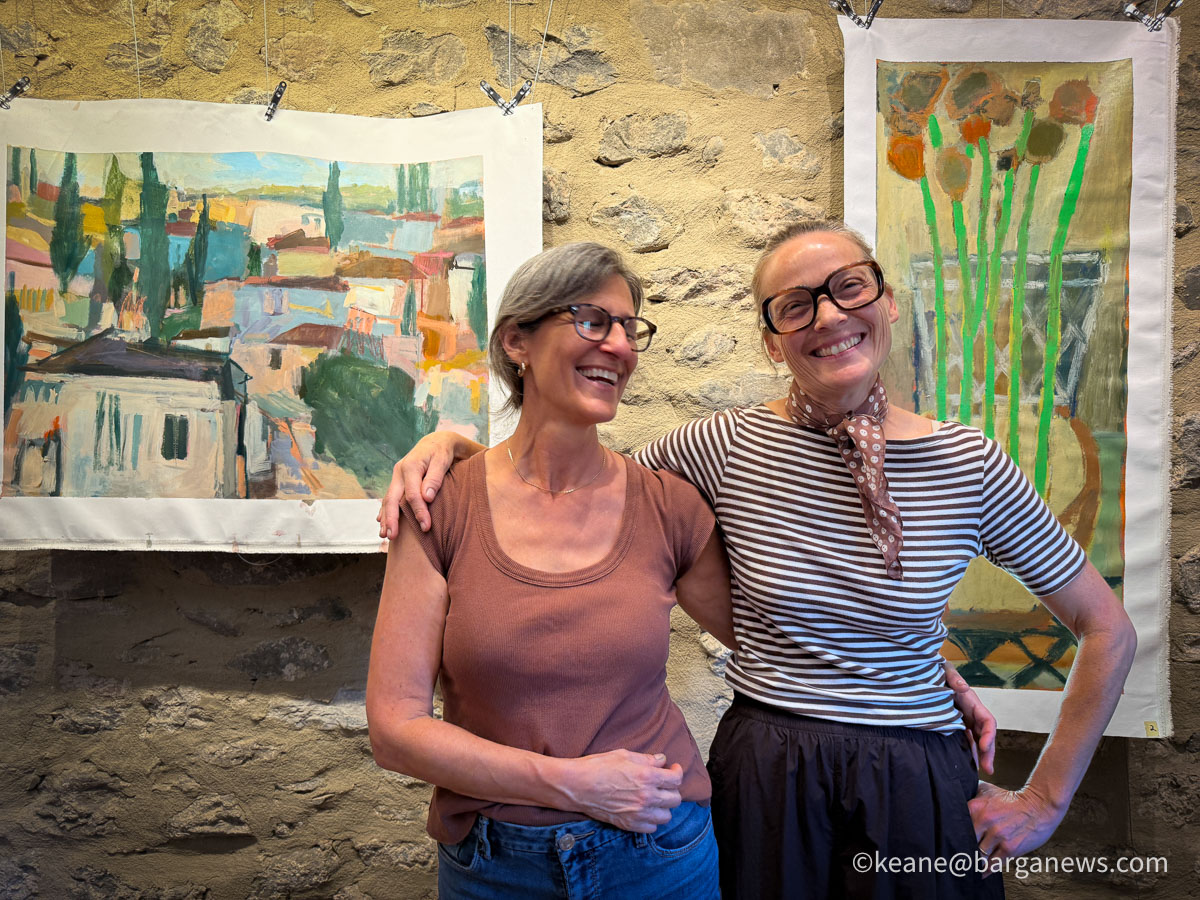
For American artists Rachael Van Dyke and Jodi Ferrier, a stay in Barga had begun as an opportunity to step away from their normal studios and concentrate on making new work. It ended with the doors of Quattro Archi opening for an informal pop-up exhibition, giving people in Barga the chance to see what had emerged during their time in the city.
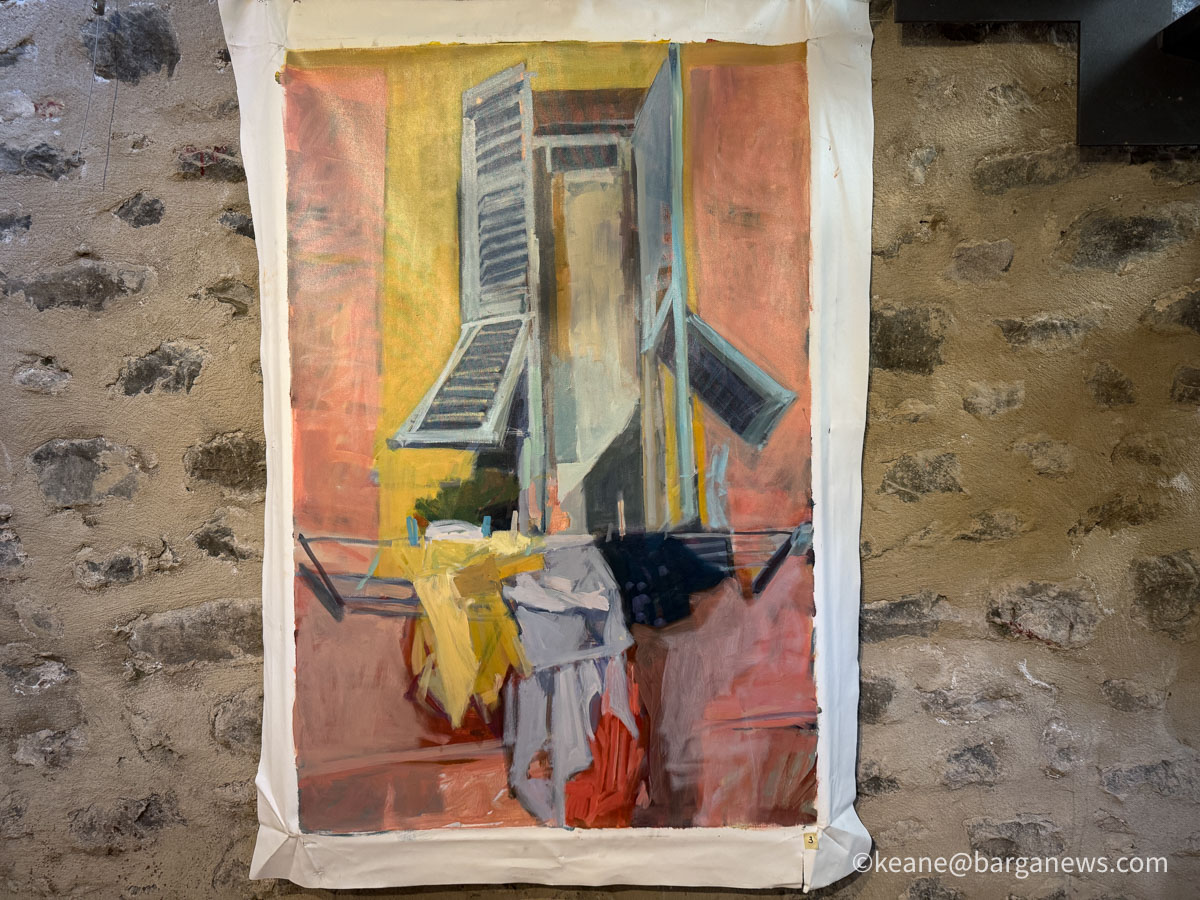
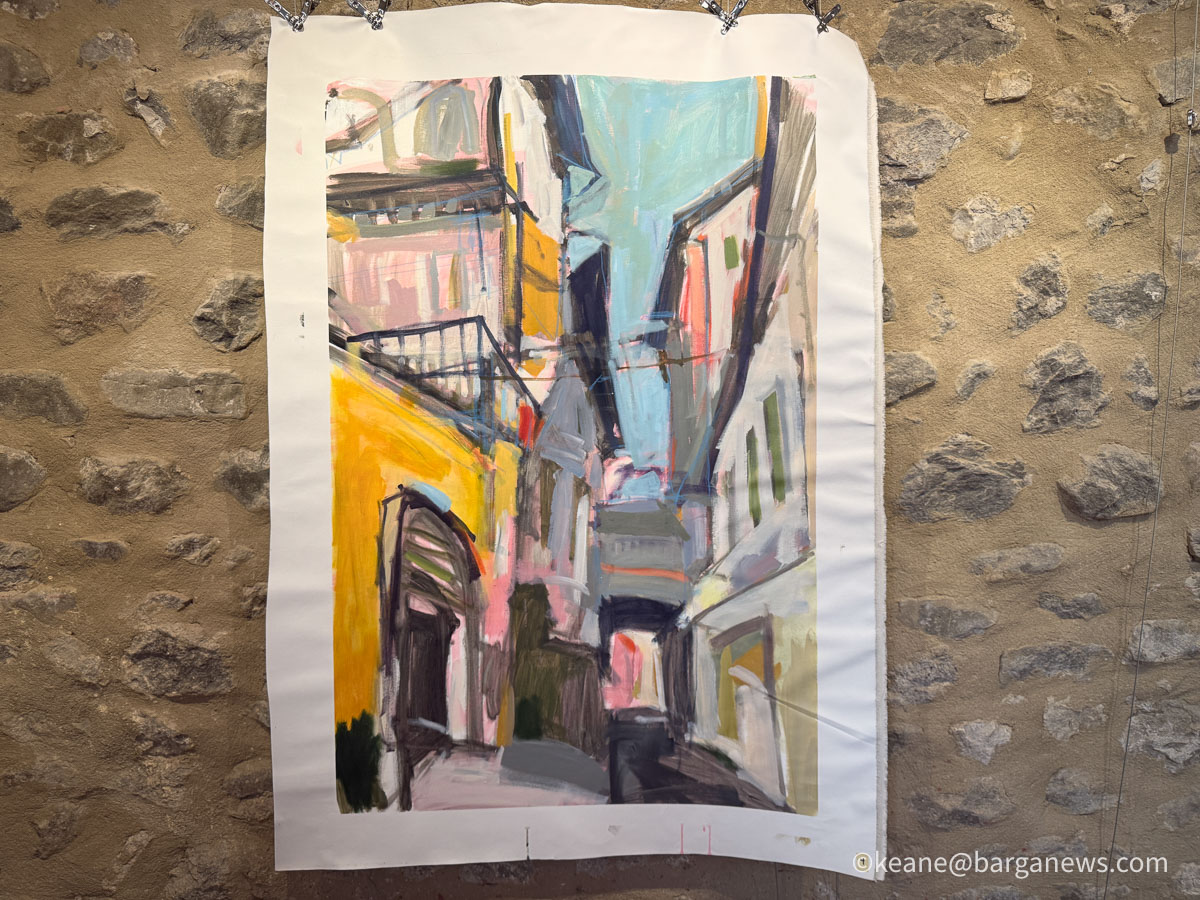
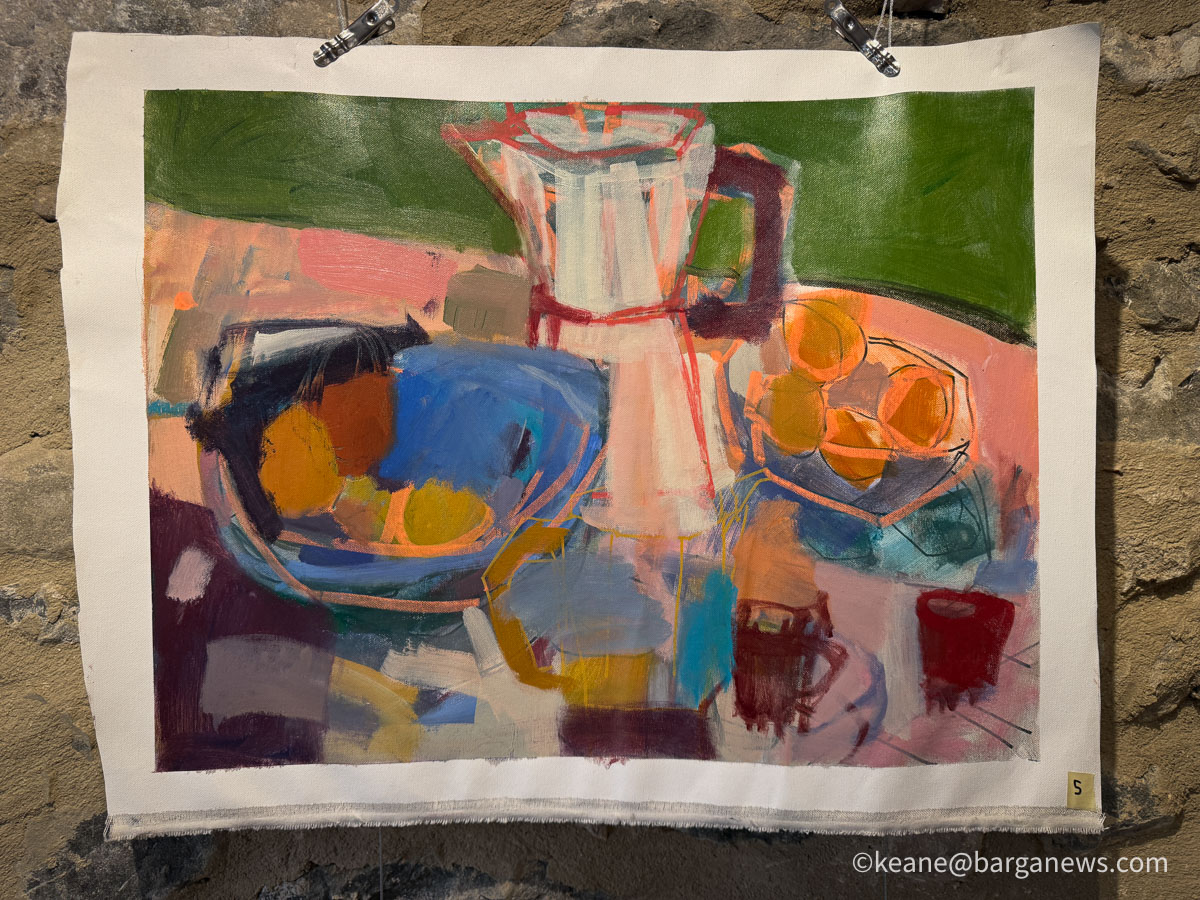
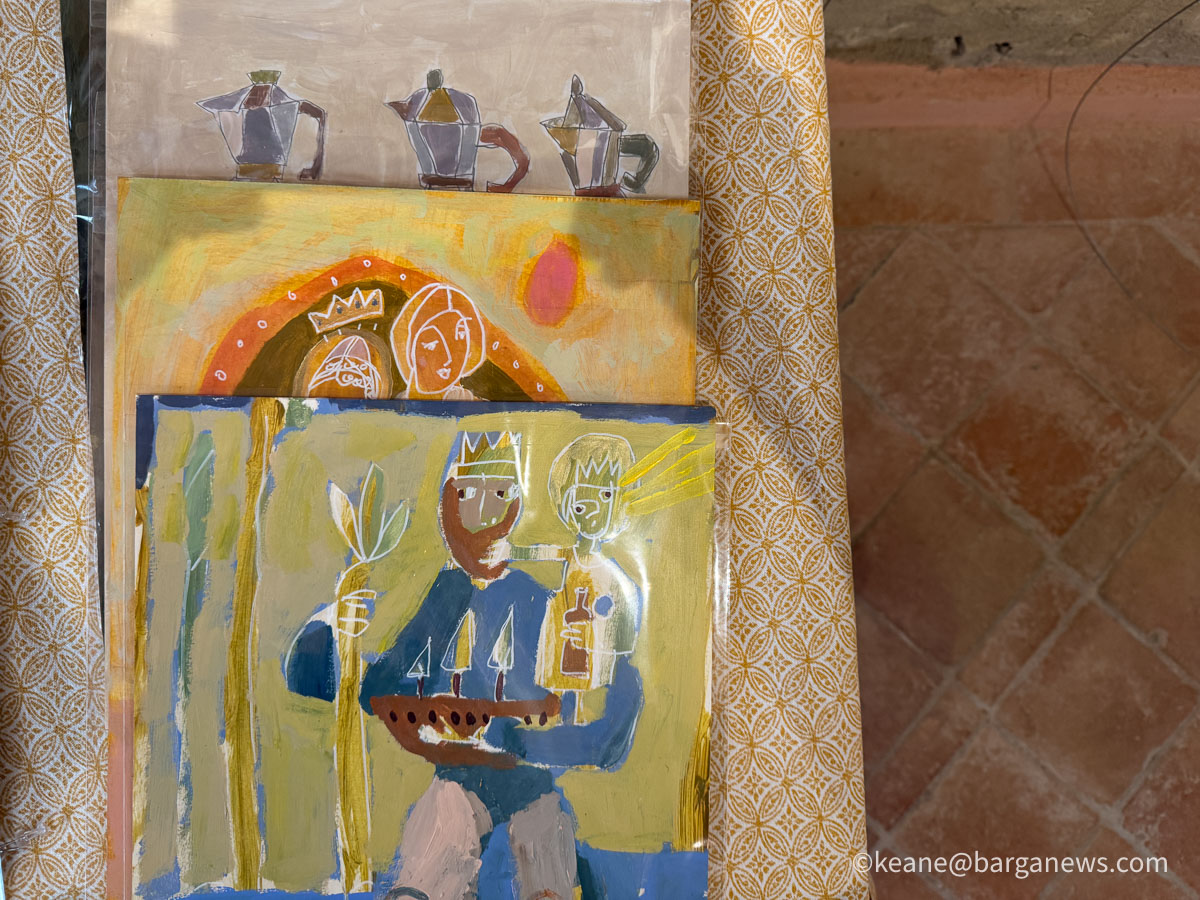
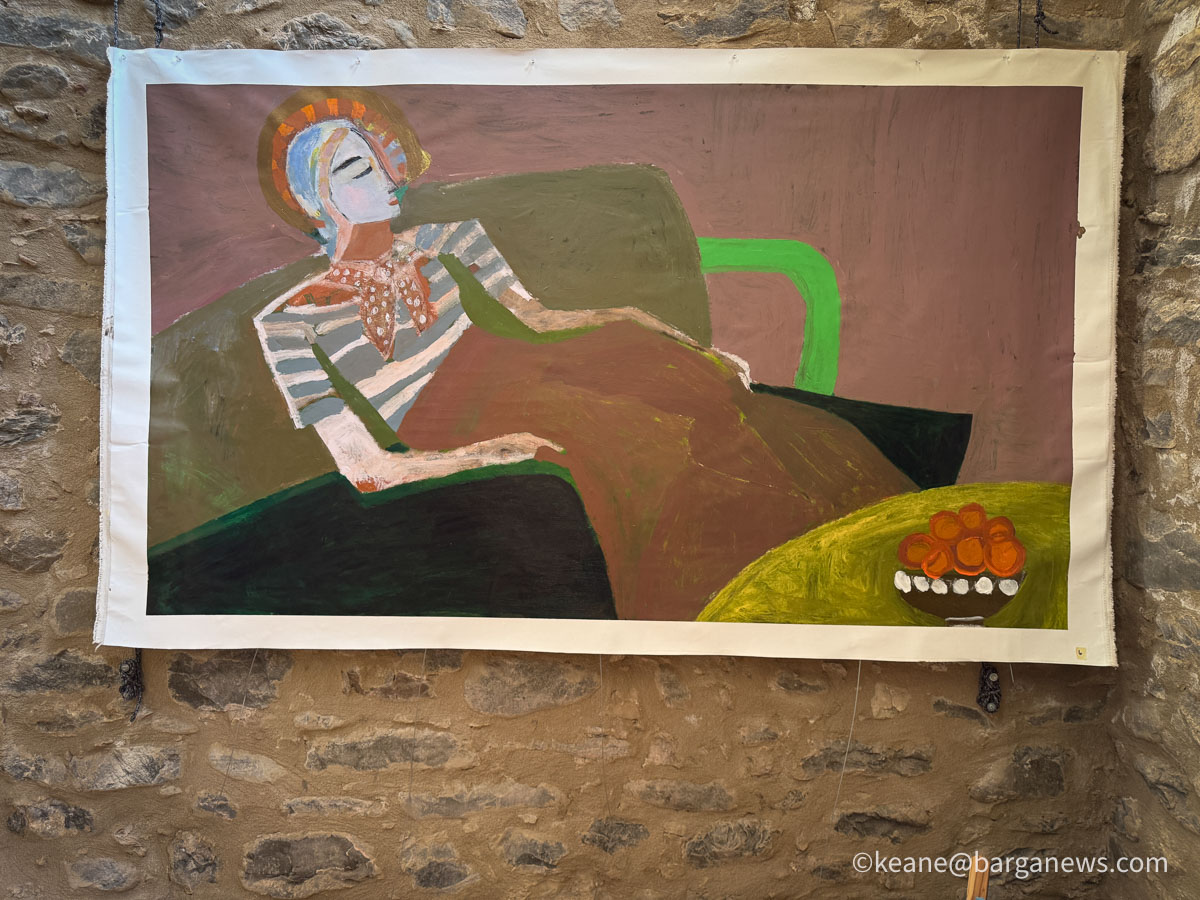
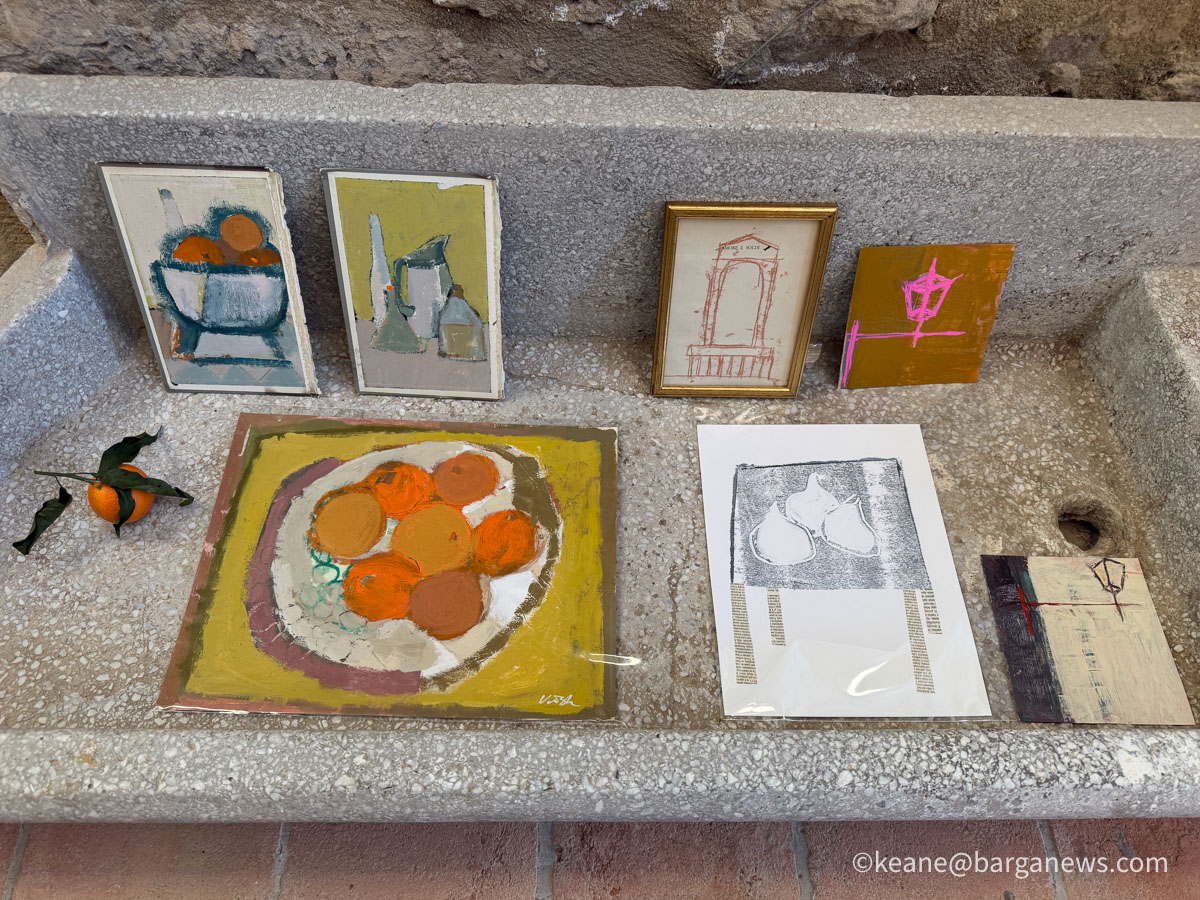
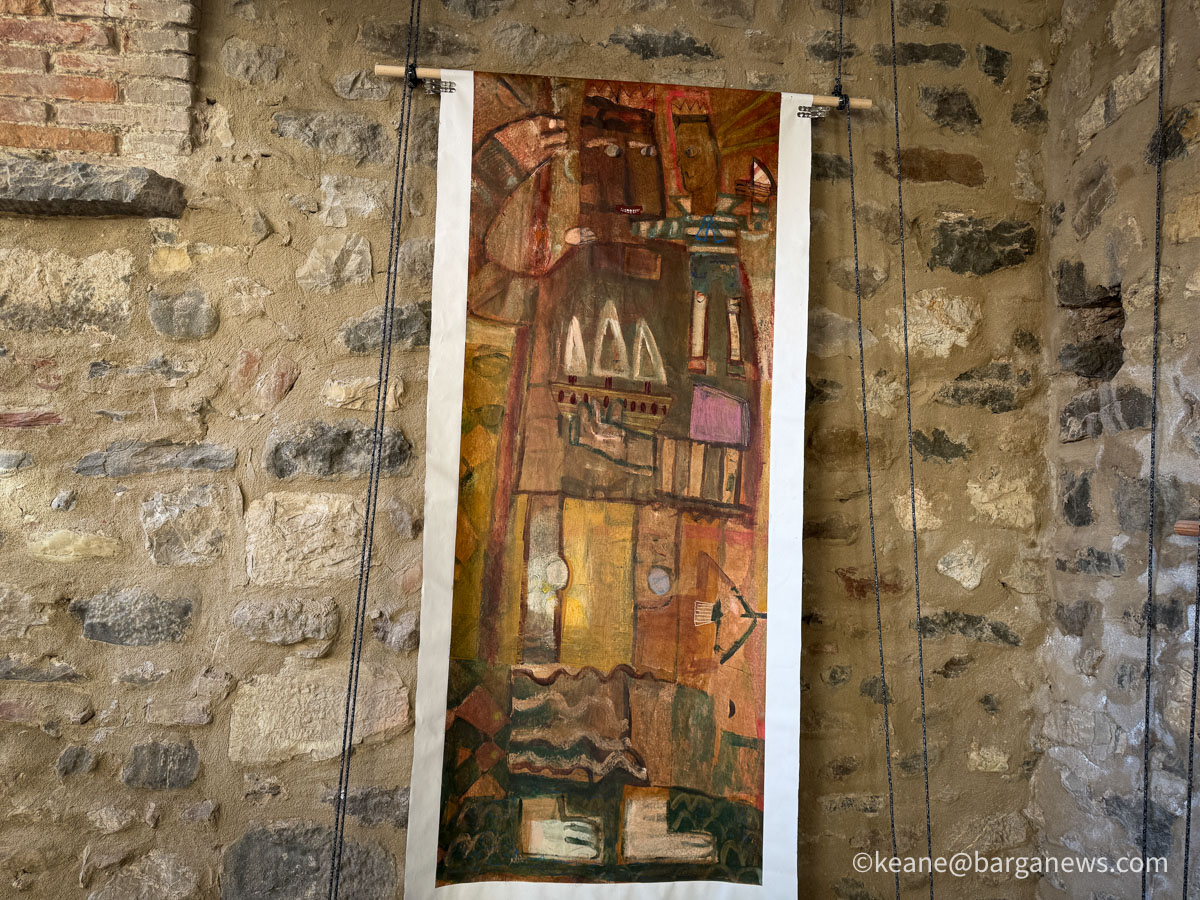
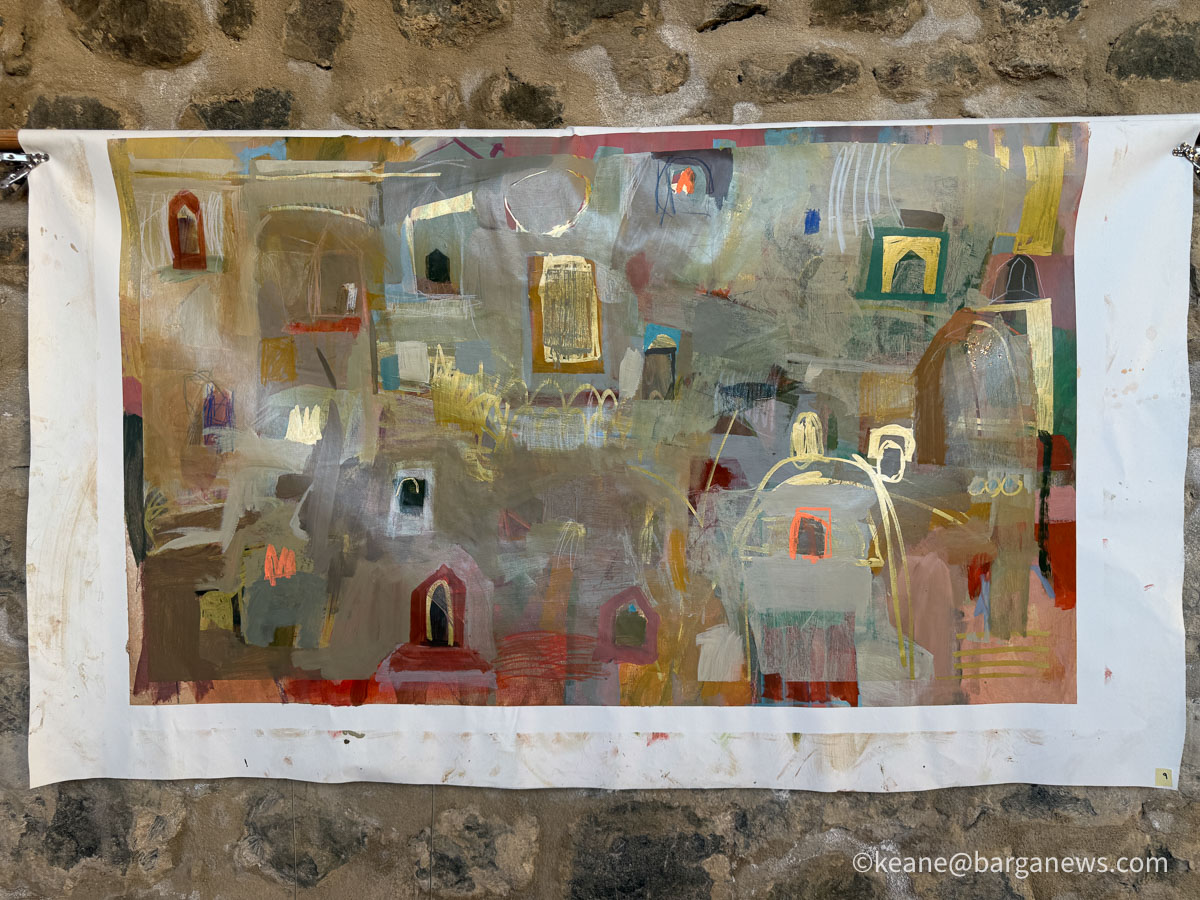
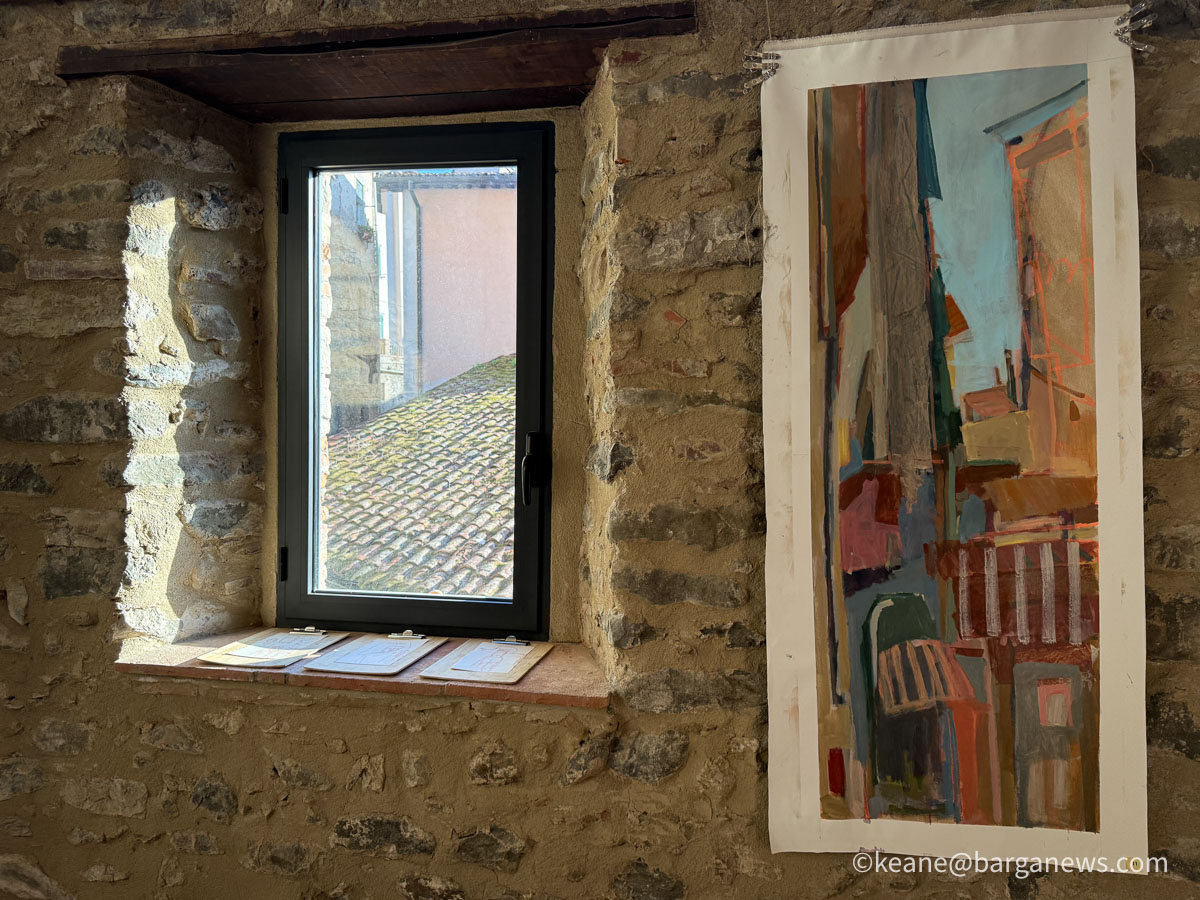
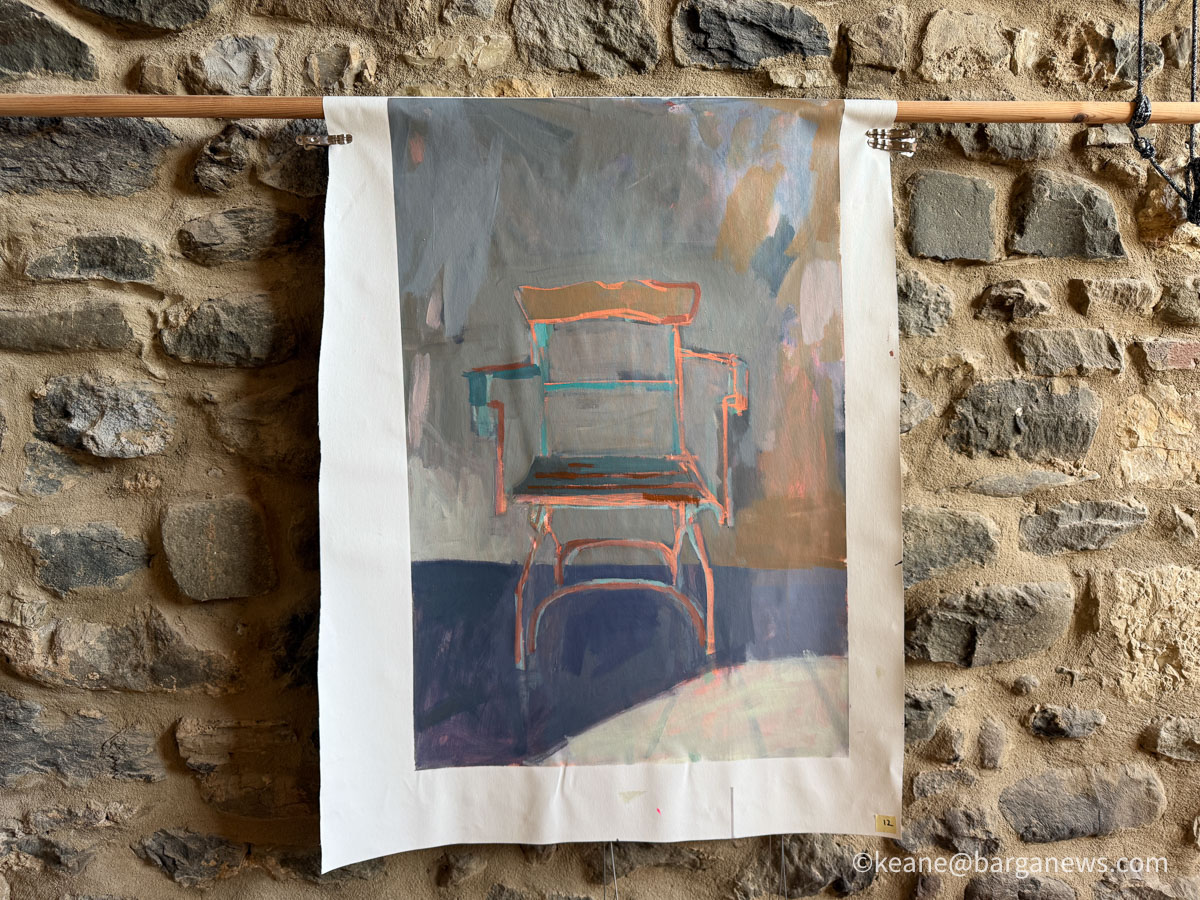
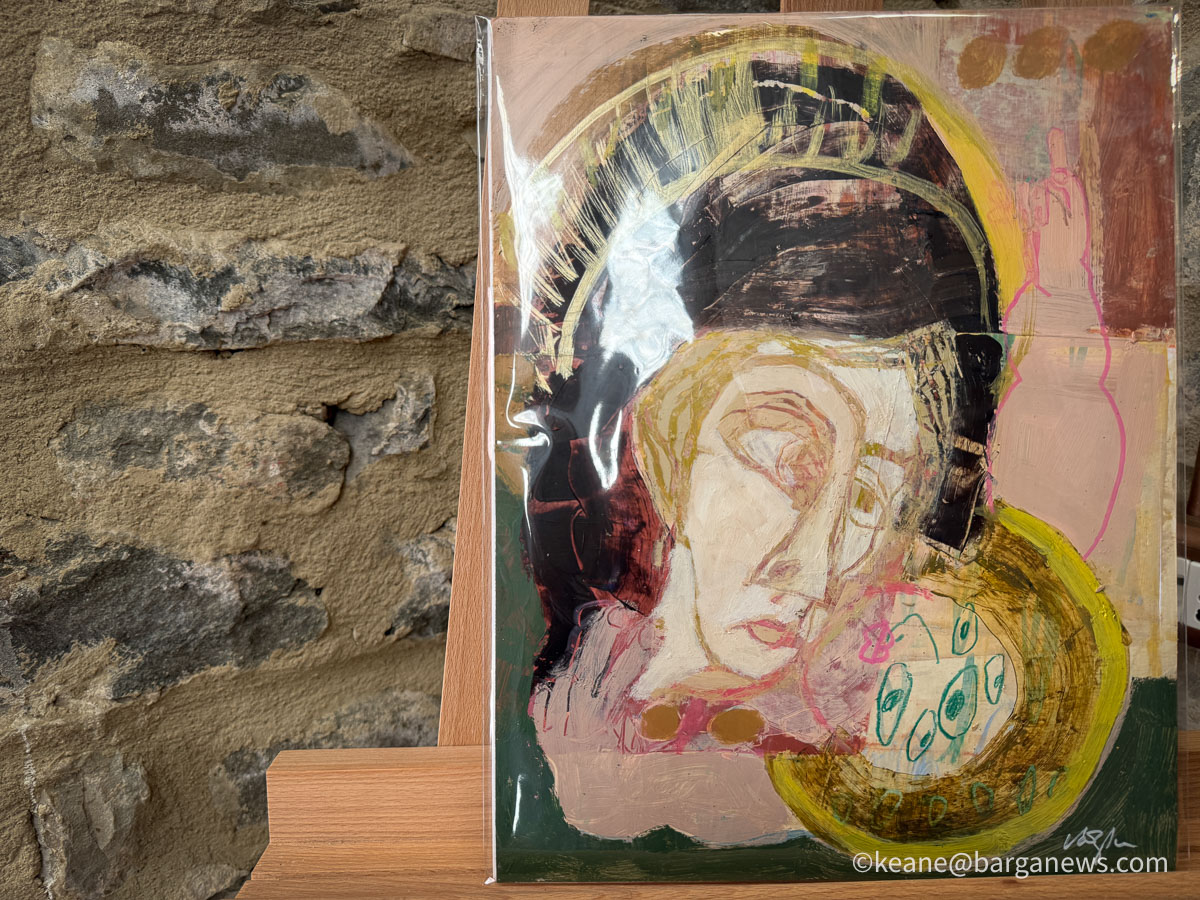
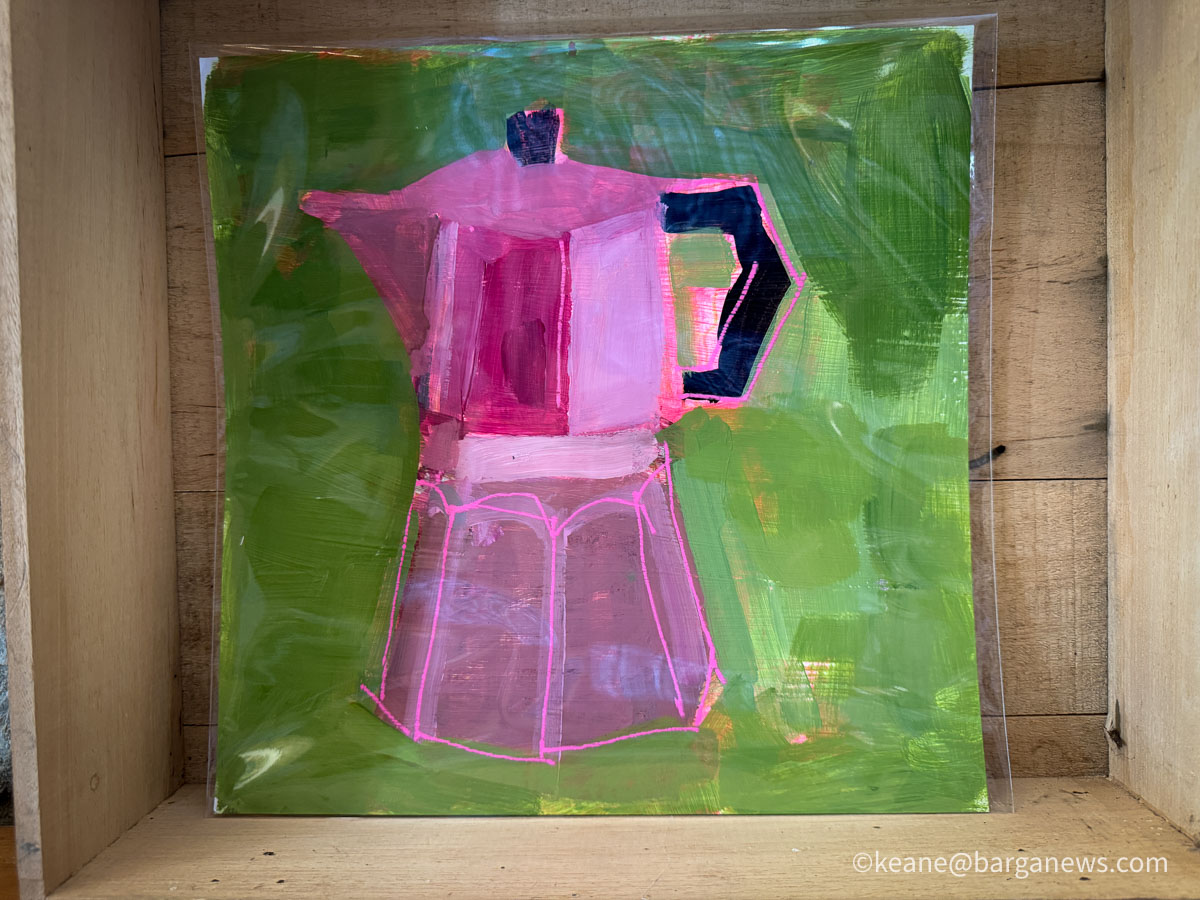
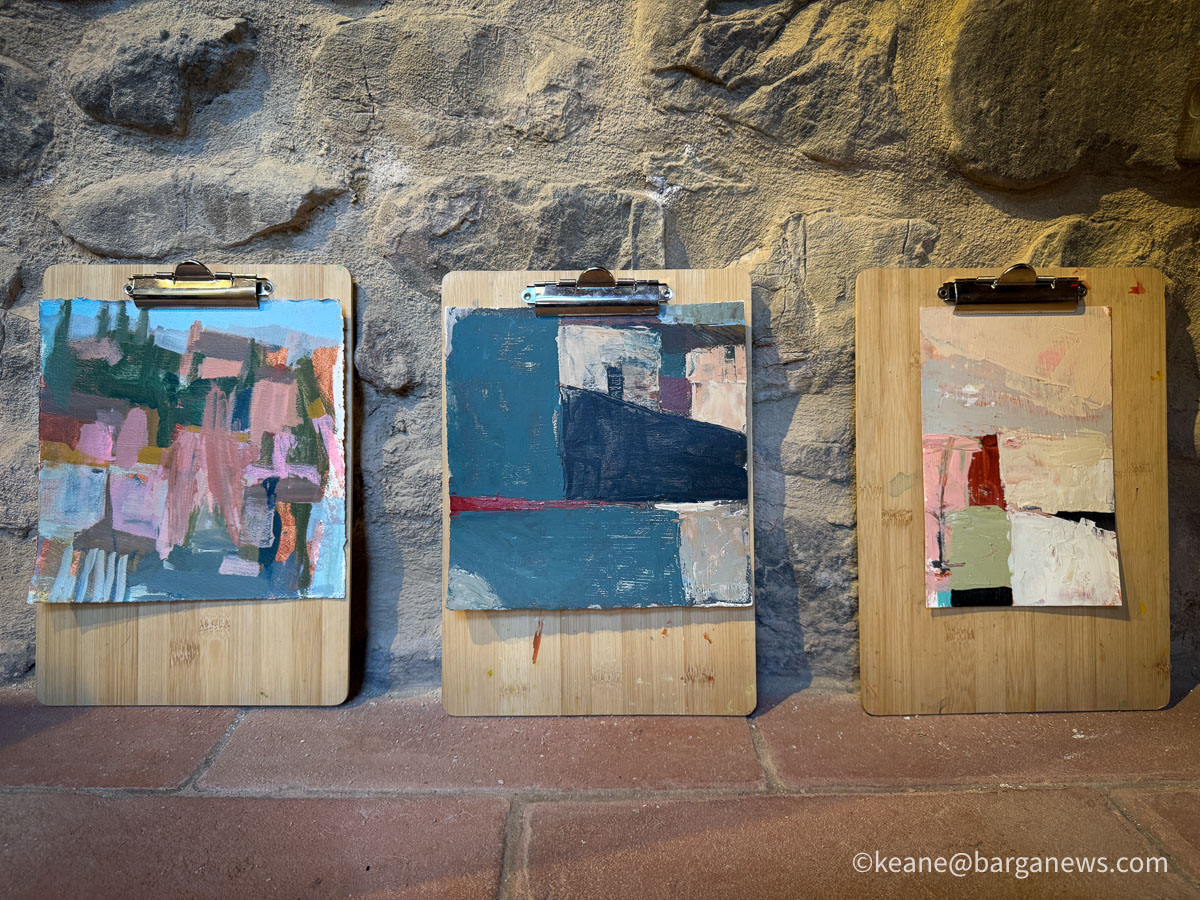
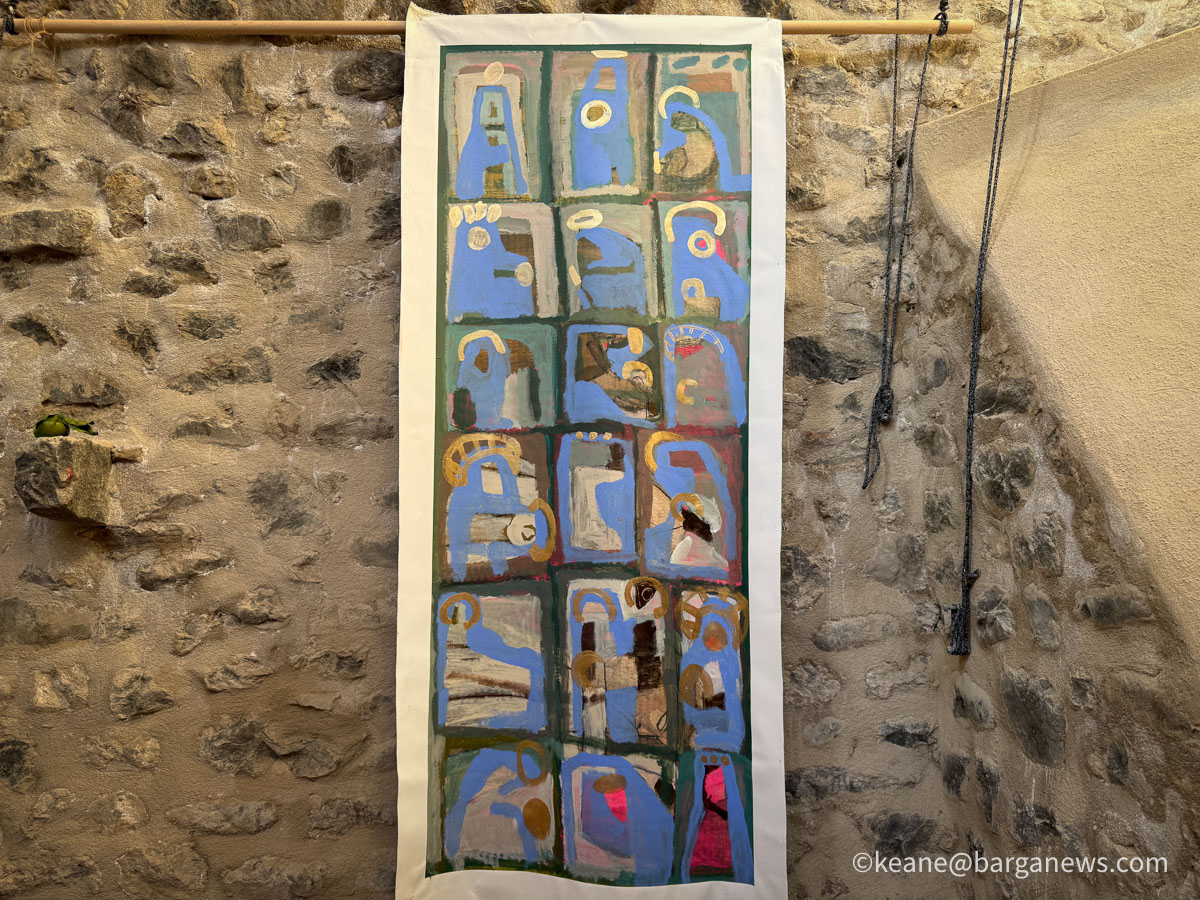
The temporary show brought together paintings, works on paper and experiments made during the residency. Some were large, loosely worked compositions built through layers of colour, drawing and overpainting; others moved towards collage, incorporating printed material, found papers and fragments of text.
The work had not simply been transported to Barga. Much of it had developed here.
For Rachel, who lives in Washington DC and normally undertakes several residencies each year, that was one of the reasons for coming. A residency offered a period in which everyday routines could be put aside and making art became the principal occupation.
She had discovered Quattro Archi while looking for residencies in Italy, a country to which she already had strong connections. Her father’s family background was Italian, she had visited the country many times and had been learning the language.
Rather than arriving during the busy summer workshops, however, she asked whether it might be possible to come later in the year. The answer was yes, and she invited her friend and fellow artist Jodi to join her.
The two had met at an artists’ residency in Virginia in 2019 and had remained close ever since. Together with another artist friend, Lindy, they regularly talked about their work, exchanged ideas and encouraged each other to keep projects moving.
Barga proved rather different from the environment they had left behind.
For Rachel in particular, coming from Washington DC to a place where the studio, shops, cafés and restaurants were all within a few minutes’ walk was part of the attraction. Both artists said the reality of Quattro Archi had also exceeded what they had expected from seeing it online.
The city itself quickly became part of the experience.
They talked enthusiastically about the sound of Barga’s bells, particularly the quarter-hour ringing continuing through the day and night.
On one Sunday, hearing the bells during a special evening ceremony, one of the artists followed the sound up to the Duomo, found the door open and climbed the stairs, eventually arriving beside the men ringing the bells.
It was precisely this kind of encounter that gave the residency its value: not simply having somewhere to paint, but living for a time inside a different place and rhythm.
That change could also be seen in the work.
The studio contained large sheets and canvases filled with interiors, plants, tables, windows and architectural fragments. Recognisable objects appeared and disappeared beneath successive layers of paint.
Elsewhere, newspaper, patterned paper and painted surfaces were assembled into small collages.
The work seemed less concerned with recording Barga literally than with absorbing something of the colours, spaces and visual interruptions encountered while living here.
Residencies, they explained, also encouraged them to work differently. Rachel had used the period to experiment more with collage, deliberately moving outside her usual practice. The freedom to change direction was part of the point.
By the end of their stay, the studio itself had become part workplace, part exhibition — paintings leaning against walls, works in progress spread across tables and the traces of several weeks of concentrated activity visible throughout Quattro Archi.
The handwritten notice taped up outside said simply: “Mostra ‘Pop-Up Art Show’.”
Inside was the evidence of what can happen when two artists are given a studio, time to work and a small Tuscan city immediately outside the door.




Artiste americane aprono le porte dei Quattro Archi
Per le artiste americane Rachael Van Dyke e Jodi Ferrier, il soggiorno a Barga era iniziato come un’occasione per allontanarsi dai loro studi abituali e concentrarsi sulla creazione di nuovi lavori. Si è concluso con l’apertura delle porte dei Quattro Archi per una mostra pop-up informale, offrendo al pubblico di Barga la possibilità di vedere ciò che era nato durante la loro permanenza in città.
La mostra temporanea riuniva dipinti, lavori su carta ed esperimenti realizzati durante la residenza. Alcune erano opere di grandi dimensioni, costruite liberamente attraverso strati di colore, disegno e successive sovrapposizioni; altre si avvicinavano invece al collage, utilizzando materiali stampati, carte trovate e frammenti di testo.
Le opere non erano semplicemente state portate a Barga. Gran parte del lavoro era nato proprio qui.
Per Rachel, che vive a Washington DC e partecipa abitualmente a diverse residenze artistiche ogni anno, questo era uno dei motivi principali del viaggio. Una residenza offre infatti un periodo in cui mettere da parte la routine quotidiana e dedicarsi quasi esclusivamente alla creazione.
Aveva scoperto i Quattro Archi mentre cercava residenze artistiche in Italia, un paese con il quale aveva già un forte legame. La famiglia di suo padre aveva origini italiane, era stata molte volte in Italia e stava anche cercando di imparare la lingua.
Invece di arrivare durante i workshop estivi, aveva però chiesto se fosse possibile venire più avanti nell’anno. La risposta era stata positiva e Rachel aveva quindi invitato l’amica e collega artista Jodi a raggiungerla.
Le due si erano conosciute durante una residenza artistica in Virginia nel 2019 ed erano rimaste molto legate. Insieme a un’altra amica artista, Lindy, continuavano regolarmente a confrontarsi sul proprio lavoro, scambiandosi idee e incoraggiandosi a portare avanti nuovi progetti.
Barga si è rivelata molto diversa dagli ambienti che avevano lasciato negli Stati Uniti.
Per Rachel, in particolare, passare da Washington DC a un luogo dove lo studio, i negozi, i bar e i ristoranti erano tutti raggiungibili in pochi minuti a piedi era parte del fascino dell’esperienza. Entrambe hanno raccontato inoltre che la realtà dei Quattro Archi aveva superato ciò che si erano immaginate vedendo lo spazio online.
Anche la città è entrata rapidamente a far parte dell’esperienza.
Le due artiste hanno parlato con entusiasmo del suono delle campane di Barga, soprattutto dei rintocchi ogni quarto d’ora che continuano durante il giorno e la notte.
Una domenica, sentendo le campane durante una particolare cerimonia serale, una delle due aveva seguito il suono fino al Duomo, aveva trovato la porta aperta ed era salita lungo le scale, arrivando infine accanto agli uomini che stavano suonando le campane.
Era proprio questo tipo di incontro a dare valore alla residenza: non soltanto avere un luogo dove dipingere, ma vivere per un periodo dentro un luogo diverso, seguendone ritmi e abitudini.
E qualcosa di questo cambiamento si poteva vedere anche nelle opere.
Nello studio c’erano grandi tele e fogli popolati da interni, piante, tavoli, finestre e frammenti architettonici. Oggetti riconoscibili apparivano e scomparivano sotto successive stesure di colore.
Altrove, pagine di giornale, carte decorate e superfici dipinte erano state assemblate in piccoli collage.
Più che cercare di rappresentare Barga in maniera letterale, i lavori sembravano assorbire qualcosa dei colori, degli spazi e delle continue suggestioni visive incontrate vivendo qui.
Le residenze, hanno spiegato, offrivano anche la possibilità di lavorare in maniera diversa dal solito. Rachel aveva approfittato del periodo ai Quattro Archi per sperimentare maggiormente con il collage, scegliendo deliberatamente di uscire dai confini della propria pratica abituale. La libertà di cambiare direzione faceva parte dell’esperienza.
Alla fine del soggiorno, lo studio stesso era diventato in parte luogo di lavoro e in parte spazio espositivo: dipinti appoggiati alle pareti, lavori ancora in corso sui tavoli e, ovunque nei Quattro Archi, le tracce di settimane di intensa attività.
Il cartello scritto a mano e attaccato all’esterno diceva semplicemente: “Mostra ‘Pop-Up Art Show’.”
Dentro c’era il risultato di ciò che può accadere quando a due artiste vengono dati uno studio, del tempo per lavorare e una piccola città toscana appena fuori dalla porta.