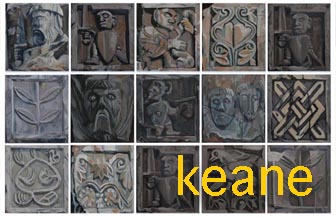
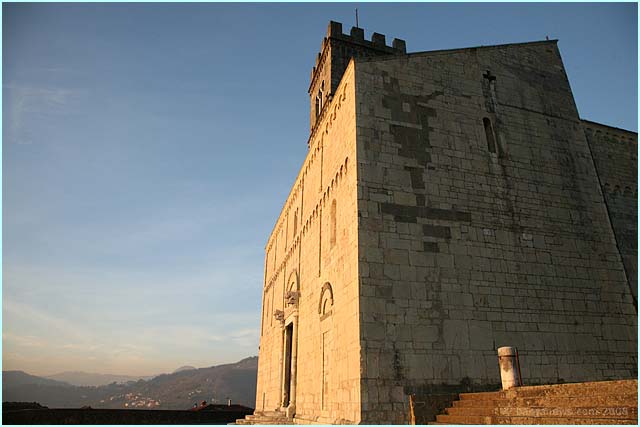
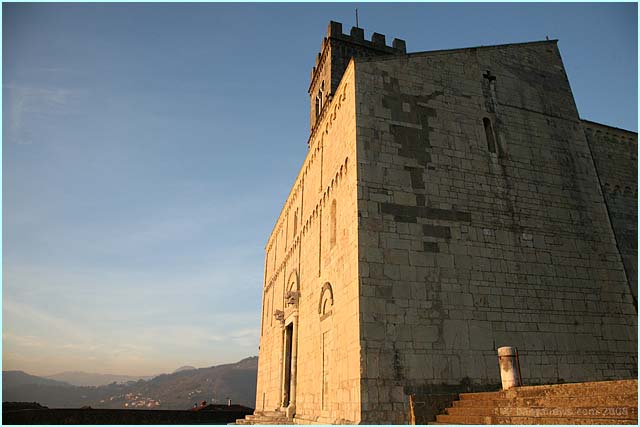
 Durante le feste di Natale abbiamo sicuramente trovato il tempo per leggere il libro scritto da Pier Carlo Marroni: “Il Duomo di Barga”, il quale tratta della storia del nostro Duomo. Chi non l’avesse ancora letto gli consigliamo di farlo, perché è un libro sicuramente interessante, sia quale guida per inoltrarci alla conoscenza del sacro edificio – chiarisce l’autore, letto dal suo esterno, nelle varie fasi costruttive: antiche scritte, ornamenti e sculture – come per le affascinanti osservazioni che si ritrovano nel testo circa le origini del monumento.
Spunti dell’autore, frutto in qualche misura di una nuova e personale visione di quella storia, che prendono l’avvio da un attento esame del particolare simbolismo medioevale rappresentato in tante sculture, interamente pubblicate nel libro, visibili nelle mensole su cui poggiano i numerosi archetti ornamentali del Duomo. Infatti, da un’attenta osservazione e condotti per mano dall’autore, possiamo cogliere in quelle sculture dei segni di estremo interesse e che parrebbero testimoniare di “misteriosi” concorsi alla fabbrica del Duomo e, comunque sia stato, pur sempre ottime considerazioni per auspicati studi futuri. Altrettanto dicasi per le enigmatiche scritte, ripetute uguali per tre volte, che stanno sugli stipiti di destra delle due porte maggiori, che Pier Carlo vuole ancora indecifrate, anche se autorevoli studiosi le ritengono invece una chiara e triplice invocazione a S.Michele, protettore della Chiesa Universale contro il maligno sin dai tempi più remoti e nell’Italia longobarda.
Sull’argomento testé prospettato si chiarisce nel libro che l’autore tenta un “azzardo”, cioè l’ipotesi che nel Duomo vi si possano ravvisare delle simbologie “Templari”, sia nelle sculture delle mensole, come nelle enigmatiche e triplici iscrizioni.
I Templari fu un Ordine Militare Religioso formato da laici e sacerdoti, fondato in Gerusalemme nel 1127 da Ugo di Payens. La Regola adottata dall’Ordine fu quella dettata da S.Agostino ed ebbe riconoscimento durante il Concilio di Troyes dell’anno 1128. Per l’enorme potere economico raggiunto dai Templari, si interessavano di servizi di esattoria e svolgevano attività bancarie, nel 1311 l’Ordine fu sciolto da Clemente V per interessamento del re di Francia Filippo il Bello.
Che dietro all’ambizione dei barghigiani di avere un Duomo sempre più grande e bello vi fosse stato, in qualche misura, un sostegno economico su cui basarsi, penso sia chiaro. Cosa sia stato lo è meno. Però ci sono indizi nella nostra storia che ci spingono, sulla scorta dei ricordati servizi svolti dai Templari, a ritenere che quanto ha azzardato Pier Carlo Marroni potrebbe corrispondere ad una verità, logicamente da verificare con cura e competenza. Cioè, che nel castello di Barga si fossero insediati dei figli devoti a quell’Ordine per custodire un Tempio, il Duomo, in cui lasciarono impressi i loro simboli: in primis il nodo di Salomone, croci, ecc. Infatti per la crociata del 1260 il pievere di Loppia versò la somma maggiore di tutte le pievi, con la chiesa di Barga in testa a tutte le chiese della Valle. I devoti ai Templari sapevano dove stare e Barga in quei secoli primi del mille era il caposaldo politico di tutta la Valle. Il Castello di riferimento politico, militare ed economico per tutti, volutamente attrezzato quale arcigna sentinella a controllo della variante della via “Francigena”, la via dei commerci, che scorreva tra i nostri monti, tantoché Barga ebbe i suoi cruenti assedi e sostanziali riconoscimenti sia dalla contessa Matilde come dalla Chiesa Romana e perfino dagli imperatori Federico I “il Barbarossa” e da suo figlio.
Altra osservazione da fare riguarda l’Opera di S.Cristofano. Nel XIII secolo sotto l’egida del Santo ritroviamo in Europa varie confraternite che raccoglievano in associazione i mercanti, i quali avevano nelle mani il destino di varie città e svolgevano la funzione di magistrati comunali: ” H. Pirenne – Le città nel medioevo”. Ovvio correlare quanto detto a Barga, in cui una confraternita laica col solito nome prese in cura il Duomo dei S.S. Jacopo e Cristoforo. In quei tempi si nominava un Operaio a vita, il quale donava tutti i suoi beni all’Opera, salvo l’usofrutto degli stessi, in cambio di varie esenzioni personali. Così quelle persone che avessero fatto un simile passo, le quali entravano a far parte del “Ceto dei Conversi” della chiesa o dell’ Opera. Questo spogliarsi dei beni, sia pur mantenendo i frutti degli stessi, ci fa pensare in qualche misura ai Templari, i quali, anch’essi si spogliavano dei loro beni nel momento dell’ingresso nell’ Ordine.
Il libro di Pier Carlo Marroni ci piace pensarlo un utile avvio per invogliare gli studiosi ad interessarsi specificatamente di questi argomenti e, comunque sia stato, ne consigliamo ancora la sua stimolante lettura, ringraziando il Giornale di Barga per averne sorretto la pubblicazione.
During the Christmas holidays, many of us have no doubt found the time to read the book written by Pier Carlo Marroni, “The Duomo of Barga”, which explores the history of our Duomo. For those who have not yet read it, we strongly recommend doing so. It is an engaging work, both as a guide leading us towards a deeper understanding of the sacred building — as the author explains, beginning from its exterior and moving through its various phases of construction, ancient inscriptions, ornaments and sculptures — and for the fascinating observations it offers regarding the monument’s origins.
The author’s insights, in part the result of a fresh and personal interpretation of that history, stem from a careful examination of the particular symbolism of the medieval period represented in many of the sculptures, all of which are reproduced in the book. These can be seen on the corbels supporting the numerous decorative arches of the Duomo. Through attentive observation, and guided by the author, we can discern in these carvings signs of considerable interest, which seem to point towards “mysterious” influences involved in the construction of the Duomo. Whatever the case, they provide valuable material for future study. The same can be said of the enigmatic inscriptions, repeated identically three times on the right-hand doorposts of the two main entrances. Pier Carlo considers them still undeciphered, although authoritative scholars interpret them as a clear, triple invocation to Saint Michael, protector of the Universal Church against evil since ancient times and throughout Lombard Italy.
On this subject, the author ventures what he himself calls a bold hypothesis: that within the Duomo it may be possible to recognise “Templar” symbolism, both in the corbel sculptures and in the enigmatic triple inscriptions.
The Templars were a religious military order composed of laymen and priests, founded in Jerusalem in 1127 by Hugh de Payens. The Rule adopted by the Order was that of Saint Augustine, and it was officially recognised at the Council of Troyes in 1128. Owing to the vast economic power they acquired, the Templars became involved in tax collection and banking activities. In 1311, the Order was dissolved by Pope Clement V at the instigation of King Philip the Fair of France.
That behind the ambition of the people of Barga to build an ever larger and more beautiful Duomo there must have been, to some extent, financial support is clear enough. What that support may have been is less certain. However, there are indications in our history which, considering the services provided by the Templars, lead us to think that Pier Carlo Marroni’s hypothesis may contain an element of truth — naturally requiring careful and informed verification. That is, that members devoted to the Order may have settled within the castle of Barga to guard a “temple”, the Duomo, leaving behind their symbols: above all the knot of Solomon, crosses, and others. Indeed, for the crusade of 1260, the parish of Loppia contributed the largest sum among all the parishes, with the church of Barga leading all the churches of the valley. Those devoted to the Templars knew where to establish themselves, and Barga, in those early centuries of the second millennium, was the political stronghold of the entire valley — a castle of political, military and economic importance, deliberately positioned as a stern sentinel controlling a branch of the Via Francigena, the great trade route that passed through our mountains. It is no coincidence that Barga endured fierce sieges and received significant recognition from Countess Matilda, the Roman Church, and even the emperors Frederick I Barbarossa and his son.
Another point worth noting concerns the Opera of Saint Christopher. In the 13th century, under the patronage of this saint, various confraternities appeared across Europe, bringing together merchants who effectively held the fate of many cities in their hands and often served as civic magistrates (H. Pirenne, Medieval Cities). It is natural to draw a parallel with Barga, where a lay confraternity of the same name took responsibility for the Duomo of Saints James and Christopher. At that time, an Operaio (warden) was appointed for life, donating all his possessions to the Opera while retaining their usufruct, in exchange for certain personal exemptions. Those who took such a step became part of the “Ceto dei Conversi” of the Church or the Opera. This renunciation of property, even while retaining its benefits, in some ways recalls the practice of the Templars, who likewise relinquished their possessions upon entering the Order.
We like to think of Pier Carlo Marroni’s book as a valuable starting point — one that may encourage scholars to explore these subjects more deeply. In any case, we once again recommend its stimulating reading, and extend our thanks to the Giornale di Barga for supporting its publication.
Pier Giuliano Cecchi