Biadina or sometimes known as “biadino” is one of those drinks which were invented generations ago, reached a peak of popularity and then kind of disappeared as tastes changed and people moved away from highly alcoholic beverages, aperitif and digestivi.
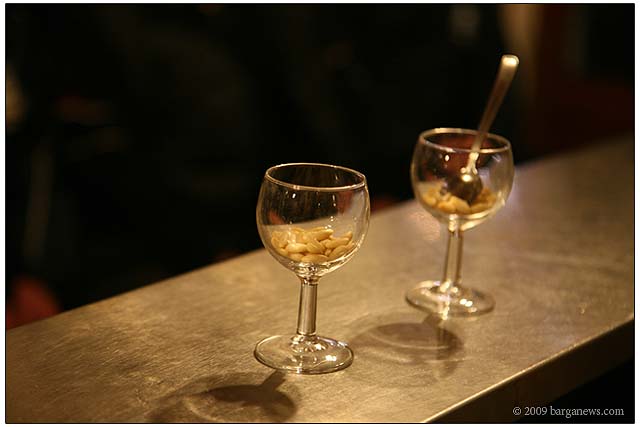
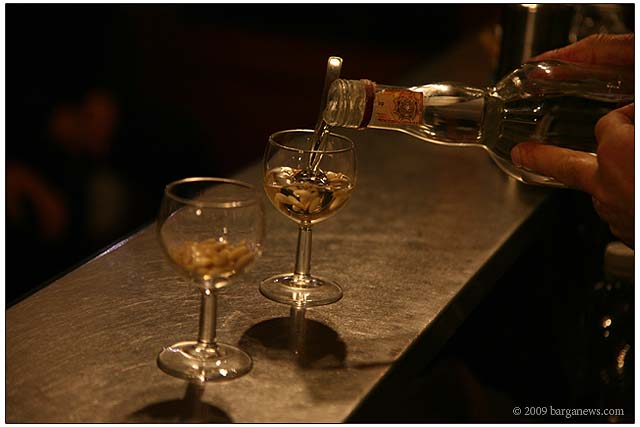
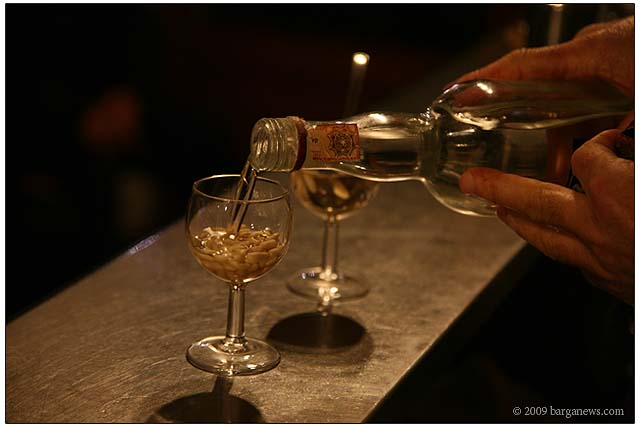
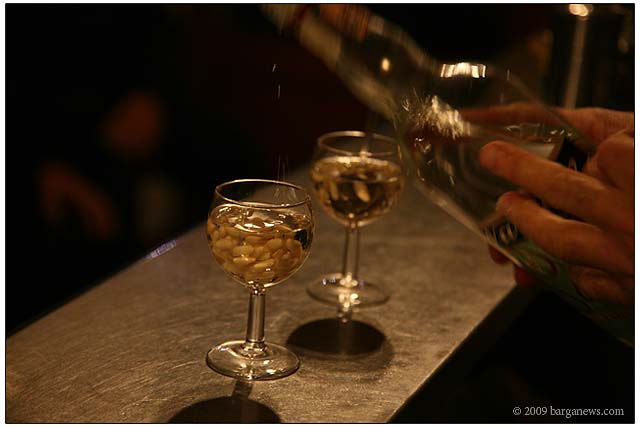
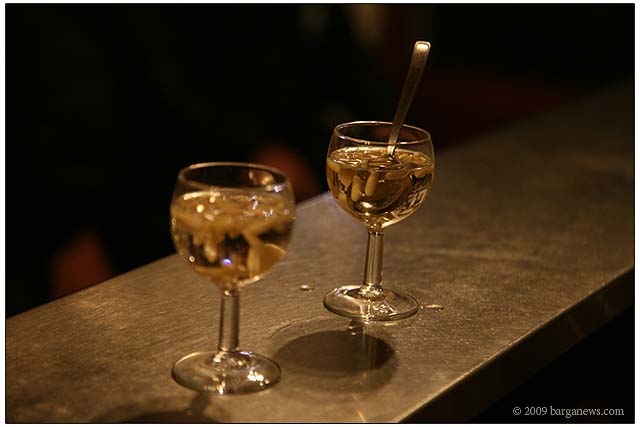
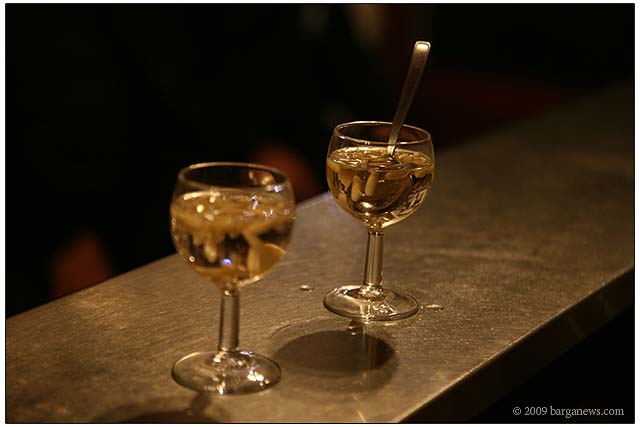
It can still be found in bars in Garfagnana and the Barga area but these days it is mainly a drink for the cognoscenti – those in the know. Deceptively simple .. a small glass of Sambuca with a small spoonful of pine nuts sitting in the bottom of the glass ready to be eaten as the last of the Sambuca is drained.
Aristo’s bar in Barga Vecchia is where the real connoisseurs gather of an afternoon to enjoy the delights of a Biadina made from a bottle of Sambuca which probably dates back to the early 60s or 70s.
Sambuca is an Italian anise-flavoured, usually colourless liqueur. Sambuca contains essential oils obtained from star anise, Illicium verum, which give the liquor a strong anise flavor. The oils are added to pure alcohol, a concentrated solution of sugar, and other flavouring. It is commonly bottled at 42% alcohol by volume (84 proof*). – source
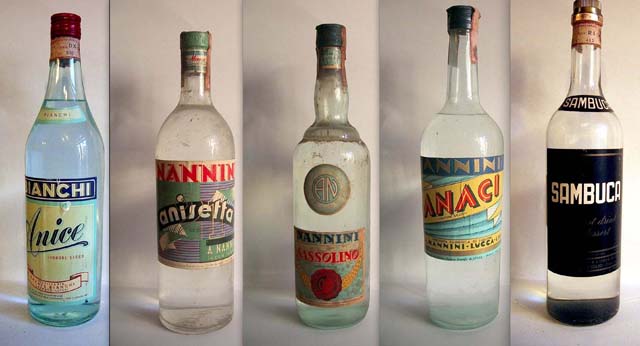
Aristodemo’s famed bottle collection (which can be seen here) going back right through to the 1940’s contains (at least for the moment) examples of local Sambuca distilled and bottled by companies long since disbanded but their wares live on.
These are the bottles that the Biadina connoisseurs jealously guard and watch over. This does not stop them drinking the precious liquor, these were made to enjoy after all, but opening and drinking them is not something that is highly publicised.
Nobody is shouting in the Piazza that Marino has just opened another 1970 Sambuca but there is a certain intensity in the eyes of his customers whenever the pine nuts are brought out that could almost be said to have a fanatical edge to them.
Further down the valley they have their own version of a biadina which for the Luccesse is a speciality of Lucca but that has very little to do the local version in this area.
La storia narra che il nome biadina derivi dalla biada per i cavalli. In particolare era rinomato a Lucca un negozio in Piazza San Michele nel quale il padrone Tista offriva ai viandanti venuti a Lucca per il mercato “un po’ di biada per il cavallo”.
It has to be said that it’s not a drink which can be drunk every day and for every occasion – for that there is nothing better than a glass of wine …. and maybe some music to help the atmosphere along.”





Biadina co’ pinoli e la fisarmonica
La biadina, o talvolta chiamata “biadino”, è una di quelle bevande nate generazioni fa, che hanno conosciuto un momento di grande popolarità per poi lentamente scomparire con il cambiare dei gusti e l’allontanarsi dalle bevande ad alta gradazione, aperitivi e digestivi.
Si può ancora trovare nei bar della Garfagnana e della zona di Barga, ma oggi è soprattutto una bevanda per intenditori — per chi sa. Ingannamente semplice: un piccolo bicchiere di sambuca con un cucchiaino di pinoli sul fondo, pronti per essere mangiati quando si finisce l’ultimo sorso.
Il bar di Aristo, a Barga Vecchia, è il luogo dove nel pomeriggio si ritrovano i veri appassionati per gustare una biadina preparata con una bottiglia di sambuca che probabilmente risale agli anni Sessanta o Settanta.
La sambuca è un liquore italiano all’anice, generalmente incolore. Contiene oli essenziali ricavati dall’anice stellato (Illicium verum), che conferiscono al liquore il suo caratteristico sapore intenso. Gli oli vengono aggiunti ad alcol puro, a una soluzione concentrata di zucchero e ad altri aromi. Viene comunemente imbottigliata a 42% di alcol in volume (84 proof*). – fonte
La celebre collezione di bottiglie di Aristodemo (che può essere vista qui), che risale fino agli anni Quaranta, contiene — almeno per il momento — esempi di sambuca locale distillata e imbottigliata da aziende ormai scomparse, ma i cui prodotti continuano a vivere.
Sono proprio queste le bottiglie che i conoscitori della biadina custodiscono e sorvegliano gelosamente. Questo non significa che non bevano il prezioso liquore — dopotutto è stato fatto per essere gustato — ma l’apertura e il consumo non sono certo fatti da pubblicizzare.
Nessuno urla in piazza che Marino ha appena aperto una sambuca del 1970, ma c’è una certa intensità negli occhi dei clienti quando arrivano i pinoli — qualcosa che sfiora quasi il fanatismo.
Più a valle esiste una versione propria della biadina che, per i lucchesi, è una specialità di Lucca, ma ha ben poco a che vedere con quella locale di questa zona.
La storia racconta che il nome biadina derivi dalla biada per i cavalli. In particolare era rinomato a Lucca un negozio in Piazza San Michele nel quale il padrone Tista offriva ai viandanti venuti a Lucca per il mercato “un po’ di biada per il cavallo”.
Va detto che non è una bevanda da consumare ogni giorno o in ogni occasione — per quello non c’è nulla di meglio di un bicchiere di vino… e magari un po’ di musica ad accompagnare l’atmosfera.
My gosh!!!! Ask Marino to please save a drop for me!!!!! Tell him the promised post card is in the mail… honest it is!!!
I thought I had it all figured out with Toquino’s!!!! How little I really know…. how little I really know…..