 那天早上,像往常一样,我和女儿带着我的小外孙女Giada去花园散步,Giada坐在妈妈推着的小车里,小手指头扭动着她胸前的项链,悠然自得地东张西望。忽然,她兴奋的喊起来,两只小手使劲地在头顶上挥舞着:“看,拖拉机!”果然,一辆老式的拖拉机从左侧陡坡上缓缓地冒了出来。拖拉机上坐着两位年长的农夫,他们和善地朝我们挥挥手,然后耐心的等待着进入主路。我这才注意到,主路上的车已经排起了长龙,前方有几量拖拉机蜗牛似的地向前移动着,后面长长的车队耐心地跟在后面。
“妈妈,今天大概是个节日。”又是节日!自我来Barga十几天,似乎每天都是节日,每当夜幕降临,乐队在一个个小广场演奏,小镇被音乐和歌声环绕,直至黎明。每天入睡前,当女儿跟我道晚安的时候,一定是过了子夜。
书归正传,当我们经过花园市区的时候,恰巧碰上了正式的游行队伍,我加入路边等候的人群翘首观望。
只见一辆辆旧式拖拉机全都被打扮的像是新嫁娘的花车,车头上的缝隙里插满一朵朵盛开的金黄色的大葵花,还有一束束成熟的麦穗,有的还在车头的正前方挂着由新鲜的野山花编成的大花环。
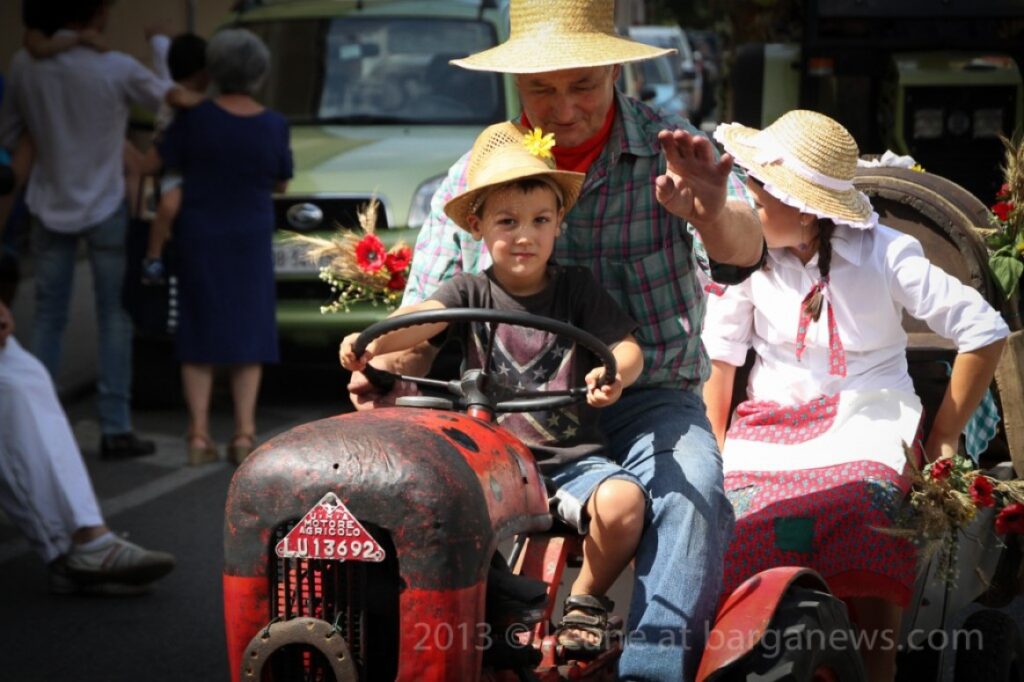
当我的视线转到驾驶座上时,不禁张大了嘴巴,你猜我看到了什么?许多驾驶座上的驾驶者并不是成年人,而是稚气未消的小男孩,他们的小手紧紧地抓在方向盘上,目光专注,一本正经,令人忍俊不禁。
没有警察叔叔上前制止,所有的交通法规全都黯然退场,任由这支别开生面的游行队伍招摇过市。
有一辆车上的人们可能来自同一个家庭,儿子在驾驶座上正襟危坐,身后是为他保驾护航的父亲,有这么一位宝贝儿子驾驶着他的宝贝拖拉机,年轻的父亲毫不掩饰脸上的自豪。 他们身后的拖斗上,一位主妇一只手上托着一个大盘子,盘子里是一个油亮的大面包,妈妈正在切下一片面包,递给她身旁的女儿。
如此熟悉的一幕出现在一辆拖拉机的拖斗上,逝去多年的童年生活蒙太奇一下子呈现在眼前,猝不及防的时空倒错,令我心头一热。
我在缓慢行驶的拖拉机群里,看见了当地记者KEANE,他正举着相机频频按动快门。随着他的镜头所指,我看到了有趣的一幕。
一辆拖拉机的拖斗上坐着六七个年轻姑娘,她们打扮成过去年代村姑的模样,荷叶边的凉帽,有肚兜的长裙,只有脸上的妆容方才看得出她们原是一群摩登女郎。此时她们围坐在一起合唱着一支意大利民歌,这支歌我前几天在小镇的音乐节上刚刚听过,因为其旋律欢快明亮,印象极深。此时姑娘们正随着音乐拍手高唱,身体有韵律地摆动着,歌声伴着笑声从车上一路飘扬,引起路人阵阵掌声。
分明是一场年轻人的party,地点却在一驾正在行驶的老式拖拉机上。我被她们的歌声和激情感染,举着傻瓜相机追了过去,我的举动也许有些笨拙,一位村姑笑着朝我抛来一个飞吻。
回过头来,另一辆车上的音乐会也正在进行,两位农夫各抱一把吉他,俯身面朝人群,身体夸张的左右摇晃,他们对面的那一位中年男子则双目微闭作陶醉状,前俯后仰地拉着手风琴。车斗中央,几个中年妇女围成一个小圆圈,扯着裙裾翩然起舞,她们也许是这些乐手的太太们,音乐悠扬,舞姿翩翩。眼看着这温馨的一幕从眼前缓缓滑过去,我却不能跟上去,我猜想后面的车上展示的,有我意想不到的奇特风景。
果然不出所料,这个拖斗的一侧,竖起的两根竹杆扯起了一根晾衣绳,上面晾着几块白色的桌布,车斗四周摆着大扫帚,拎水用的铁皮水桶, 犁地的铁耙子,这分明是一个农家庭院。男主人手里端着一个玻璃大酒杯,杯子里盛满了淡黄色的啤酒。看来这位男主人是在劳作之余,惬意地享受着这份清闲。拖斗的后面,有一个很大的圆肚木酒桶,那桶看上去很老很旧了,陈年老酒才更有味道,不是吗?
艳阳高照,有辆收割机的车头上,高高地立着一个稻草人,只见他头戴草帽,身披蓝色长衫,面向前方,两只宽大的袖子随风挥舞着,颇有些威风凛凛的架势,十分滑稽可笑。
游行接近尾声,我才想起应当问一下,这到底是什么主题的游行?为什么街上跑的全是拖拉机收割机这些老式的农业机械?Keane告诉我,今天是这里的第八届蒸汽动力脱粒节,跑在街上的有些机械已有近百年的历史,有的至今还在使用着。
原来如此!可惜我的视线刚才全都聚焦在那些可爱的人们身上了,忽视了今天作为主角的农业机械。
不过,我看到的,不正是蒸汽机问世后给人们的生活带来的巨大变化吗?今天所展示的Barga人的生活场景,不正是我素来向往的那种无拘无束的平实而快乐的日子吗?
Article by 贺爱莉





Quella mattina, come al solito, io e mia figlia portammo la mia piccola nipotina Giada a fare una passeggiata nel giardino. Giada stava seduta nel passeggino spinto dalla mamma, giocherellando con la collanina sul petto e guardandosi intorno con aria serena e curiosa.
All’improvviso si mise a gridare eccitata, agitando con forza le manine sopra la testa: «Guarda, un trattore!». E infatti, un vecchio trattore stava lentamente spuntando dal ripido pendio sulla sinistra. Sul trattore sedevano due anziani contadini che ci salutarono cordialmente con la mano, aspettando poi con pazienza di immettersi sulla strada principale. Solo allora mi accorsi che sulla strada si era già formata una lunga fila di veicoli: davanti, alcuni trattori avanzavano lentamente, quasi come lumache, seguiti da una lunga coda di auto che procedeva con pazienza.
«Mamma, oggi dev’essere una festa.» Un’altra festa! Da quando sono arrivata a Barga da una decina di giorni, sembra che ogni giorno sia una festa: al calare della sera, le bande suonano nelle piccole piazze, il paese si riempie di musica e canti fino all’alba. Ogni sera, quando mia figlia mi dà la buonanotte, è sempre già passata la mezzanotte.
Tornando al racconto: quando passammo nella zona del giardino pubblico, ci imbattemmo proprio nel corteo ufficiale. Mi unii alla folla ai bordi della strada e mi misi a osservare con curiosità.
Una dopo l’altra, le vecchie macchine agricole erano decorate come carri nuziali: nelle fessure della parte anteriore erano infilati grandi girasoli giallo oro in piena fioritura, insieme a mazzi di spighe mature; alcuni trattori avevano persino, sul davanti, grandi ghirlande fatte di fiori di campo freschi.
Quando poi rivolsi lo sguardo verso i sedili di guida, rimasi a bocca aperta: indovinate cosa vidi? Molti dei conducenti non erano adulti, ma bambini ancora pieni di ingenuità. Le loro piccole mani stringevano con forza il volante, lo sguardo serio e concentrato: una scena irresistibilmente divertente.
Nessun vigile interveniva a fermarli; tutte le regole del traffico sembravano sospese, lasciando che questo corteo così insolito attraversasse liberamente le strade.
Su uno dei carri sembrava esserci un’intera famiglia: il figlio sedeva composto al volante, mentre dietro di lui il padre lo proteggeva con orgoglio. Il giovane padre non nascondeva la soddisfazione nel vedere il suo bambino guidare quel prezioso trattore. Sul rimorchio, una donna teneva in mano un grande piatto con una pagnotta lucida e fragrante; stava tagliandone una fetta per passarla alla figlia accanto a lei.
Quella scena così familiare, ambientata su un rimorchio, fece riaffiorare improvvisamente i ricordi della mia infanzia, come un montaggio di immagini del passato: un inatteso intreccio di tempi che mi scaldò il cuore.
Tra i trattori che avanzavano lentamente, vidi anche il giornalista locale Keane, intento a scattare fotografie senza sosta. Seguendo la direzione del suo obiettivo, mi accorsi di una scena davvero interessante.
Su un rimorchio erano sedute sei o sette giovani ragazze, vestite come contadine di un tempo: cappelli a tesa larga con volant, abiti lunghi con grembiulini. Solo il trucco rivelava che si trattava in realtà di ragazze moderne. Sedute in cerchio, cantavano insieme una canzone popolare italiana che avevo sentito pochi giorni prima al festival del paese: una melodia vivace e luminosa. Battevano le mani, ondeggiavano al ritmo della musica, e le loro voci, accompagnate dalle risate, si diffondevano lungo la strada, suscitando applausi tra i passanti.
Era chiaramente una festa tra giovani, ma ambientata su un vecchio trattore in movimento. Contagiata dalla loro energia, corsi dietro di loro con la mia macchina fotografica; forse il mio gesto risultò un po’ goffo, perché una delle “contadine” mi lanciò un bacio sorridendo.
Voltandomi, vidi che su un altro carro si stava svolgendo un vero e proprio concerto: due contadini suonavano la chitarra, piegati verso il pubblico, oscillando in modo esagerato da un lato all’altro. Di fronte a loro, un uomo di mezza età, con gli occhi socchiusi, suonava la fisarmonica completamente immerso nella musica. Al centro del rimorchio, alcune donne danzavano in cerchio, sollevando le gonne con grazia: probabilmente erano le mogli dei musicisti. Musica e danza si fondevano in una scena armoniosa che lentamente scivolava davanti ai miei occhi, mentre io restavo indietro, immaginando quali altre sorprese potessero arrivare.
E infatti, poco dopo, vidi un altro carro: su un lato erano piantati due pali di bambù con una corda da bucato su cui erano stesi dei teli bianchi. Attorno, scope, secchi di latta e rastrelli: una vera scena di cortile contadino. Il padrone di casa teneva in mano un grande bicchiere di vetro colmo di birra chiara, godendosi il meritato riposo dopo il lavoro. Sul fondo del rimorchio c’era anche una grande botte di legno, vecchia e consumata: il vino invecchiato, si sa, è sempre il migliore.
Sotto il sole splendente, su una mietitrebbia svettava uno spaventapasseri: cappello di paglia, lunga tunica blu, rivolto in avanti, con le ampie maniche mosse dal vento, in una posa quasi solenne ma decisamente buffa.
Quando la sfilata stava per concludersi, mi venne finalmente in mente di chiedere: quale fosse il tema di questa manifestazione? Perché tutte queste vecchie macchine agricole? Keane mi spiegò che si trattava dell’ottava edizione della festa della trebbiatura a vapore; alcune delle macchine in sfilata avevano quasi cento anni e alcune erano ancora in uso.
Ecco spiegato tutto! Peccato che il mio sguardo fosse stato catturato soprattutto dalle persone, dimenticando quasi le vere protagoniste della giornata: le macchine agricole.
Eppure, ciò che ho visto non è forse il cambiamento che la macchina a vapore ha portato nella vita delle persone? E non è forse questa scena di vita a Barga proprio quel tipo di esistenza semplice, libera e felice che ho sempre desiderato?
Articolo di 贺爱莉
That morning, as usual, my daughter and I took my little granddaughter Giada for a walk in the garden. Giada sat in her mother’s pushchair, her tiny fingers playing with the necklace on her chest as she looked around calmly and curiously.
Suddenly she cried out with excitement, waving her little hands above her head: “Look, a tractor!” And sure enough, an old tractor was slowly emerging from the steep slope on the left. Two elderly farmers sat on it; they waved to us kindly and then patiently waited to join the main road. Only then did I notice that a long line of vehicles had already formed there: ahead, several tractors were moving forward at a snail’s pace, followed by a long queue of cars trailing patiently behind.
“Mum, today must be a holiday.” Another festival! Since arriving in Barga ten days ago, it has seemed as though every day is a celebration. As night falls, bands play in the small piazzas, and the town fills with music and song until dawn. Each night, when my daughter says goodnight to me, it is always already past midnight.
But back to the story. As we passed through the public garden area, we happened to encounter the official parade. I joined the crowd at the roadside and watched with eager curiosity.
One after another, the old tractors were decorated like wedding carriages. Bright golden sunflowers were tucked into the gaps at the front, along with bundles of ripe wheat; some even had large wreaths made of fresh wildflowers hanging proudly at the very front.
When my gaze shifted to the driver’s seat, I could not help but open my mouth in surprise. Guess what I saw? Many of the drivers were not adults, but young boys whose childish innocence had not yet faded. Their small hands gripped the steering wheel tightly, their expressions serious and focused—it was both amusing and endearing.
No policemen stepped forward to stop them; all traffic rules seemed to fade away, allowing this unusual procession to pass freely through the streets.
On one vehicle, it seemed an entire family was present. The son sat upright at the wheel, while behind him his father watched over him protectively. The young father could not hide the pride on his face as his beloved son drove his treasured tractor. On the trailer behind them, a housewife held a large plate with a glossy loaf of bread. She sliced off a piece and handed it to the daughter beside her.
Such a familiar scene, set on the back of a tractor, suddenly brought back a montage of my childhood—an unexpected overlap of time and memory that warmed my heart.
Among the slowly moving tractors, I spotted the local journalist Keane, raising his camera and pressing the shutter again and again. Following the direction of his lens, I noticed something delightful.
On one trailer sat six or seven young women dressed like village girls from another era—wide-brimmed hats with frills, long dresses with traditional details. Only their make-up revealed that they were in fact modern young women. Sitting together, they sang an Italian folk song I had heard just days before at the town’s music festival—a lively and cheerful melody that had stayed with me. They clapped in rhythm, swaying gently as they sang, their laughter carried along with the music, drawing applause from those watching.
It was clearly a party of young people, yet it was taking place on a moving old tractor. Carried away by their energy, I ran after them with my camera. Perhaps my movements were a little clumsy, because one of the “village girls” smiled and blew me a kiss.
Turning back, I saw that another vehicle had become a stage for music. Two farmers each held a guitar, leaning forward towards the crowd, swaying dramatically from side to side. Opposite them, a middle-aged man played the accordion with his eyes half closed, completely absorbed. In the centre of the trailer, several women formed a small circle, lifting their skirts lightly as they danced—perhaps the musicians’ wives. The music flowed gently, the dancing graceful. As this warm, intimate scene slowly passed before me, I found myself unable to follow, imagining what other unexpected sights might lie further along the procession.
And indeed, there were more. On another trailer, two bamboo poles held up a clothesline with white tablecloths hanging out to dry. Around it were brooms, metal buckets for carrying water, and iron rakes—a perfect reconstruction of a farmyard. The man of the house held a large glass filled with pale beer, enjoying a moment of leisure after work. At the back stood a large wooden barrel, old and worn—aged wine always tastes better, does it not?
Under the bright sun, atop a combine harvester stood a scarecrow: straw hat, long blue coat, facing forward, its wide sleeves waving in the wind in a comically dignified pose.
As the parade drew to a close, I finally thought to ask what it was all about. Why were there so many old agricultural machines on the streets? Keane told me that this was the eighth annual steam-powered threshing festival. Some of the machines on display were nearly a hundred years old, and some were still in use today.
So that was it! And yet, my attention had been drawn less to the machinery and more to the people.
But what I saw—was it not the great change that the steam engine brought to people’s lives? And were these scenes of life in Barga not exactly the kind of simple, free, and joyful existence I have always longed for?
Article by He Aili