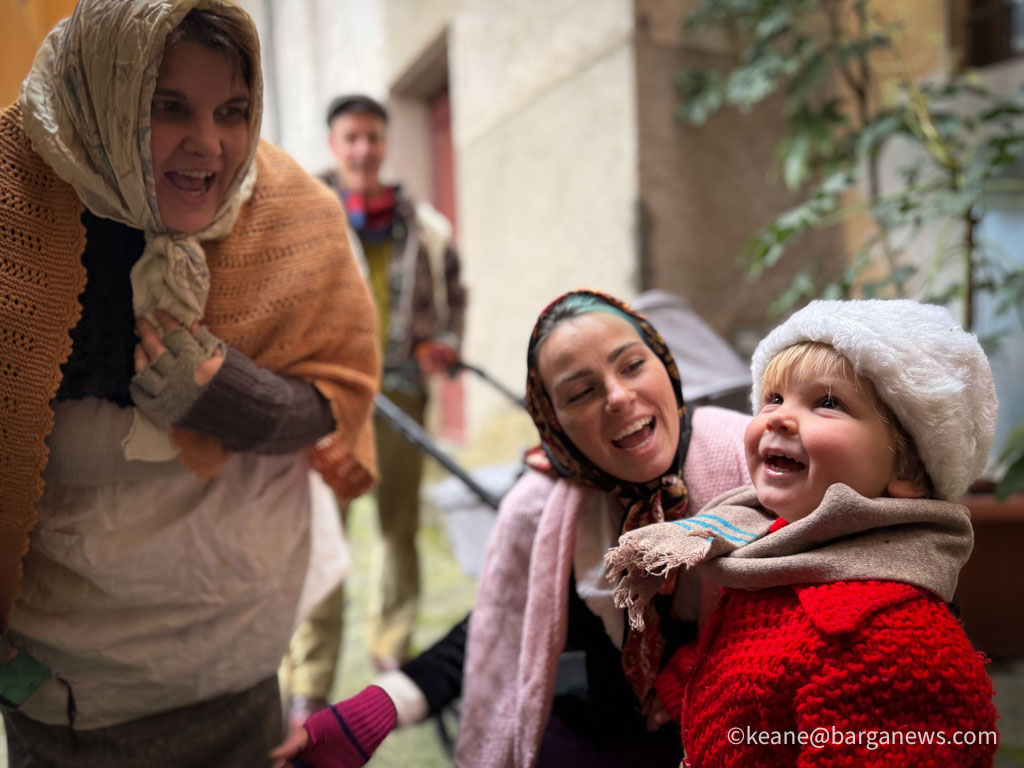
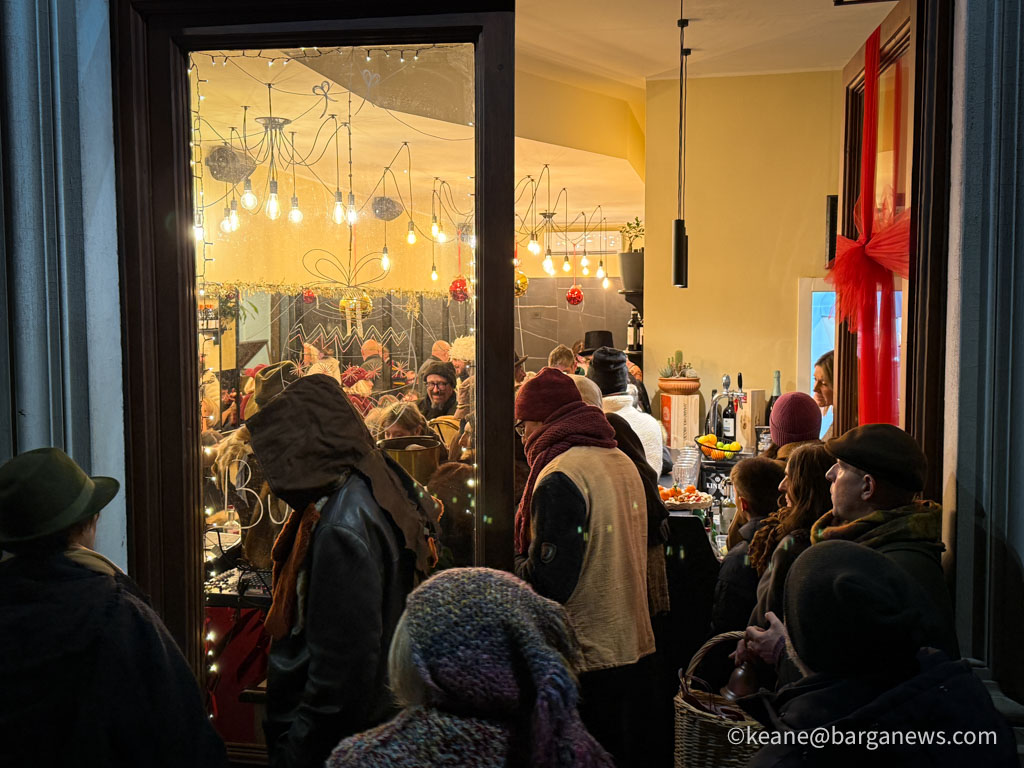
All day, eyes were on the forecast. The familiar question hung in the air: would the weather allow the Befanotti to come down from the mountains for their traditional evening of meeting and singing in Barga Vecchia?
They did.
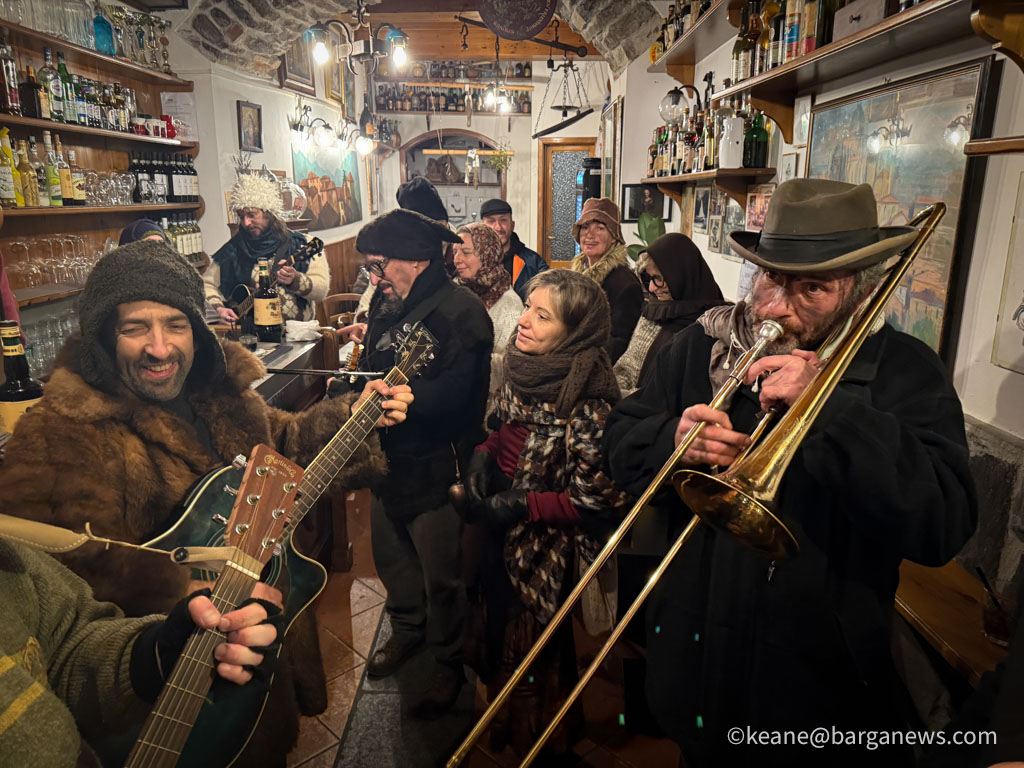
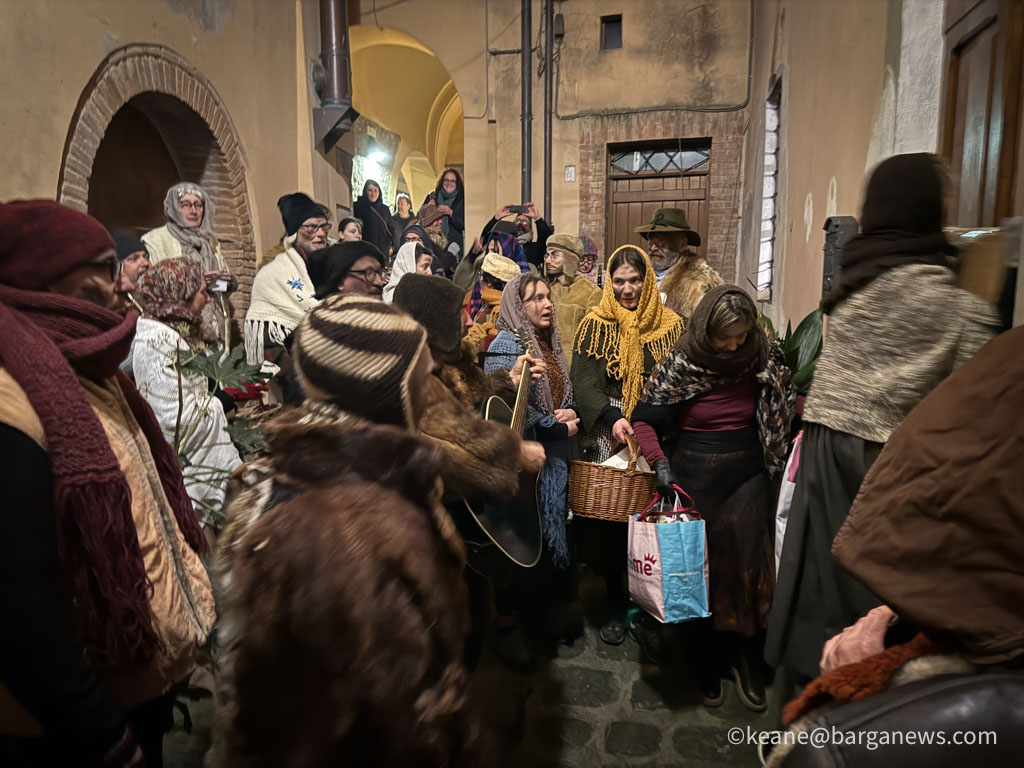
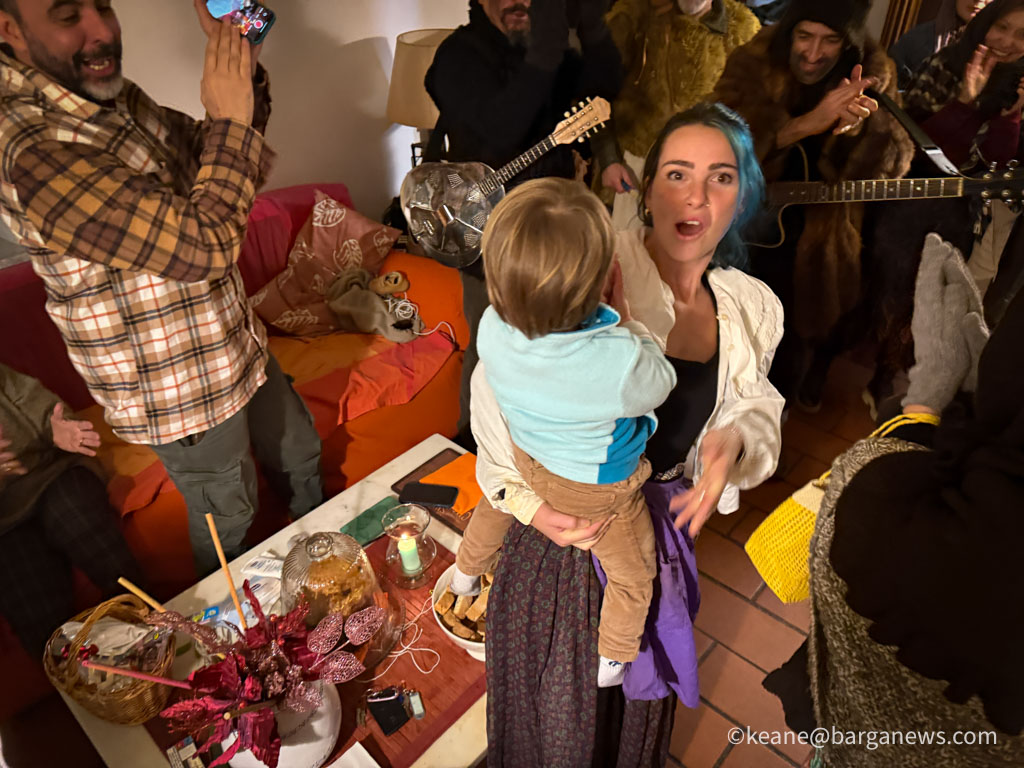
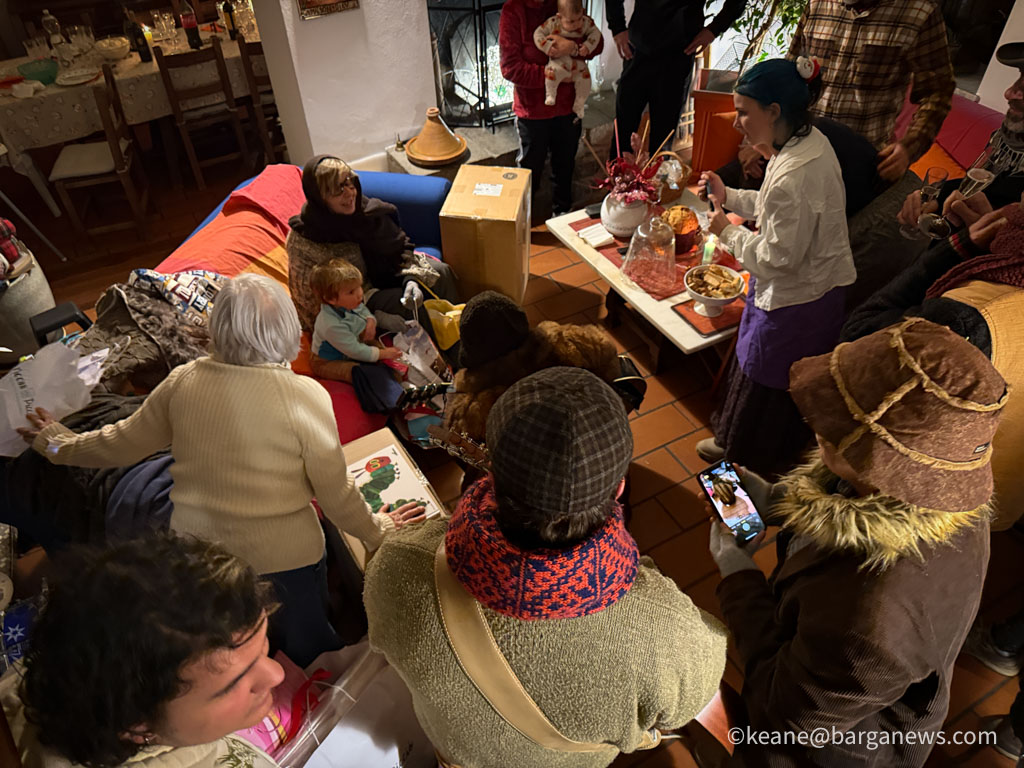
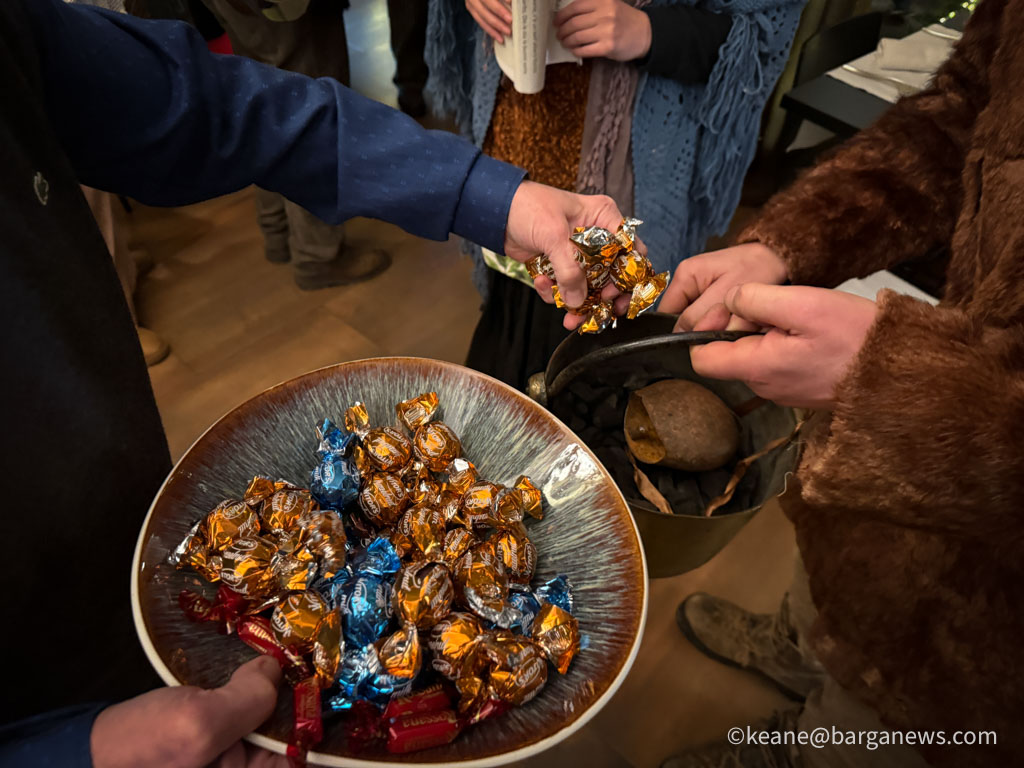
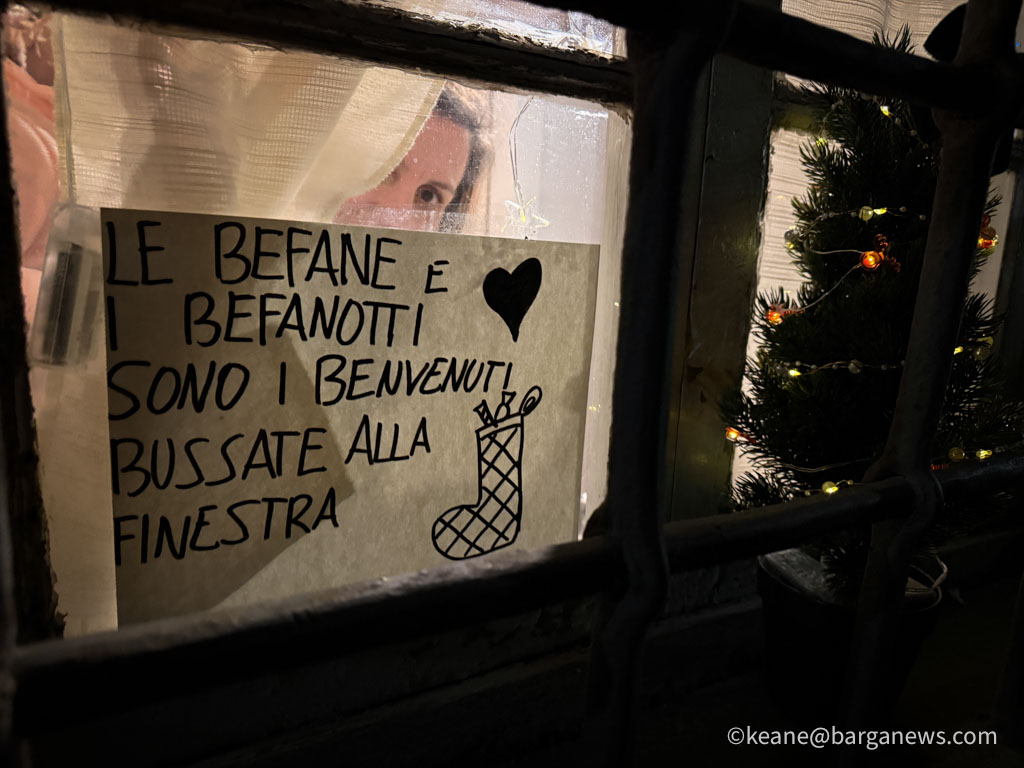
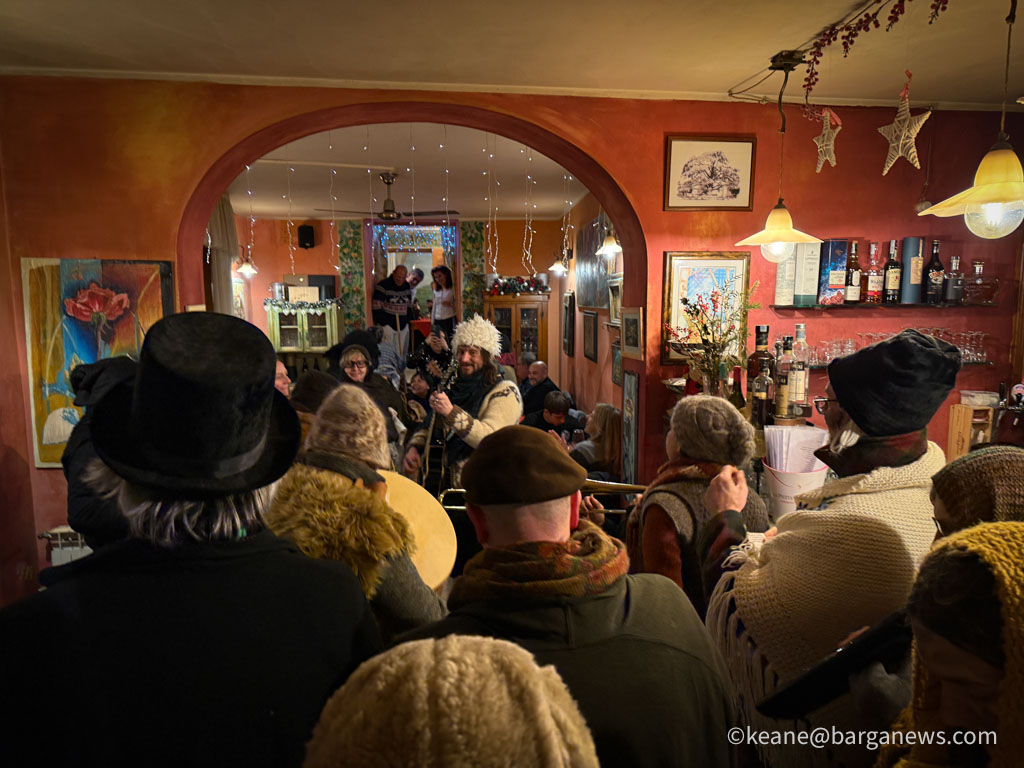
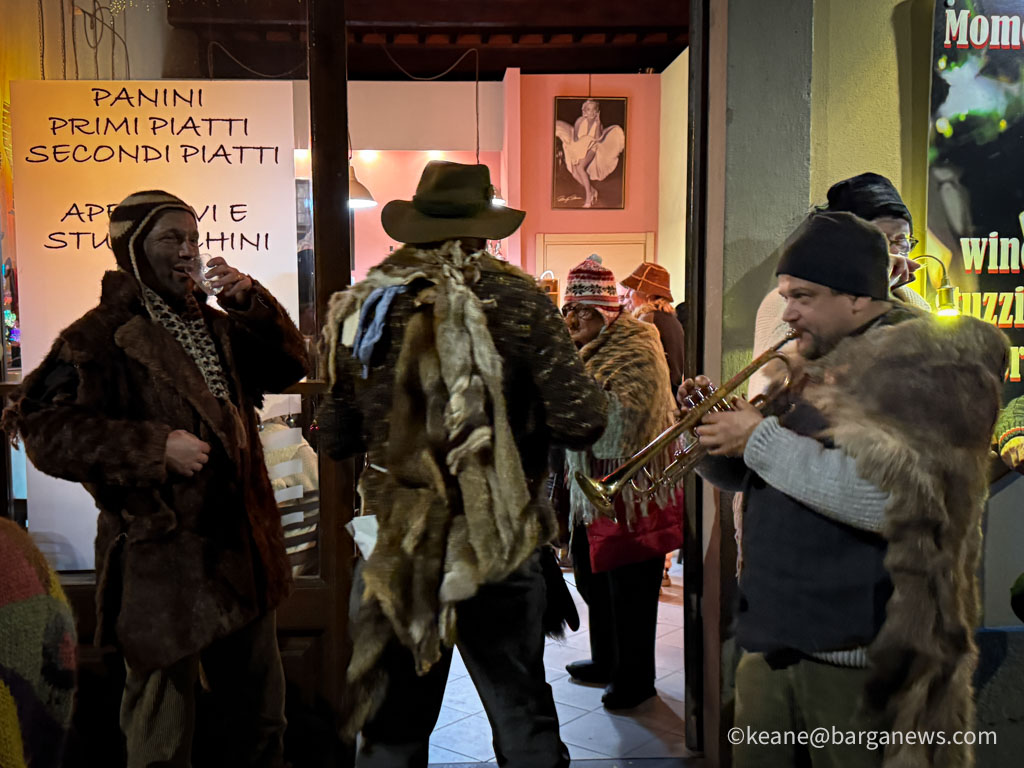
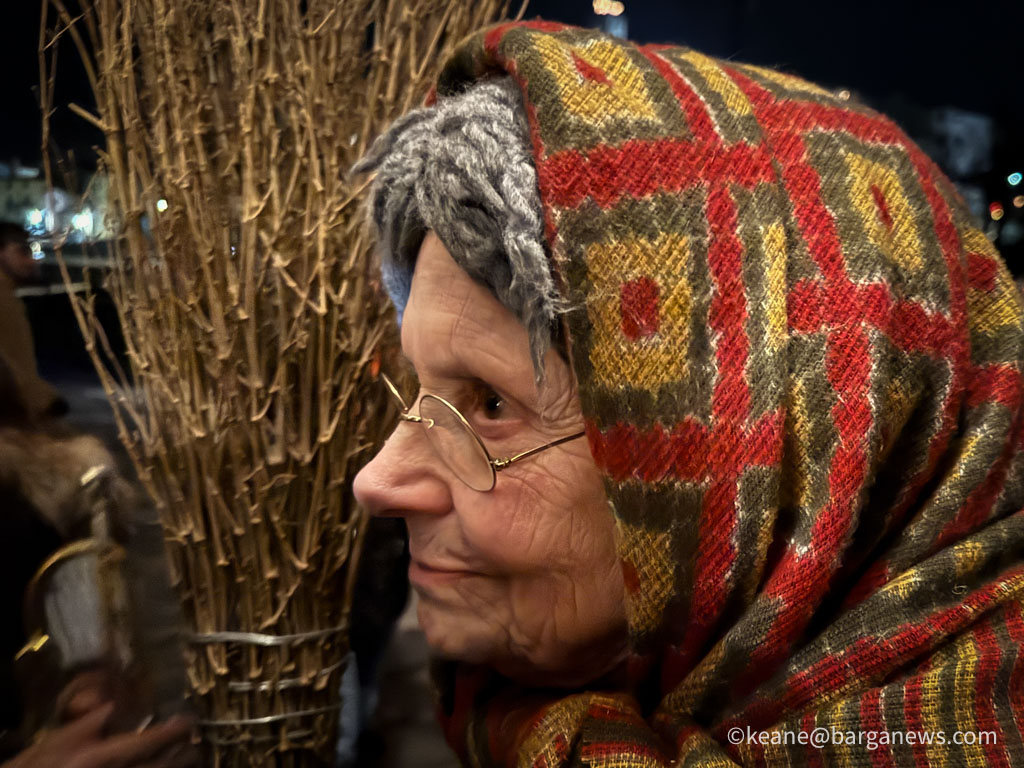
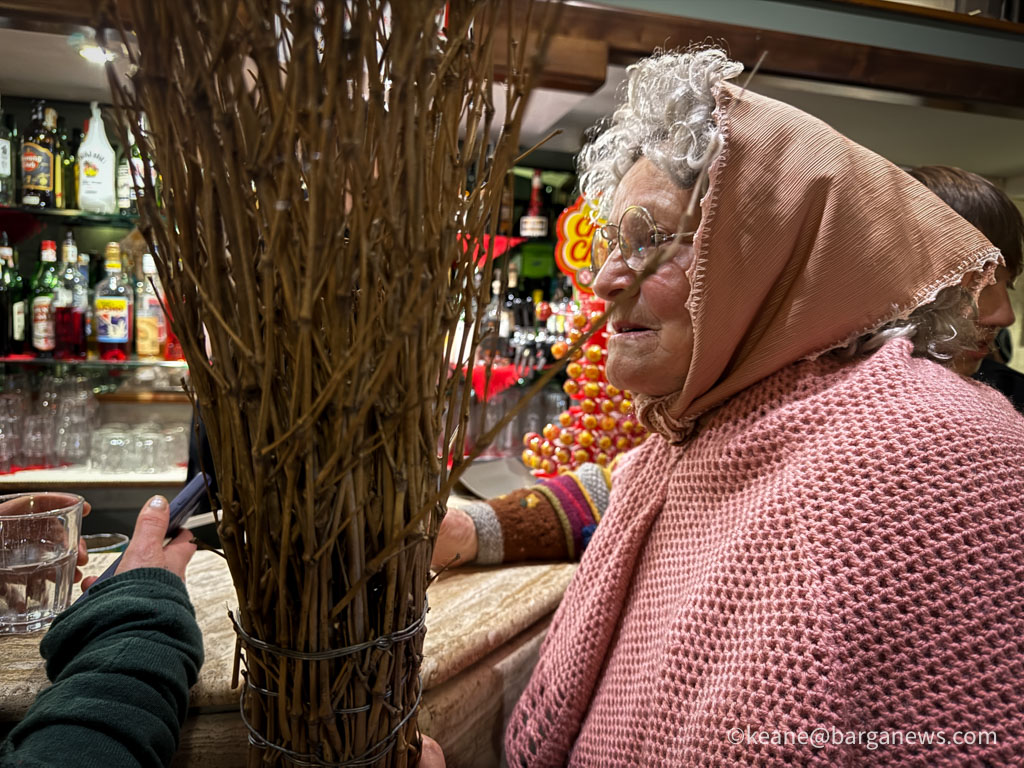
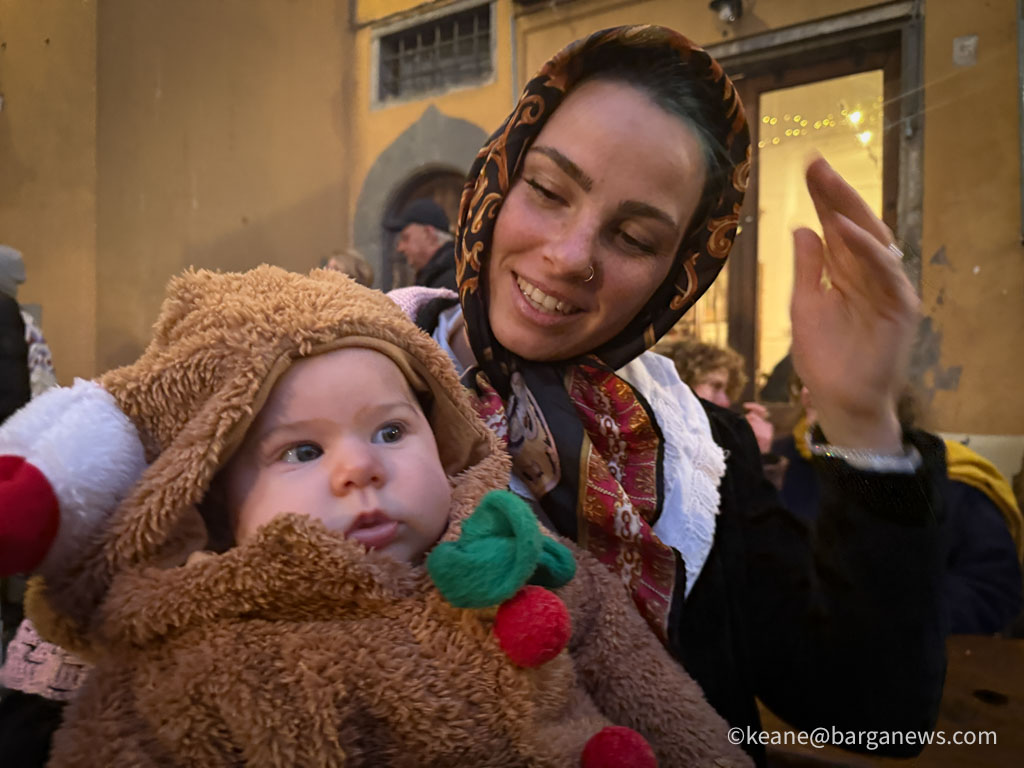
As tradition dictates, the Befanotti moved through the streets, entering houses, handing out small gifts to excited children, and stopping in bars and restaurants to sing the well-known Befana song. Payment came not in money but in glasses of hot punch — generously poured and rarely refused.
As the evening wore on, the effects of that hospitality became increasingly visible. Voices grew rougher, tempos less reliable, and clothes slipped gradually into a more end-of-night disarray. The music, like the singers themselves, became gloriously unruly.
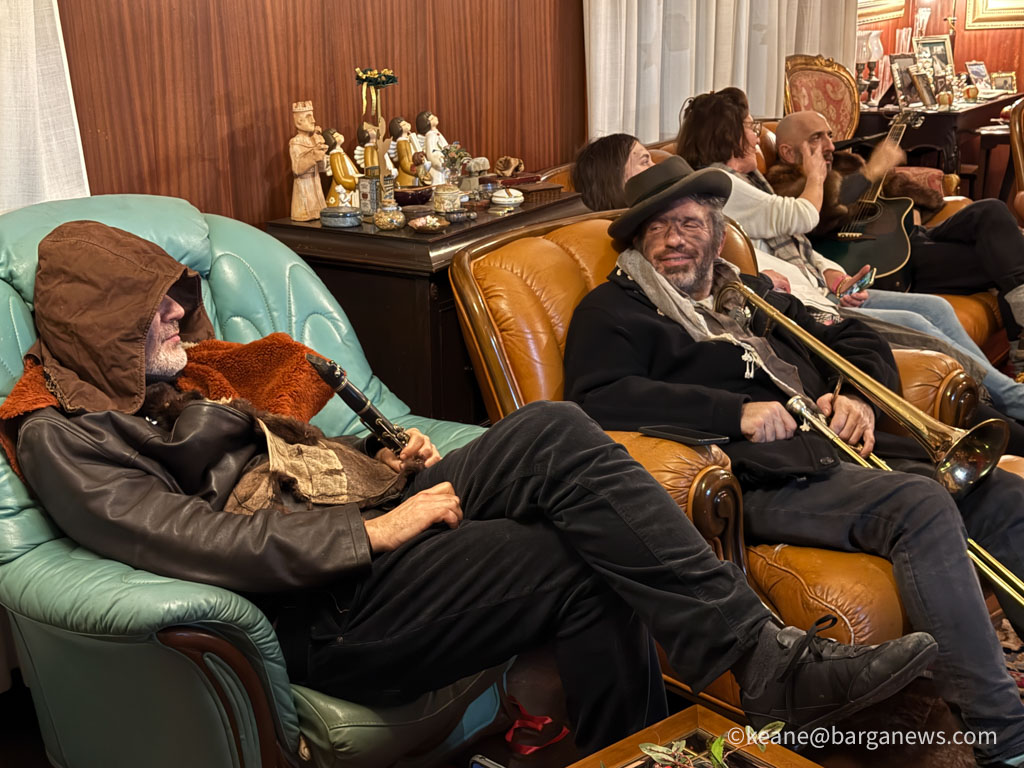
Despite the cold, one of the groups included several musicians from Barga Jazz. Alongside the traditional song came variations: a jazz-inflected version, a Giovanni Pascoli-inspired interpretation and, later in the evening, a surprise ska rendition that echoed through the streets of Barga Vecchia, to the delight of residents.
La Befana and the Epiphany
The Feast of the Epiphany, celebrated on 6 January and marked by a national holiday in Italy, brings the Christmas season to its close. It commemorates the arrival of the Three Wise Men at the manger, bearing gifts for the infant Jesus, on the twelfth day of Christmas.
Interwoven with the religious feast is the figure of La Befana, the old woman who flies on her broomstick during the night of 5 January, filling children’s stockings with sweets and toys — or, for those less well behaved, lumps of coal.
According to legend, the Wise Men once stopped at the home of an old woman to ask for directions. They invited her to join them, but she refused, saying she was too busy. Later, regretting her decision, she set out with gifts of her own but never found the manger. Condemned to wander, she now searches each year, leaving gifts behind in the hope of finding the Christ child at last.
The origins of La Befana may stretch back even further, to ancient Roman festivals such as Saturnalia, held around the winter solstice. Over time, pagan customs were absorbed into Christian celebrations, and the old woman who once foretold fortunes found a new role — transformed into one of Italy’s most enduring figures of winter tradition.

|
|

|

|

Per tutta la giornata gli sguardi sono rimasti puntati sulle previsioni del tempo. La domanda era la stessa di ogni anno: il meteo avrebbe permesso ai Befanotti di scendere dalle montagne per la loro tradizionale serata di incontro e di canti a Barga Vecchia?
La risposta è stata sì.
Come vuole la tradizione, i Befanotti hanno attraversato le strade entrando nelle case, distribuendo piccoli doni ai bambini e fermandosi nei bar e nei ristoranti per cantare la consueta canzone della Befana. Il compenso non era in denaro, ma in bicchieri di ponce caldo — offerti con generosità e raramente rifiutati.
Con il passare delle ore, gli effetti di tanta ospitalità sono diventati sempre più evidenti. Le voci si sono fatte più ruvide, i tempi meno regolari e gli abiti hanno assunto, poco a poco, un’aria da fine serata. La musica, come i cantori stessi, è diventata piacevolmente irregolare.
Nonostante il freddo, uno dei gruppi presenti a Barga Vecchia comprendeva anche diversi musicisti di Barga Jazz. Accanto alla versione tradizionale del canto, sono arrivate alcune variazioni: una versione jazz, una ispirata a Giovanni Pascoli e, più tardi nella serata, persino una versione ska che ha risuonato tra le vie di Barga Vecchia, suscitando curiosità e sorrisi tra i residenti.
La Befana e l’Epifania
La Festa dell’Epifania, celebrata il 6 gennaio e riconosciuta come festività nazionale in Italia, segna la conclusione del periodo natalizio. Ricorda l’arrivo dei Re Magi alla mangiatoia con i loro doni per il Bambino Gesù, nel dodicesimo giorno del Natale.
Accanto alla dimensione religiosa si colloca la figura della Befana, l’anziana che vola sulla scopa nella notte tra il 5 e il 6 gennaio, riempiendo le calze dei bambini con dolci e giocattoli — o, per quelli meno obbedienti, con pezzi di carbone.
Secondo la leggenda, i Re Magi si fermarono un tempo alla casa di una vecchia per chiedere indicazioni. La invitarono a unirsi a loro, ma lei rifiutò, dicendo di essere troppo occupata. Pentitasi in seguito, partì con dei doni, senza però riuscire a trovare la mangiatoia. Da allora vaga ogni anno, lasciando regali lungo il cammino nella speranza di incontrare il Bambino Gesù.
Le origini della Befana potrebbero essere ancora più antiche e risalire ai riti pagani romani, come i Saturnali, celebrati intorno al solstizio d’inverno. Con il tempo, molte tradizioni pagane confluirono nelle festività cristiane e la figura della vecchia indovina trovò una nuova collocazione, trasformandosi in uno dei simboli più duraturi dell’inverno italiano.
Barga Befana archives
Befana 2000 | 2001 | 2003 | 2004 | 2007 | 2008 | 2009 | 2010 | 2014 | 2015 | 2016 | 2017 | 2019 | 2023 | 2024 | 2025 |