More than fifteen years have passed since this small scene unfolded in the valley below Barga, but the memory of it remains tied to a sound that has now almost completely disappeared from rural life — the soft, steady tapping of hammer against steel.
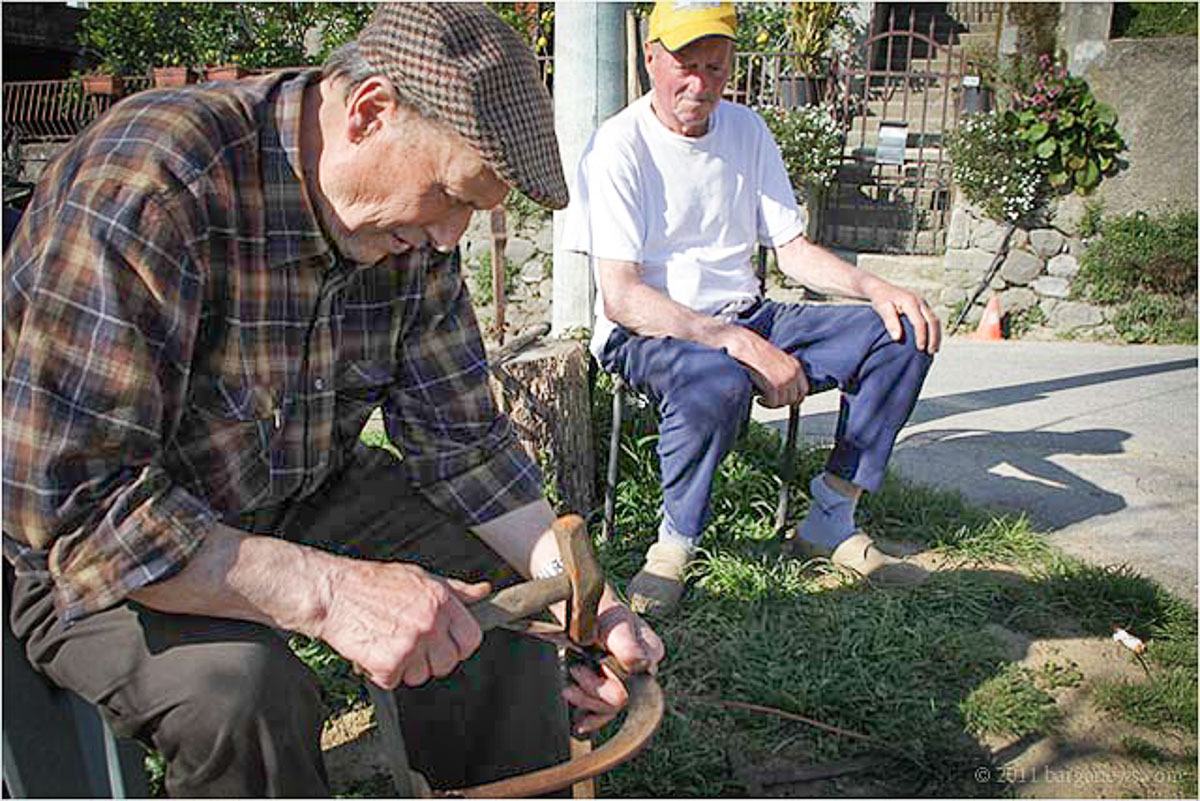
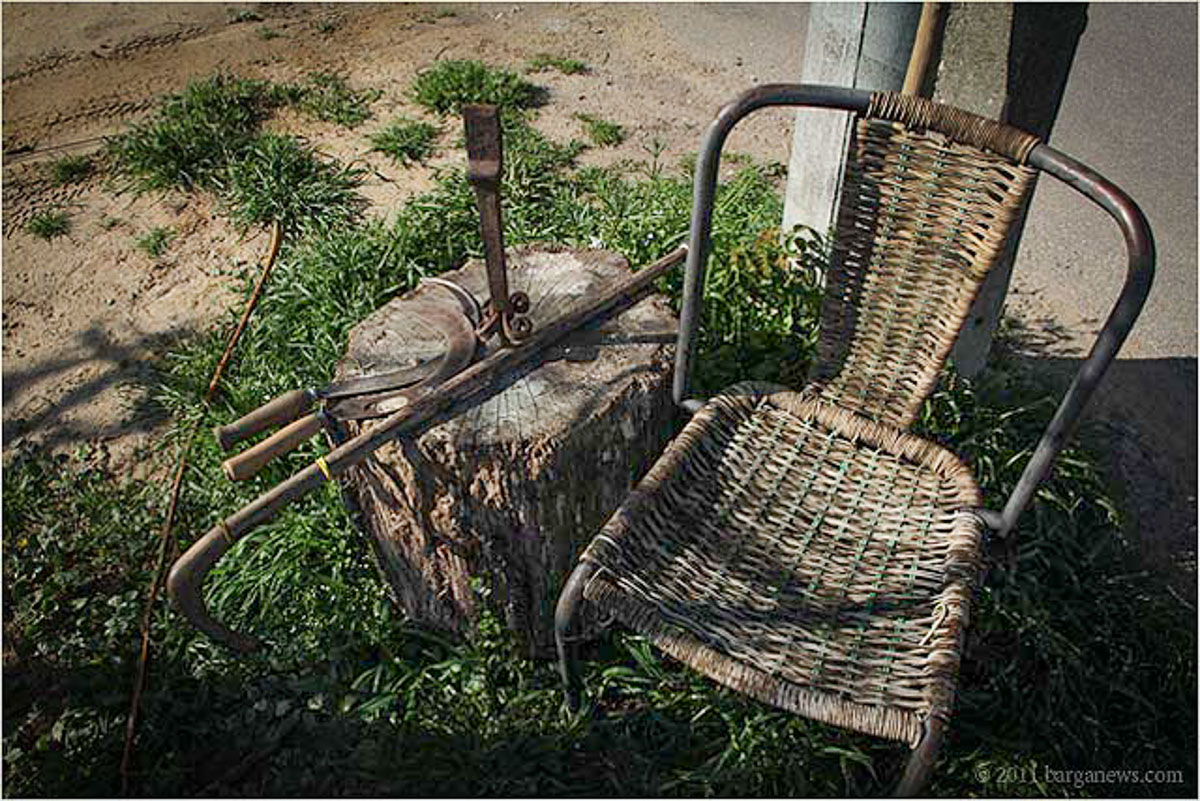
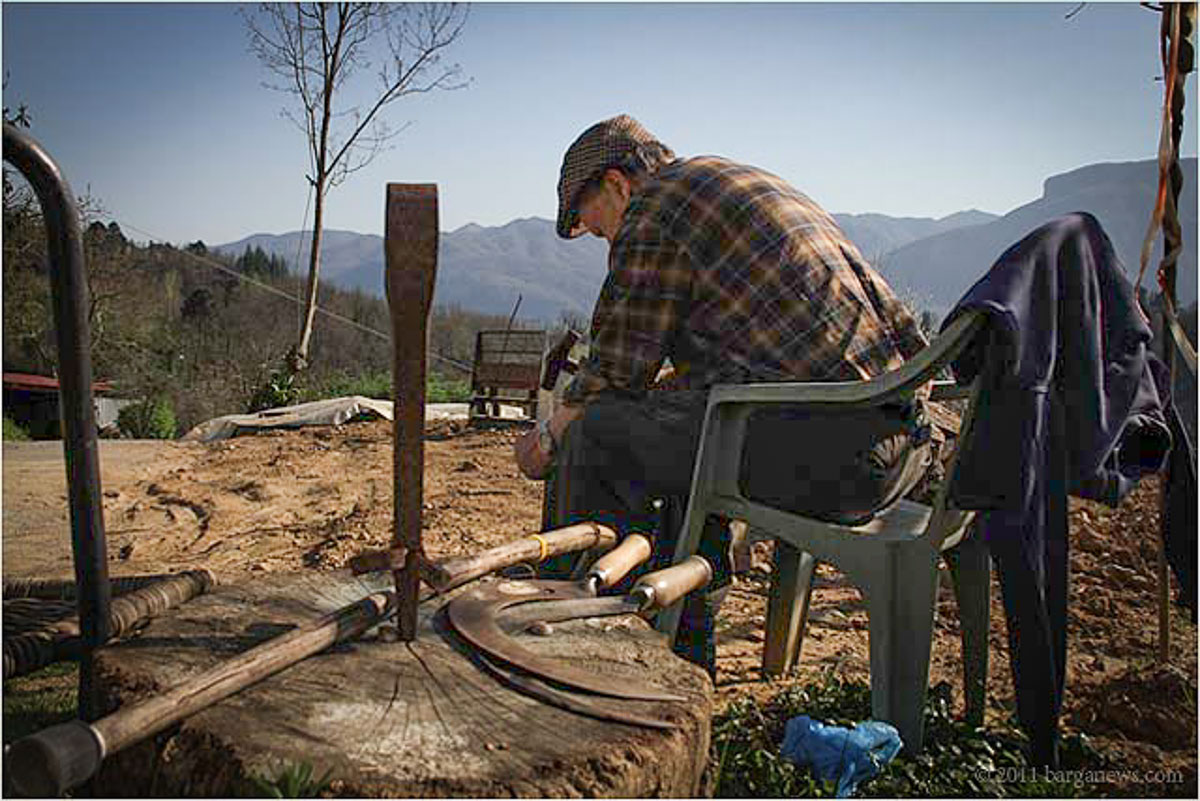
Back in the spring of 2011, barganews stopped beside Natale Bertolini who had set up a temporary workspace outdoors in the sunshine. Seated quietly beside a small anvil, with a bucket of water close at hand, he was sharpening old sickles using a technique that had already become rare even then.
Today the man himself has long since passed away, and with him much of the knowledge and rhythm of a way of life that belonged to another Tuscany – (full article about Natale here)
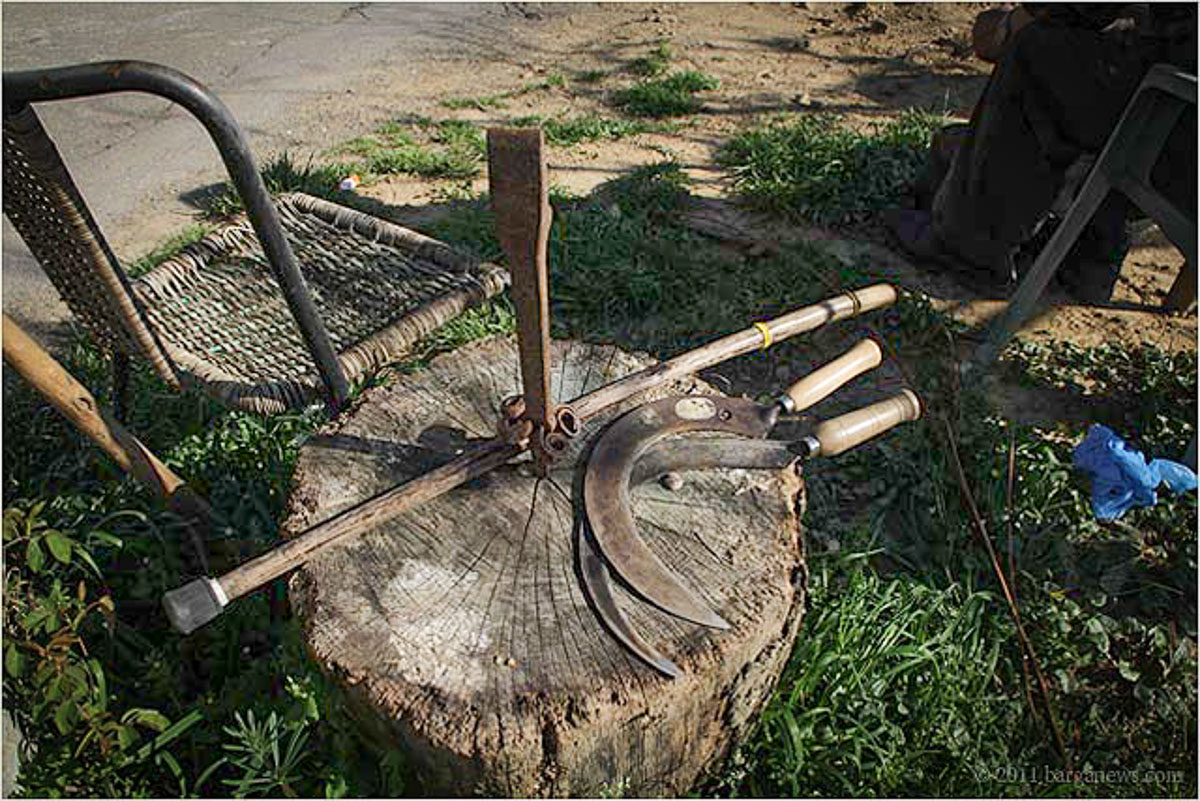
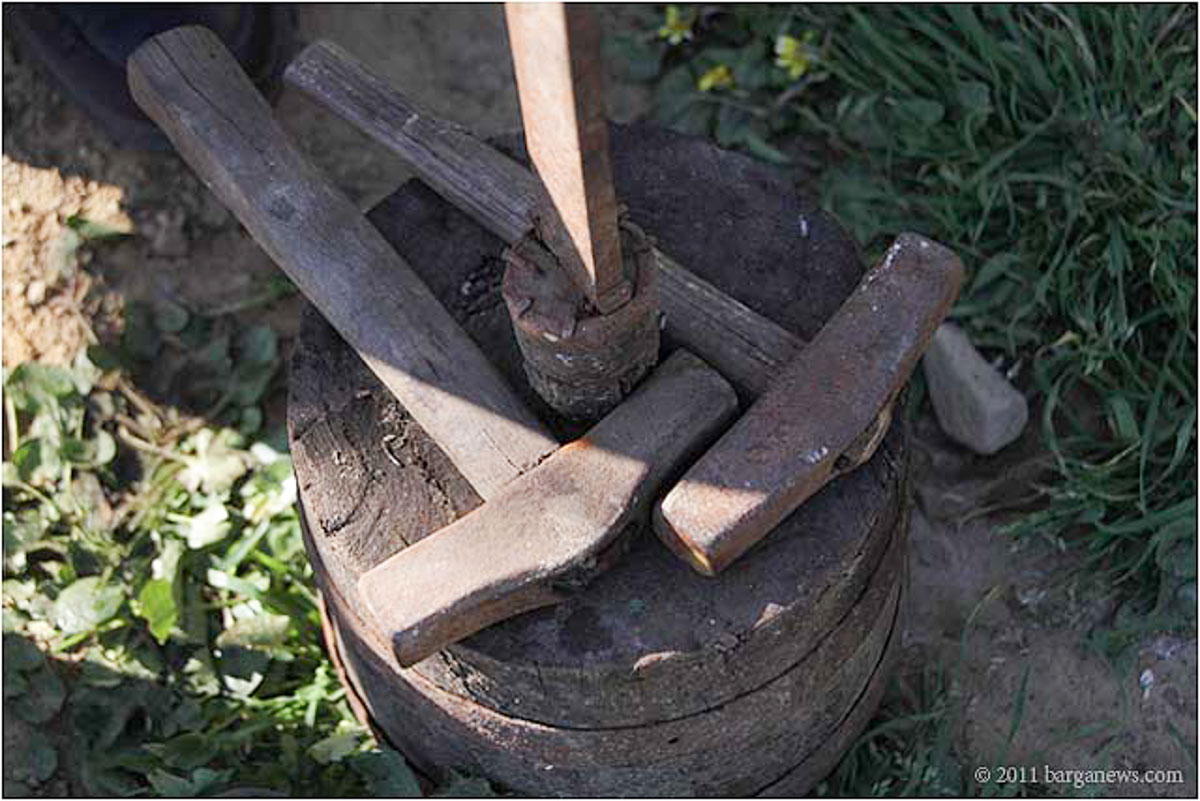
At first glance the scene carried echoes of the familiar hammer and sickle symbol recognised throughout the world from twentieth-century politics — the emblem once used to represent the unity of industrial workers and peasants during the Communist revolutions of Europe. Yet here in the Serchio Valley the relationship between hammer and sickle had never been ideological. It was practical, agricultural and deeply connected to everyday survival.
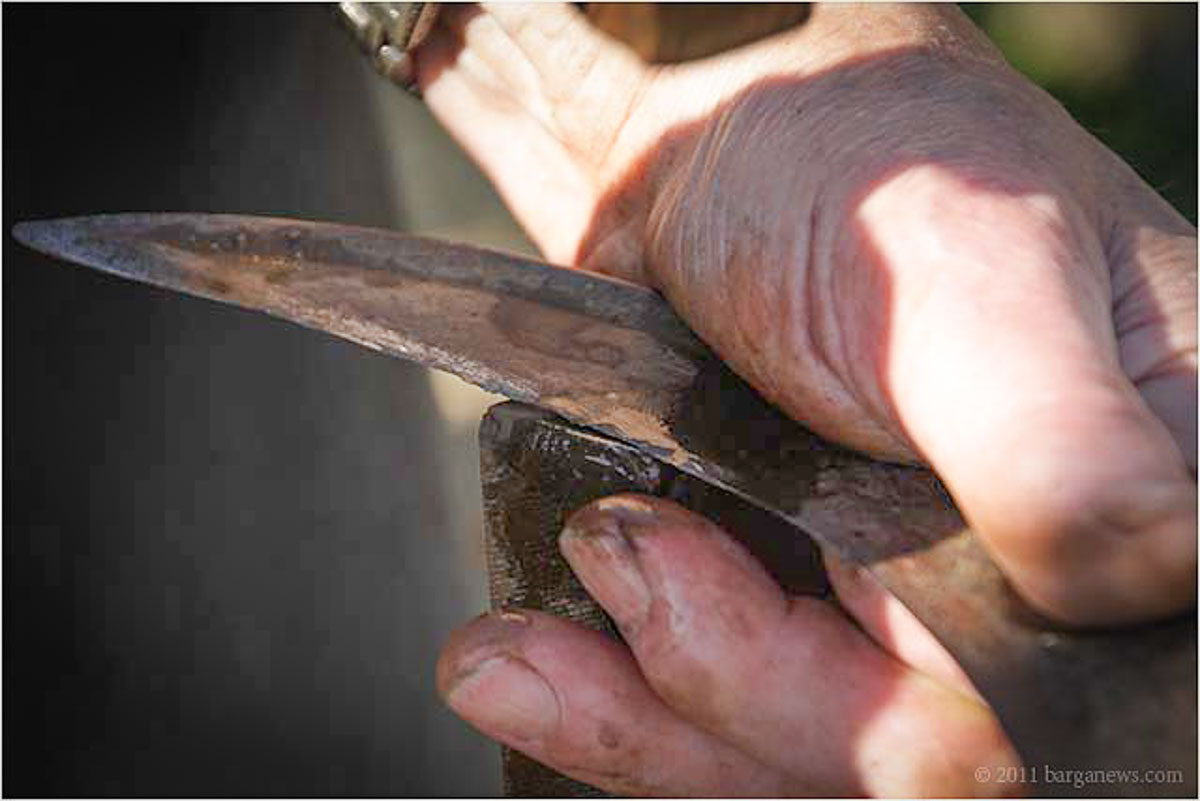
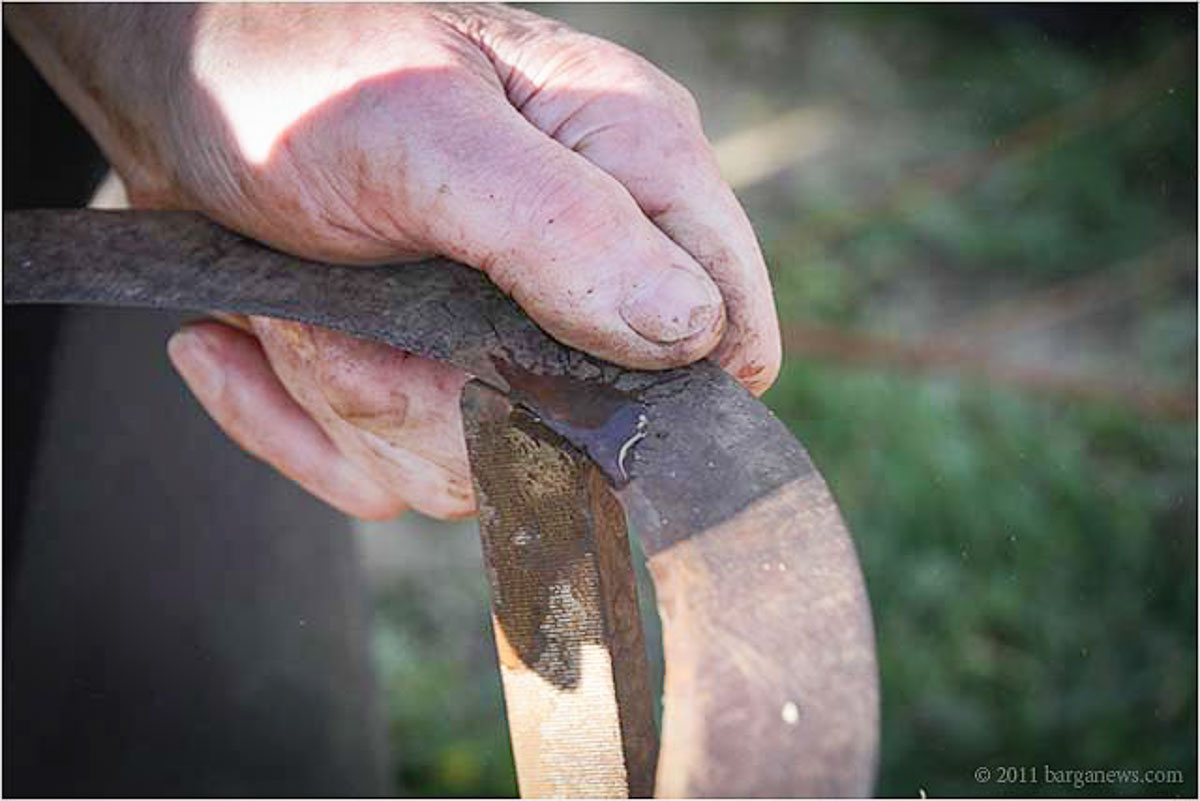
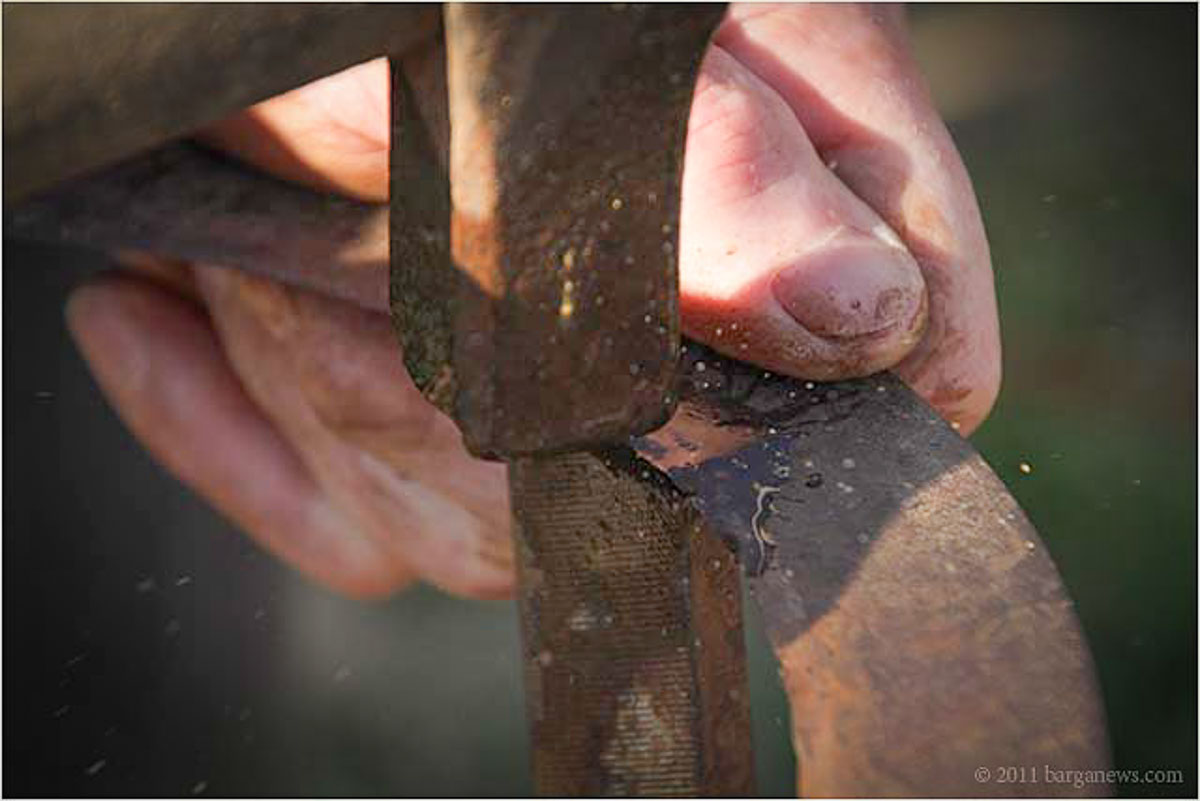
Most people assume a sickle was sharpened with a stone alone, but the real craft involved something far more delicate. Using a small flat-ended hammer, the sharpener carefully thinned and stretched the edge of the blade by striking it repeatedly against a tiny anvil. Only afterwards would a stone be used to finish the cutting edge.
It was highly skilled work. Too heavy a blow could crack the blade; too light a touch achieved nothing. Those who mastered the craft were once well known throughout the countryside and farmers would travel considerable distances bringing tools to them before the haymaking and harvesting seasons began.
That afternoon in 2011, people slowly arrived carrying bundles of worn sickles, waiting patiently while Natale worked. The metallic rhythm of the hammer carried across the valley, occasionally interrupted as he dipped the heated blade into water before continuing once more.
For a brief moment it felt as though the clock had been turned back decades. The pace of life around him seemed slower, quieter and more closely tied to the land itself.
The sickle, one of humanity’s oldest agricultural tools, had once been essential throughout the hills around Barga. Its curved blade was designed to gather and cut grain, grass and vegetation in a single movement, becoming an extension of the hand during harvest time.
Today the tools themselves are mostly decorative objects hanging on walls or stored in old barns, while the men who knew how to shape and maintain them are becoming memories as well.
Looking back now at those photographs and listening once again to the recorded sound of the hammering, the scene feels less like a simple moment from rural life and more like the final echo of a disappearing world.




Sono passati ormai più di quindici anni da quando questa piccola scena si svolse nella valle sotto Barga, ma il ricordo resta legato ad un suono che oggi è quasi completamente scomparso dalla vita rurale — il lieve e costante battere del martello sull’acciaio.
Nella primavera del 2011, barganews si fermò accanto a Natale Bertolini, che aveva improvvisato un piccolo laboratorio all’aperto sotto il sole. Seduto tranquillamente accanto ad una piccola incudine, con un secchio d’acqua vicino, stava affilando vecchie falci utilizzando una tecnica che già allora stava diventando rara.
Oggi Natale non c’è più e con lui se ne è andata anche una parte del sapere e del ritmo di vita appartenenti ad un’altra Toscana — (articolo completo su Natale qui)
A prima vista la scena richiamava inevitabilmente il celebre simbolo del martello e falce conosciuto in tutto il mondo attraverso la politica del Novecento — l’emblema utilizzato per rappresentare l’unione tra operai e contadini durante le rivoluzioni comuniste europee. Ma qui nella Valle del Serchio il rapporto tra martello e falce non aveva nulla di ideologico. Era qualcosa di pratico, agricolo e profondamente legato alla sopravvivenza quotidiana.
Molti pensano che una falce venisse affilata semplicemente con una pietra, ma il vero lavoro richiedeva un’operazione molto più delicata. Con un piccolo martello dalla testa piatta, l’affilatore assottigliava lentamente il bordo della lama colpendolo ripetutamente sopra una piccola incudine. Solo in seguito veniva utilizzata la pietra per rifinire il taglio.
Era un lavoro che richiedeva grande abilità. Un colpo troppo forte poteva rompere la lama; troppo leggero invece non avrebbe ottenuto alcun risultato. Chi possedeva questa capacità era conosciuto in tutta la campagna e i contadini percorrevano anche lunghe distanze portando gli attrezzi da preparare prima della stagione del fieno e del raccolto.
Quel pomeriggio del 2011, lentamente, arrivarono persone con fasci di vecchie falci consumate, aspettando pazientemente mentre Natale lavorava. Il ritmo metallico del martello si diffondeva nella valle, interrompendosi soltanto quando immergeva la lama nell’acqua per raffreddarla prima di ricominciare.
Per qualche momento sembrò davvero che il tempo fosse tornato indietro di decenni. Tutto intorno il ritmo della vita appariva più lento, più silenzioso e più vicino alla terra.
La falce, uno degli strumenti agricoli più antichi dell’umanità, era stata per secoli indispensabile sulle colline intorno a Barga. La sua lama curva era progettata per raccogliere e tagliare grano, erba e vegetazione con un solo movimento, diventando quasi un’estensione della mano durante il raccolto.
Oggi questi strumenti sopravvivono soprattutto come oggetti decorativi appesi ai muri o dimenticati nei vecchi fienili, mentre anche gli uomini che sapevano forgiare e mantenere quelle lame stanno lentamente diventando memoria.
Riguardando oggi quelle fotografie e riascoltando il suono registrato del martello sull’acciaio, quella scena appare meno come un semplice episodio di vita contadina e più come l’ultima eco di un mondo che stava scomparendo.