The People of Barga Still Care for Their Garibaldi
For generations, the marble figure of Giuseppe Garibaldi has watched over the square that bears his name in the heart of Barga. Darkened by weather, pollution and the passage of time, the monument has become such a familiar part of daily life that many people scarcely notice it anymore.
This week, however, Garibaldi became the centre of attention once again.
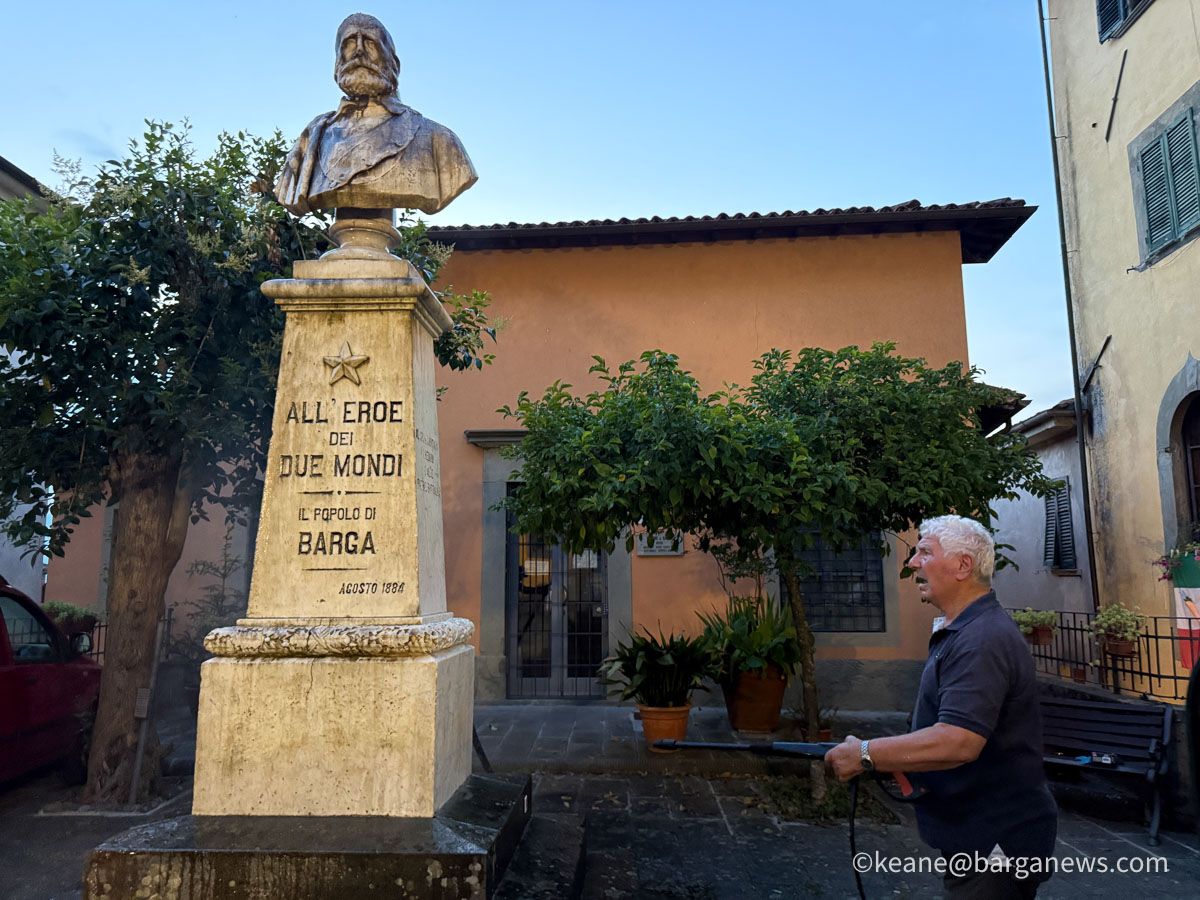
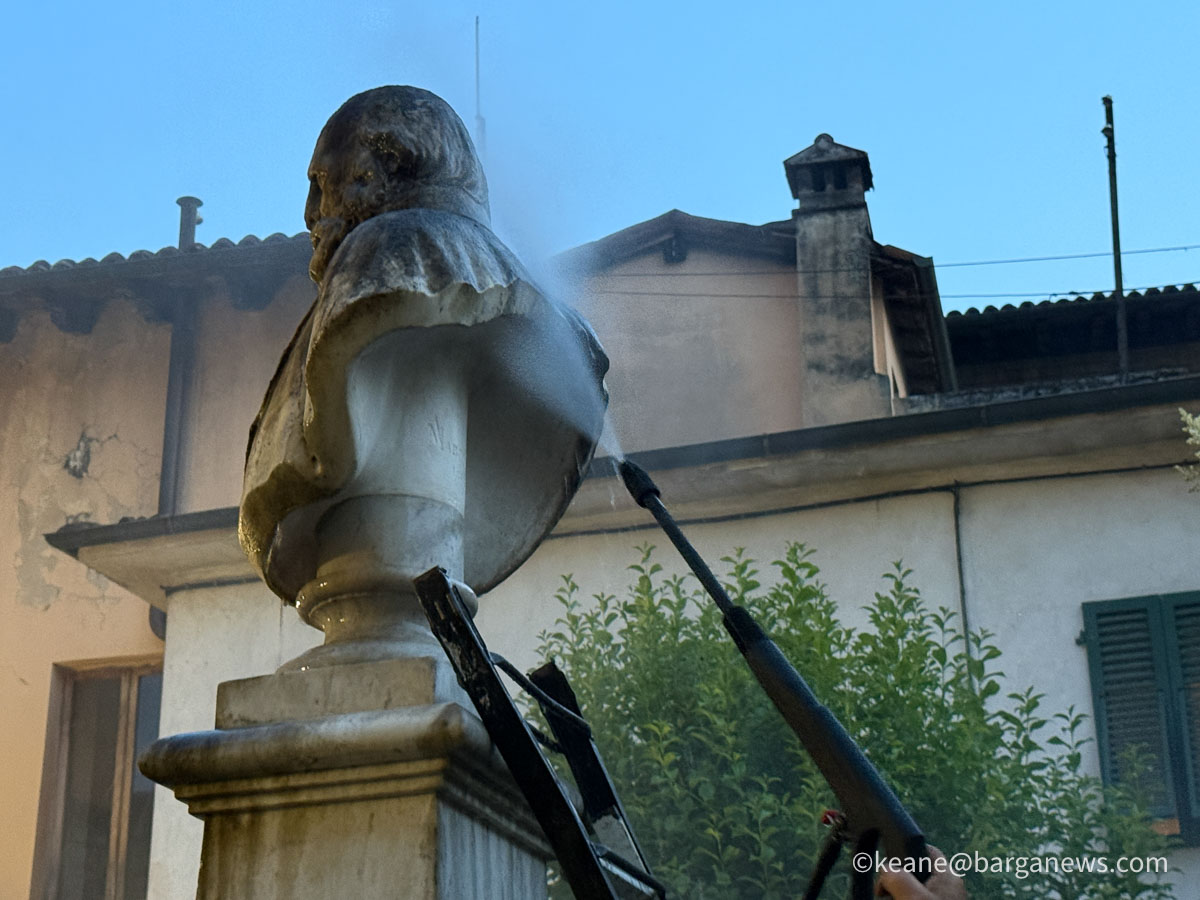
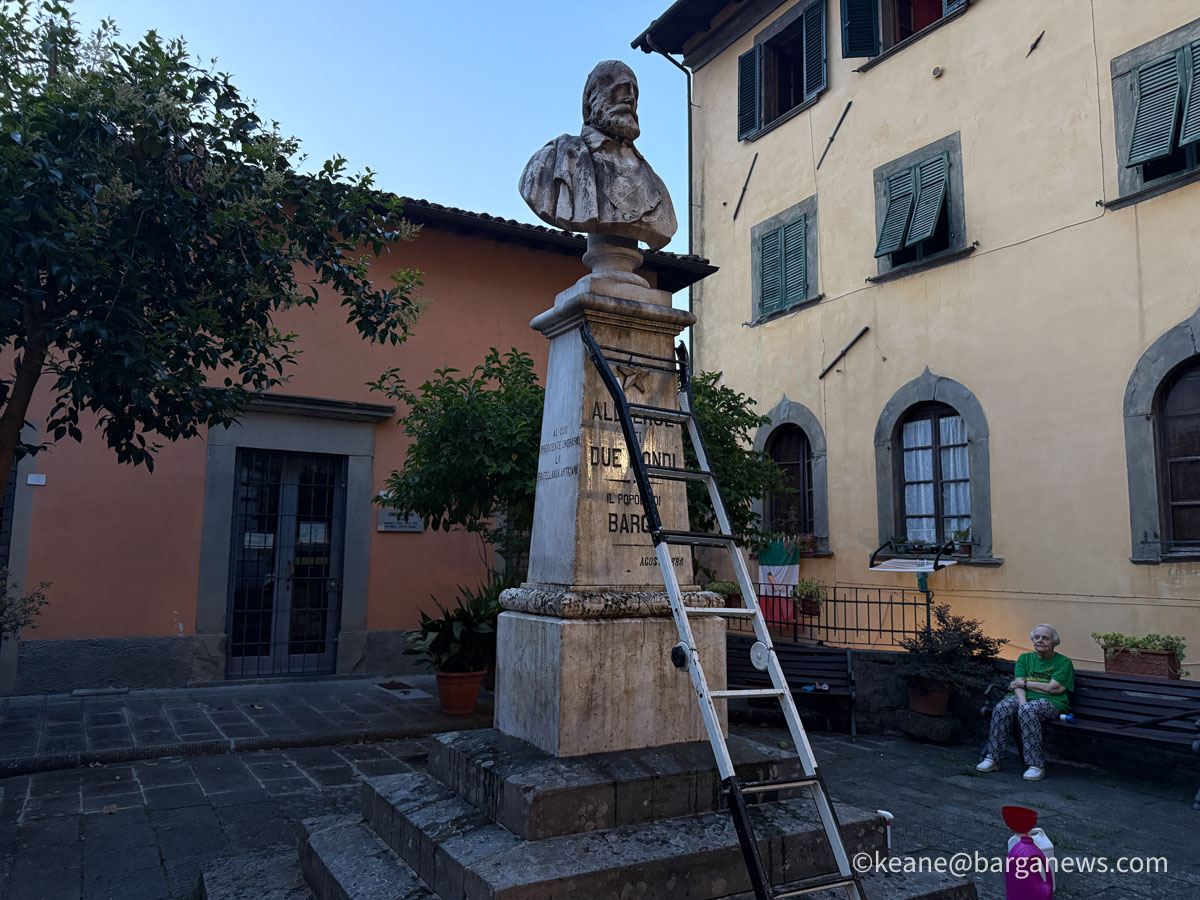
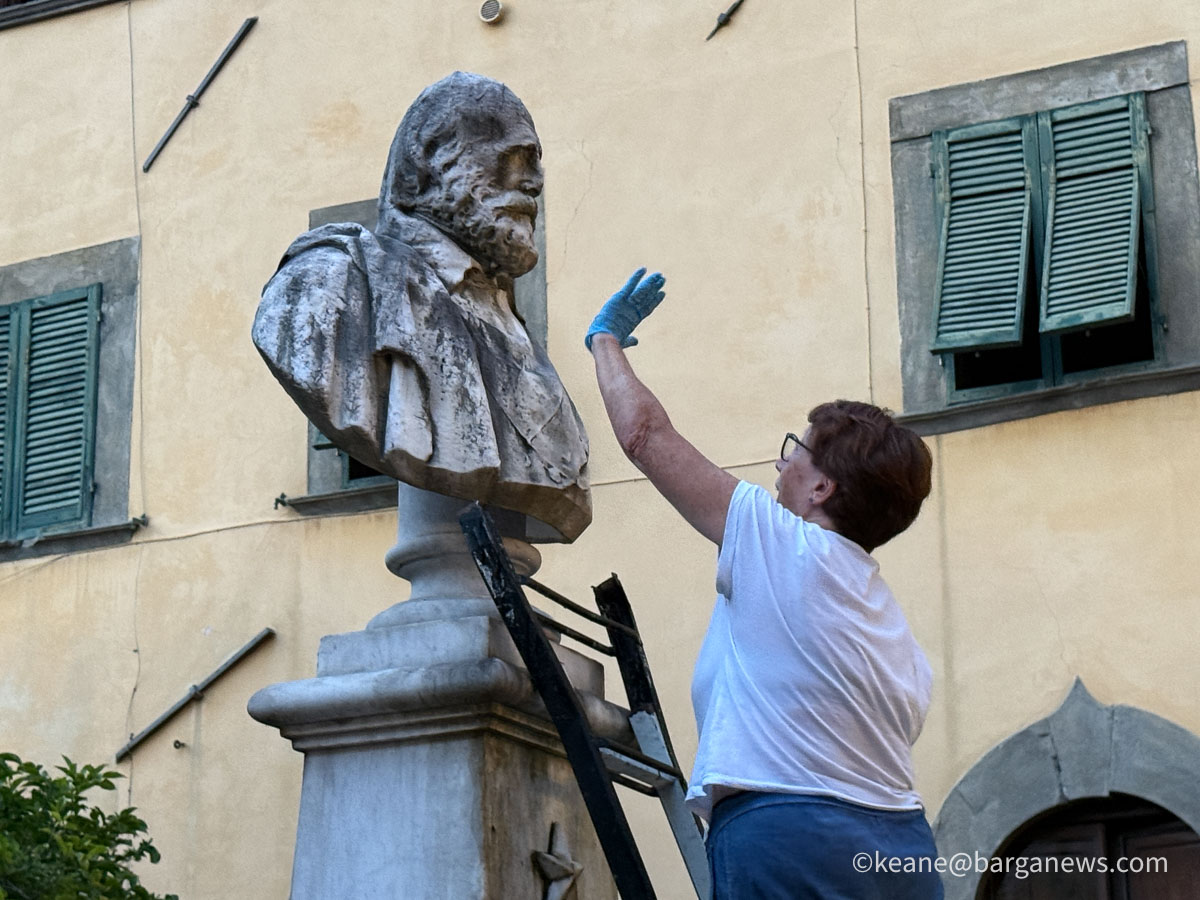
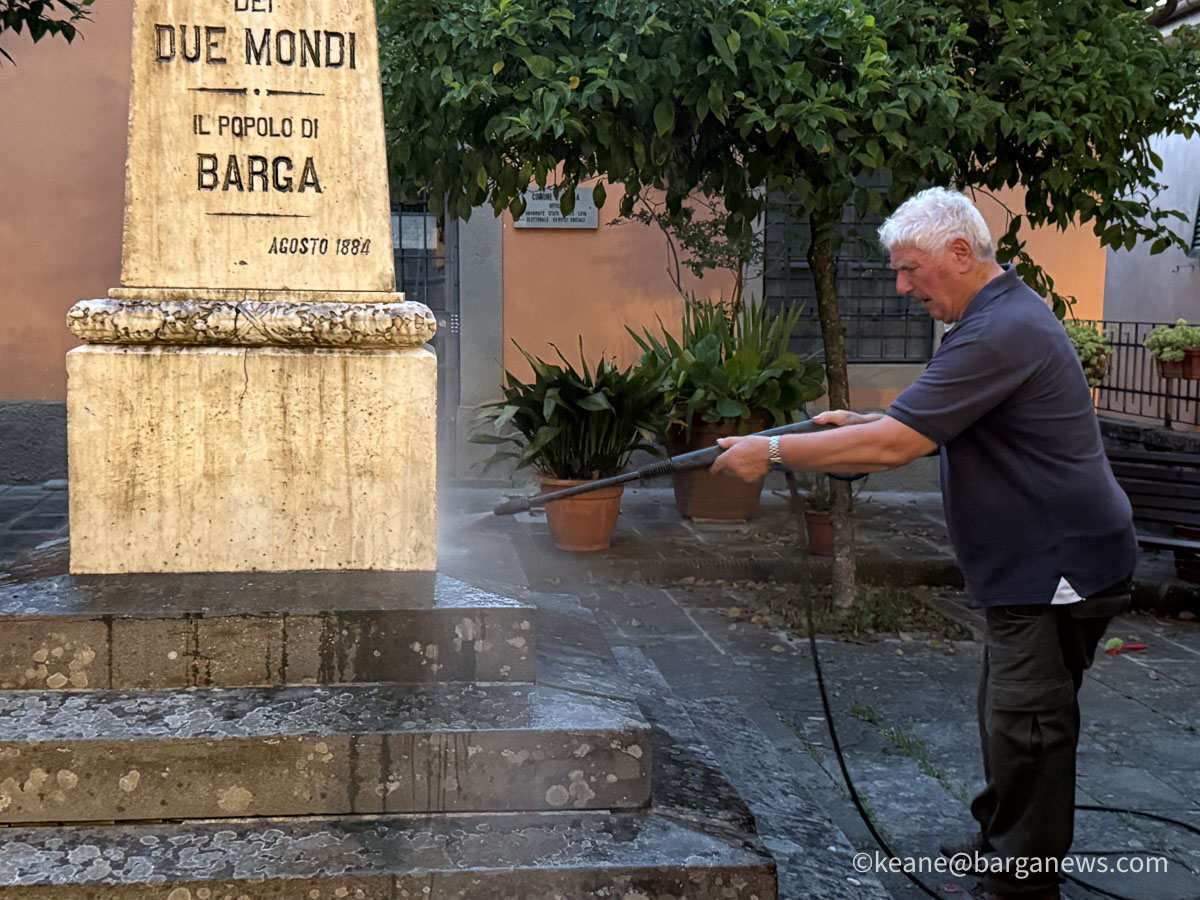
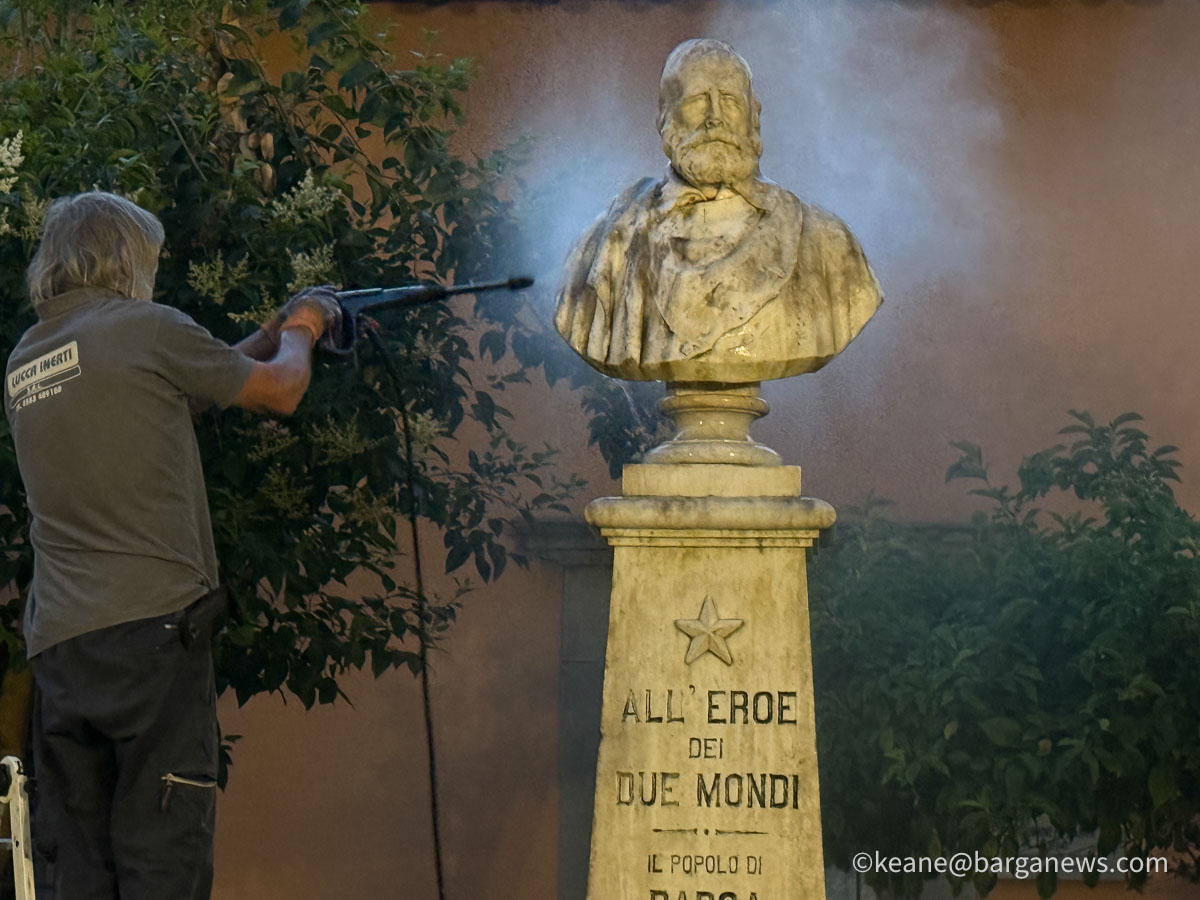
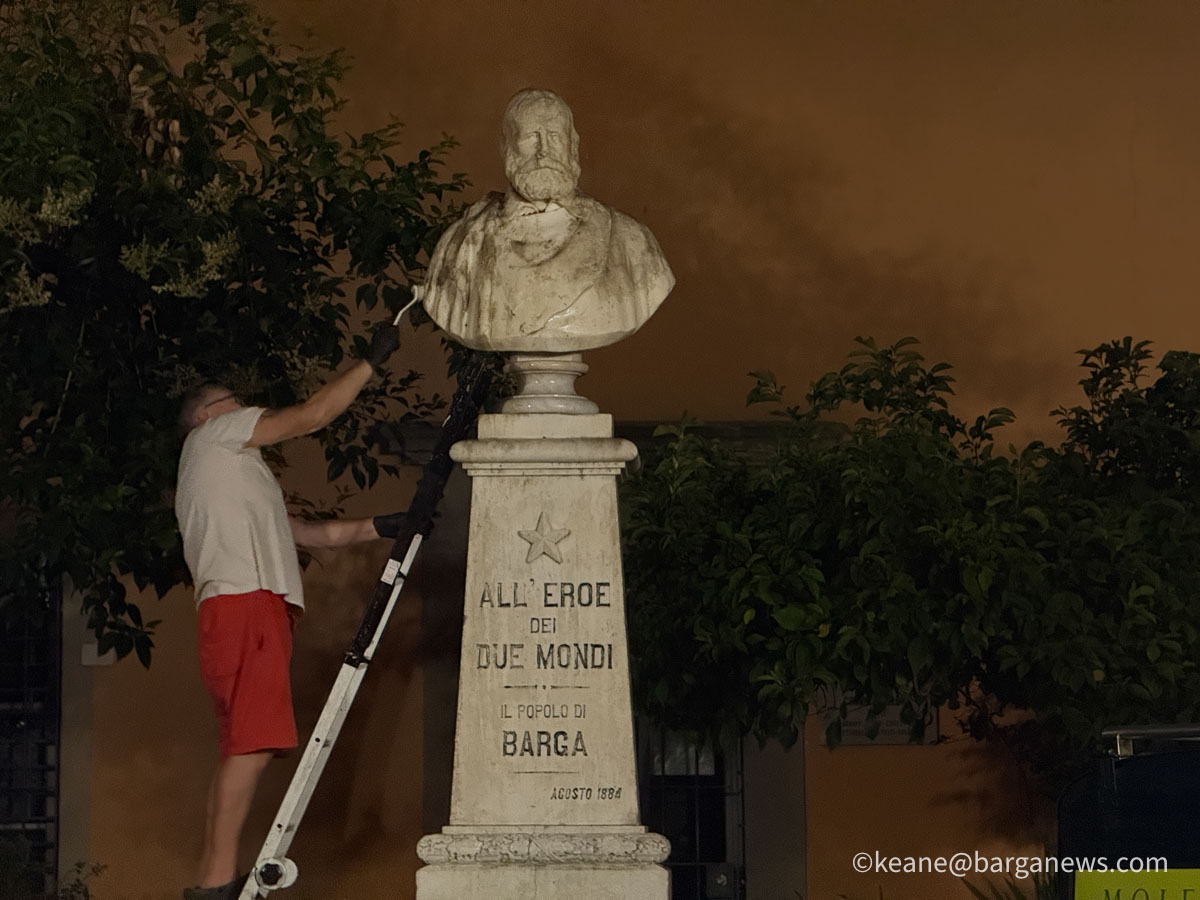
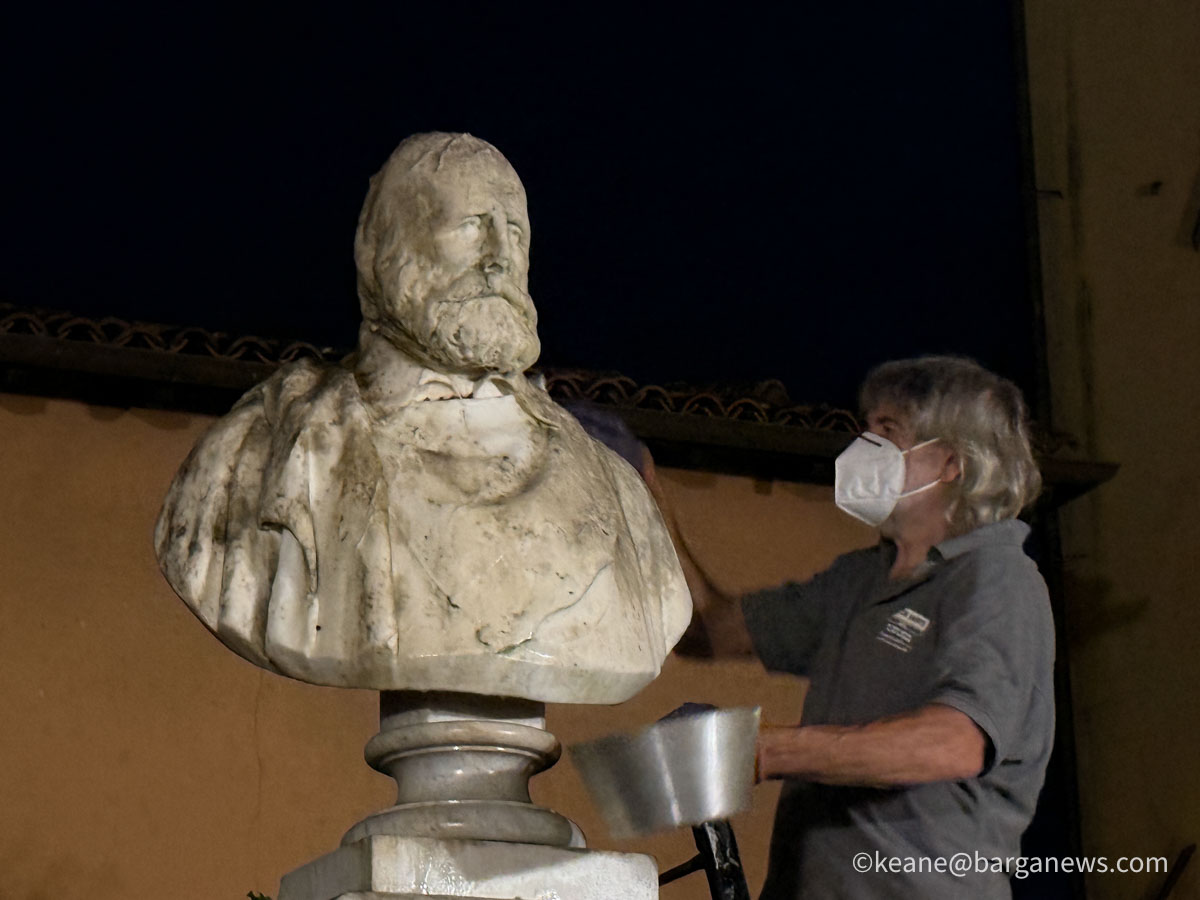
As evening fell in Piazza Garibaldi, local residents gathered with ladders, brushes and pressure washers to give the monument a thorough cleaning. Working together over several hours, they carefully washed away years of accumulated grime from both the bust and its pedestal, gradually revealing details that had long been hidden beneath dirt and biological growth.
The photographs tell the story better than words. One after another, volunteers took their turn on the ladder, cleaning the marble surface while neighbours gathered to watch, offer advice and lend a hand. It was a small act of community spirit, but one that reflected the affection that many people in Barga continue to feel for one of the city’s most important monuments.
The monument itself occupies a special place in local history.
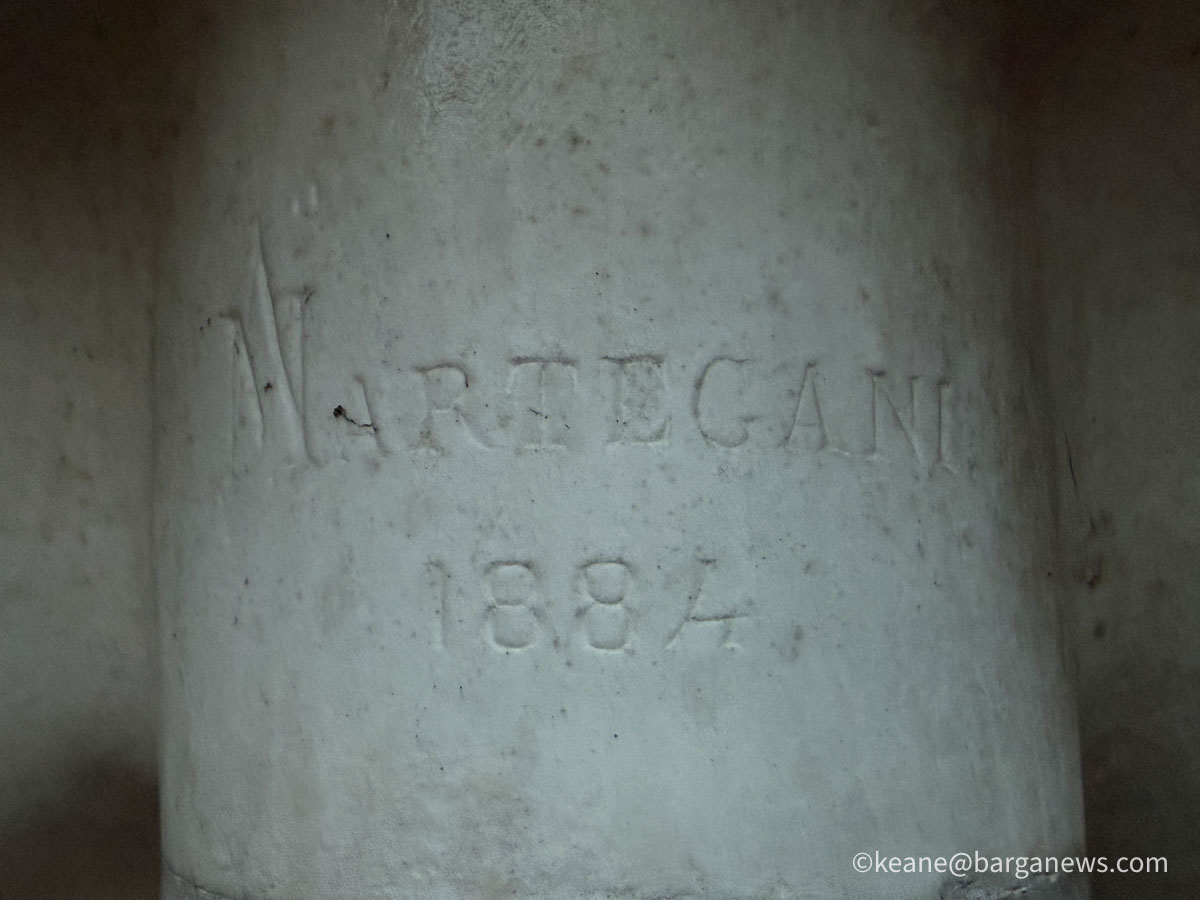
In August 1884, just two years after the death of Giuseppe Garibaldi, Barga became one of the first cities in Italy to honour him with a public marble monument. The bust was created by the sculptor Alessandro Martegani, whose signature and the date 1884 remain carved into the marble.
The inscription reads:
“All’Eroe dei Due Mondi
Il Popolo di Barga
Agosto 1884”
“To the Hero of the Two Worlds
The People of Barga
August 1884”
The title “Hero of the Two Worlds” reflects Garibaldi’s extraordinary life. Born in Nice in 1807, he became one of the central figures of the Italian Risorgimento, the movement that led to the unification of Italy.
Before returning to Italy to fight for independence, Garibaldi spent years in South America, taking part in revolutionary struggles in Brazil and Uruguay. These experiences shaped the military skills that would later make him famous throughout Europe.
His most celebrated achievement came in 1860 with the legendary Expedition of the Thousand. On 5 May of that year, two ships, the Piemonte and the Lombardo, sailed from Quarto near Genoa carrying around 1,000 volunteers bound for Sicily. Their campaign would become one of the defining episodes in the creation of modern Italy.
The volunteers came from every walk of life. Among them were lawyers, doctors, pharmacists, engineers, merchants, sea captains and artists. The oldest volunteer was seventy years old, while the youngest was just eleven.
Together with Mazzini and Cavour, Garibaldi remains one of the principal architects of modern Italy and one of the most recognisable figures in Italian history.
The monument has also been at the centre of more recent events.
In August 2007, during a rally in Venice, the leader of the Lega Nord, Umberto Bossi, declared that making Rome the capital of Italy had been a mistake committed by the House of Savoy and Garibaldi. He went on to describe Garibaldi as a “cretin”.
The remarks prompted reactions across Italy. Here in Barga, the response came a few weeks later in the form of a large public celebration. Children filled the streets, a thirty-metre Italian flag was carried through the city and music echoed through the historic centre beneath the gaze of the marble patriot. The event became known as “Garibaldi Red in the Streets of Barga”, and remains one of the more memorable civic gatherings of recent years – (article and video here)
The monument has, of course, received attention before. It was cleaned and restored some decades ago, but time and the elements have once again left their mark on the marble surface.
This latest cleaning was therefore not simply about removing dirt. It was a reminder that, nearly 142 years after the monument was unveiled, the connection between Barga and Garibaldi remains strong.
The inscription says that the monument was erected by “Il Popolo di Barga” — the people of Barga.
This week, it was once again the people of Barga who came together to care for it.




Il Popolo di Barga si prende ancora cura del suo Garibaldi
Da generazioni, la figura marmorea di Giuseppe Garibaldi veglia sulla piazza che porta il suo nome nel cuore di Barga. Scurito dalle intemperie, dall’inquinamento e dal trascorrere del tempo, il monumento è diventato una presenza così familiare nella vita quotidiana che molti ormai quasi non lo notano più.
Questa settimana, però, Garibaldi è tornato ad essere al centro dell’attenzione.
Al calare della sera, in Piazza Garibaldi, alcuni cittadini si sono riuniti con scale, spazzole e idropulitrici per effettuare una pulizia approfondita del monumento. Lavorando insieme per diverse ore, hanno rimosso con cura anni di sporco accumulato sul busto e sul piedistallo, riportando alla luce particolari che da tempo erano nascosti sotto depositi, muschi e incrostazioni.
Le fotografie raccontano la storia meglio di qualsiasi parola. Uno dopo l’altro, i volontari si sono alternati sulla scala per pulire il marmo, mentre vicini e passanti osservavano, offrivano consigli e davano una mano. Un piccolo gesto di spirito comunitario che testimonia l’affetto che molti barghigiani continuano a nutrire per uno dei monumenti più importanti della città.
Il monumento occupa infatti un posto speciale nella storia di Barga.
Nell’agosto del 1884, appena due anni dopo la morte di Giuseppe Garibaldi, Barga fu una delle prime città d’Italia a rendergli omaggio con un monumento pubblico in marmo. Il busto venne realizzato dallo scultore Alessandro Martegani, la cui firma e la data 1884 sono ancora visibili incise sul marmo.
L’iscrizione recita:
“All’Eroe dei Due Mondi
Il Popolo di Barga
Agosto 1884”
Il titolo di “Eroe dei Due Mondi” richiama la straordinaria vita di Garibaldi. Nato a Nizza nel 1807, fu una delle figure centrali del Risorgimento italiano, il movimento che portò all’unificazione del Paese.
Prima di tornare in Italia per combattere per l’indipendenza, Garibaldi trascorse diversi anni in Sud America, partecipando alle lotte rivoluzionarie in Brasile e Uruguay. Furono proprio quelle esperienze a forgiare le capacità militari che lo avrebbero reso celebre in tutta Europa.
La sua impresa più famosa fu la leggendaria Spedizione dei Mille. Il 5 maggio 1860, due navi, il Piemonte e il Lombardo, salparono da Quarto, presso Genova, con circa mille volontari diretti in Sicilia. Quella campagna sarebbe diventata uno degli episodi decisivi nella nascita dell’Italia moderna.
I volontari provenivano dai più diversi ambienti sociali. Tra loro vi erano avvocati, medici, farmacisti, ingegneri, commercianti, capitani di mare e artisti. Il più anziano aveva settant’anni, mentre il più giovane soltanto undici.
Insieme a Mazzini e Cavour, Garibaldi continua ad essere ricordato come uno dei principali artefici dell’Italia moderna e una delle figure più riconoscibili della storia nazionale.
Il monumento è stato protagonista anche di vicende più recenti.
Nell’agosto del 2007, durante un comizio a Venezia, il leader della Lega Nord Umberto Bossi dichiarò che avere Roma come capitale d’Italia era stato un errore commesso dai Savoia e da Garibaldi. Arrivò inoltre a definire Garibaldi un “cretino”.
Quelle affermazioni suscitarono reazioni in molte parti d’Italia. A Barga la risposta arrivò poche settimane dopo sotto forma di una grande manifestazione popolare. Bambini, famiglie e associazioni riempirono le strade della città, una bandiera italiana lunga trenta metri venne portata in corteo attraverso il centro storico e la musica risuonò sotto lo sguardo del patriota di marmo. L’evento passò alla storia locale con il titolo “Garibaldi rosso nelle strade di Barga” e rimane uno dei momenti civici più significativi degli ultimi anni.
Naturalmente il monumento aveva già ricevuto attenzioni in passato. Alcuni decenni fa era stato oggetto di un importante intervento di pulizia e manutenzione, ma il tempo e gli agenti atmosferici hanno nuovamente lasciato il loro segno sulla superficie del marmo.
Quest’ultima iniziativa non è stata quindi soltanto un’operazione di pulizia.
È stata soprattutto un promemoria del fatto che, a quasi 142 anni dalla sua inaugurazione, il legame tra Barga e Garibaldi è ancora vivo.
L’iscrizione ricorda che il monumento fu eretto dal “Popolo di Barga”.
Questa settimana è stato ancora una volta il Popolo di Barga a prendersene cura.