Summer in Barga Wouldn’t Be the Same Without the Swallows
One of the surest signs that summer has truly arrived in Barga is not the heat, nor even the sound of cicadas.
It is the sight of the Swallows wheeling and diving through the skies above the city
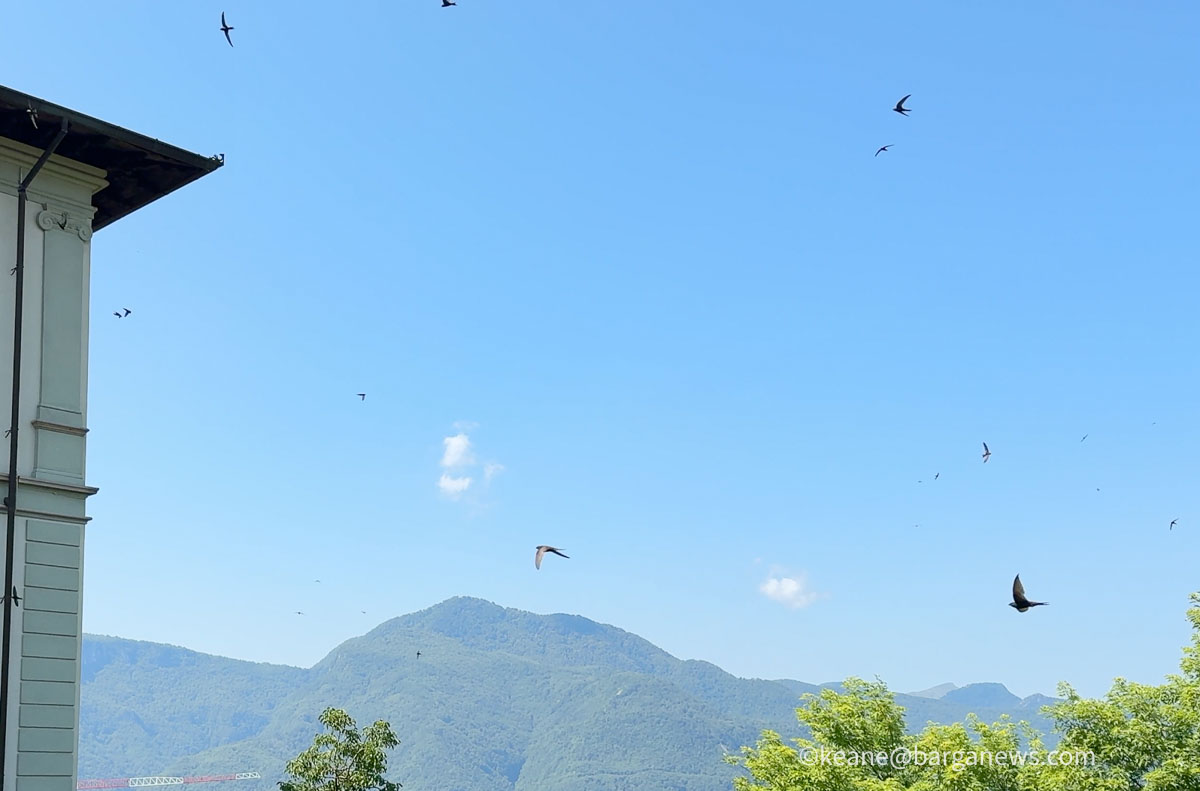
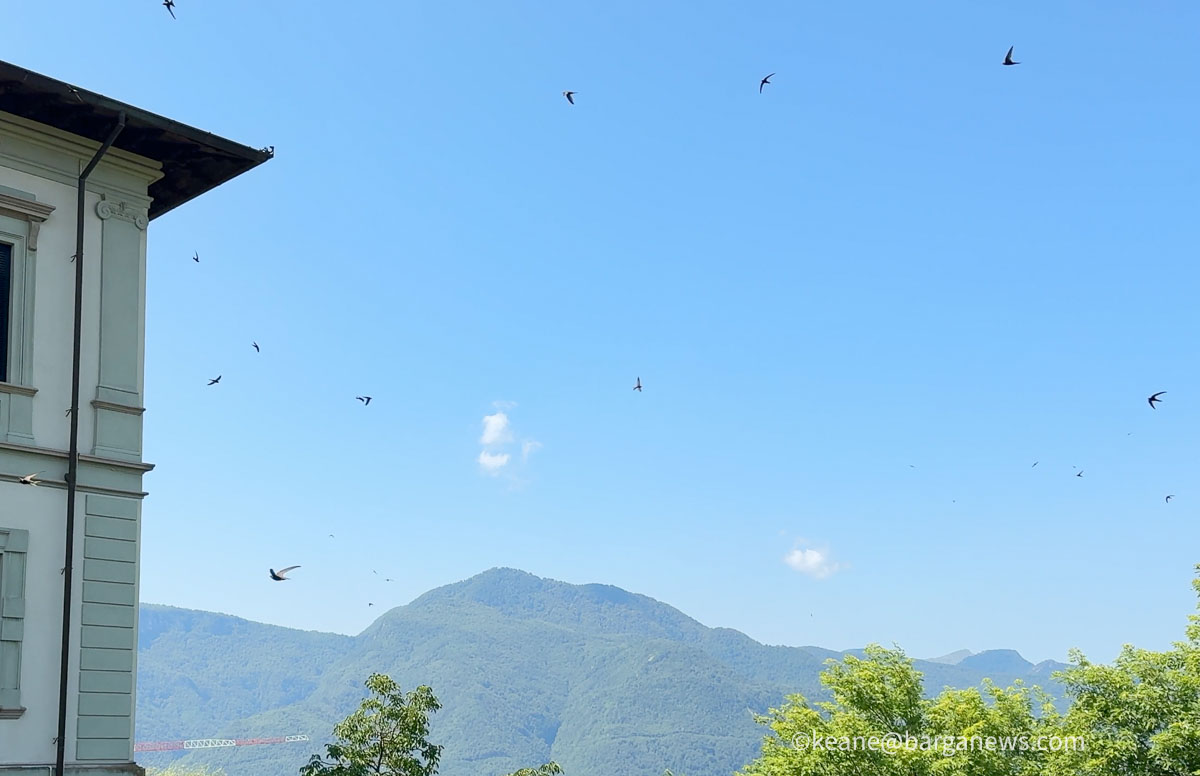
Anyone standing near to Barga Vecchia or looking out across the valley over the last few days will have seen dozens of these remarkable birds twisting and turning at astonishing speed. At first glance their flight appears almost chaotic, but every movement has a purpose.
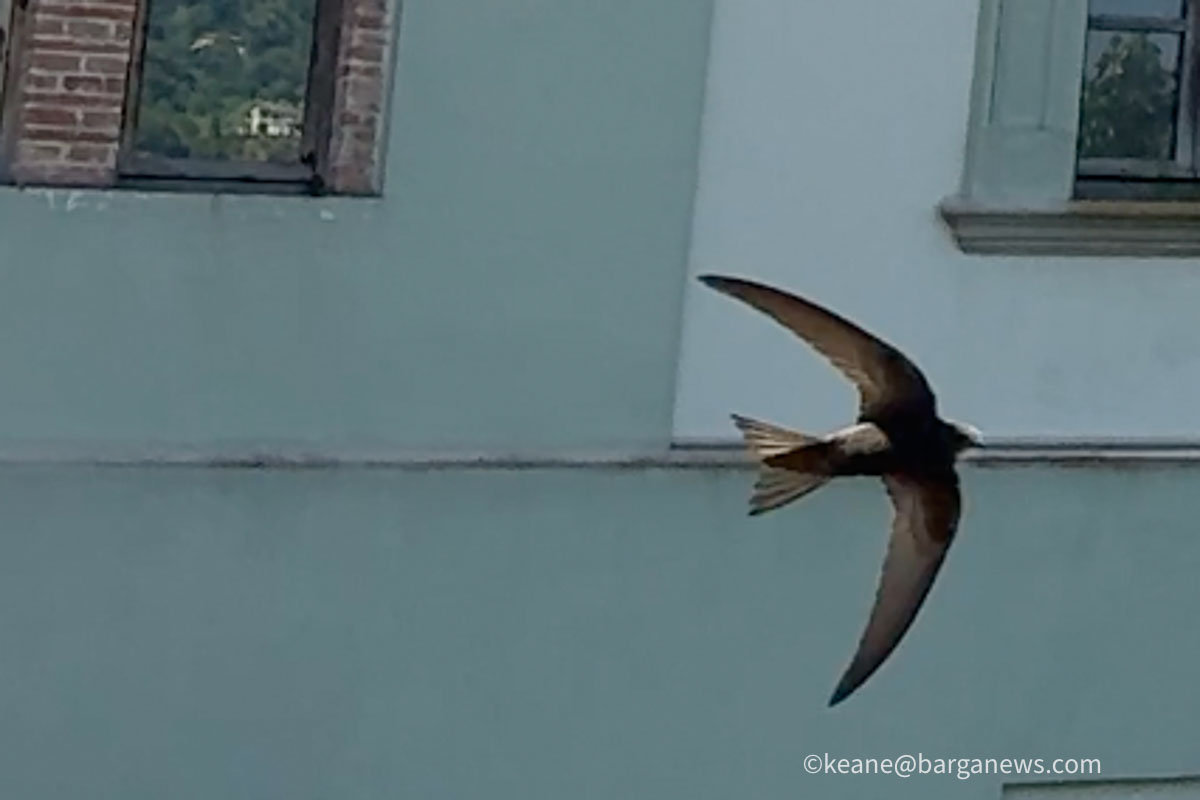
The birds shown in the video are swallows (Hirundo rustica), instantly recognisable by their elegant long forked tails and slender pointed wings. Unlike the darker swifts that scream around church towers and high rooftops, Barn Swallows often fly lower, skimming over fields, gardens and open spaces as they hunt.
Their aerial displays are not simply for entertainment.
Every rapid turn, climb and swoop is part of an almost continuous search for tiny flying insects. Mosquitoes, midges, flies and other insects are caught on the wing with extraordinary precision. A single swallow can consume hundreds of insects every day, making them one of nature’s most effective forms of pest control.
At this time of year there is another reason for the constant activity.
Many of the birds are feeding hungry chicks hidden away in nests beneath roofs, balconies and old stone buildings. The adults spend virtually every daylight hour gathering insects before returning to the nest, often only pausing for a second before setting off again.
The long tail streamers, especially noticeable on the adults, are also part of their breeding story. Studies have shown that birds with longer, more symmetrical tail streamers are often more successful at attracting a mate, making these elegant feathers as much a symbol of courtship as of graceful flight.
For centuries Swallows have chosen to live alongside people. Traditional farm buildings, old houses and sheltered eaves provide ideal nesting sites, and places such as Barga continue to offer exactly the kind of environment they need.
Although they spend the summer raising their young here, these birds are remarkable travellers. At the end of the season they will leave Tuscany and begin an extraordinary migration, many flying thousands of kilometres across the Mediterranean and the Sahara before spending the winter in sub-Saharan Africa. Next spring many of the very same birds will return to Barga, often to the same nest they used the previous year.





L’estate a Barga non sarebbe la stessa senza le rondini
Uno dei segnali più evidenti che l’estate è davvero arrivata a Barga non è il caldo, né tantomeno il canto delle cicale.
È lo spettacolo delle rondini che volteggiano e si tuffano nel cielo sopra la città.
Chiunque si sia trovato nei pressi di Barga Vecchia o abbia osservato la valle negli ultimi giorni avrà certamente notato decine di questi straordinari uccelli sfrecciare nell’aria con incredibile agilità. A prima vista il loro volo può sembrare quasi caotico, ma ogni movimento ha uno scopo preciso.
Gli uccelli che si vedono nel video sono rondini comuni (Hirundo rustica), immediatamente riconoscibili per la loro elegante coda profondamente forcuta e le lunghe ali affusolate e appuntite. A differenza dei più scuri rondoni, che sfrecciano lanciando i loro caratteristici richiami attorno ai campanili e sopra i tetti più alti, le rondini volano spesso più basse, sfiorando campi, giardini e spazi aperti mentre sono a caccia.
Le loro evoluzioni aeree non sono semplicemente uno spettacolo da ammirare.
Ogni rapida virata, ogni salita e ogni picchiata fanno parte di una ricerca quasi continua di minuscoli insetti in volo. Zanzare, moscerini, mosche e molti altri piccoli insetti vengono catturati con una precisione straordinaria. Una sola rondine può consumarne centinaia ogni giorno, rendendola uno dei più efficaci sistemi naturali di controllo degli insetti.
In questo periodo dell’anno c’è però anche un’altra ragione per questa frenetica attività.
Molte di queste rondini stanno nutrendo i loro piccoli, nascosti nei nidi costruiti sotto i tetti, i balconi e gli antichi edifici in pietra. Gli adulti trascorrono praticamente tutte le ore di luce raccogliendo insetti, tornando al nido solo per pochi istanti prima di ripartire immediatamente alla ricerca di altro cibo.
Le lunghe timoniere della coda, particolarmente evidenti negli esemplari adulti, svolgono anch’esse un ruolo importante durante la stagione riproduttiva. Diversi studi hanno dimostrato che gli individui con penne della coda più lunghe e simmetriche hanno maggiori probabilità di attirare un compagno, facendo di queste eleganti piume non solo un simbolo di grazia in volo, ma anche di corteggiamento.
Da secoli le rondini hanno scelto di vivere accanto all’uomo. Le tradizionali case coloniche, gli edifici storici e le gronde riparate offrono luoghi ideali per la nidificazione, e città come Barga continuano a fornire esattamente l’ambiente di cui hanno bisogno.
Pur trascorrendo l’estate qui ad allevare i loro piccoli, queste rondini sono viaggiatrici straordinarie. Alla fine della stagione lasceranno la Toscana per intraprendere una migrazione eccezionale: molte voleranno per migliaia di chilometri attraverso il Mediterraneo e il deserto del Sahara, fino a raggiungere l’Africa subsahariana, dove trascorreranno l’inverno. La prossima primavera molte di loro faranno ritorno a Barga, spesso ritrovando e riutilizzando lo stesso nido dell’anno precedente.