Befana Brings Music, Sweets and Tradition Back to the Streets of Barga
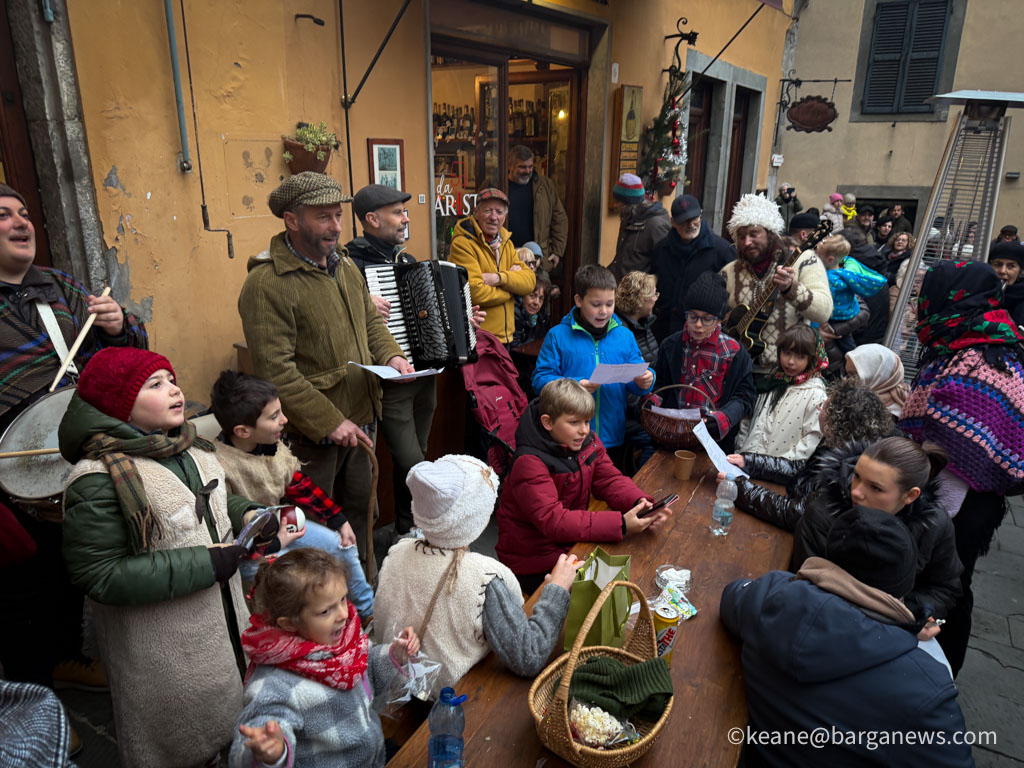
The traditional Befana celebrations returned to Barga this afternoon, filling the historic centre with children’s voices, music, sweets and a strong sense of shared tradition. Organised by Pro Loco Barga together with the Associazione La Befana, the event once again transformed the city into a moving festival.
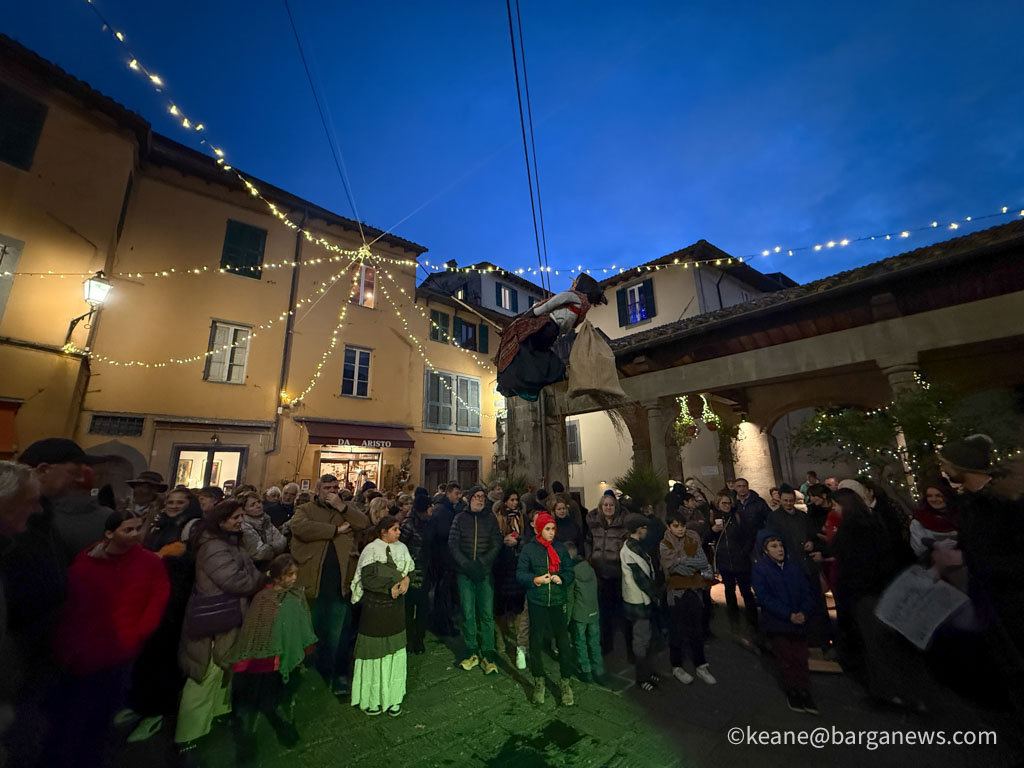
Shortly after mid-afternoon, the Befana arrived from Pegnana in Piazza Pascoli, accompanied by her befanotti. From there, she wandered through the streets with dozens of children in tow. The procession passed through the Giardino, entered Via di Mezzo through Porta Reale and finally reached Piazza Salvi, where the Befana paused to meet every child individually, offering small gifts and a few kind words to each. (article here)
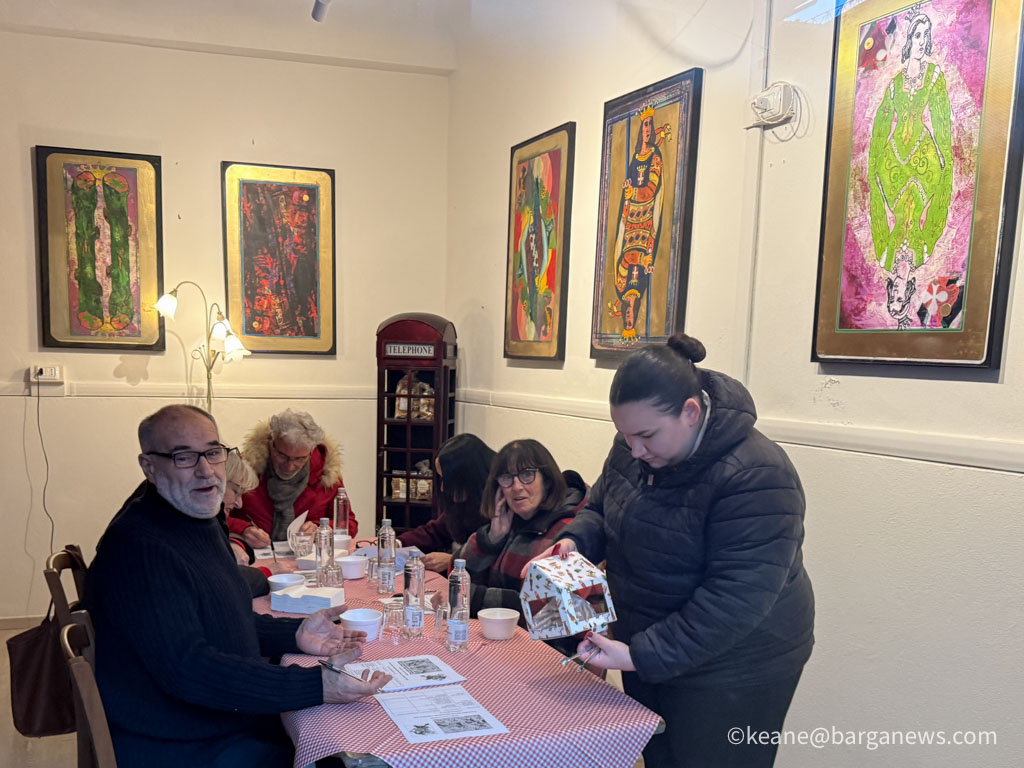
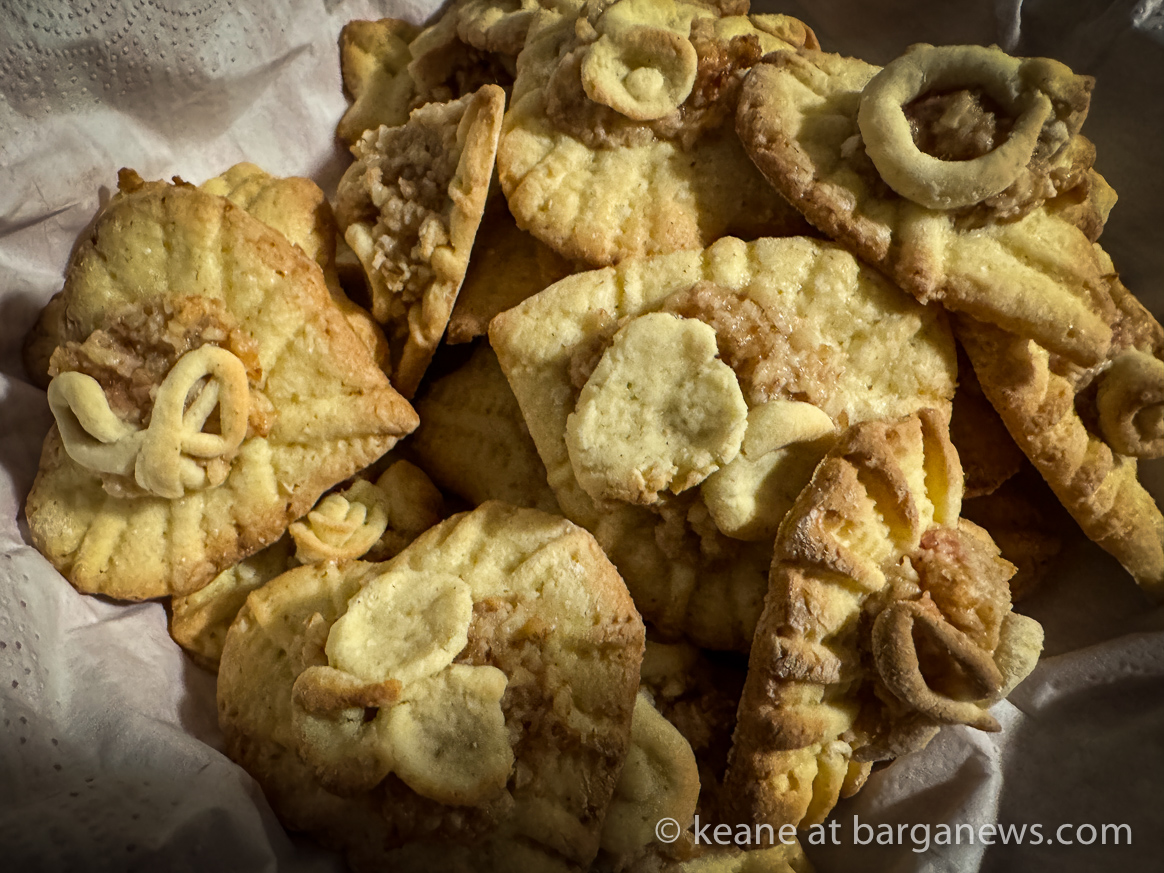
Alongside the festivities, the fourth edition of the Best Homemade Befana Biscuit of Barga competition also took place.
Dedicated to the traditional sweet prepared in local homes for the Epiphany, the contest saw numerous entries delivered during the afternoon.
Promoted by the municipal administration in collaboration with the Giornale di Barga, the Consulta dei Giovani and the cafés of the piazza, the competition celebrated a recipe that continues to be passed down through Barga families.
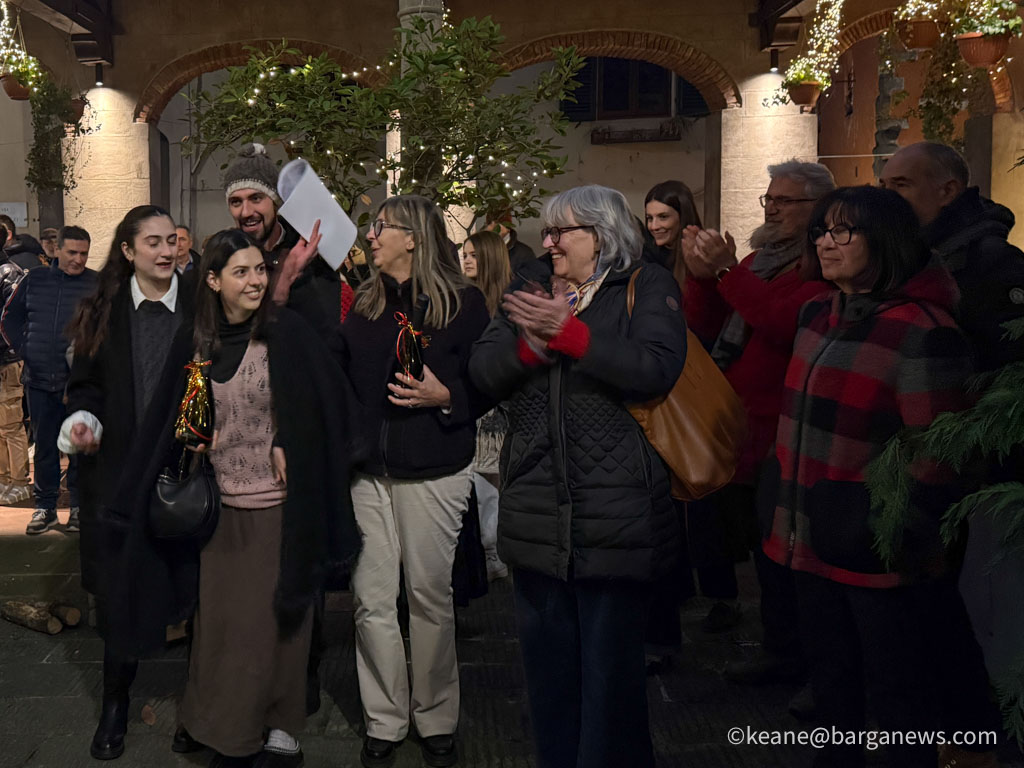
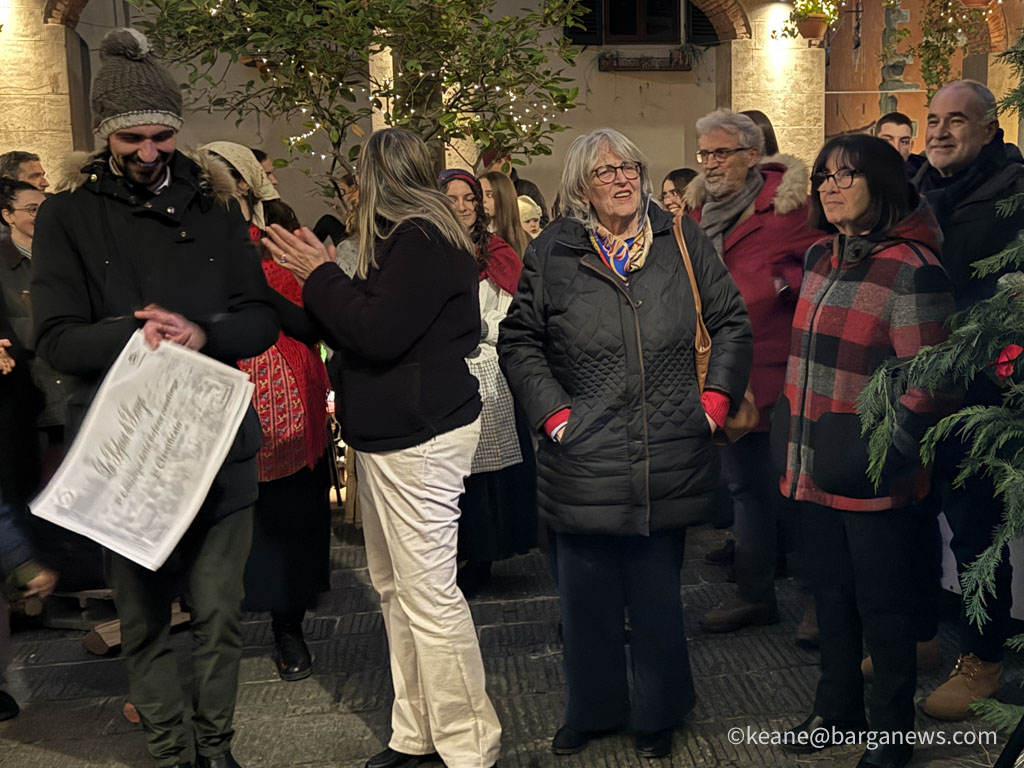
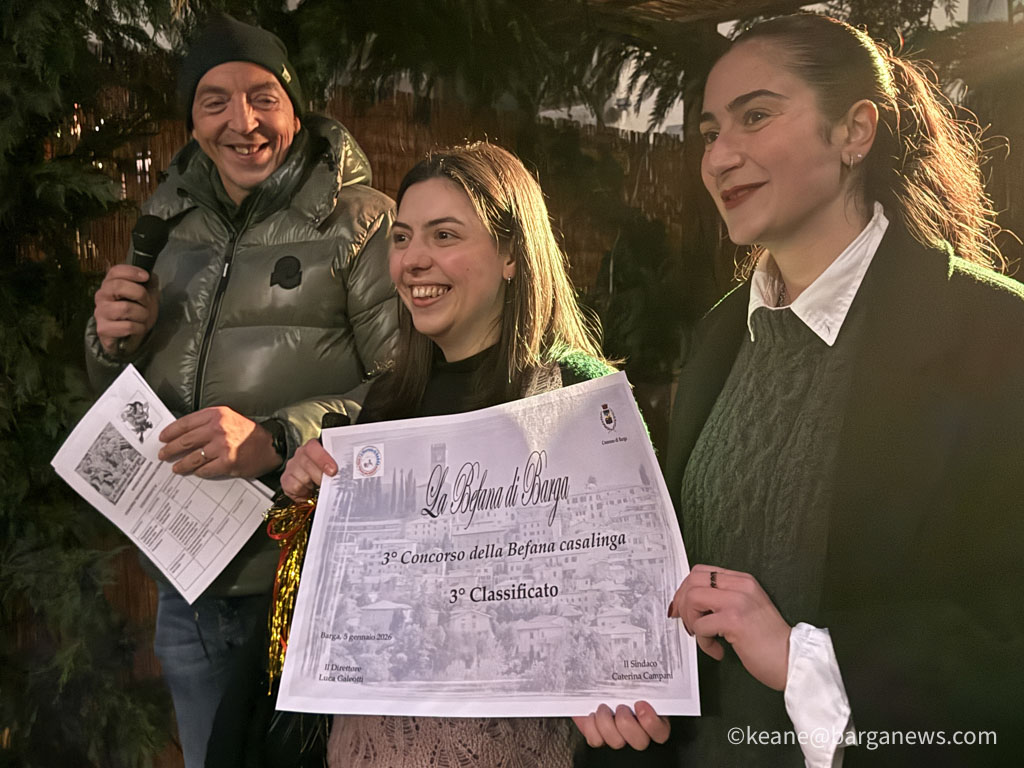
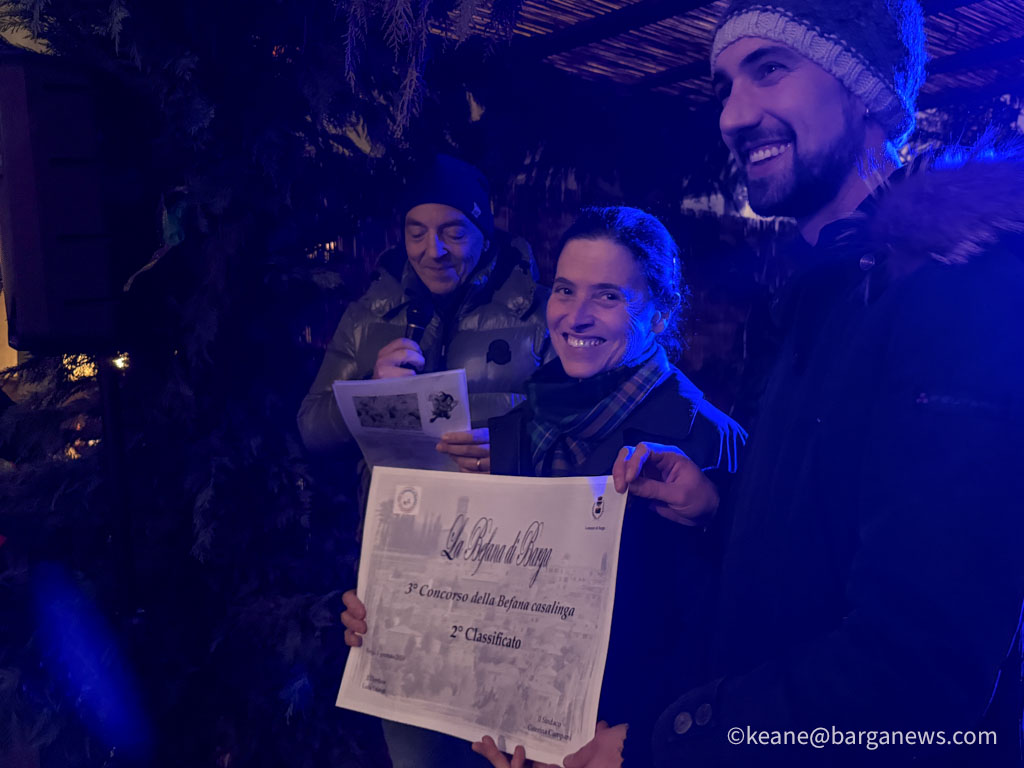
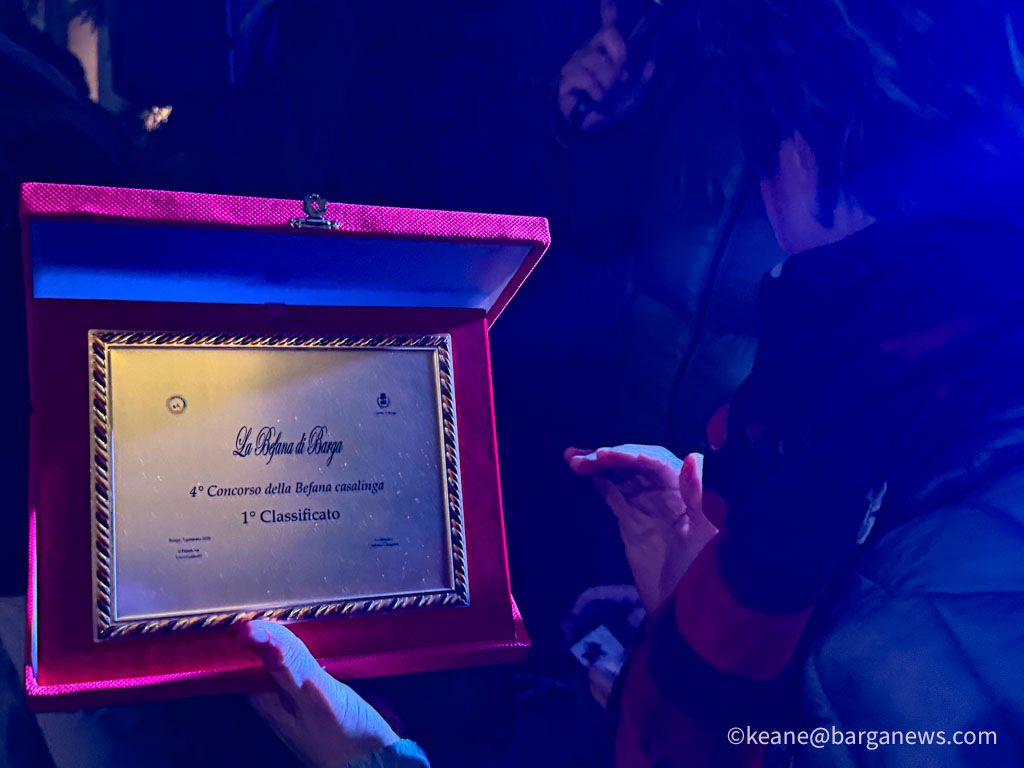
After careful tasting, the jury selected the winning befana biscuit, with the awards ceremony held later in Piazza Salvi.
Students from the ISI Barga hotel and catering institute also took part, supporting the judging process.
Once again, the Befana celebrations confirmed their place as one of Barga’s most loved winter traditions — an event that blends folklore, food and community, and continues to bring generations together in the city’s streets and squares.




La Befana riporta musica, dolci e tradizione nelle strade di Barga
Le tradizionali celebrazioni della Befana sono tornate questo pomeriggio a Barga, riempiendo il centro storico di voci di bambini, musica, caramelle e di un forte senso di tradizione condivisa. Organizzata da Pro Loco Barga insieme all’Associazione La Befana, la manifestazione ha trasformato ancora una volta la città in una festa itinerante.
Poco dopo metà pomeriggio, la Befana è arrivata da Pegnana in Piazza Pascoli, accompagnata dai suoi befanotti. Da lì ha iniziato a girare per le vie del centro seguita da decine di bambini. Il corteo ha attraversato il Giardino, è entrato in Via di Mezzo passando da Porta Reale e ha raggiunto infine Piazza Salvi, dove la Befana si è fermata per incontrare uno ad uno tutti i bambini, offrendo piccoli doni e una parola gentile a ciascuno.
Accanto alla festa si è svolta anche la quarta edizione del concorso per la Migliore Befana Casalinga di Barga.
Dedicato al dolce tradizionale preparato nelle case in occasione dell’Epifania, il concorso ha visto numerose consegne nel corso del pomeriggio.
Promosso dall’amministrazione comunale in collaborazione con la Giornale di Barga, la Consulta dei Giovani e i locali della piazza, il concorso ha celebrato una ricetta che continua a essere tramandata nelle famiglie barghigiane.
Dopo un’attenta degustazione, la giuria ha decretato la befana vincitrice, con la premiazione che si è svolta successivamente in Piazza Salvi. Alla manifestazione hanno collaborato anche gli studenti dell’ISI Barga, in particolare dell’istituto alberghiero.
Ancora una volta, la Befana ha confermato il suo ruolo come una delle tradizioni invernali più amate di Barga: un appuntamento che unisce folklore, sapori e comunità, continuando a far incontrare generazioni diverse nelle strade e nelle piazze della città.
La Befana
The Feast of the Epiphany, celebrated January 6 with a national holiday in Italy, and the tradition of La Befana are a big part of Italian Christmas celebrations. Epiphany commemorates the 12th day of Christmas when the three Wise Men arrived at the manger bearing gifts for Baby Jesus. The traditional Christmas holiday season in Italy lasts through Epiphany.
Italy’s traditional celebration includes the tale of a witch known as La Befana who arrives on her broomstick during the night of January 5 and fills the stockings with toys and sweets for the good children and lumps of coal for the bad ones.
According to the legend, the night before the Wise Men arrived at the manger they stopped at the shack of an old woman to ask directions. They invited her to come along but she replied that she was too busy. Then a shepherd asked her to join him but again she refused. Later that night, she saw a great light in the sky and decided to join the Wise Men and the shepherd bearing gifts that had belonged to her child who had died. She got lost and never found the manger.
Now La Befana flies around on her broomstick each year on the 11th night, bringing gifts to children in hopes that she might find the Baby Jesus. Children hang their stockings on the evening of January 5 awaiting the visit of La Befana.
The origins of La Befana may actually go back farther, to the Roman’s pagan festival of Saturnalia, a one or two week festival starting just before the winter solstice. At the end of Saturnalia, Romans would go to the Temple of Juno on the Capitoline Hill to have their augers read by an old crone. Many pagan traditions were incorporated into Christmas celebrations when Christianity became main stream. La Befana was a good substitute for the old woman who read the augers. The saying augur originated with this practice, too, as it was common to wish someone good augers. –
Barga Befana archives
Befana 2000 | 2001 | 2003 | 2004 | 2007 | 2008 | 2009 | 2010 | 2014 | 2015 | 2016 | 2017 | 2019 | 2023 | 2024 | 2025 |
Befana Biscuits: A Taste of Tradition from Barga, Tuscany
In the heart of Tuscany, the ancient city of Barga comes alive with traditions that honour its rich history and culture. Among these, the celebration of La Befana on 6 January stands out.
This folkloric figure, often depicted as a kindly witch, is said to bring sweets to children who have been good and coal to those who have not.
Central to the festivities are the beloved Befana biscuits — a culinary treasure that embodies the spirit of the season.
Ingredients
For the Biscuit:
Flour: 1 kg
Sugar: 700 g
Butter: 250 g
Eggs: 6 (including 1 egg white and a half for marzipan)
Yeast: a pinch
Grated lemon and orange peel: for flavour
For the Marzipan:
Toasted and chopped almonds: 300 g
Sugar: 280 g
Egg white: 1 and a half
Grated lemon and orange peel: for flavour
Alchèrmes, rum, pebble, and cognac: a splash of each for depth
Method
Preparing the Biscuit Dough
Begin by softening the butter at room temperature. Combine it with the flour, sugar, eggs, yeast, and citrus zest, kneading the mixture until a smooth, homogeneous dough forms. Wrap the dough in cling film and let it rest in the refrigerator for 10 to 12 hours to allow the flavours to meld.
Crafting the Marzipan
While the biscuit dough rests, prepare the marzipan. Mix the toasted almonds, sugar, egg white, citrus zest, and a hint of liqueurs until the mixture becomes consistent but not overly soft. Adjust the texture as needed to ensure it holds its shape.
Shaping the Biscuits
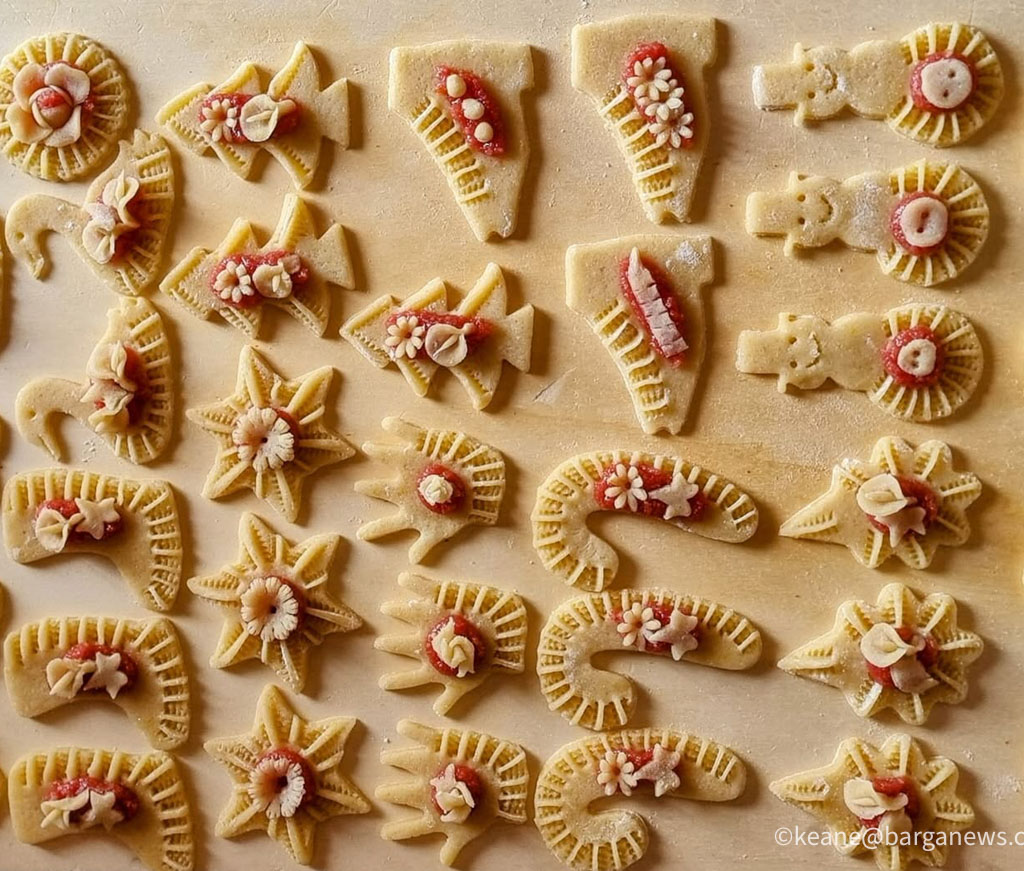
Once the dough has rested, roll it out with a rolling pin to an even thickness. Cut out shapes of your choice—stars, hearts, or festive figures work beautifully. Use metal tweezers to pinch decorative patterns along the edges of each biscuit, leaving space in the centre for the marzipan filling. Place a dollop of marzipan in the middle and adorn the biscuits with additional dough cut into small, leaf-like shapes.
Resting and Baking
Allow the prepared biscuits to rest for about a day. This step enhances their texture and flavour. Preheat your oven to 180°C and bake the biscuits until they are golden brown. Once removed from the oven, sprinkle them with icing sugar and let them cool completely.
The Spirit of Befana in Every Bite
These Befana biscuits are more than a seasonal treat—they are a symbol of warmth, community, and tradition in Barga. Their delicate citrus and almond notes, coupled with the richness of marzipan and a whisper of liqueur, make them a perfect accompaniment to a cup of espresso or a glass of vin santo. As the snow dusts the surrounding mountains and the city glows with festive lights, these biscuits serve as a reminder of the enduring charm of Tuscan heritage.