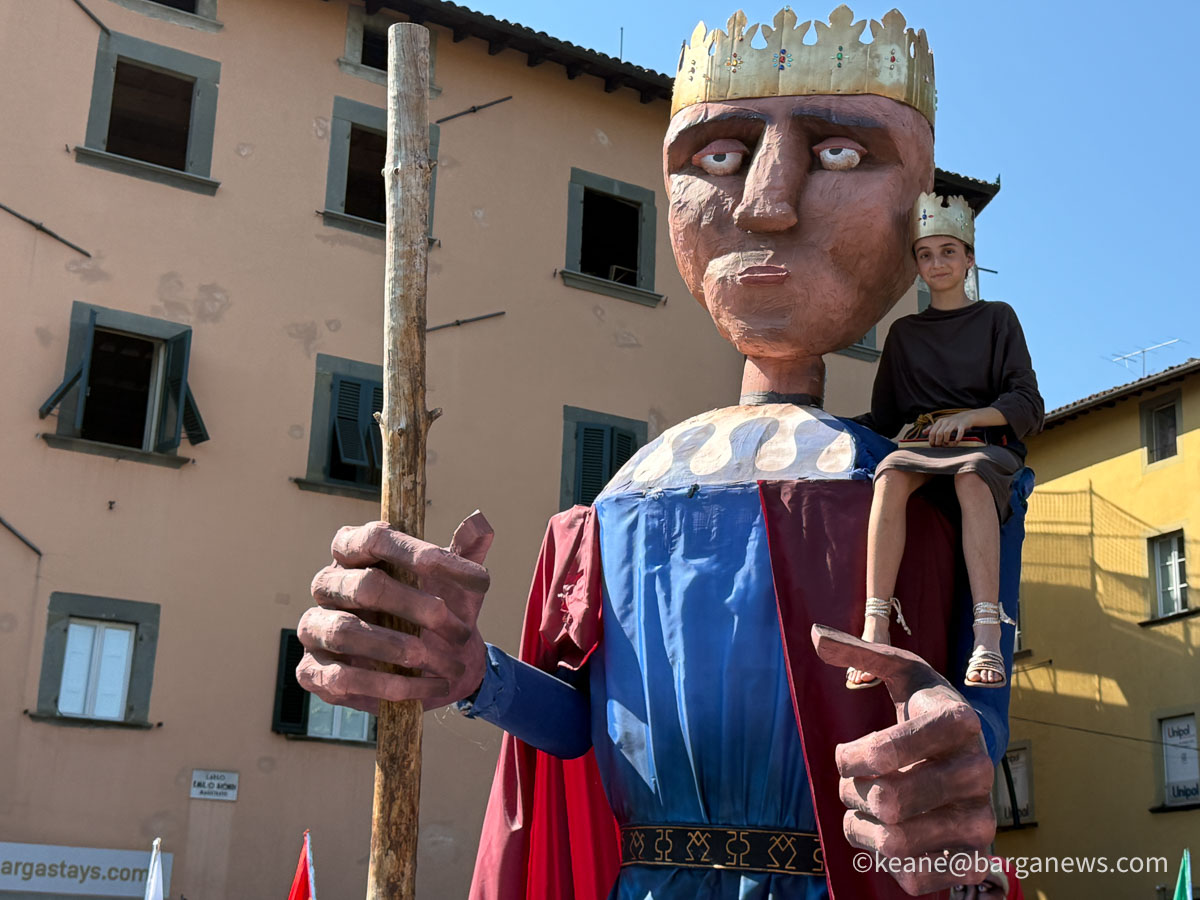
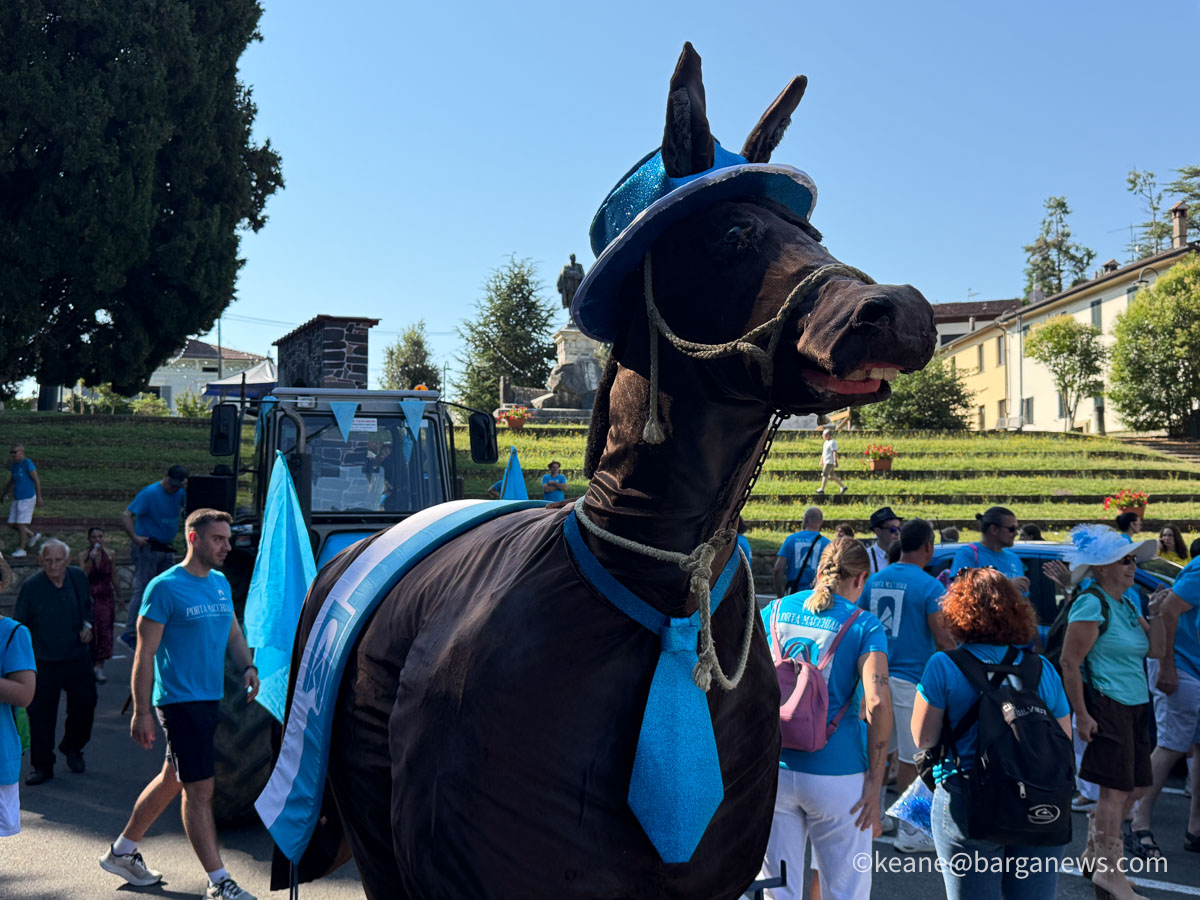
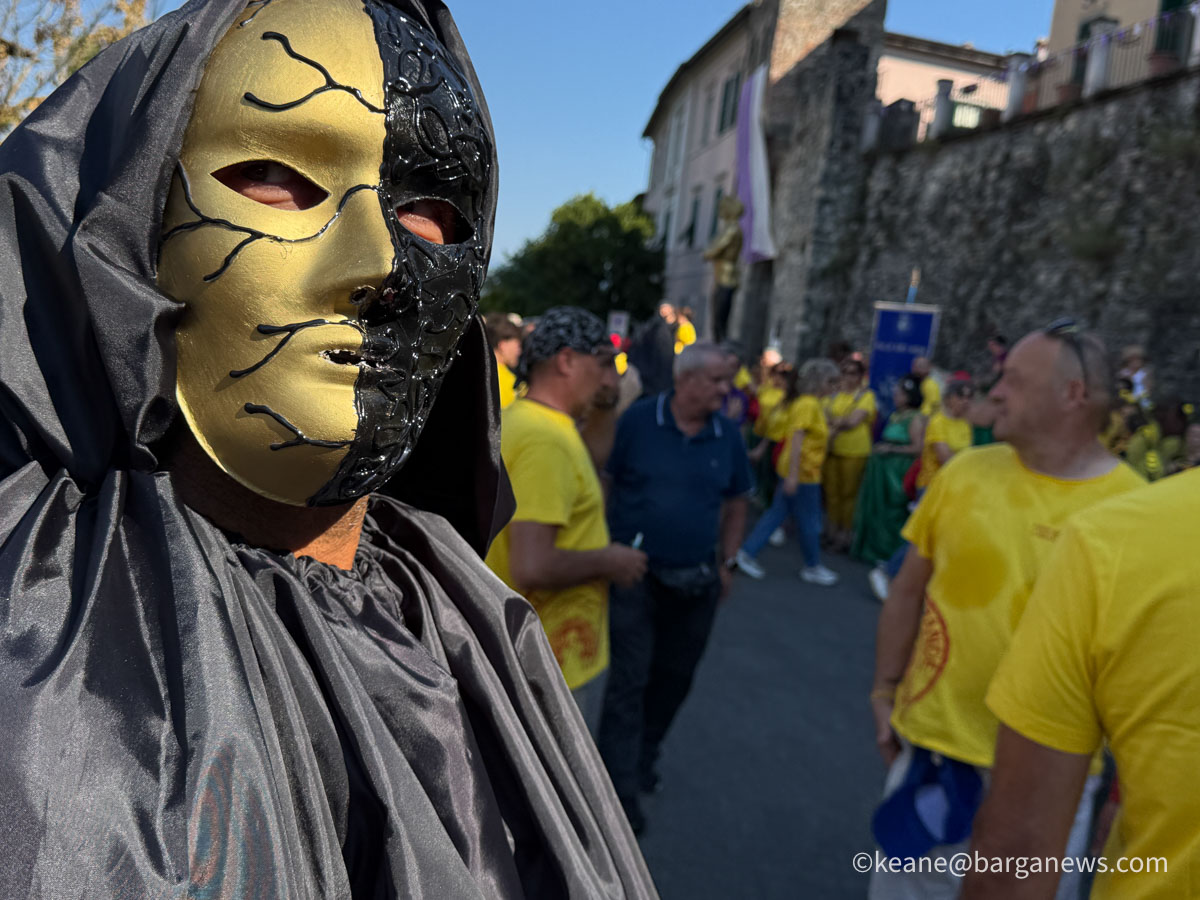
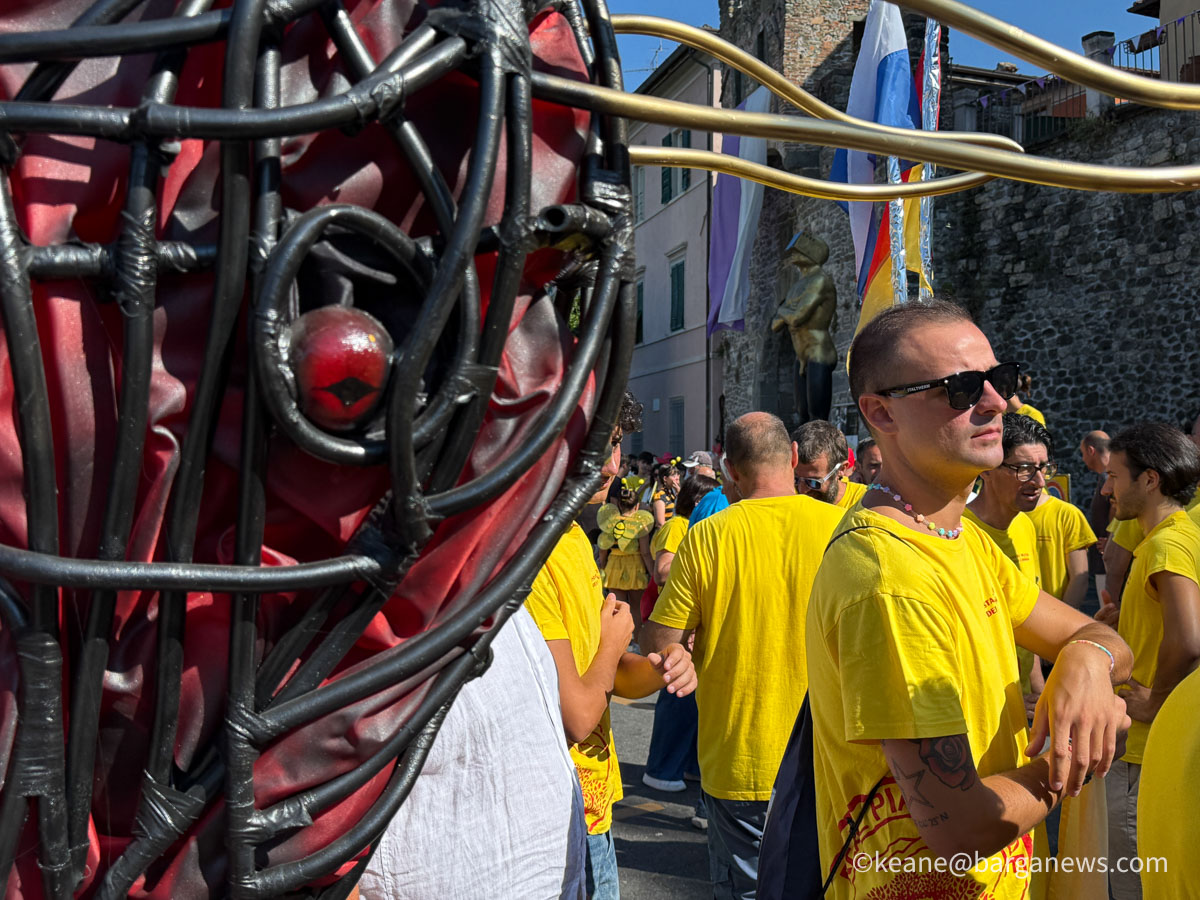
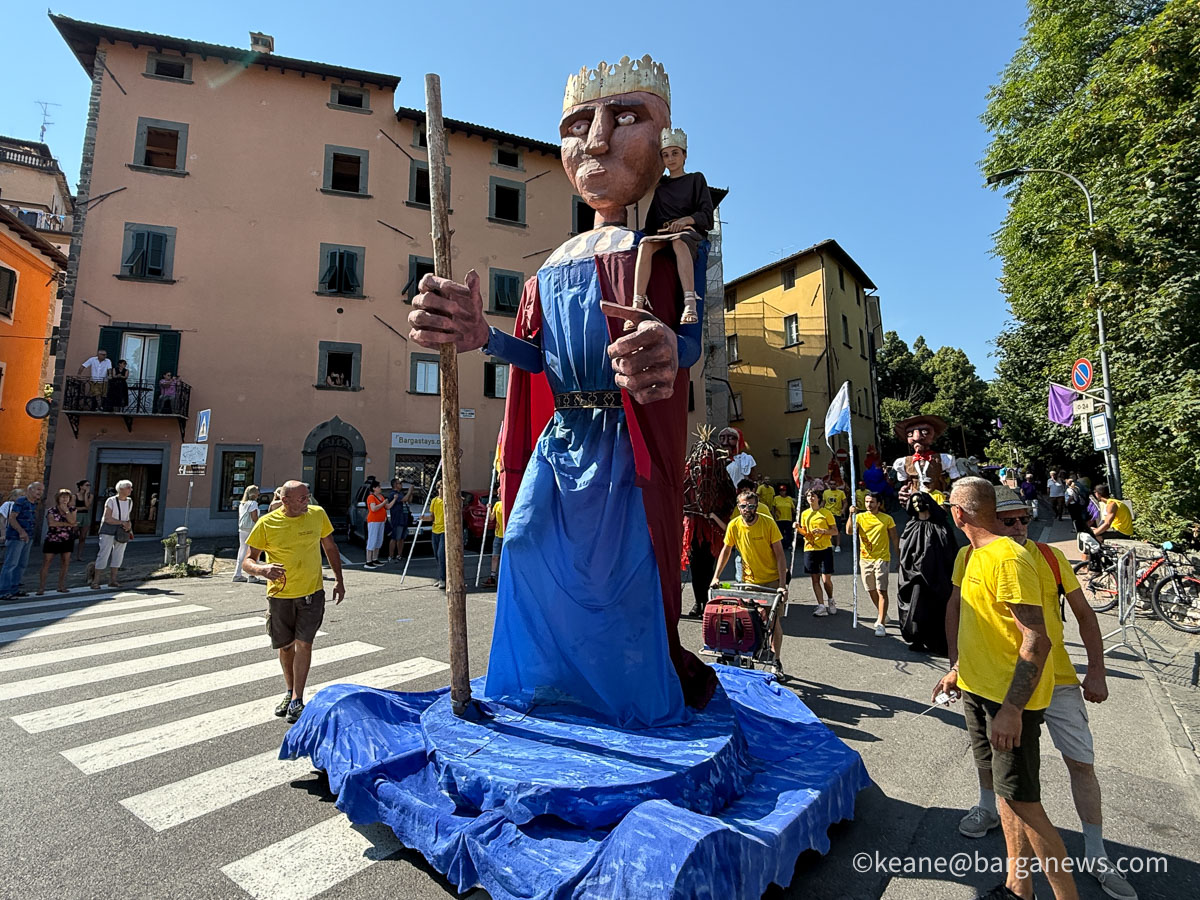
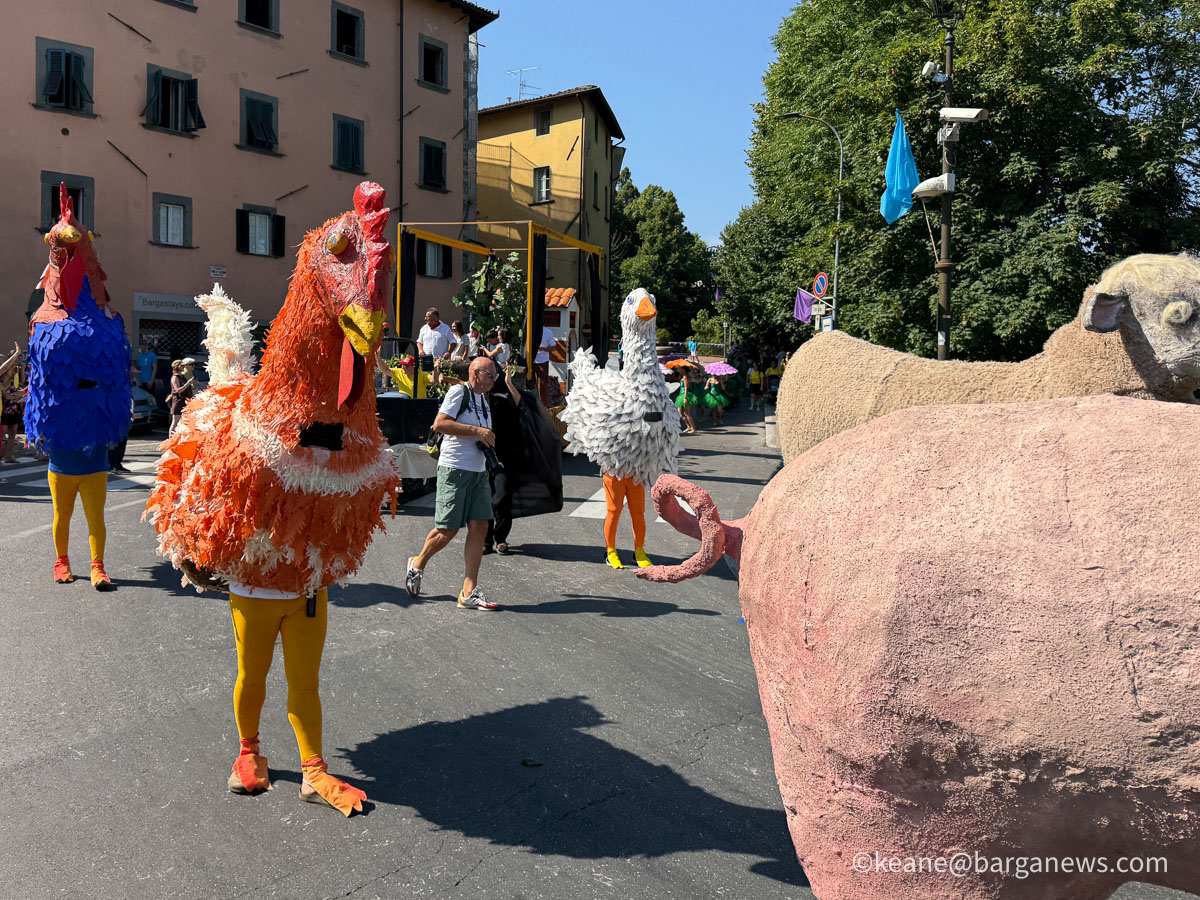
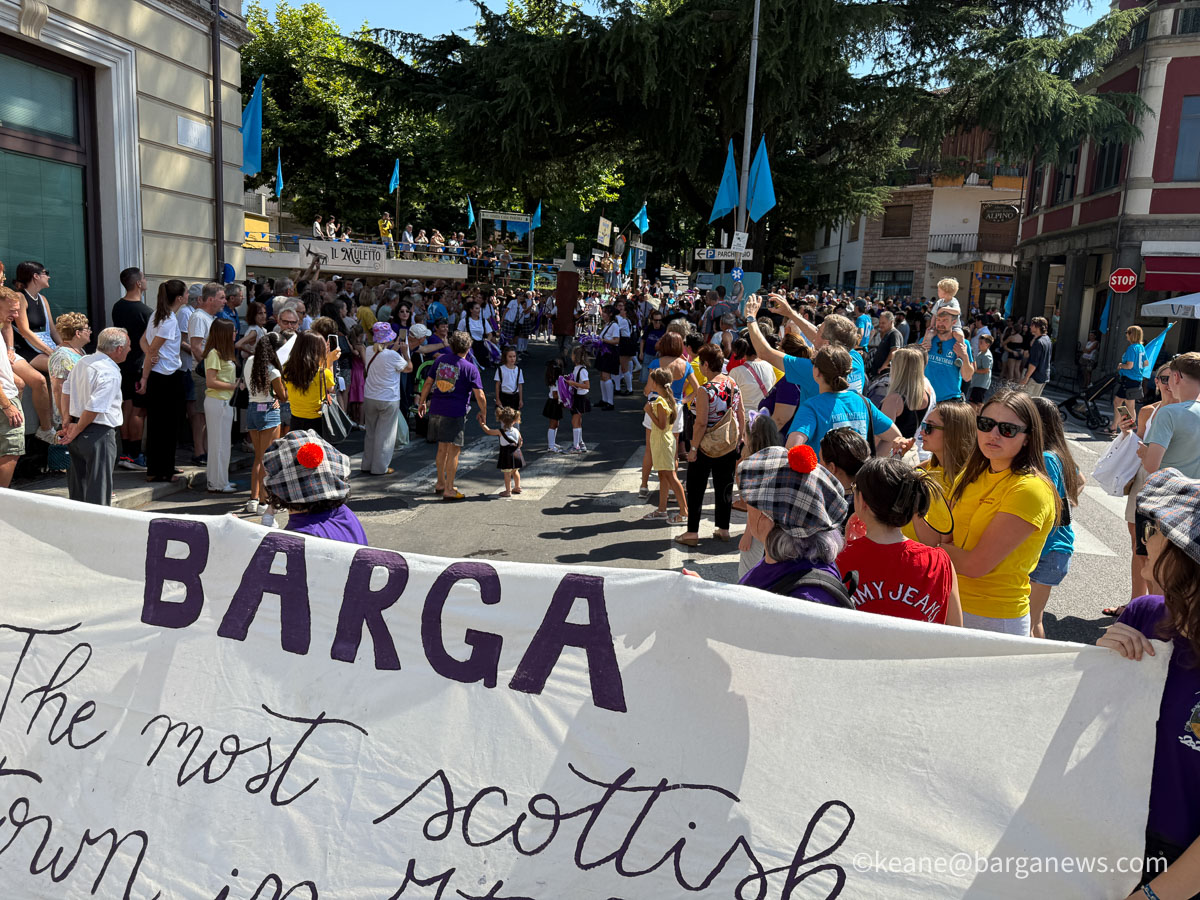
Last year the Festa della Campagna e del Muletto made a remarkable return to Barga after disappearing from the town’s calendar for more than three decades. The revival of the much-loved event proved to be one of the highlights of the summer, drawing thousands of people into the streets and reminding many older residents of a tradition that first began in 1949.
The second edition of the Festival of the Countryside and the Muletto,took place over Saturday 11 and Sunday 12 July.
Following the overwhelming success of last year’s revival, the organisers expanded the festival to two days after discovering that it had been almost impossible to fit everything into a single Sunday.
The extra day proved well worthwhile. Saturday began with “The Three Curves of the Muletto“, a downhill race of gravity-powered carts on ball-bearing wheels, each representing one of Barga’s districts. The course ran from Via Hayange to Ponte Lombardini and was organised with the assistance of Speed Down Italia, together with the Municipality of Barga, the municipal police and a team of volunteers whose technical support made the event possible.
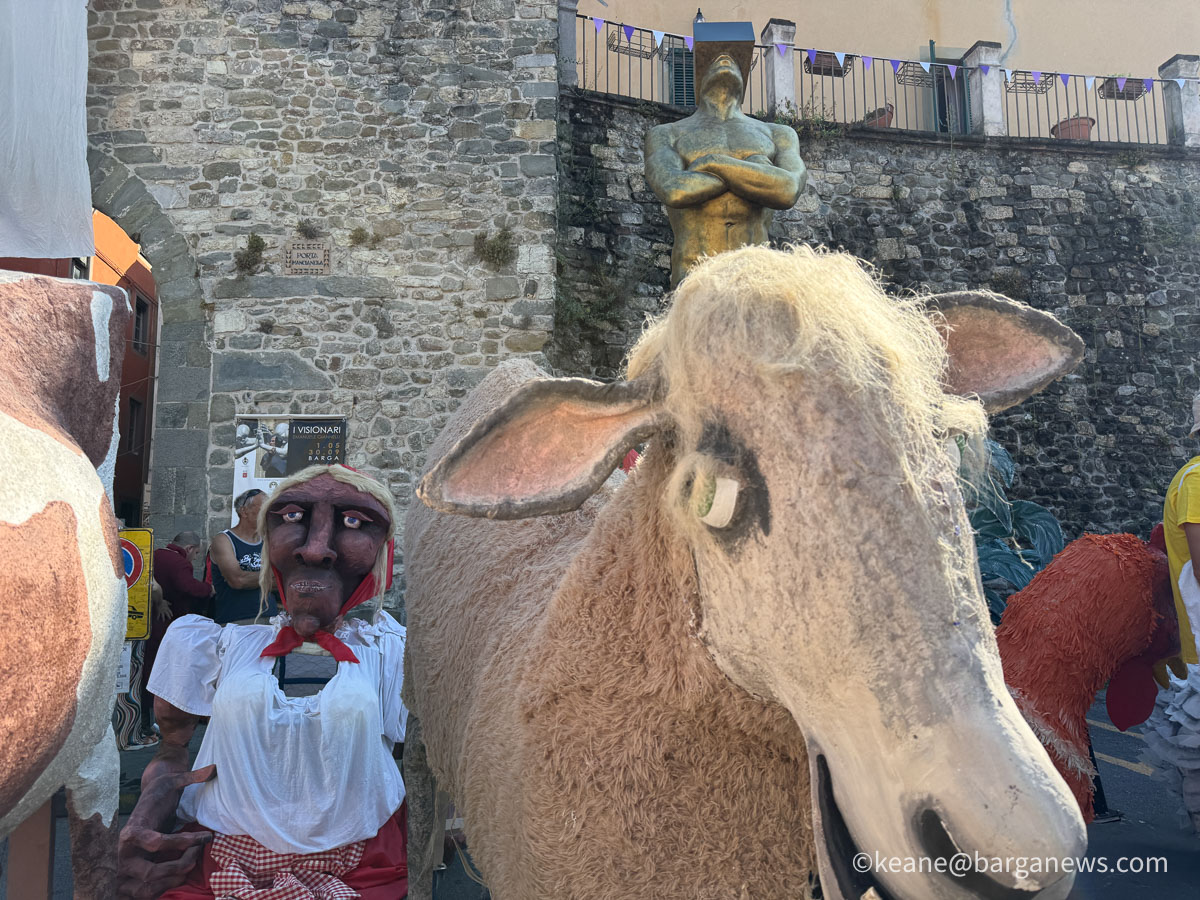
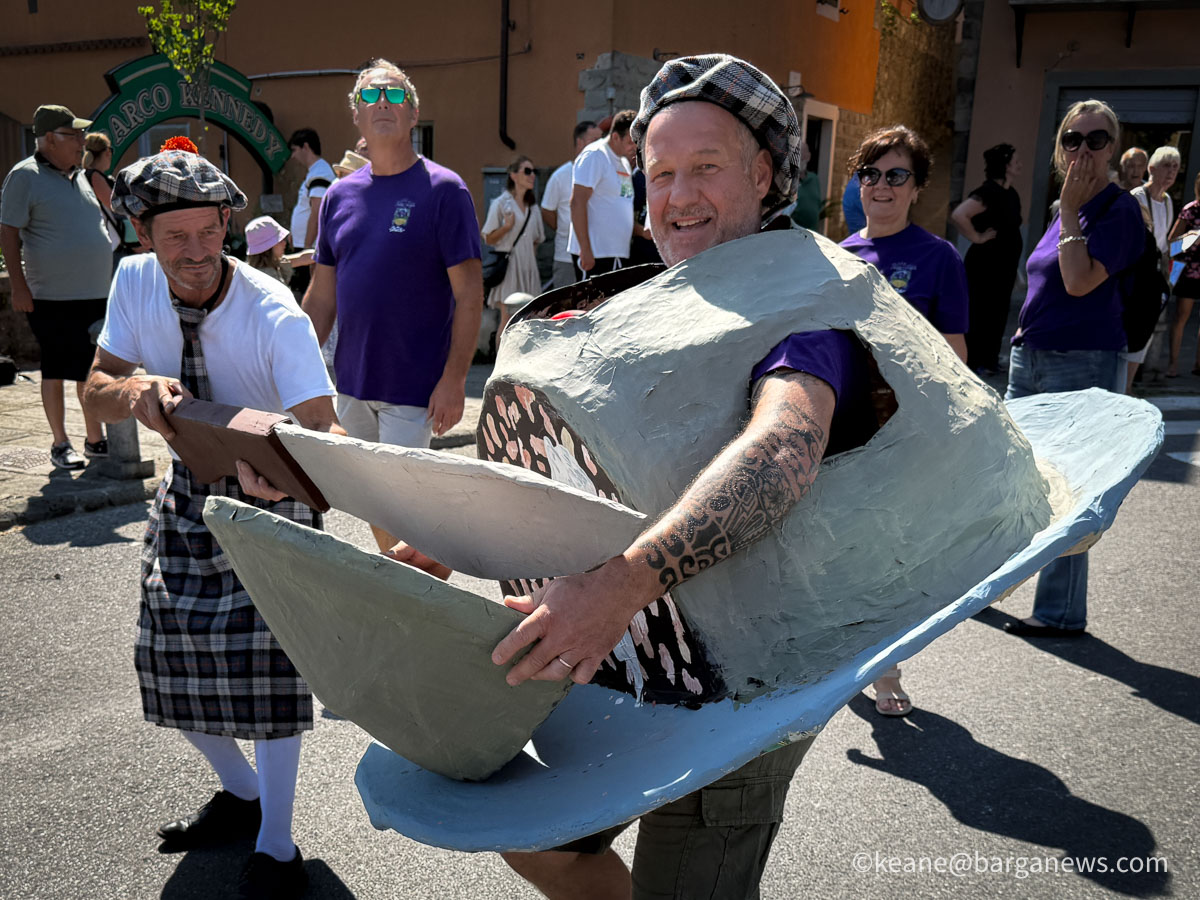
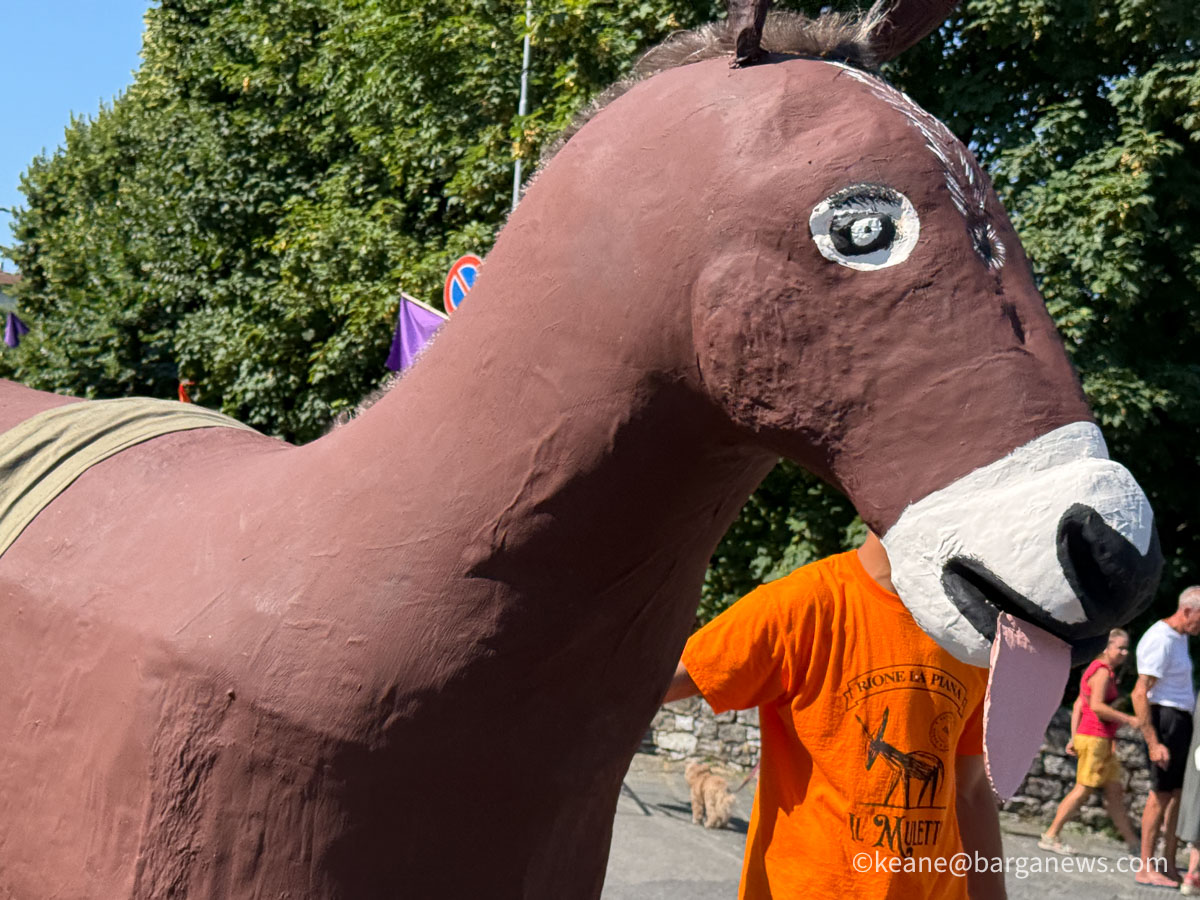
The action then moved to Piazza Pascoli, where the district mule teams gathered for one of the festival’s most entertaining moments. The handcrafted allegorical mules underwent tongue-in-cheek “veterinary inspections” before tackling a gymkhana-style obstacle course, with prizes awarded later in the evening.
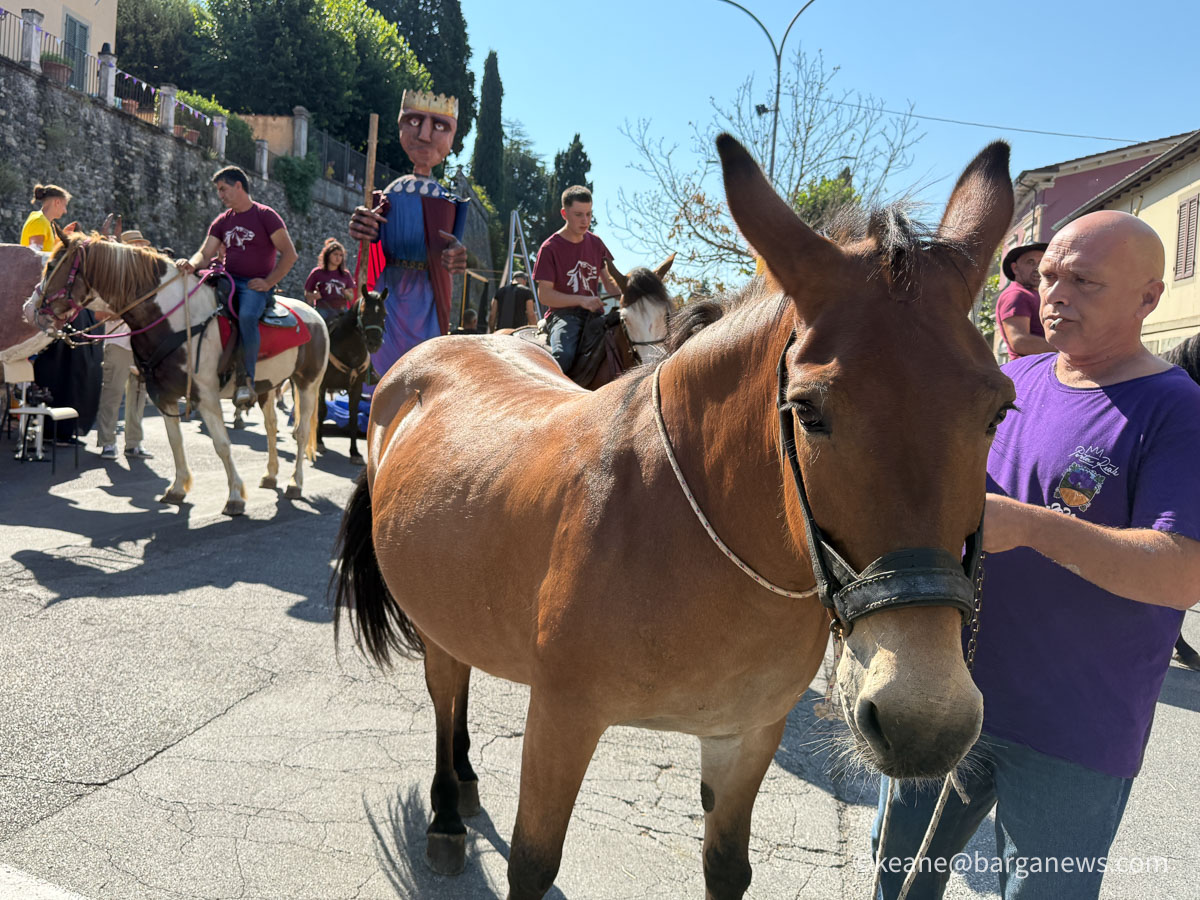
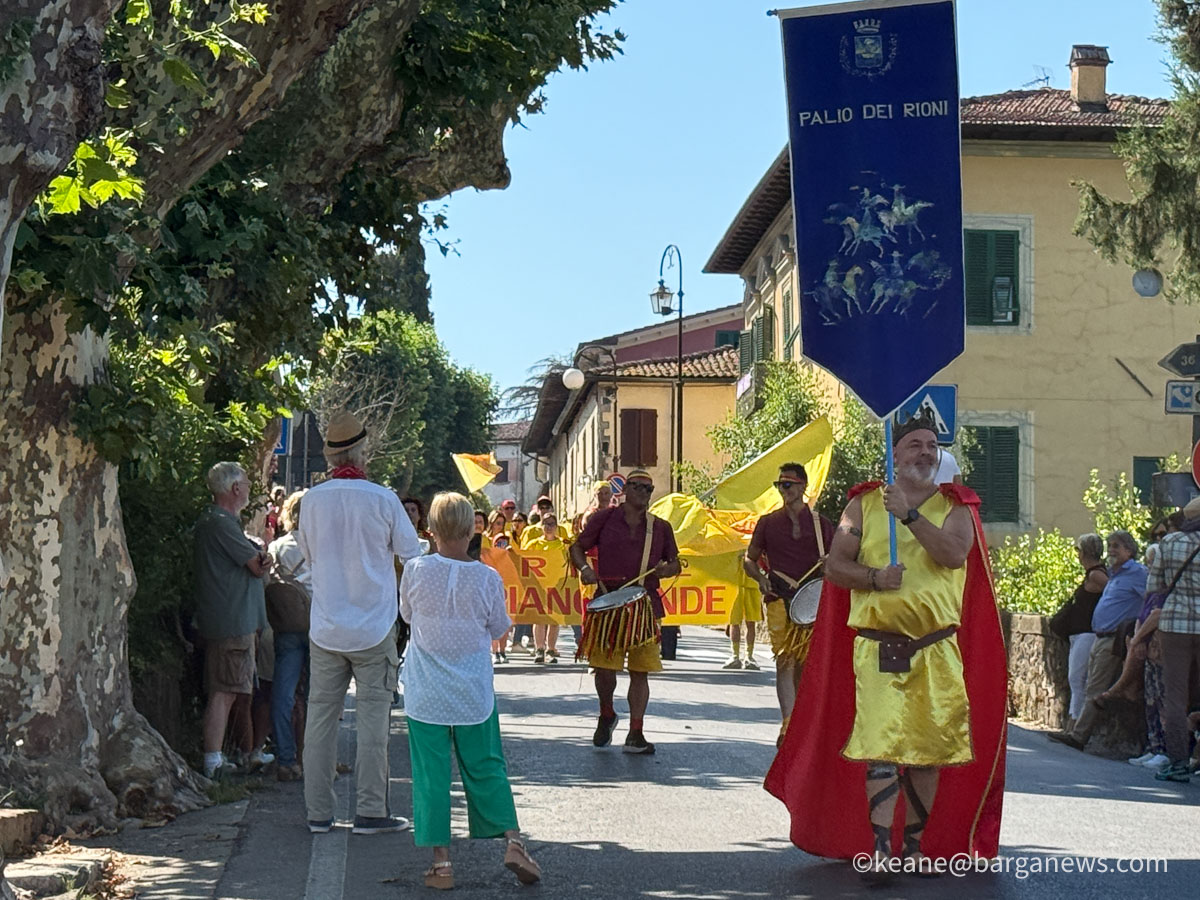
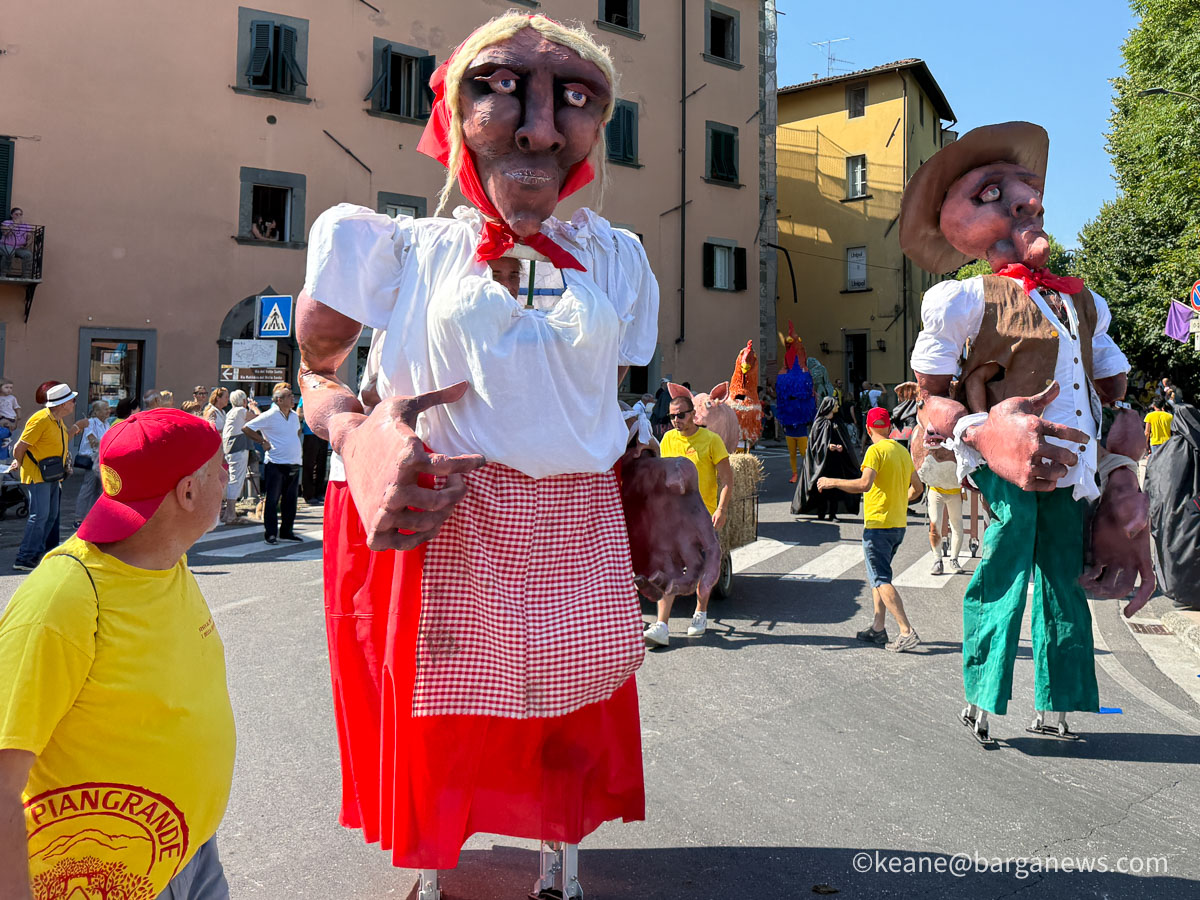
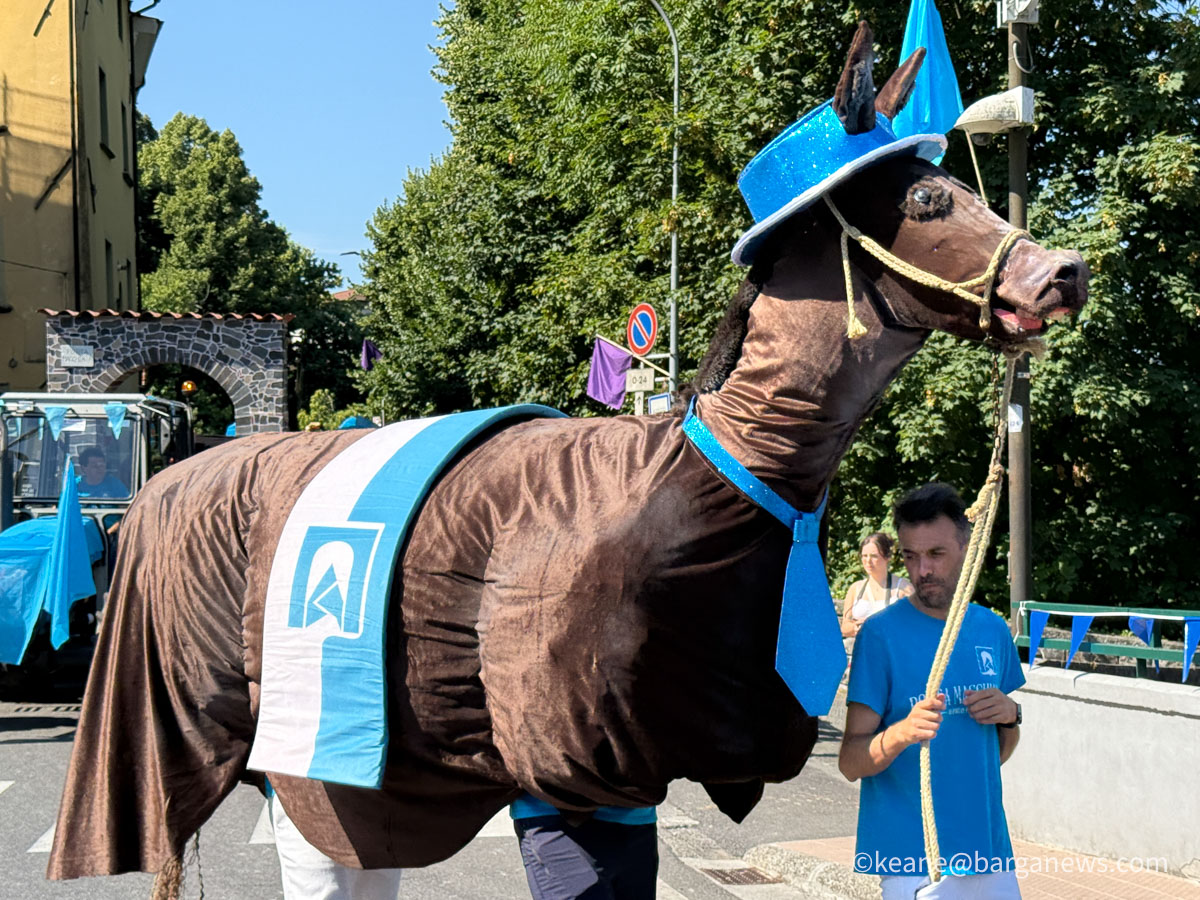
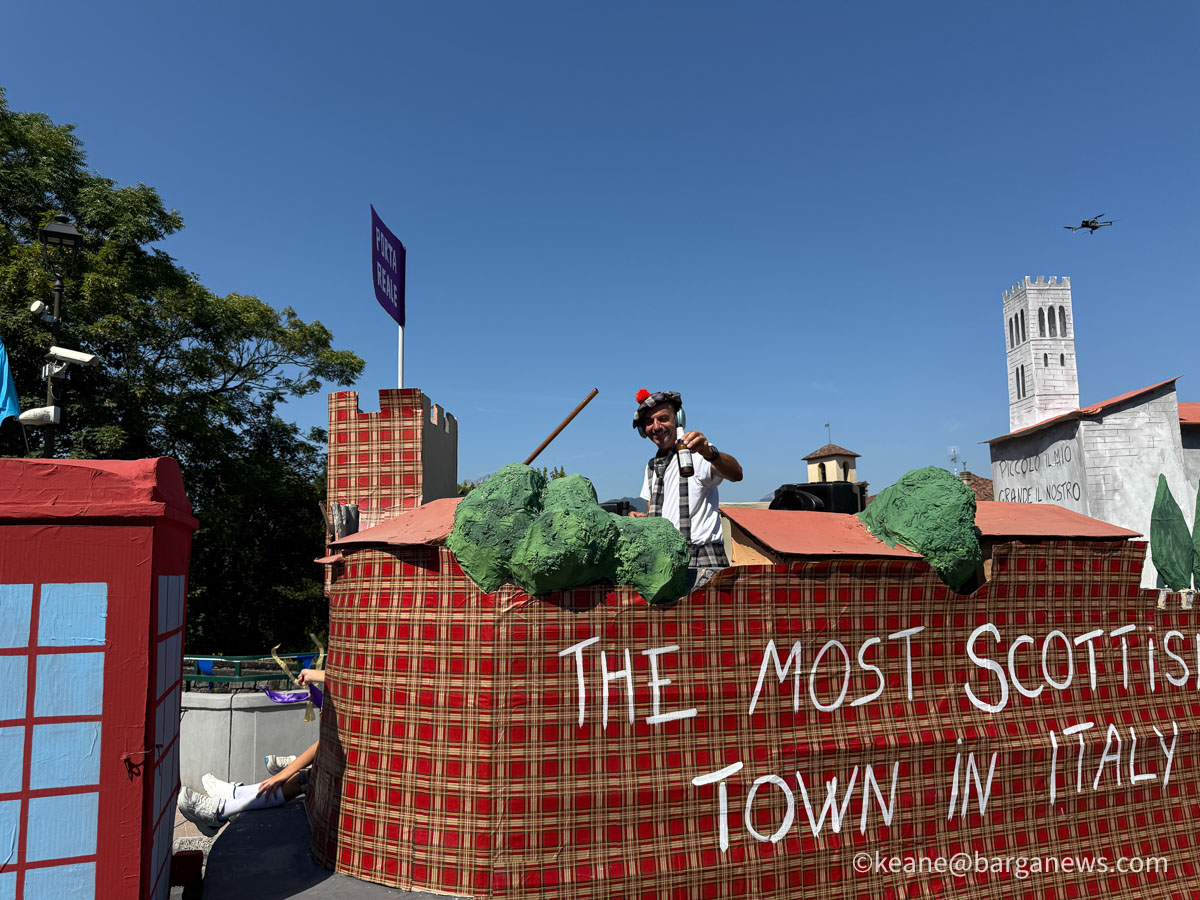
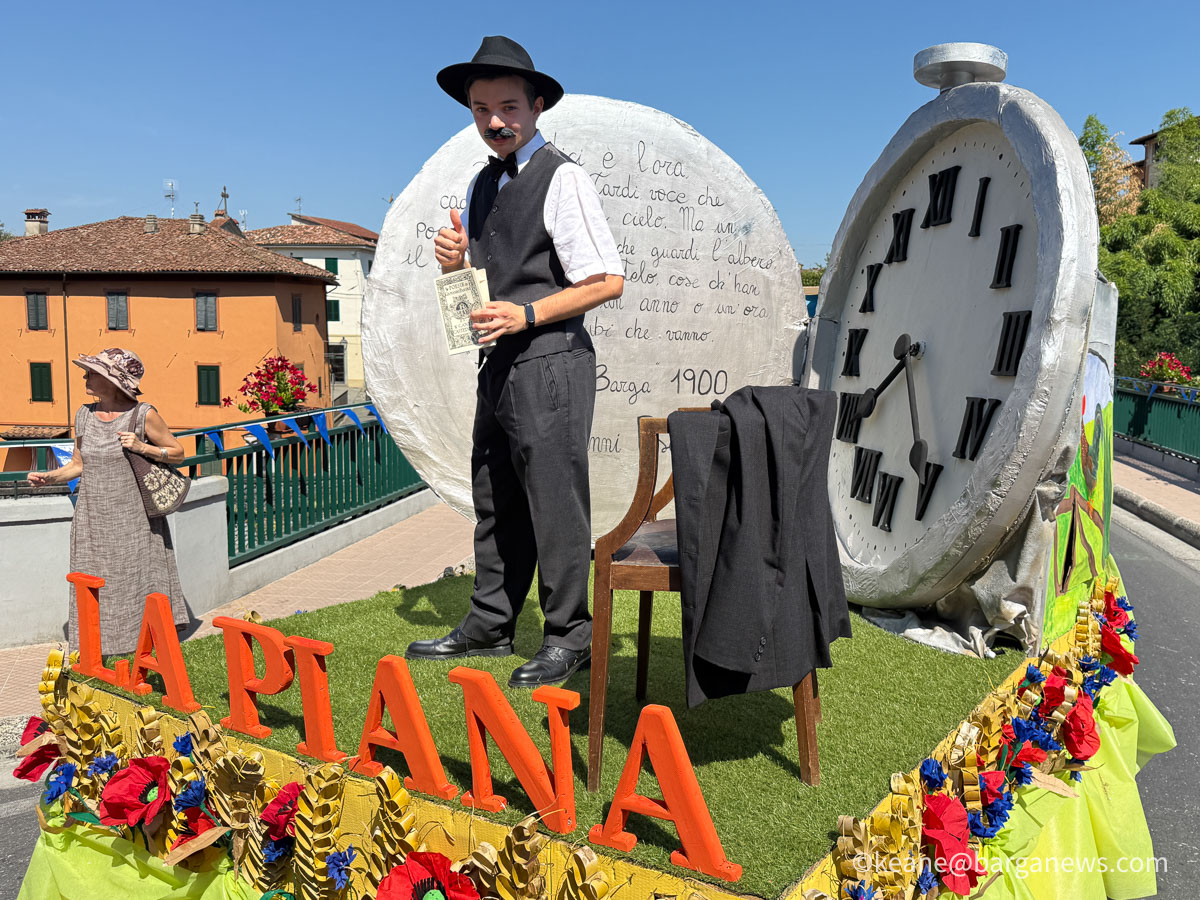
Sunday returned to the traditions that many older residents still remembered. Real mules, horses, decorated floats and costumed participants gathered at Piazzale del Fosso before parading through the city of Barga to Moscardini Stadium, where they were presented before the judges ahead of the communal lunch and an afternoon of traditional games.
The Muletto Pentathlon once again included sack relays, tug of war, log-cutting and egg throwing, with stilt wrestling making its debut. There was also an equestrian demonstration designed to recreate some of the atmosphere of the original mule races that first took place in 1949.
But for many people, the real story of the festival lay behind the scenes.
Last year the Festa della Campagna e del Muletto had returned – while visitors enjoyed the spectacle, the organisers had a much broader ambition.
“At the end of the day,” one organiser explained, “the idea was to rebuild a sense of community.”
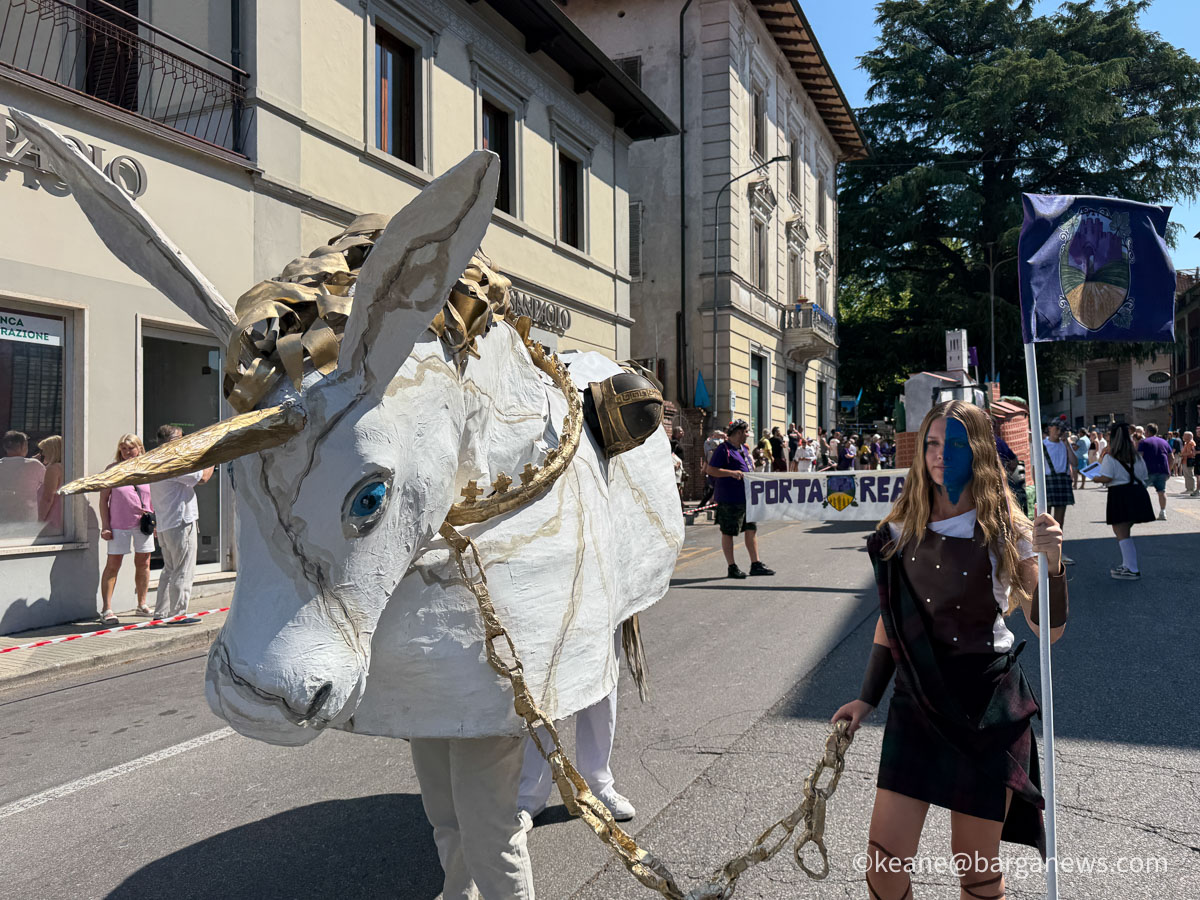
The original festival had featured real mule races alongside floats celebrating rural life. Today, regulations made that impossible, so the organisers devised the now-famous allegorical mule race. Each district constructed a wooden mule with two people hidden inside acting as its legs. Unable to see where they were going, they relied entirely on the shouted instructions of the jockey riding above them, producing one of the weekend’s funniest and most unpredictable spectacles.
Yet the organisers insisted that the race itself was only the visible part of something much bigger.
For months before the festival, people of every generation spent evenings and weekends building floats, constructing their mules, sewing costumes and preparing decorations. Teenagers worked alongside parents and grandparents, neighbours who might otherwise never have met found themselves sharing workshops and ideas, and each district developed a remarkable sense of purpose.
“The festival is simply the glue, What really matters are the hours that people willingly give. When you add them all together, the commitment is enormous.”
As for the competition itself, predictions beforehand had been divided.
Several organisers believed Pian Grande would once again be the team to beat, describing them as “like Juventus”—experienced, organised and perennial favourites. Others believed Porta Reale could spring a surprise.
But perhaps the warmest wishes had been reserved for La Piana.
Last year the district had consisted of little more than a handful of youngsters working beneath a shelter in San Piero in Campo. Twelve months later they had become one of the best organised groups in the festival, bringing together younger and older generations with infectious enthusiasm.
Whether they lifted the trophy or not almost seemed beside the point.
The organisers believed the real victory had already been achieved.
If last year’s return of the Muletto proved that Barga had rediscovered one of its favourite traditions, this year’s expanded programme showed that something even more valuable had happened. The festival had become a reason for neighbours to work together once again, strengthening the bonds between the city’s districts long before the first race began.
Someone was, of course, declared the winner at the end of the weekend. A little rivalry had always been part of life in Barga, and every district dreamed of lifting the trophy.
But as the organisers themselves pointed out, the real success of the Festival of the Countryside and the Muletto was measured not by who crossed the finish line first, but by the friendships renewed, the younger generations drawn into community life and the countless hours of voluntary effort that made the festival possible once again.
In that respect, everyone in the city of Barga had already won.




La comunità dietro il ritorno del Muletto
Lo scorso anno la Festa della Campagna e del Muletto è tornata a Barga dopo essere scomparsa dal calendario cittadino per oltre trent’anni. Il ritorno di questa amatissima manifestazione si è rivelato uno dei momenti più significativi dell’estate, richiamando migliaia di persone nelle strade della città e riportando alla memoria dei barghigiani più anziani una tradizione nata nel 1949.
La seconda edizione della Festa della Campagna e del Muletto si è svolta nelle giornate di sabato 11 e domenica 12 luglio.
Dopo lo straordinario successo della rievocazione dello scorso anno, gli organizzatori hanno deciso di ampliare la manifestazione su due giornate, rendendosi conto che era praticamente impossibile concentrare l’intero programma in una sola domenica.
La scelta si è rivelata vincente. Il sabato si è aperto con Le Tre Curve del Muletto, una spettacolare gara in discesa di carretti a cuscinetti, ciascuno abbinato a uno dei rioni di Barga. Il percorso si snodava da Via Hayange fino al Ponte Lombardini ed è stato organizzato grazie alla collaborazione di Speed Down Italia, del Comune di Barga, della Polizia Municipale e di un gruppo di volontari il cui supporto tecnico ha reso possibile l’evento.
Successivamente la festa si è spostata in Piazza Pascoli, dove i muletti allegorici dei rioni sono stati protagonisti di uno dei momenti più divertenti della manifestazione. Prima della gara, gli originali muletti artigianali sono stati sottoposti a spiritose “visite veterinarie”, per poi affrontare un percorso a ostacoli in stile gimkana. Le premiazioni sono avvenute nel corso della serata.
La domenica ha riportato in vita le tradizioni che molti cittadini ricordavano ancora. Muli veri, cavalli, carri allegorici e figuranti in costume si sono ritrovati al Piazzale del Fosso per poi sfilare attraverso la città di Barga fino allo Stadio Moscardini, dove sono stati presentati alla giuria prima del pranzo comunitario e di un pomeriggio dedicato ai giochi popolari.
Il Pentathlon del Muletto ha riproposto le tradizionali staffette nei sacchi, il tiro alla fune, il taglio del tronco e il lancio delle uova, con l’aggiunta, per la prima volta, della lotta sui trampoli. Non è mancata nemmeno una dimostrazione equestre, pensata per ricreare almeno in parte l’atmosfera delle storiche corse dei muli che si disputarono per la prima volta nel 1949.
Ma per molti il vero racconto della festa si trovava dietro le quinte.
Se lo scorso anno la Festa della Campagna e del Muletto era tornata in scena, mentre il pubblico si godeva lo spettacolo gli organizzatori avevano in realtà un obiettivo molto più ambizioso.
“Alla fine, l’idea era quella di ricostruire il senso di comunità”, ha spiegato uno degli organizzatori.
La manifestazione originale comprendeva vere corse dei muli accanto ai carri dedicati alla vita contadina. Oggi le normative non lo consentono più e così gli organizzatori hanno ideato la ormai celebre corsa dei muletti allegorici. Ogni rione ha costruito un muletto di legno all’interno del quale due persone, nascoste, ne muovevano le gambe. Non potendo vedere dove stavano andando, dovevano affidarsi completamente alle indicazioni gridate dal fantino seduto sopra di loro, dando vita a uno degli spettacoli più esilaranti e imprevedibili dell’intero fine settimana.
Gli organizzatori, però, hanno sempre ribadito che la gara rappresentava soltanto la parte più visibile di qualcosa di molto più importante.
Per mesi, prima della festa, persone di tutte le età hanno trascorso serate e fine settimana costruendo carri allegorici, realizzando i muletti, cucendo costumi e preparando scenografie. Ragazzi hanno lavorato fianco a fianco con genitori e nonni; vicini che forse non si sarebbero mai incontrati hanno condiviso laboratori, idee ed esperienze, e ogni rione ha sviluppato un fortissimo spirito di appartenenza.
“La festa è soltanto il collante. Ciò che conta davvero sono le ore che le persone dedicano volontariamente a questo progetto. Sommandole tutte, ci si rende conto di quanto sia enorme l’impegno.”
Alla vigilia della competizione i pronostici erano piuttosto incerti.
Diversi organizzatori ritenevano che il Pian Grande fosse ancora una volta il rione da battere, definendolo “come la Juventus”: esperto, organizzato e da sempre tra i favoriti. Altri, invece, erano convinti che Porta Reale potesse sorprendere tutti.
Ma forse gli auguri più sentiti erano rivolti al rione La Piana.
Lo scorso anno il gruppo era formato poco più che da un manipolo di ragazzi che lavoravano sotto una tettoia a San Piero in Campo. Dodici mesi dopo era diventato uno dei rioni meglio organizzati della manifestazione, capace di coinvolgere giovani e meno giovani con un entusiasmo contagioso.
Che riuscisse oppure no a conquistare il trofeo sembrava quasi secondario.
Per gli organizzatori, la vera vittoria era già stata ottenuta.
Se il ritorno del Muletto dello scorso anno aveva dimostrato che Barga aveva riscoperto una delle sue tradizioni più amate, il programma ampliato di quest’anno ha dimostrato qualcosa di ancora più prezioso. La festa è diventata un’occasione per far tornare i vicini a lavorare insieme, rafforzando i legami tra i rioni della città molto prima che iniziasse la prima gara.
Naturalmente, al termine del fine settimana è stato proclamato anche un vincitore. Un pizzico di rivalità ha sempre fatto parte della vita barghigiana e ogni rione sogna di alzare il trofeo.
Ma, come hanno sottolineato gli stessi organizzatori, il vero successo della Festa della Campagna e del Muletto non si misura da chi taglia per primo il traguardo, bensì dalle amicizie ritrovate, dai giovani coinvolti nella vita della comunità e dalle innumerevoli ore di volontariato che hanno reso possibile ancora una volta questa manifestazione.
Sotto questo aspetto, ad aver vinto è stata tutta la città di Barga.