The hidden Gromignana with John Jack Card
There are places in the Serchio Valley which most of us pass without ever really seeing. A wall beside a road, a ruined building disappearing beneath vegetation, an opening in the hillside — fragments of a landscape whose original purpose has almost been forgotten.
Finding those places, and more importantly discovering the stories behind them, was the idea behind The Real Tuscan Guide Book, a series of explorations published on barganews with the eminent Mr John Jack Card as our guide.
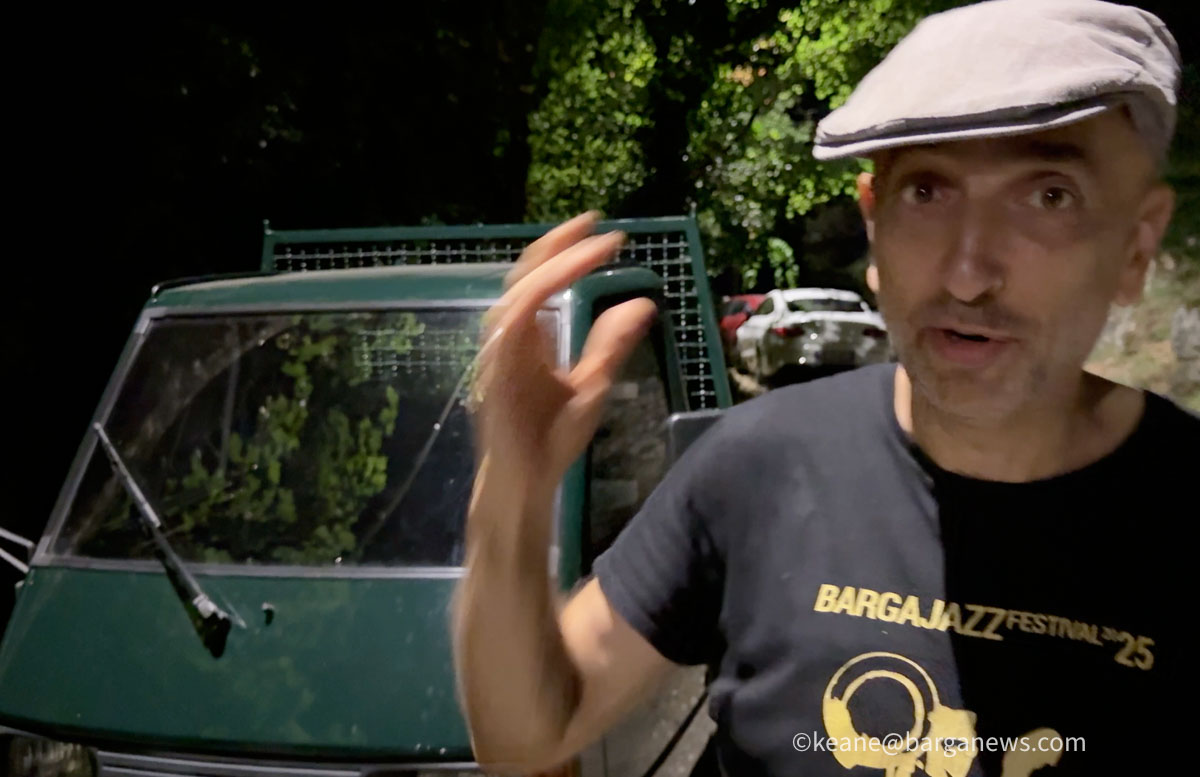
For the ninth journey in the series, John Jack Card took us to Gromignana, in the Comune of Coreglia Antelminelli, and once again this was certainly not the Tuscany described in conventional guidebooks.
Gromignana itself is an unusual place. Rather than developing as a compact village, its houses are scattered across the hillside around the church of San Cassiano and its distinctive bell tower, standing on a rocky outcrop. Its history reaches far back into the past: archaeological evidence in the area points to much earlier occupation, while written records of the settlement go back to the period of the Rolandinghi. Gromignana later became part of the Vicaria di Coreglia in 1272.
But John was not taking us there to admire the view.
As so often happened on these expeditions, the real destination was somewhere that could easily be overlooked altogether.
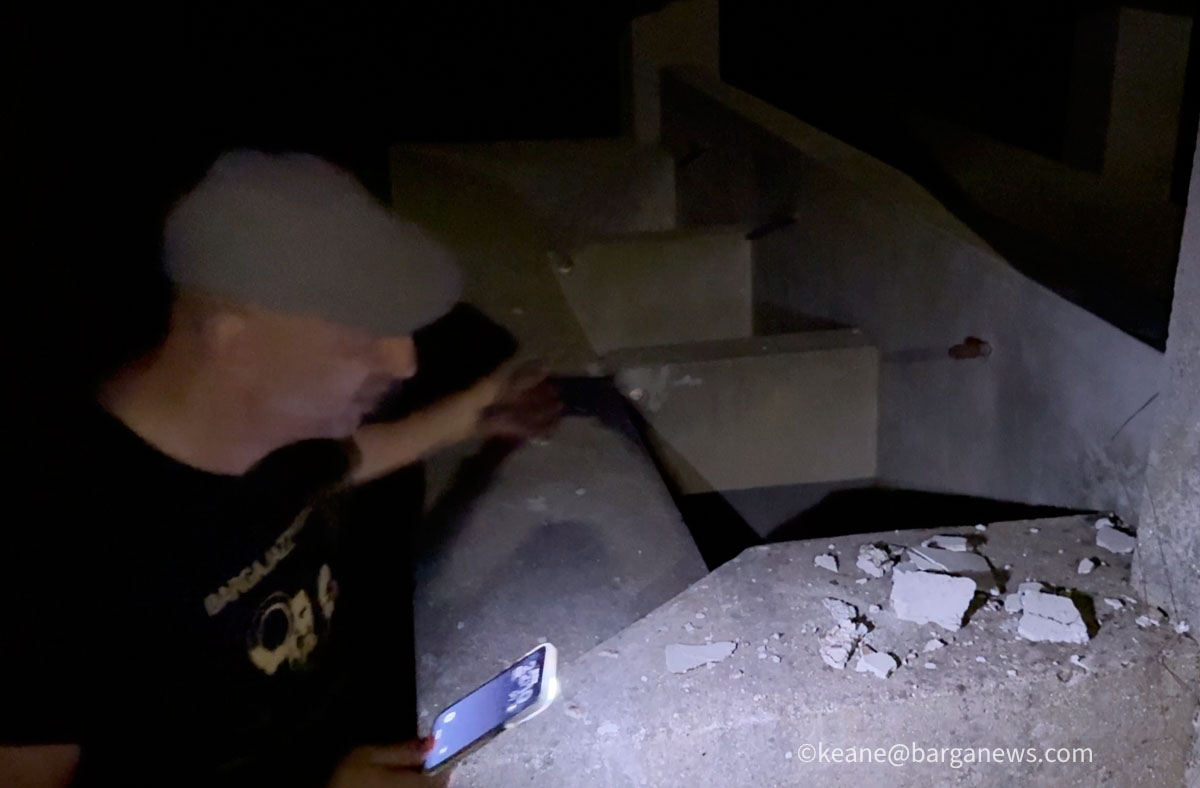
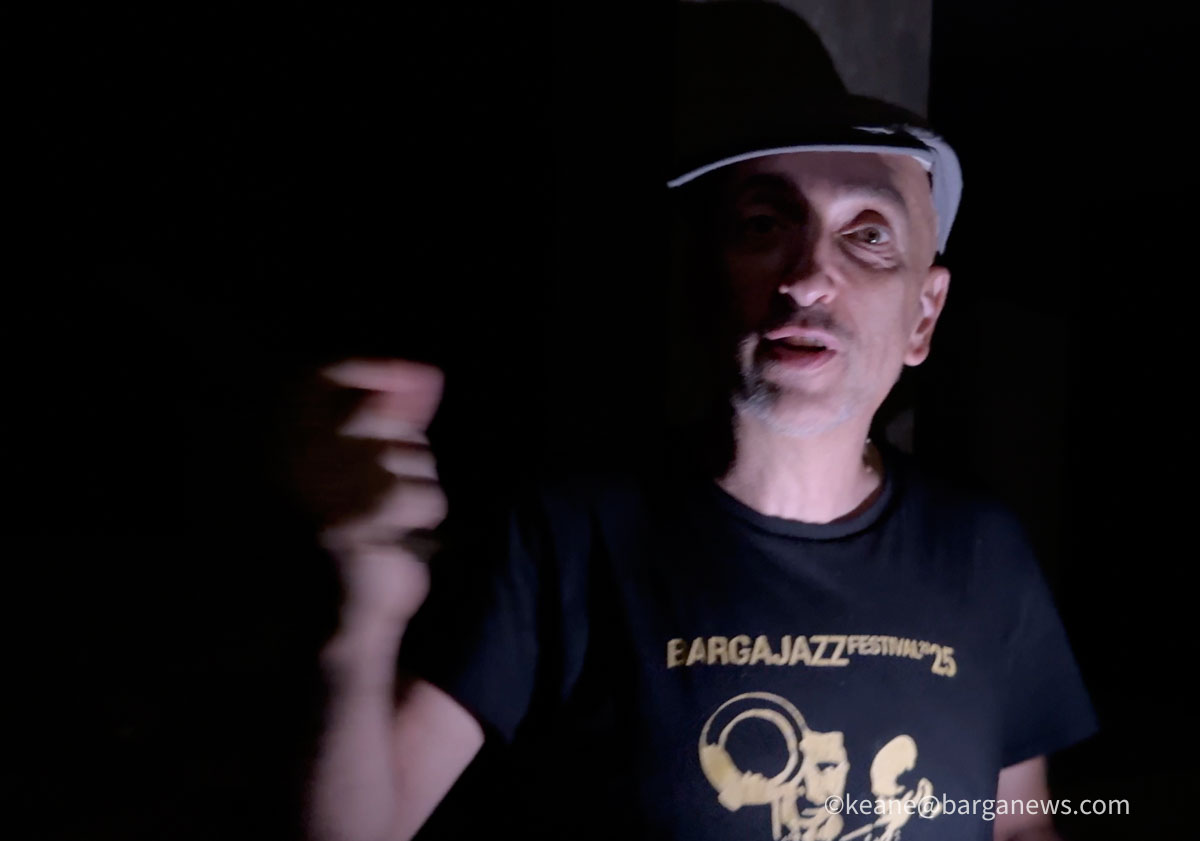
What followed was an exploration conducted partly in darkness, with little more than a torch and the light from a telephone illuminating the way. Concrete structures, rubble, narrow spaces and abandoned interiors gradually emerged from the blackness as John led the way and explained what we were looking at.
This was exactly what made travelling with John Jack Card so fascinating.
A ruin was rarely simply a ruin. A strange piece of concrete beside a road was not necessarily meaningless. The landscape around Barga and the Garfagnana is filled with evidence of the generations who lived and worked here before us, but much of that evidence becomes almost invisible once nobody remembers what it was for.
John remembered.
His extraordinary archive, combined with a prodigious memory and decades spent investigating the history of the area, meant that an apparently insignificant structure could suddenly become the starting point for another story.




La Gromignana nascosta con John Jack Card
Ci sono luoghi nella Valle del Serchio davanti ai quali la maggior parte di noi passa senza mai vederli veramente. Un muro accanto alla strada, un edificio in rovina che scompare sotto la vegetazione, un’apertura nel fianco della collina — frammenti di un paesaggio la cui funzione originaria è stata quasi dimenticata.
Trovare questi luoghi e, soprattutto, scoprire le storie che si nascondono dietro di essi era l’idea alla base di The Real Tuscan Guide Book, una serie di esplorazioni pubblicate su barganews con l’eminente signor John Jack Card come nostra guida.
Per il nono viaggio della serie, John Jack Card ci ha portato a Gromignana, nel Comune di Coreglia Antelminelli, e ancora una volta questa non era certo la Toscana descritta nelle guide turistiche tradizionali.
Gromignana è di per sé un luogo particolare. Invece di svilupparsi come un borgo compatto, le sue case sono sparse sul fianco della collina intorno alla chiesa di San Cassiano e al suo caratteristico campanile, che sorge su uno sperone roccioso. La sua storia affonda le radici in un passato molto lontano: le testimonianze archeologiche della zona indicano insediamenti molto più antichi, mentre le prime fonti scritte relative all’abitato risalgono al periodo dei Rolandinghi. Nel 1272 Gromignana entrò poi a far parte della Vicaria di Coreglia.
Ma John non ci aveva portato fin lì per ammirare il panorama.
Come spesso accadeva durante queste spedizioni, la vera destinazione era un luogo che sarebbe stato facilissimo non notare affatto.
Quello che seguì fu un’esplorazione condotta in parte nell’oscurità, con poco più di una torcia e la luce di un telefono a illuminare il cammino. Strutture in cemento, macerie, spazi angusti e ambienti abbandonati emergevano gradualmente dal buio mentre John ci faceva strada, spiegandoci ciò che stavamo osservando.
Ed era proprio questo a rendere così affascinante viaggiare con John Jack Card.
Una rovina raramente era soltanto una rovina. Uno strano pezzo di cemento accanto alla strada non era necessariamente privo di significato. Il paesaggio intorno a Barga e alla Garfagnana è pieno delle tracce lasciate dalle generazioni che hanno vissuto e lavorato qui prima di noi, ma molte di queste testimonianze diventano quasi invisibili quando nessuno ricorda più a cosa servissero.
John ricordava.
Il suo straordinario archivio, unito a una memoria prodigiosa e a decenni trascorsi a indagare la storia di questa zona, faceva sì che una struttura apparentemente insignificante potesse improvvisamente diventare il punto di partenza per un’altra storia.