More than two thousand years ago, tens of thousands of Liguri Apuani were forced from their homes in the northern Apennines and transported hundreds of kilometres south by the Roman Republic.
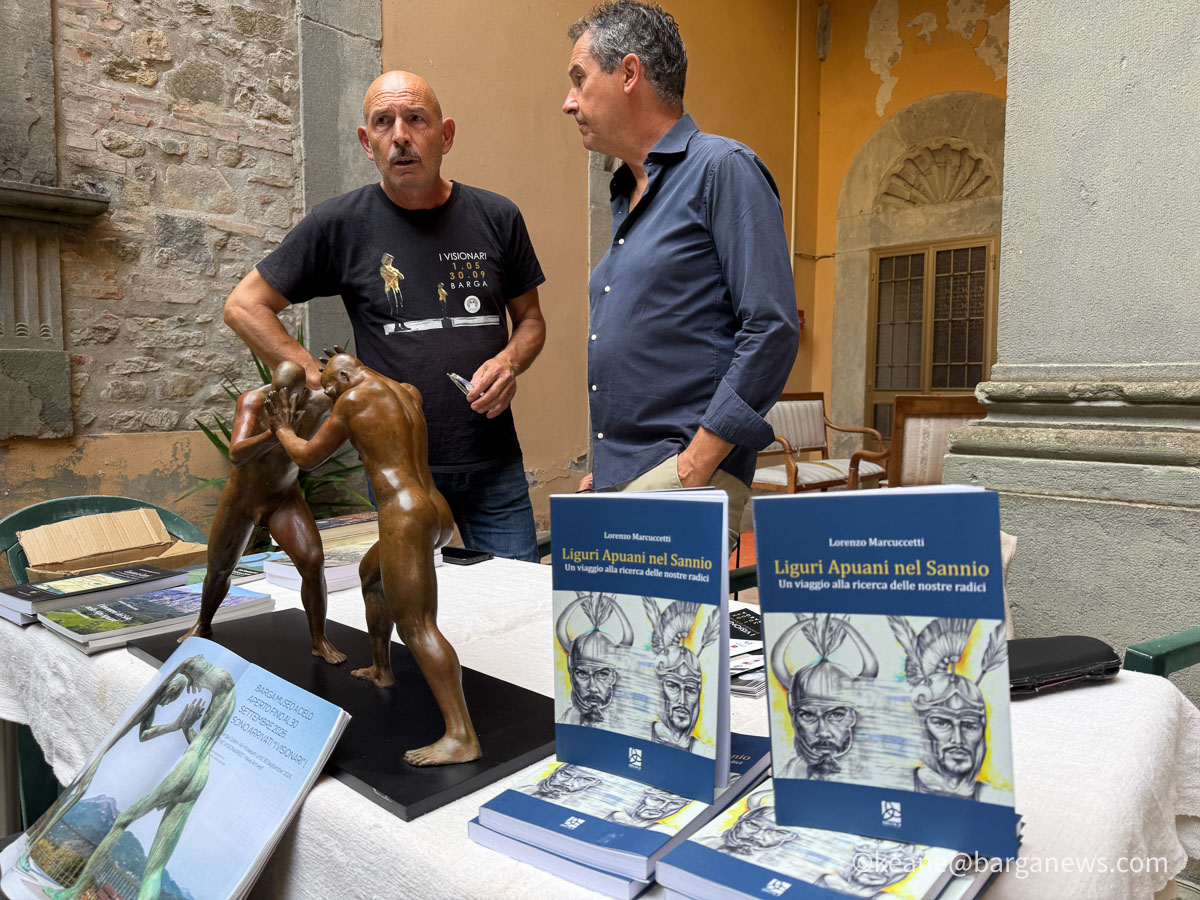
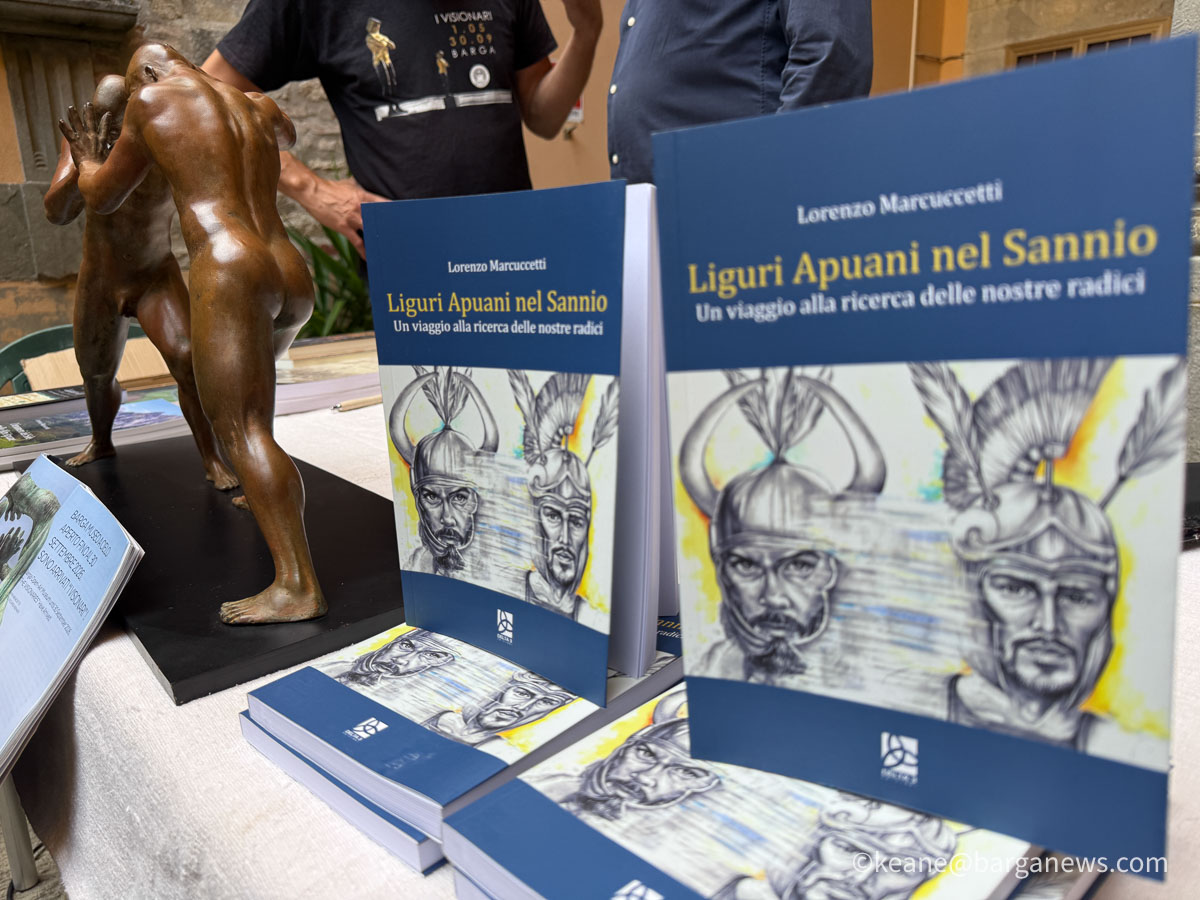
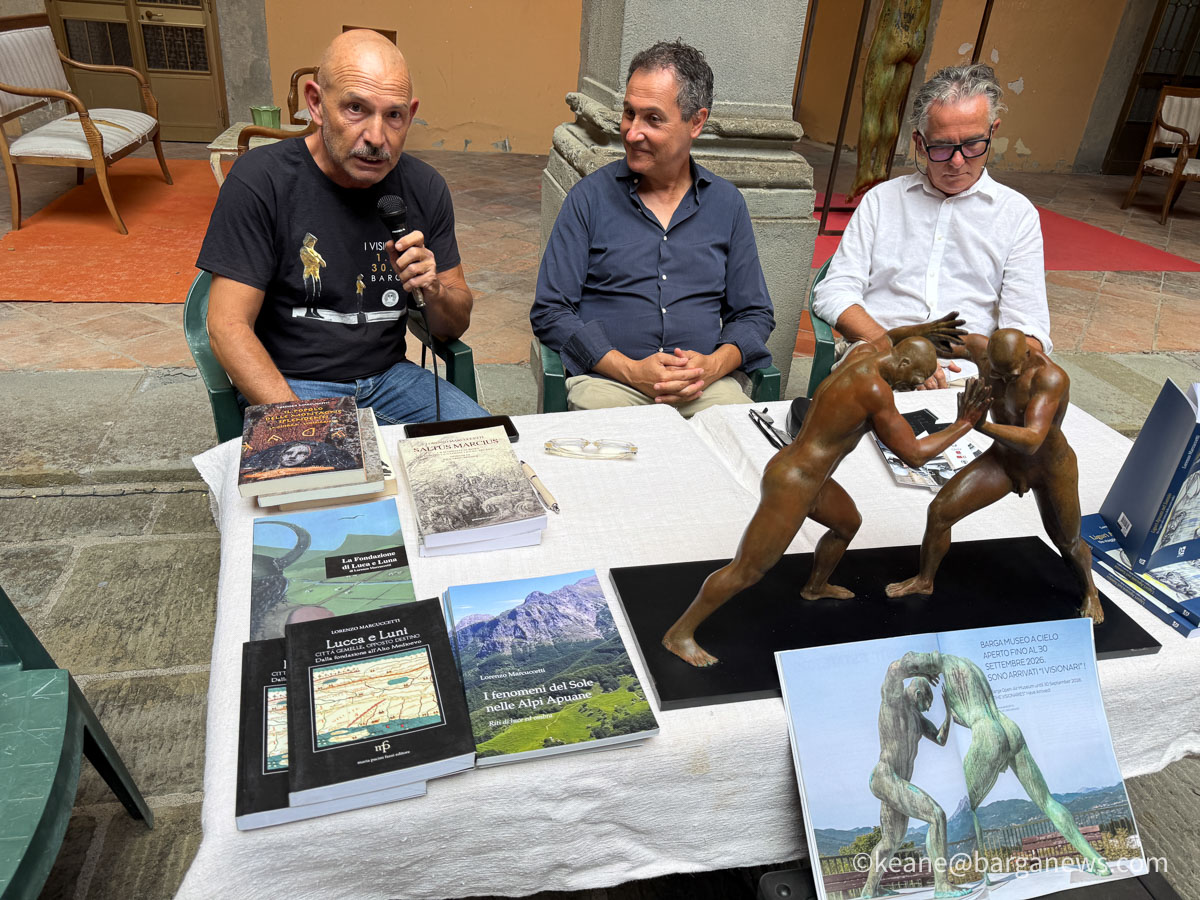
What became of them — and how much of their story might still survive today — was at the centre of Liguri Apuani nel Sannio, a book by Lorenzo Marcuccetti which was presented in Barga on 29 August, in the cloister of Palazzo Balduini.
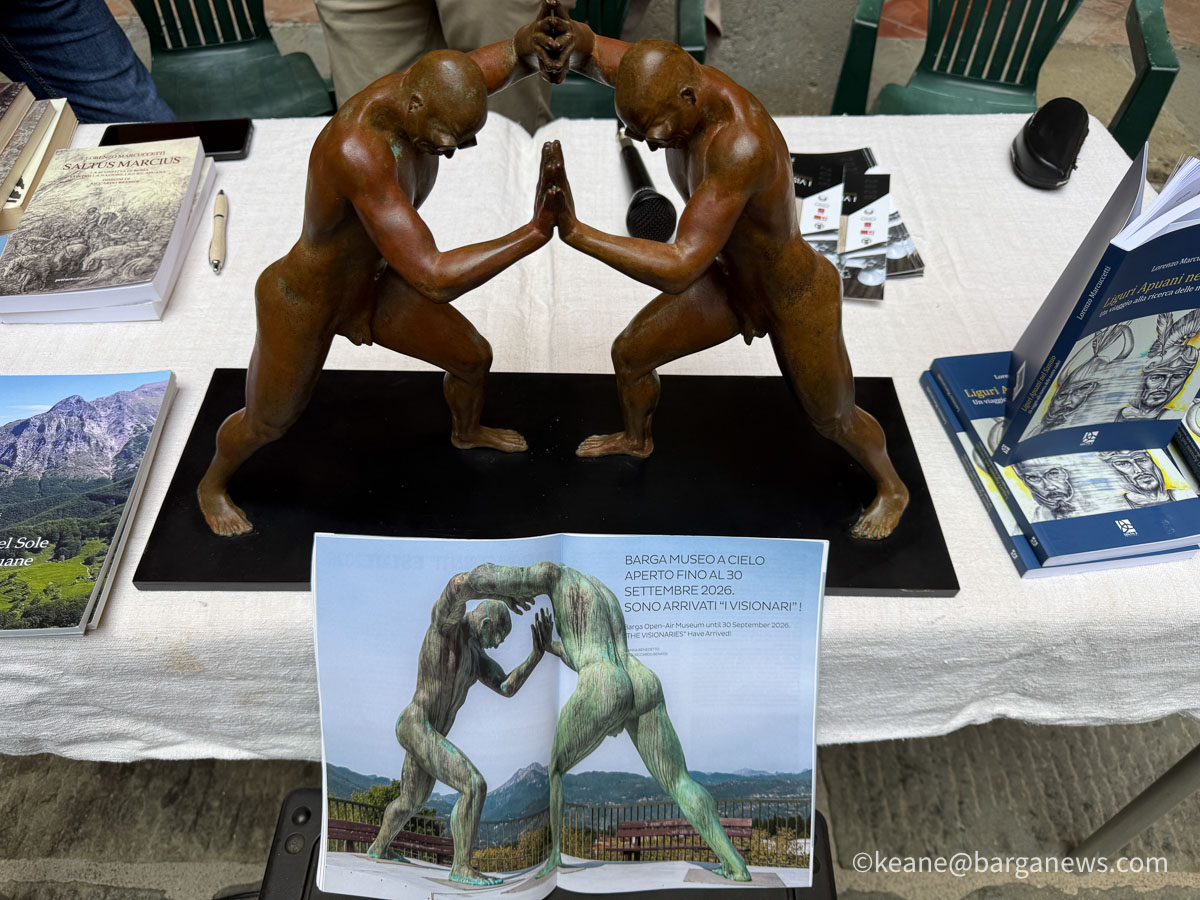
The presentation, organised by OXO Gallery as part of Spazio Sonho, also included the participation of sculptor E. Giannelli.
Marcuccetti’s book brought together history and genetics to investigate one of the most remarkable episodes in the Roman expansion across the Italian peninsula.
Between 181 and 180 BC, following years of conflict, the Roman Republic forcibly removed an estimated 40,000–47,000 Liguri Apuani — men, women and children — from their mountain territories and resettled them in the Sannio, in an area between Benevento and present-day Circello.
It was an extraordinary movement of an entire population across the peninsula.
Rather than looking at the episode purely through surviving historical accounts, Marcuccetti also explored whether the consequences of that migration could still be detected more than two millennia later.
The research presented in the book included DNA studies involving people from both the Ligurian-Apuan territory and the Upper Sannio, selected according to criteria which included the historical presence of their family names in the respective areas.
The result was an unusual journey between archaeology, written history, genetics and collective memory.
For Marcuccetti the subject was also a personal one. His involvement with the relationship between the two territories went back to 1981, when, at the age of fourteen, he accompanied a delegation from Versilia to the Sannio. What began as an encounter between two geographically distant communities subsequently developed into decades of historical research and continuing dialogue.
At the heart of the book was the dramatic deportation itself.
The Liguri Apuani had fiercely resisted Roman expansion, inflicting serious defeats on Roman armies. Eventually Rome adopted a different solution: rather than simply destroying its opponents, it removed a large part of the population from the territory in which that resistance had developed.
The human consequences must have been immense. Entire families were required to abandon their homes and cross the Apennines towards an unfamiliar territory hundreds of kilometres away.
Marcuccetti’s investigation therefore went beyond reconstructing a military and political episode. It asked what happened to the identity of a people after displacement, how memories survived across generations and whether modern scientific research could illuminate events known previously almost entirely through ancient texts.
In the introduction to his work, Marcuccetti described knowledge of the past as a form of “catarsi” — catharsis — and an awareness of the deepest layers of the self, almost as though historical investigation allowed a form of contact with those who came before us.
That idea gave Liguri Apuani nel Sannio its wider significance.
The story did not belong exclusively to the Liguri Apuani or to the inhabitants of the Sannio. It formed part of the much larger history of movement, conflict and mixture from which the populations of Italy emerged — Ligurians, Samnites, Romans, Greeks and many others gradually becoming part of the extraordinarily complex human landscape of the peninsula.




Più di duemila anni fa, decine di migliaia di Liguri Apuani furono costretti ad abbandonare le loro terre nell’Appennino settentrionale e deportati dalla Repubblica Romana centinaia di chilometri più a sud.
Che cosa ne fu di loro — e quanto di quella storia possa essere sopravvissuto fino ai nostri giorni — è stato al centro di Liguri Apuani nel Sannio, il libro di Lorenzo Marcuccetti presentato a Barga il 29 agosto, nel chiostro di Palazzo Balduini.
La presentazione, organizzata da OXO Gallery nell’ambito di Spazio Sonho, ha visto anche la partecipazione dello scultore E. Giannelli.
Il libro di Marcuccetti ha messo insieme storia e genetica per indagare uno degli episodi più straordinari dell’espansione romana nella penisola italiana.
Tra il 181 e il 180 a.C., dopo anni di conflitti, la Repubblica Romana deportò forzatamente circa 40.000–47.000 Liguri Apuani — uomini, donne e bambini — dalle loro terre montane, trasferendoli nel Sannio, in un’area compresa tra Benevento e l’odierna Circello.
Si trattò di uno straordinario spostamento di un’intera popolazione attraverso la penisola.
Invece di affrontare l’episodio soltanto attraverso le fonti storiche giunte fino a noi, Marcuccetti ha cercato anche di capire se le conseguenze di quella migrazione potessero essere ancora individuate a distanza di oltre duemila anni.
La ricerca presentata nel libro comprende studi sul DNA condotti su persone provenienti sia dall’area ligure-apuana sia dall’Alto Sannio, selezionate secondo criteri che includevano la presenza storica dei loro cognomi nei rispettivi territori.
Il risultato è stato un insolito viaggio tra archeologia, fonti storiche, genetica e memoria collettiva.
Per Marcuccetti il tema ha avuto anche una dimensione personale. Il suo rapporto con la storia che lega questi due territori risale al 1981, quando, all’età di quattordici anni, accompagnò una delegazione della Versilia nel Sannio. Quello che iniziò come un incontro tra due comunità geograficamente lontane si trasformò successivamente in decenni di ricerca storica e di dialogo continuo.
Al centro del libro è rimasta la drammatica vicenda della deportazione.
I Liguri Apuani avevano opposto una forte resistenza all’espansione romana, infliggendo anche pesanti sconfitte agli eserciti di Roma. Alla fine Roma adottò una soluzione diversa: invece di limitarsi a distruggere i propri avversari, allontanò una parte consistente della popolazione dal territorio nel quale quella resistenza si era sviluppata.
Le conseguenze umane dovettero essere immense. Intere famiglie furono costrette ad abbandonare le proprie case e ad attraversare gli Appennini verso un territorio sconosciuto, a centinaia di chilometri di distanza.
L’indagine di Marcuccetti è andata quindi oltre la semplice ricostruzione di un episodio militare e politico. Ha posto domande su ciò che accade all’identità di un popolo dopo uno spostamento forzato, su come la memoria possa sopravvivere attraverso le generazioni e su quanto la moderna ricerca scientifica possa contribuire a comprendere avvenimenti conosciuti in precedenza quasi esclusivamente attraverso i testi antichi.
Nella premessa al suo lavoro, Marcuccetti ha descritto la conoscenza del passato come una forma di “catarsi” e di “consapevolezza degli strati più profondi del sé”, quasi come se la ricerca storica permettesse una qualche forma di contatto con coloro che ci hanno preceduto.
È questa idea ad aver dato a Liguri Apuani nel Sannio un significato più ampio.
La storia non appartiene esclusivamente ai Liguri Apuani o agli abitanti del Sannio. Fa parte della più vasta vicenda di spostamenti, conflitti e incontri dalla quale sono nate le popolazioni d’Italia — Liguri, Sanniti, Romani, Greci e molti altri, confluiti nel corso dei secoli nello straordinariamente complesso paesaggio umano della penisola.