One of Britain’s fastest rising composers, Michael Stimpson who has been a resident in Barga Vecchia for some time now (article here) has just released a new CD containing some of his recent work. The CD entitled “Journeymen” is recorded by the Allegri String Quartet and is based on two distinct and separate moments and places in time.
The first – the string quartet no 1 (Robben Island) – 6 pieces concerning Robben Island; the island 7 kilometres off the coast of Cape Town, South Africa where Nelson Mandella spent many years of his 27 years prison sentence . Today the island is a popular tourist destination and was declared a World Heritage Site in 1999. The second part of the CD is based around the work and life of Laurie Lee (1914 -1997). English poet, memoirist, and novelist, probably best-known for his autobiographical book CIDER WITH ROSIE
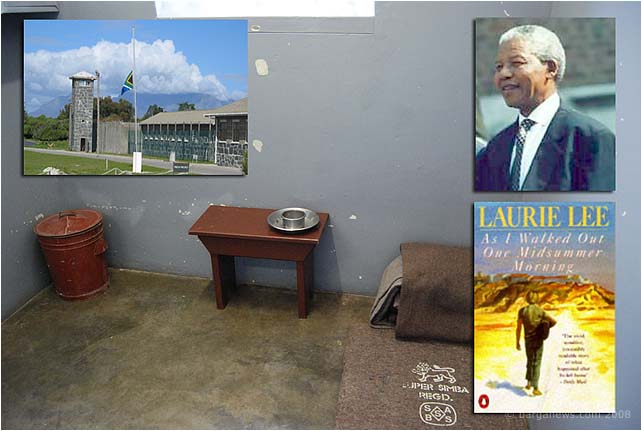
Robben Island had for a number of years been a symbol of great suffering and suppression of basic human rights. But when I came to visit the island around Christmas of 1999, having already begun this quartet, I realized that it was also a place of beauty and mystery, and of course immense inspiration. I appreciated also that it is simply a piece of land, only temporarily abused since its formation. So the piece needed to reflect characteristics as well as events, and therefore it emerges only gradually, almost like the island appearing out of the mist. If it feels uncertain and edgy, then all the better.
The second movement had a working title of ‘the road from Natal’, where Nelson Mandela was arrested before his final trial. It is violent, a siren wails in places, although on occasion the chasing has odd elements of farce.
For the opening of the third movement I had in mind the misery of being transported to the island, tired, battered, and full of fear and trepidation. A later section is marked ‘Restless, quasi-dance’, and this relates to the earlier history of the island. For some time it was a leper colony and I wanted to convey a lifestyle and mental energy that would be so strange and difficult to comprehend by those on the outside. It draws to a close with more reference to modern times, a confrontation of imprisonment and a theoretical slamming of a cell door gives it a dramatic finale.
The fourth movement had a working title of ‘isolation’ and I have used pizzicato chords to symbolize a heartbeat that both stops and runs into panic. An equally nervous ‘pacing up and down’ can be heard in the second violin, viola and ‘cello. This movement gives way to a re-emergence of the opening chorale, but this time with a little off-beat, reggae-like rhythm in the pizzicato first violin. Here I had in mind the hub of ‘real-life’ that was so near to the islanders, and yet so far.
And then a fifth movement that had a working title of ‘spirit’. Being marked ‘Majestic: Joyous’ it speaks for itself, and is a celebration of one of the major successes of the twentieth century. The work draws to a close with an ornamented version of the original chorale, but this time it finishes with a closer reference to the national anthem of New South Africa.
In programme notes I usually shy away from structural comment, I think I have been worn down by the dominance that ’analysis of what someone has done’ takes over the ’act of creation’. But I will mention here the opening motif of the national anthem of South Africa. I first hid this in a second subject of a Sonatina for guitar some years ago. It was no coincidence that I settled on this on the afternoon that Mr. Mandela walked from Robben Island. I later experimented with it in a student piece for orchestra, and both of these gave me the preparation for this larger scale work. The rising third of the opening to the national anthem forms the basis of this quartet, as does the three-note response. But in this piece it is not the structure that is important, it is the human element. Yes, this is a tribute to one man, but to the spirit of many others as well. – Michael Stimpson
Michael has composed for some of the UK’s most distinguished artists in the classical music industry, including the English Chamber Orchestra, Tallis Chamber Choir, David Campbell, Allegri String Quartet, Paul Agnew, Sioned Williams, John Anderson, Dussek Piano Trio, London Festival Orchestra and the English Concert Singers. The capital’s foremost venues have hosted performances of his work; the Wigmore Hall, Queen Elizabeth Hall, Cadogan Hall, Purcell Room and St. John’s Smith Square and international recognition has prompted performances in the USA, Iran and Italy.
The second part of the CD is based around the work and life of Laurie Lee (1914 -1997). English poet, memoirist, and novelist, probably best-known for his autobiographical trilogy CIDER WITH ROSIE (1959), AS I WALKED OUT ONE MIDSUMMER MORNING (1969), and A MOMENT OF WAR (1991). The trilogy depicts Lee’s boyhood in the country, his journey to London to seek his fortune and see the world, and his experiences in the Spanish Civil War.
As I Walked out One Midsummer Morning narrates Lee’s first trip to Civil War Spain in 1936 and his walk across the country from Vigo to Granada. In Castillo he works in a hotel, but when the city is taken by Franco’s troops, he returns to England, only to realise that the war is not over. A Moment of War told of a young man’s walk over the Pyrenees into Spain to fight in the International Brigades in 1937.
‘The challenge of the new work has been to reflect the many different features and styles within these wonderful books, the ‘Englishness’ of the early chapters, the youth and energy of his long walk through Spain, and the underlying menace of this most desolate of wars. To assist me with this I have made various musical references, some of works premiered in the years that Laurie Lee travelled, and some structures of the various regions of Spain. But uppermost is the story itself.’ – Michael Stimpson
Michael’s site can be seen here




Uno dei compositori britannici emergenti più promettenti, Michael Stimpson, che da qualche tempo risiede a Barga Vecchia (articolo qui), ha appena pubblicato un nuovo CD contenente alcune delle sue opere più recenti. Il CD, intitolato “Journeymen”, è eseguito dall’Allegri String Quartet ed è basato su due momenti e luoghi distinti nel tempo.
La prima parte – il Quartetto per archi n. 1 (Robben Island) – comprende sei brani dedicati a Robben Island; l’isola situata a 7 chilometri al largo di Città del Capo, in Sudafrica, dove Nelson Mandela trascorse molti anni dei suoi 27 anni di prigionia. Oggi l’isola è una popolare destinazione turistica ed è stata dichiarata Patrimonio dell’Umanità nel 1999. La seconda parte del CD è invece ispirata alla vita e all’opera di Laurie Lee (1914–1997), poeta, memorialista e romanziere inglese, noto soprattutto per il suo libro autobiografico Cider with Rosie.
Per molti anni Robben Island è stata un simbolo di grande sofferenza e della soppressione dei diritti umani fondamentali. Tuttavia, quando ho visitato l’isola intorno al Natale del 1999, avendo già iniziato a lavorare a questo quartetto, mi resi conto che era anche un luogo di bellezza e mistero, oltre che di immensa ispirazione. Compresi anche che si tratta semplicemente di un pezzo di terra, abusato solo temporaneamente dalla sua formazione. Così il brano doveva riflettere sia le caratteristiche del luogo sia gli eventi, emergendo quindi gradualmente, quasi come l’isola che appare dalla nebbia. Se trasmette incertezza e tensione, tanto meglio.
Il secondo movimento aveva come titolo provvisorio “la strada da Natal”, dove Nelson Mandela fu arrestato prima del suo processo finale. È un movimento violento, con il suono di una sirena in alcuni passaggi, anche se a tratti l’inseguimento assume elementi quasi grotteschi.
Per l’apertura del terzo movimento avevo in mente la sofferenza del trasferimento sull’isola: stanchi, malconci, pieni di paura e apprensione. Una sezione successiva è indicata come “Irrequieto, quasi danza”, e si riferisce alla storia più antica dell’isola. Per un periodo fu una colonia di lebbrosi e volevo evocare uno stile di vita e un’energia mentale difficili da comprendere per chi sta all’esterno. Il movimento si chiude con un riferimento più diretto ai tempi moderni: il confronto con la prigionia e il colpo teorico di una porta di cella che si chiude danno un finale drammatico.
Il quarto movimento aveva come titolo provvisorio “isolamento” e ho utilizzato accordi pizzicati per simboleggiare un battito cardiaco che si interrompe e accelera nel panico. Un altrettanto nervoso “andare avanti e indietro” si percepisce nel secondo violino, nella viola e nel violoncello. Questo movimento lascia poi spazio alla ricomparsa del corale iniziale, ma questa volta con un leggero ritmo fuori battuta, quasi reggae, nel pizzicato del primo violino. Qui avevo in mente il cuore della “vita reale”, così vicino agli isolani e al tempo stesso così lontano.
Segue un quinto movimento, con titolo provvisorio “spirito”. Indicato come “Maestoso: gioioso”, parla da sé ed è una celebrazione di uno dei grandi successi del XX secolo. L’opera si conclude con una versione ornata del corale iniziale, questa volta con un richiamo più diretto all’inno nazionale del nuovo Sudafrica.
Nelle note di programma tendo solitamente ad evitare commenti strutturali; credo di essere stato logorato dal predominio dell’“analisi di ciò che qualcuno ha fatto” sull’“atto della creazione”. Tuttavia menzionerò qui il motivo iniziale dell’inno nazionale sudafricano. Lo nascosi per la prima volta nel secondo tema di una Sonatina per chitarra alcuni anni fa. Non fu un caso che vi approdassi proprio nel pomeriggio in cui il signor Mandela lasciò Robben Island. In seguito lo sperimentai in un brano orchestrale studentesco, e queste esperienze mi hanno preparato per quest’opera di più ampio respiro. La terza ascendente dell’inizio dell’inno costituisce la base del quartetto, così come la risposta di tre note. Ma in questo lavoro non è la struttura a essere importante: è l’elemento umano. Sì, questo è un tributo a un uomo, ma anche allo spirito di molti altri. – Michael Stimpson
Michael ha composto per alcuni degli artisti più prestigiosi del panorama della musica classica britannica, tra cui la English Chamber Orchestra, il Tallis Chamber Choir, David Campbell, l’Allegri String Quartet, Paul Agnew, Sioned Williams, John Anderson, il Dussek Piano Trio, la London Festival Orchestra e gli English Concert Singers. Le principali sale della capitale hanno ospitato le esecuzioni delle sue opere: la Wigmore Hall, la Queen Elizabeth Hall, la Cadogan Hall, la Purcell Room e St. John’s Smith Square. Il riconoscimento internazionale ha inoltre portato esecuzioni negli Stati Uniti, in Iran e in Italia.
La seconda parte del CD è basata sulla vita e l’opera di Laurie Lee (1914–1997), poeta, memorialista e romanziere inglese, noto soprattutto per la sua trilogia autobiografica Cider with Rosie (1959), As I Walked Out One Midsummer Morning (1969) e A Moment of War (1991). La trilogia racconta l’infanzia di Lee in campagna, il suo viaggio a Londra in cerca di fortuna e le sue esperienze durante la guerra civile spagnola.
As I Walked Out One Midsummer Morning narra il primo viaggio di Lee nella Spagna della guerra civile nel 1936 e il suo cammino attraverso il paese da Vigo a Granada. A Castillo lavora in un albergo, ma quando la città viene occupata dalle truppe di Franco, torna in Inghilterra, rendendosi conto che la guerra non è finita. A Moment of War racconta invece il viaggio di un giovane che attraversa i Pirenei per entrare in Spagna e combattere nelle Brigate Internazionali nel 1937.
«La sfida del nuovo lavoro è stata quella di riflettere le molteplici caratteristiche e gli stili presenti in questi meravigliosi libri: l’“inglesità” dei primi capitoli, la giovinezza e l’energia del lungo cammino attraverso la Spagna e la minaccia costante di una delle guerre più desolate. Per aiutarmi ho inserito vari riferimenti musicali, alcuni a opere presentate negli anni in cui Laurie Lee viaggiava, altri alle strutture musicali delle diverse regioni spagnole. Ma ciò che conta più di tutto è la storia stessa.» – Michael Stimpson
Il sito di Michael può essere visitato qui.