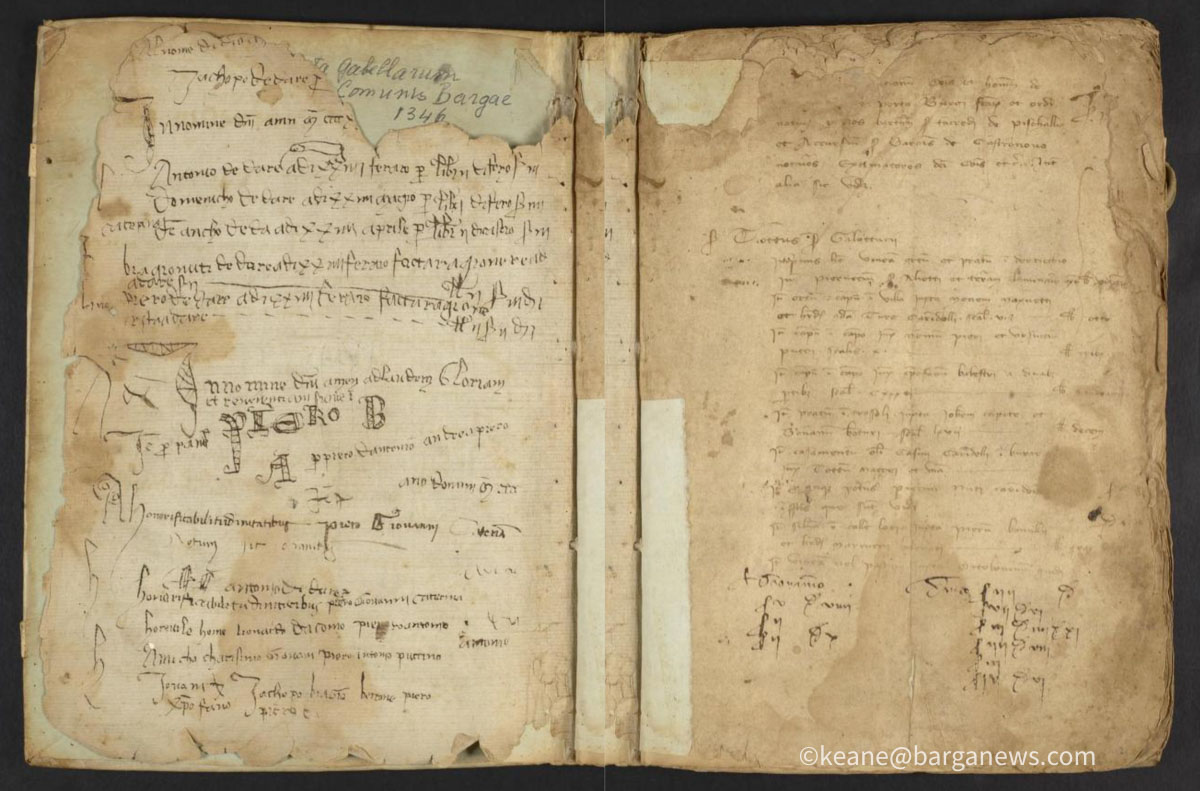
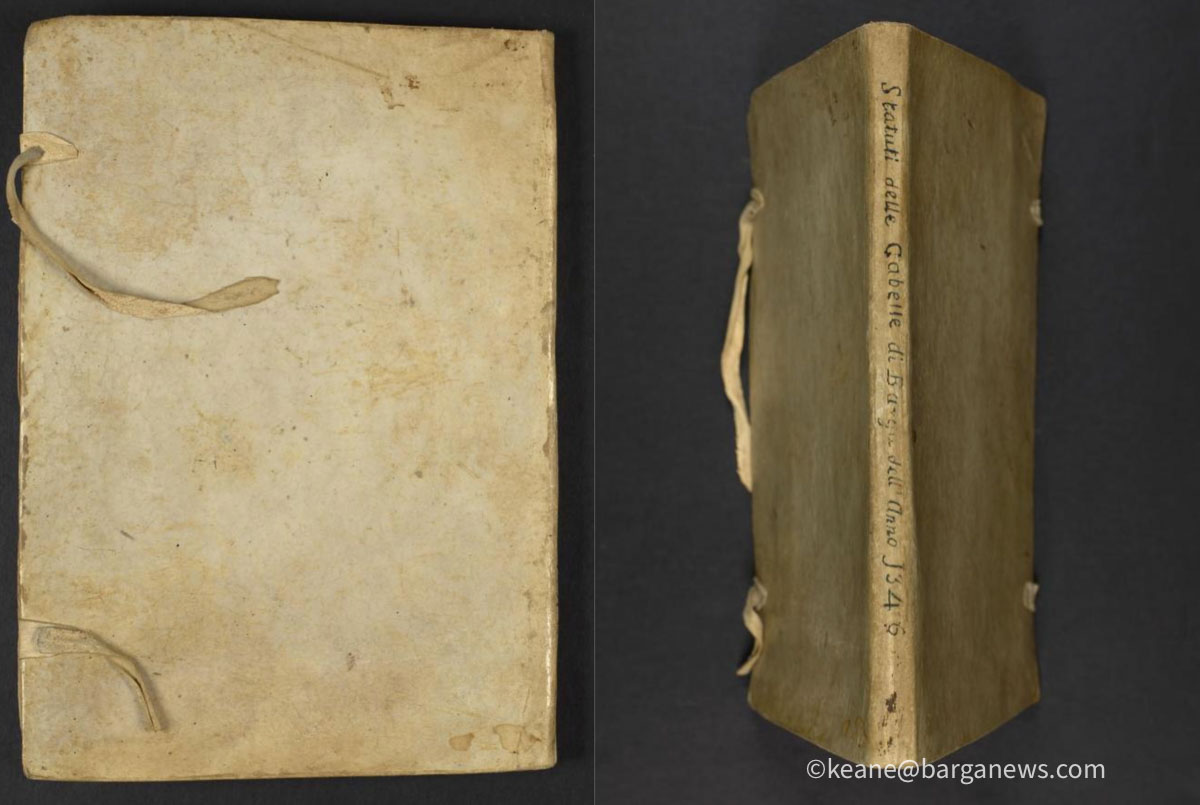
Set out across a series of worn parchment pages, written in a steady hand and marked by time, the manuscript known as Statuta Gabelarum Communis Bargae offers a direct view into how Barga functioned in the middle of the fourteenth century.
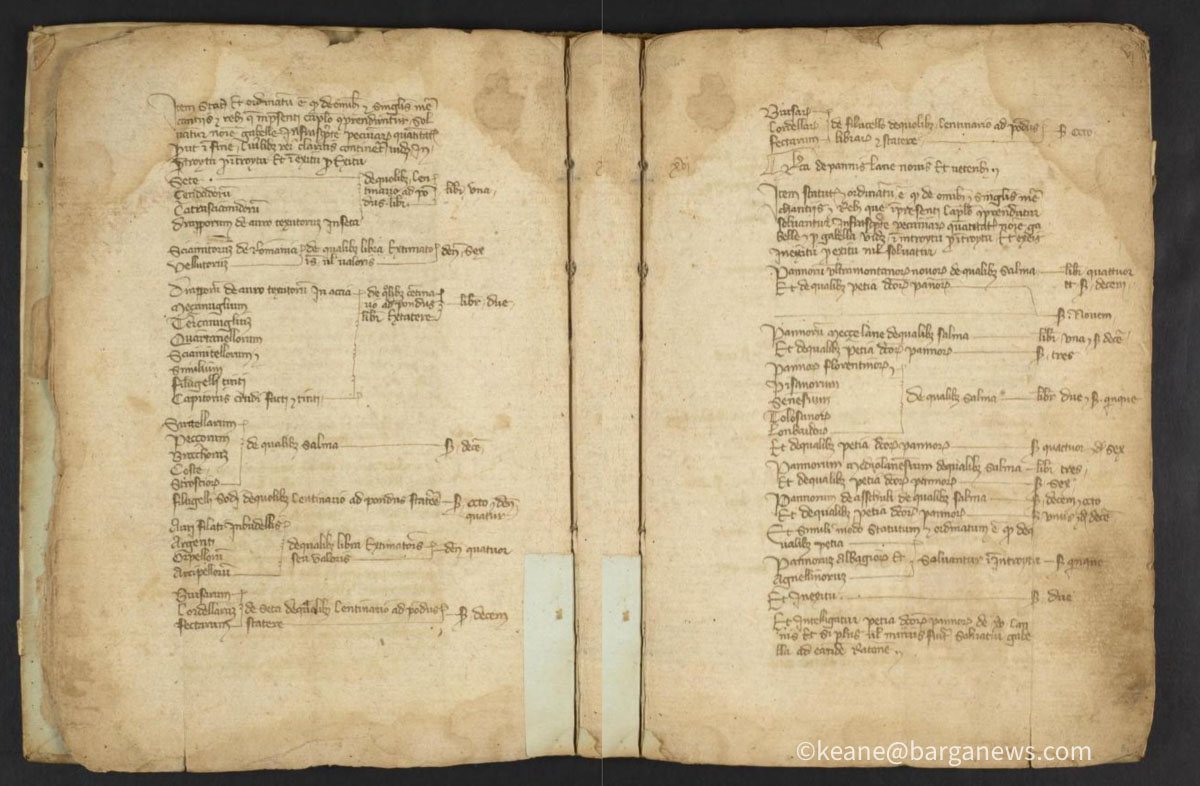
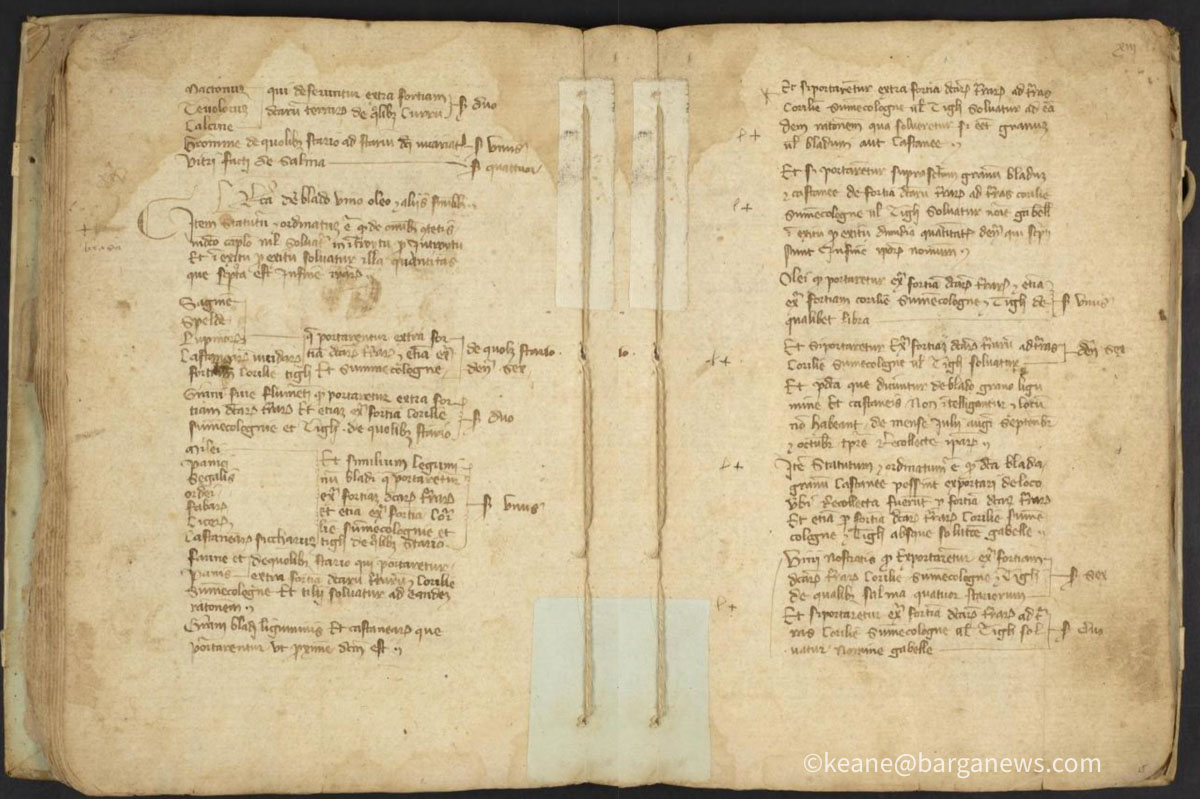
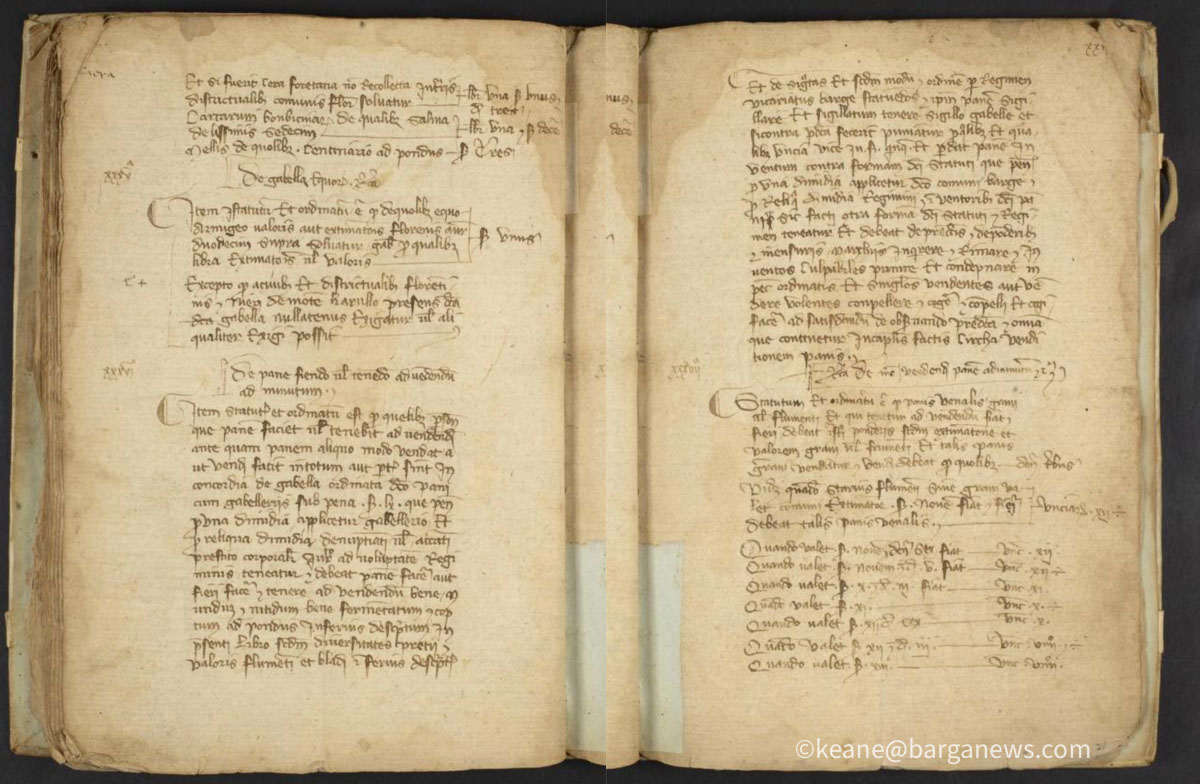
Dated 1346, the manuscript is not a narrative or a chronicle, but something more practical. It is a working document — a collection of statutes governing taxation, trade, and the movement of goods within the city. Line after line begins with the same formula, Item statutum et ordinatum est, “it is established and ordered,” setting out the rules by which daily life was organised.
The subject matter is precise and grounded. Grain, wine, livestock, and other essentials appear repeatedly, not as abstract commodities but as measurable quantities tied to duty and payment. Standard units — salma, mina, libra — anchor the system, ensuring that transactions could be controlled and accounted for. What emerges is a structured economy, closely observed and regulated.
The language itself reflects this practical purpose. It is not classical Latin, but a form of medieval administrative Latin, shaped by use rather than by literary convention. The pages are filled with abbreviations — q̃ for quod, p̄ for per, and many others — allowing the scribe to compress large amounts of information into limited space. At the same time, the Latin shows the influence of early Tuscan speech, with phrasing and vocabulary that move towards the emerging vernacular. The result is a hybrid language: formal enough to carry legal authority, but flexible enough to function as a tool of everyday administration.
The statutes do not only describe what is permitted. They define consequences. Fines are set out alongside obligations, making clear that these were enforceable rules. Behind the text lies an administrative system — officials responsible for collecting, recording, and overseeing the flow of goods through the city.
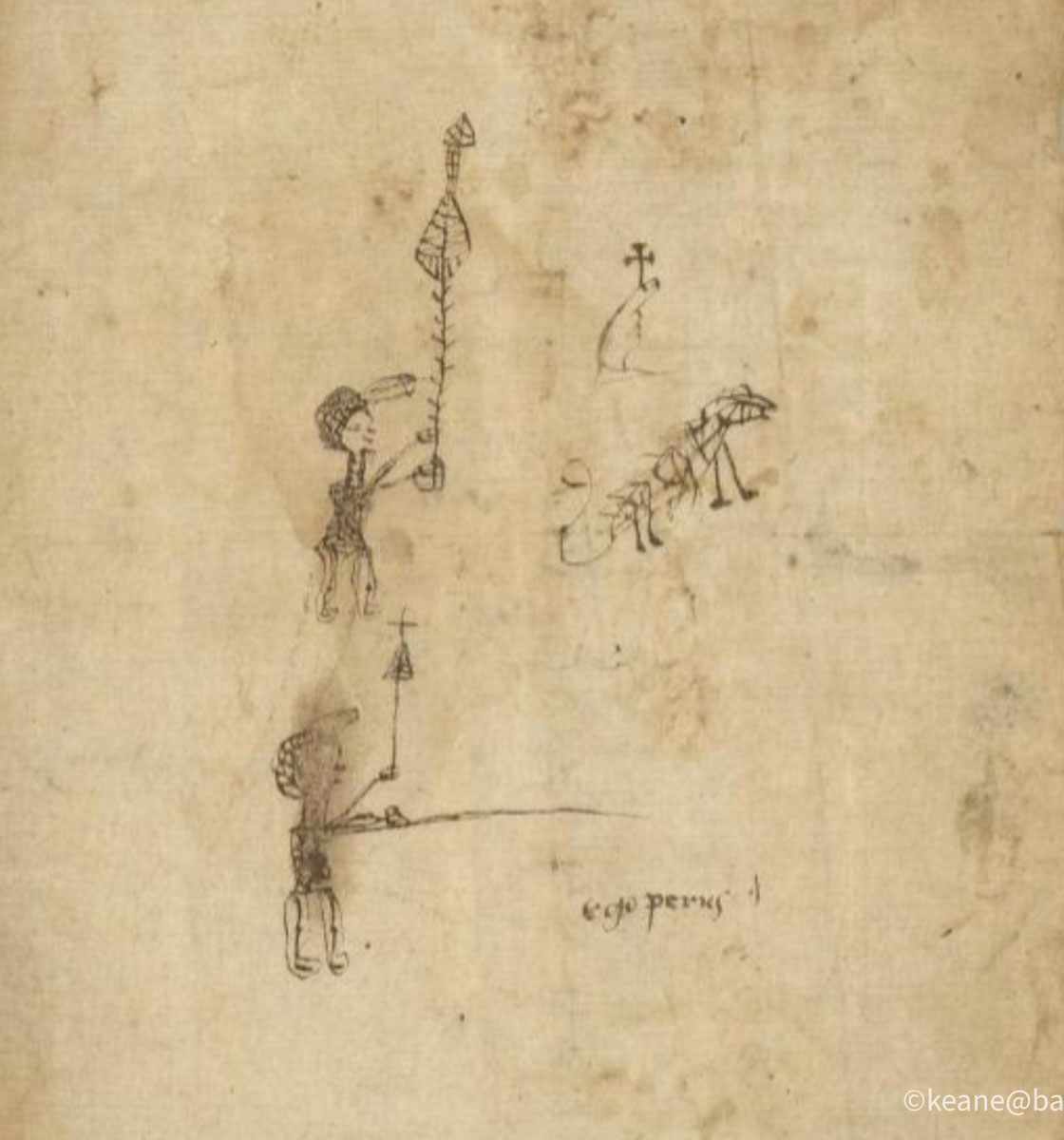
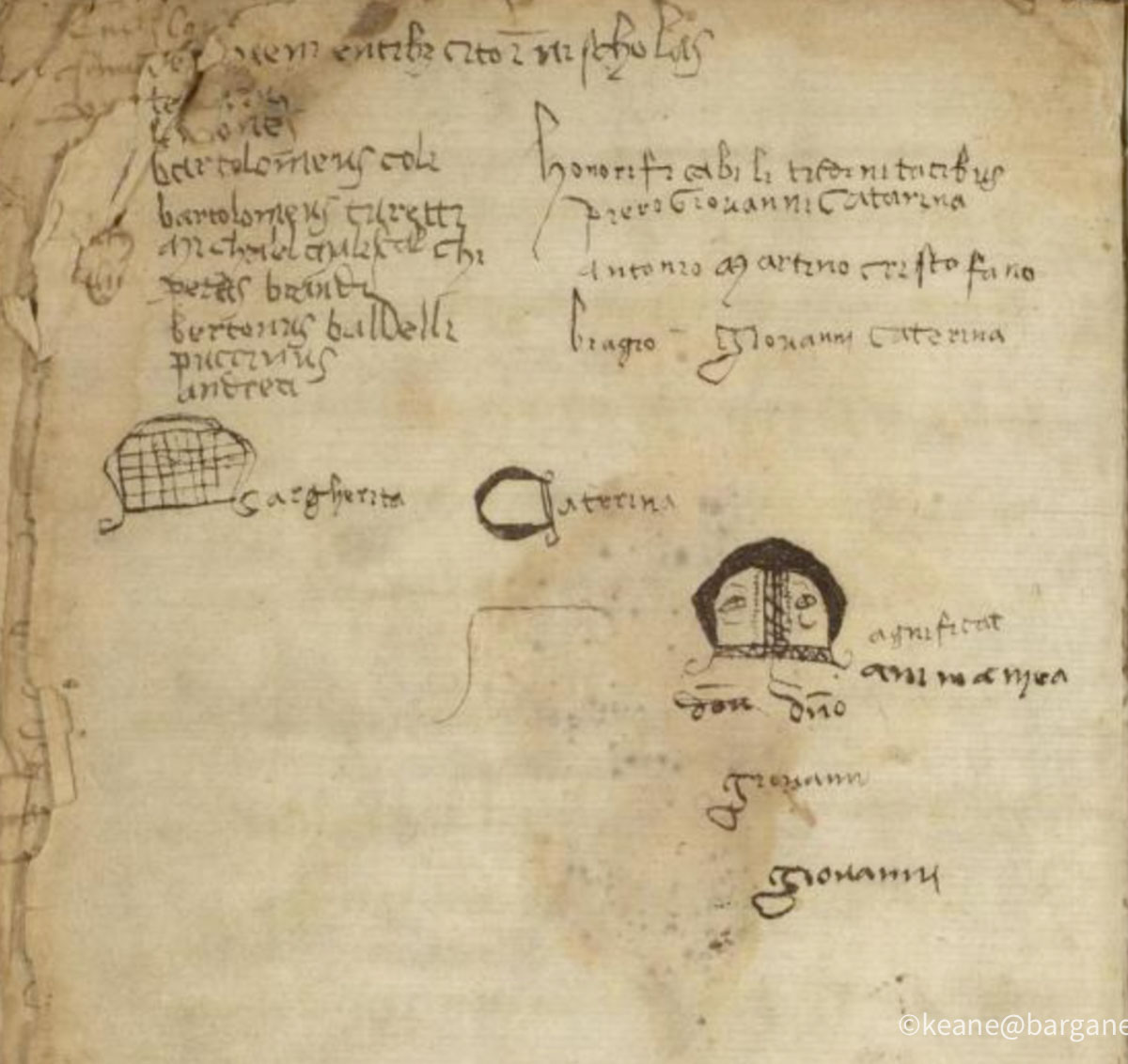
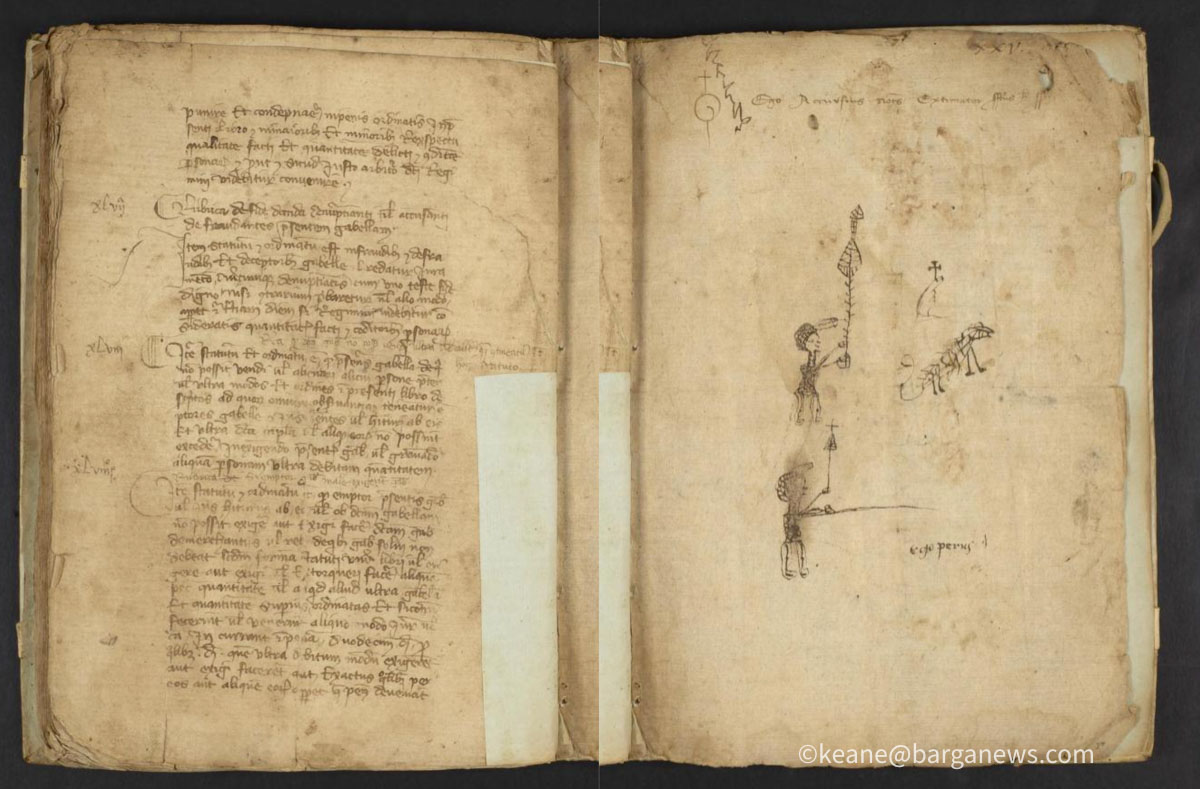
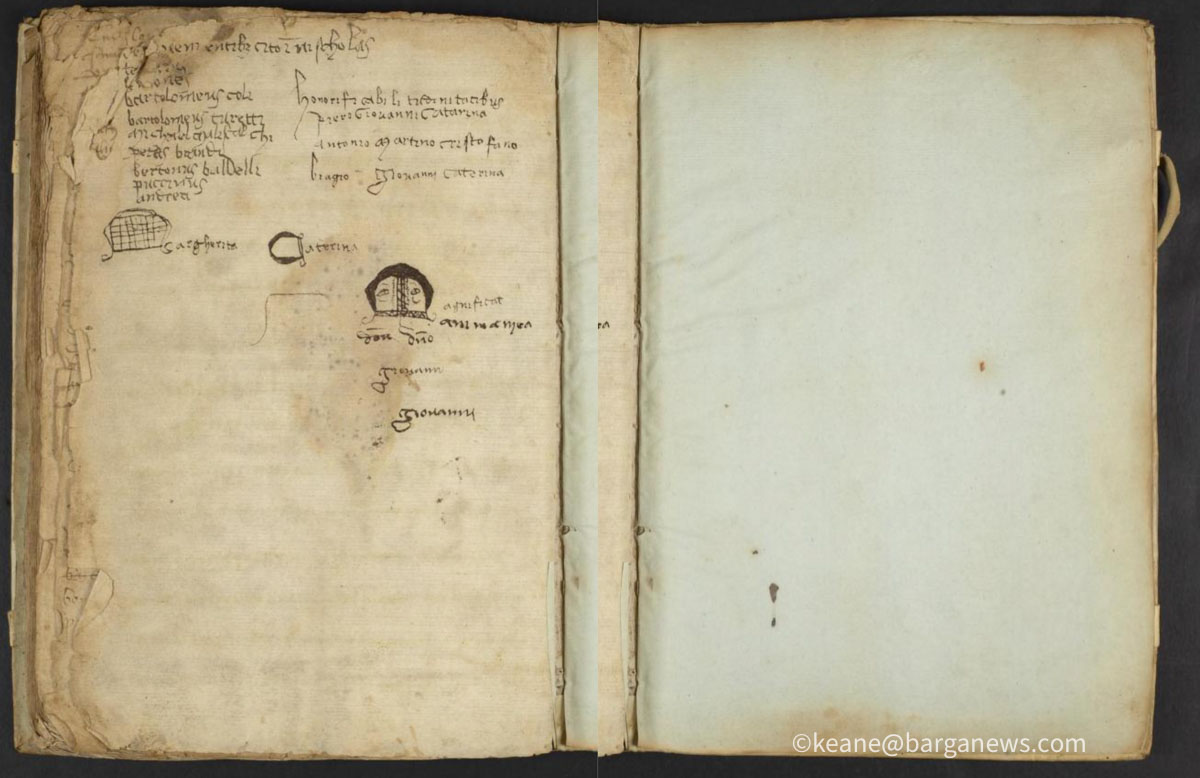
Physically, the manuscript carries its own history. Pages show signs of handling, corrections, and occasional additions. In places, the formal script gives way to something more personal: practice writing, small drawings, names written and repeated. These traces suggest that the book was not simply stored, but used — opened, consulted, and worked with over time.
The date places the manuscript at a significant moment. In 1341, Barga became part of the Florentine state, and by 1346 its systems were already being formalised within that wider structure. The statutes reflect this transition, embedding local life within a broader network of governance and control.
What remains striking is how familiar the subjects still feel. Bread, wine, markets, exchange — the basic rhythms of daily life are recognisable across the centuries. The language has changed, and the system itself has long since evolved, but the underlying concerns remain.
The manuscript is today preserved far from Barga itself, held in the Lawrence J. Schoenberg Collection at the University of Pennsylvania in Philadelphia, where it is catalogued as LJS 231.
It can be viewed on line here




Distribuito su una serie di pagine di pergamena consumate, scritto con mano regolare e segnato dal tempo, il manoscritto noto come Statuta Gabelarum Communis Bargae offre uno sguardo diretto su come funzionava Barga a metà del XIV secolo.
Datato 1346, il manoscritto non è un racconto né una cronaca, ma qualcosa di più pratico. È un documento di lavoro — una raccolta di statuti che regolano la tassazione, il commercio e la circolazione delle merci all’interno della città. Riga dopo riga inizia con la stessa formula, Item statutum et ordinatum est, “è stabilito e ordinato”, che definisce le regole attraverso cui veniva organizzata la vita quotidiana.
I contenuti sono precisi e concreti. Grano, vino, bestiame e altri beni essenziali compaiono ripetutamente, non come merci astratte ma come quantità misurabili legate a dazi e pagamenti. Unità standard — salma, mina, libbra — strutturano il sistema, garantendo che le transazioni potessero essere controllate e registrate. Ne emerge un’economia organizzata, attentamente osservata e regolata.
La lingua stessa riflette questa funzione pratica. Non è latino classico, ma una forma di latino amministrativo medievale, modellata dall’uso più che dalla convenzione letteraria. Le pagine sono ricche di abbreviazioni — q̃ per quod, p̄ per per, e molte altre — che permettono allo scriba di condensare grandi quantità di informazioni in uno spazio limitato. Allo stesso tempo, il latino mostra l’influenza del primo toscano, con costruzioni e lessico che si avvicinano alla lingua volgare emergente. Il risultato è una lingua ibrida: sufficientemente formale da garantire autorità giuridica, ma abbastanza flessibile da funzionare come strumento dell’amministrazione quotidiana.
Gli statuti non si limitano a descrivere ciò che è consentito. Definiscono le conseguenze. Le multe accompagnano gli obblighi, rendendo evidente che si tratta di norme applicabili. Dietro il testo si intravede un sistema amministrativo — funzionari incaricati di riscuotere, registrare e controllare il flusso delle merci attraverso la città.
Dal punto di vista materiale, il manoscritto porta con sé la propria storia. Le pagine mostrano segni d’uso, correzioni e aggiunte occasionali. In alcuni punti, la scrittura formale lascia spazio a qualcosa di più personale: esercizi di scrittura, piccoli disegni, nomi scritti e ripetuti. Tracce che suggeriscono che il libro non fosse semplicemente conservato, ma utilizzato — aperto, consultato e adoperato nel tempo.
La data colloca il manoscritto in un momento significativo. Nel 1341 Barga entra a far parte dello stato fiorentino, e già nel 1346 i suoi sistemi risultano formalizzati all’interno di quella struttura più ampia. Gli statuti riflettono questa transizione, inserendo la vita locale in una rete più vasta di governo e controllo.
Colpisce quanto i temi restino familiari. Pane, vino, mercati, scambio — i ritmi fondamentali della vita quotidiana sono riconoscibili attraverso i secoli. La lingua è cambiata e il sistema si è evoluto, ma le esigenze di fondo restano le stesse.
Il manoscritto è oggi conservato lontano da Barga, nella Lawrence J. Schoenberg Collection presso la University of Pennsylvania a Philadelphia, dove è catalogato come LJS 231.
Può essere consultato online qui.