Every year at the San Rocco market there is a familiar sight in Barga Giardino. Among the people moving between the stalls are some carrying small bundles wrapped carefully in newspaper, while others reach into their shopping bags and pull out an old pair of scissors, a kitchen knife or some other implement that has long since lost its edge.
The 15th and 16th of August have traditionally been the time to bring them to the arrotino – the knife sharpener.
Once there would have been many travelling knife sharpeners working their way through this part of Tuscany, moving from market to market and from village to village. Like so many traditional trades, however, the arrotino has gradually disappeared as the way we buy and use things has changed.
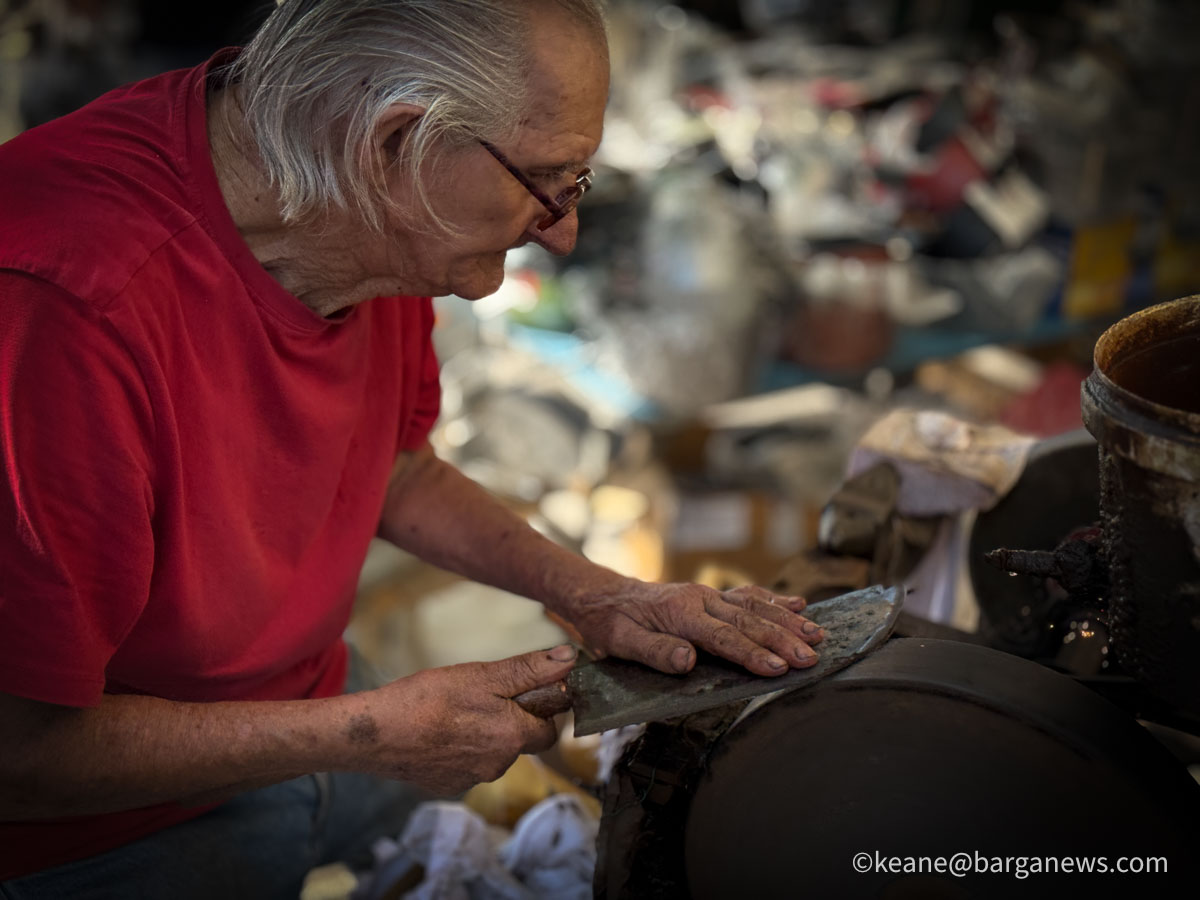
One person who knows this better than most is Umberto, who has been working at the trade since 1950 and has become more or less the last of the knife grinders still on the road. When we first wrote about him nearly 20 years ago, Umberto was already in his late 60s, continuing a profession which even then was rapidly disappearing.
These days, when a pair of scissors stops cutting properly or a kitchen knife becomes blunt, it is often easier simply to buy another one. We live in a world where replacing something can cost less than repairing it.
At San Rocco, however, a little of the old world survives.
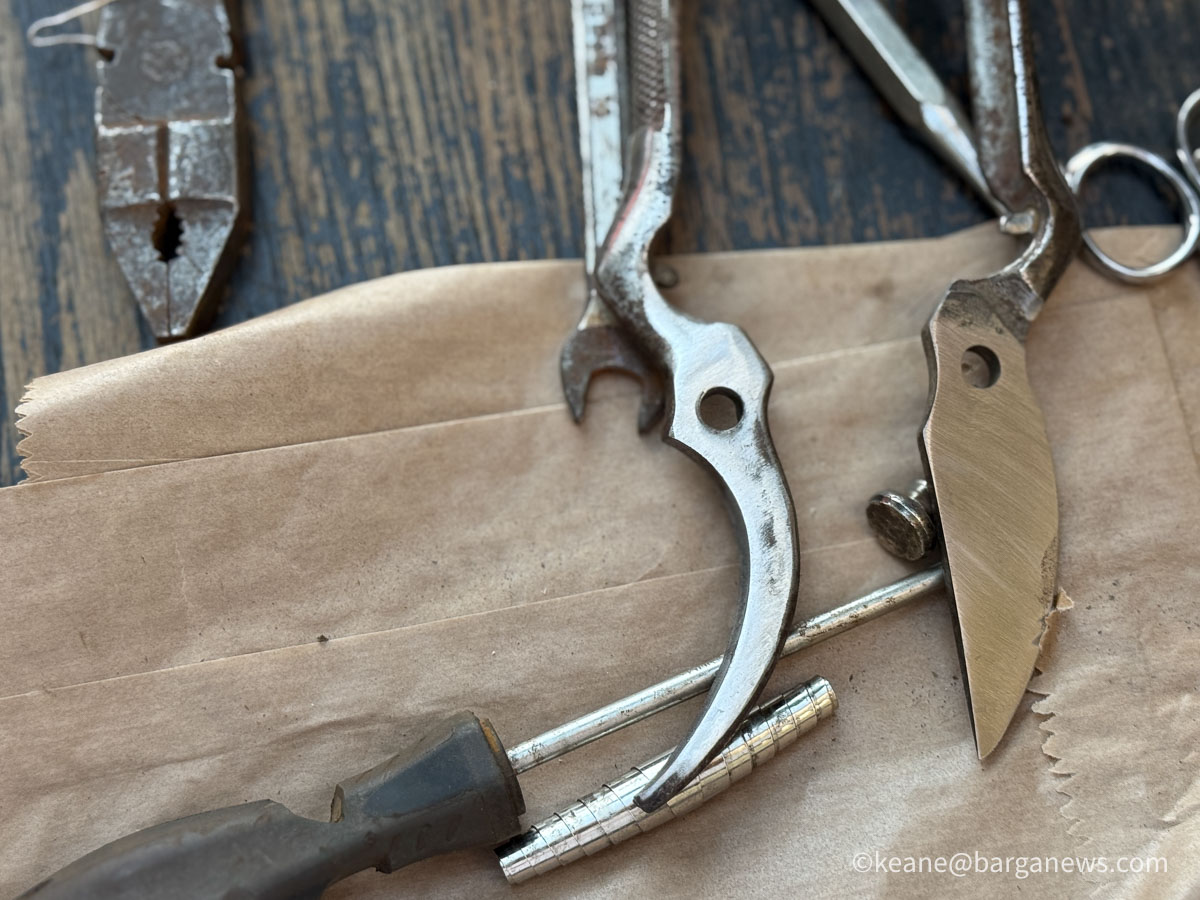
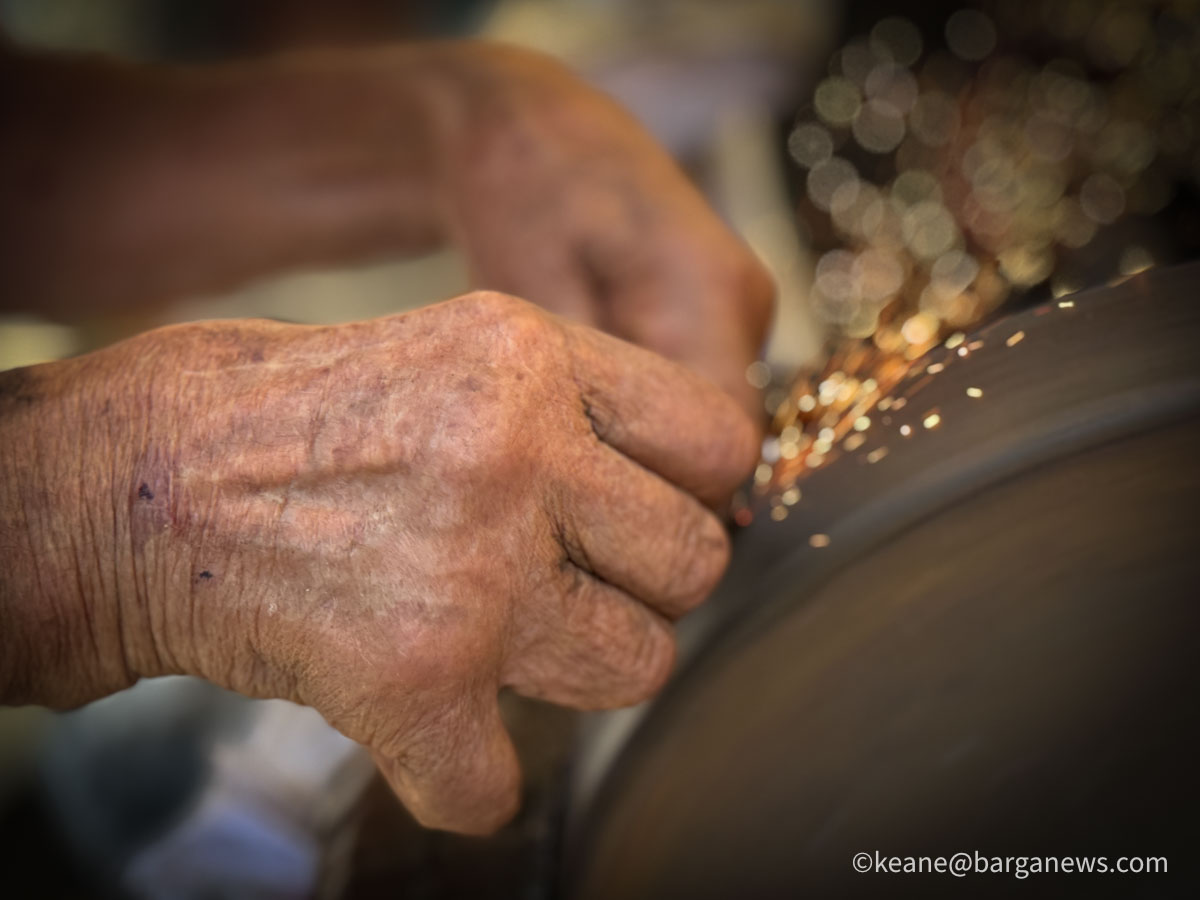
The sound of the grinding wheel is still there, accompanied every few moments by a shower of sparks as another blade is carefully brought back to life. Knives, scissors, garden tools and all manner of well-used implements arrive at the stall, many of them showing the marks of decades of use.
And the work itself remains intensely physical.
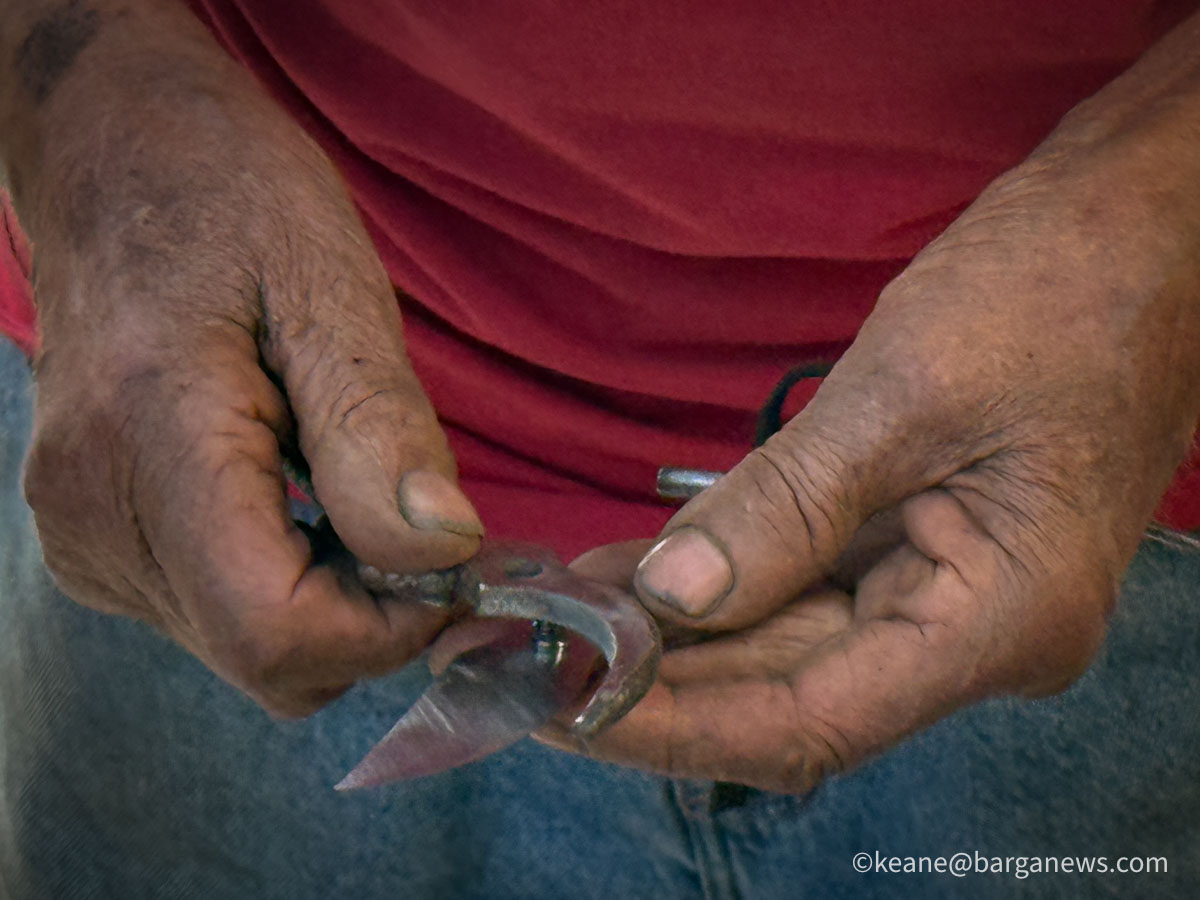
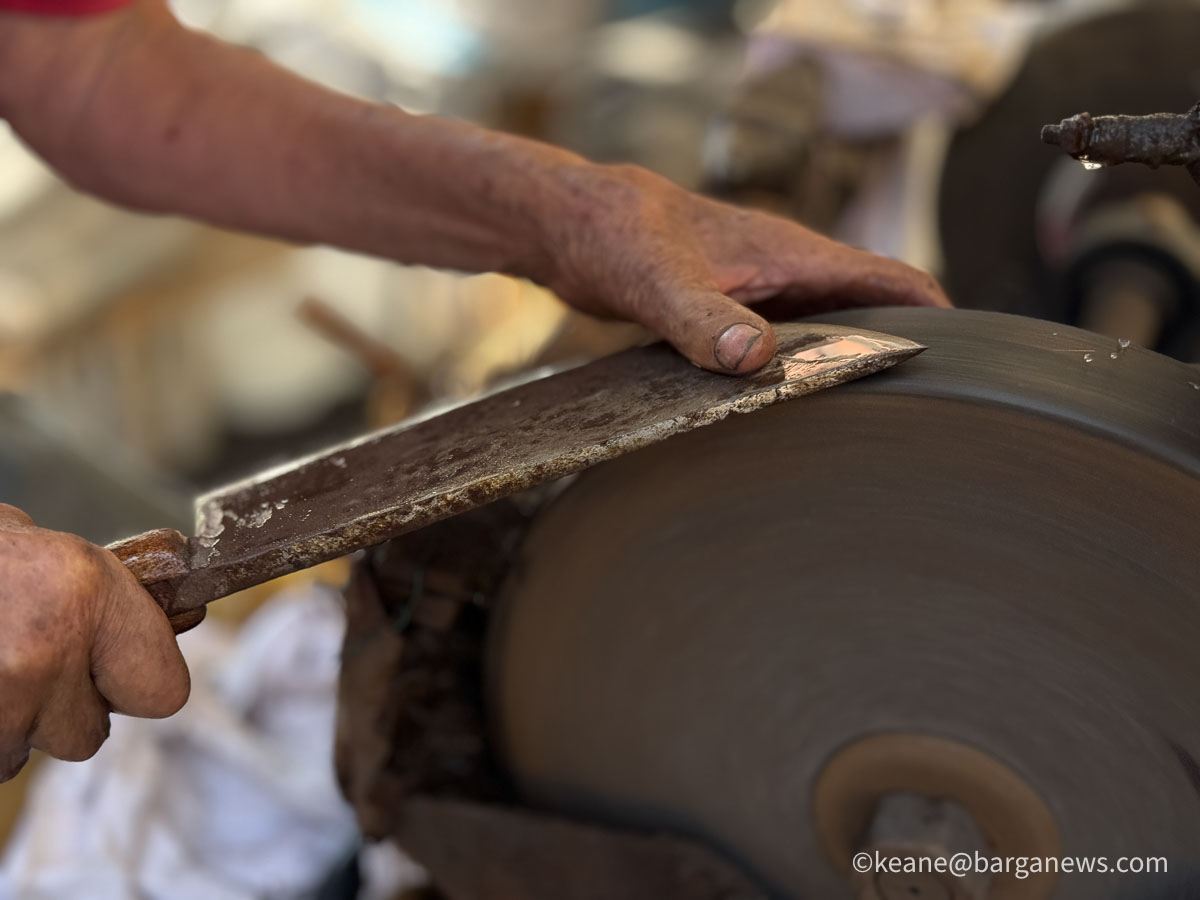
The hands of the arrotino tell much of the story. They hold the blade at precisely the right angle against the rapidly turning stone, moving it backwards and forwards with the confidence that comes from doing the same thing thousands upon thousands of times. There are no digital controls and very little separating the craftsman from the object he is working on. There is the wheel, the steel, water, sparks – and experience.
Some of the objects brought to be sharpened are probably worth very little in monetary terms. But that is not really the point. They work, people are accustomed to them and, after a few minutes in the hands of the arrotino, they can work properly again.
Perhaps that explains those little newspaper parcels which continue to appear at Barga Giardino each August.
They are a small reminder of a different attitude towards the objects around us: if something becomes blunt, you sharpen it; if it can be repaired, you repair it; and if it has served you well for years, there is no particular reason to throw it away.
Amid all the noise, colour and movement of the San Rocco market, the hiss of steel against the grinding wheel and the sudden flash of sparks remain one of its most distinctive sights and sounds.
An old trade, certainly – but at San Rocco, still very much alive.





Ogni anno, al mercato di San Rocco, a Barga Giardino si ripete una scena familiare. Tra le persone che si muovono fra le bancarelle, ce ne sono alcune che portano piccoli fagotti avvolti con cura nella carta di giornale, mentre altre infilano la mano nelle borse della spesa e tirano fuori un vecchio paio di forbici, un coltello da cucina o qualche altro utensile che da tempo ha perso il filo.
Il 15 e 16 agosto sono tradizionalmente i giorni in cui portarli dall’arrotino.
Un tempo erano numerosi gli arrotini ambulanti che percorrevano questa parte della Toscana, spostandosi da un mercato all’altro e da un paese all’altro. Come tanti mestieri tradizionali, però, anche quello dell’arrotino è gradualmente scomparso, man mano che è cambiato il nostro modo di acquistare e utilizzare gli oggetti.
Una persona che lo sa meglio di molti altri è Umberto, che svolge questo mestiere dal 1950 ed è diventato più o meno l’ultimo degli arrotini ancora in giro. Quando scrivemmo di lui per la prima volta, molti anni fa, Umberto aveva già superato i sessant’anni e continuava a esercitare una professione che, già allora, stava rapidamente scomparendo.
Oggi, quando un paio di forbici non taglia più bene o un coltello da cucina perde il filo, spesso è più semplice comprarne uno nuovo. Viviamo in un mondo nel quale sostituire un oggetto può costare meno che ripararlo.
A San Rocco, però, sopravvive ancora un piccolo pezzo del vecchio mondo.
Il rumore della mola è ancora lì, accompagnato ogni pochi istanti da una pioggia di scintille mentre un’altra lama viene pazientemente riportata in vita. Coltelli, forbici, attrezzi da giardino e utensili di ogni genere arrivano alla bancarella, molti dei quali portano i segni di decenni di utilizzo.
E il lavoro stesso rimane profondamente manuale.
Le mani dell’arrotino raccontano gran parte della storia. Tengono la lama esattamente alla giusta inclinazione contro la pietra che gira rapidamente, muovendola avanti e indietro con la sicurezza che deriva dall’aver compiuto lo stesso gesto migliaia e migliaia di volte. Non ci sono controlli digitali e c’è ben poco a separare l’artigiano dall’oggetto sul quale sta lavorando. Ci sono la mola, l’acciaio, l’acqua, le scintille — e l’esperienza.
Alcuni degli oggetti portati ad affilare probabilmente valgono ben poco in termini economici. Ma non è questo il punto. Funzionano, le persone sono abituate a usarli e, dopo pochi minuti nelle mani dell’arrotino, possono tornare a funzionare come si deve.
Forse è proprio questo che spiega quei piccoli pacchetti avvolti nella carta di giornale che continuano a comparire ogni agosto a Barga Giardino.
Sono un piccolo ricordo di un diverso modo di considerare gli oggetti che ci circondano: se qualcosa perde il filo, lo si affila; se può essere riparato, lo si ripara; e se ci ha servito bene per anni, non c’è un motivo particolare per buttarlo via.
In mezzo a tutto il rumore, ai colori e al movimento del mercato di San Rocco, il sibilo dell’acciaio contro la mola e l’improvviso bagliore delle scintille rimangono tra le immagini e i suoni più caratteristici della fiera.
Un mestiere antico, certamente — ma a San Rocco ancora ben vivo.