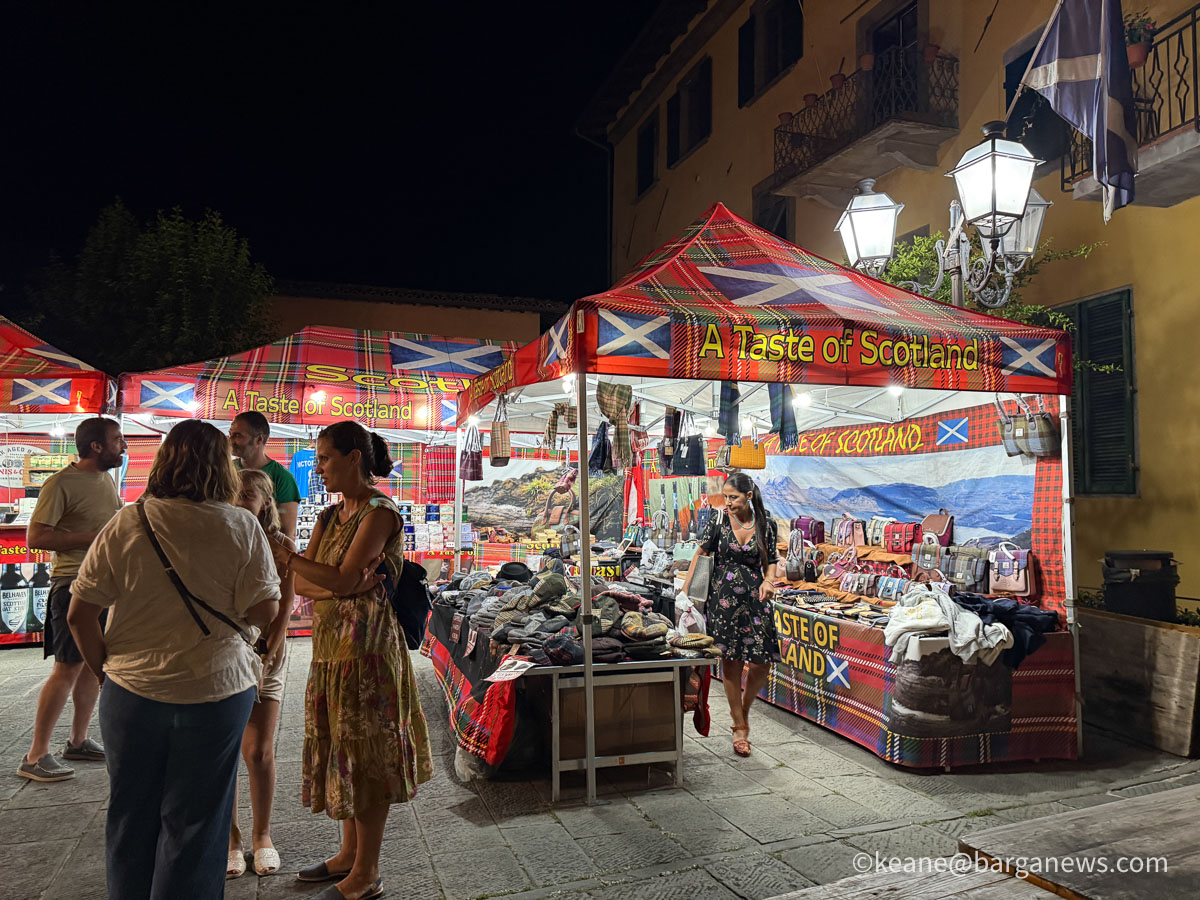
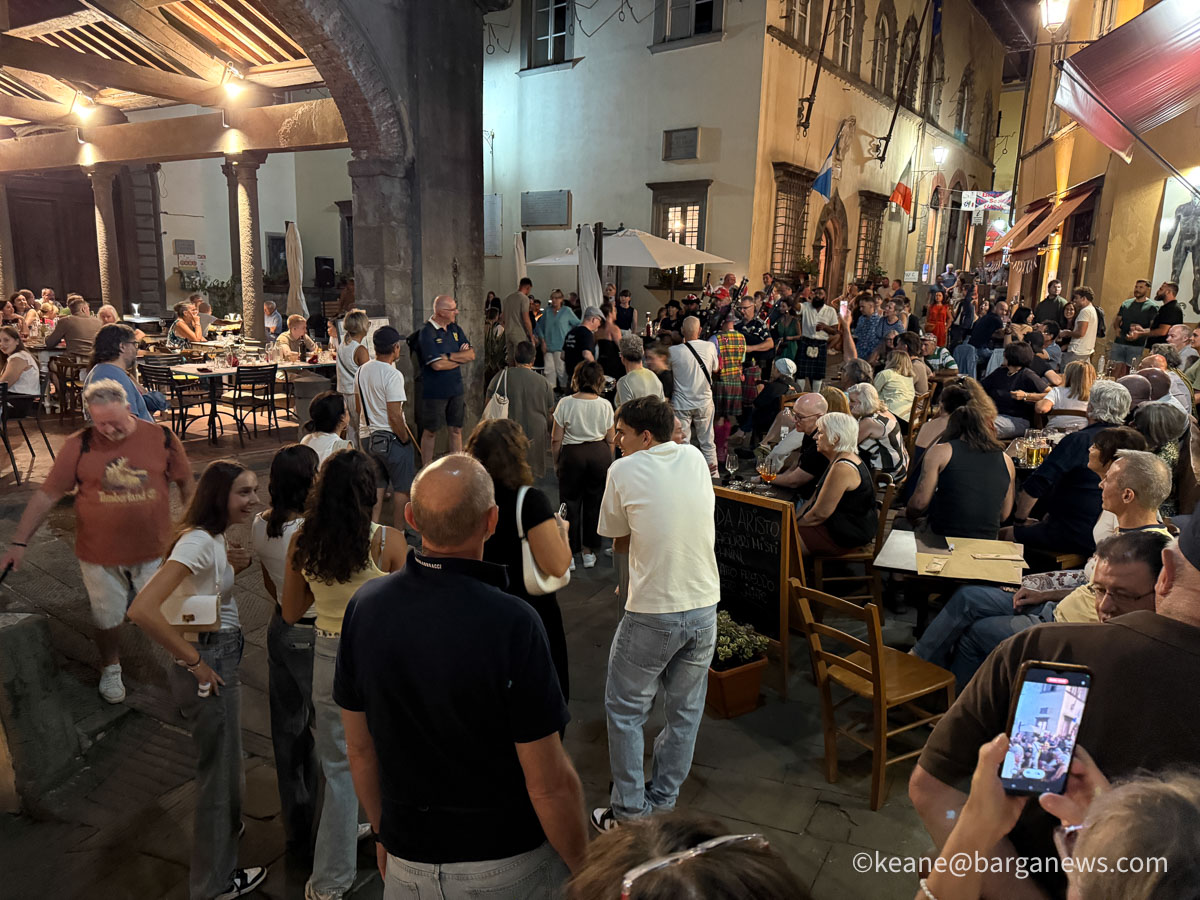
The Barga Scottish Festival moved out into the piazze on 4 September as pipes, drums and Highland dancing once again brought a distinctly Scottish sound to the historic centre.
After the official welcome to the visiting groups the previous day, this was the moment when the festival became visible — and particularly audible — to everyone in the city.
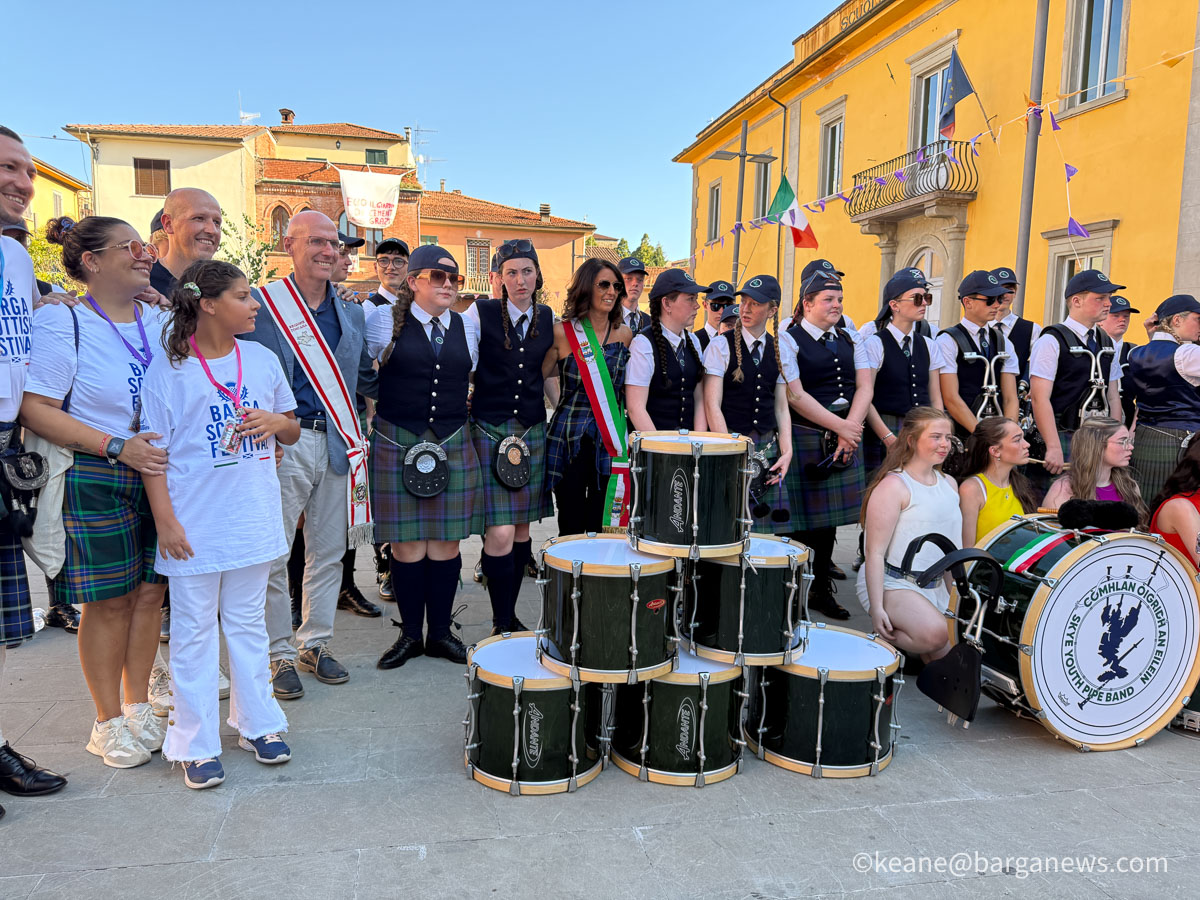
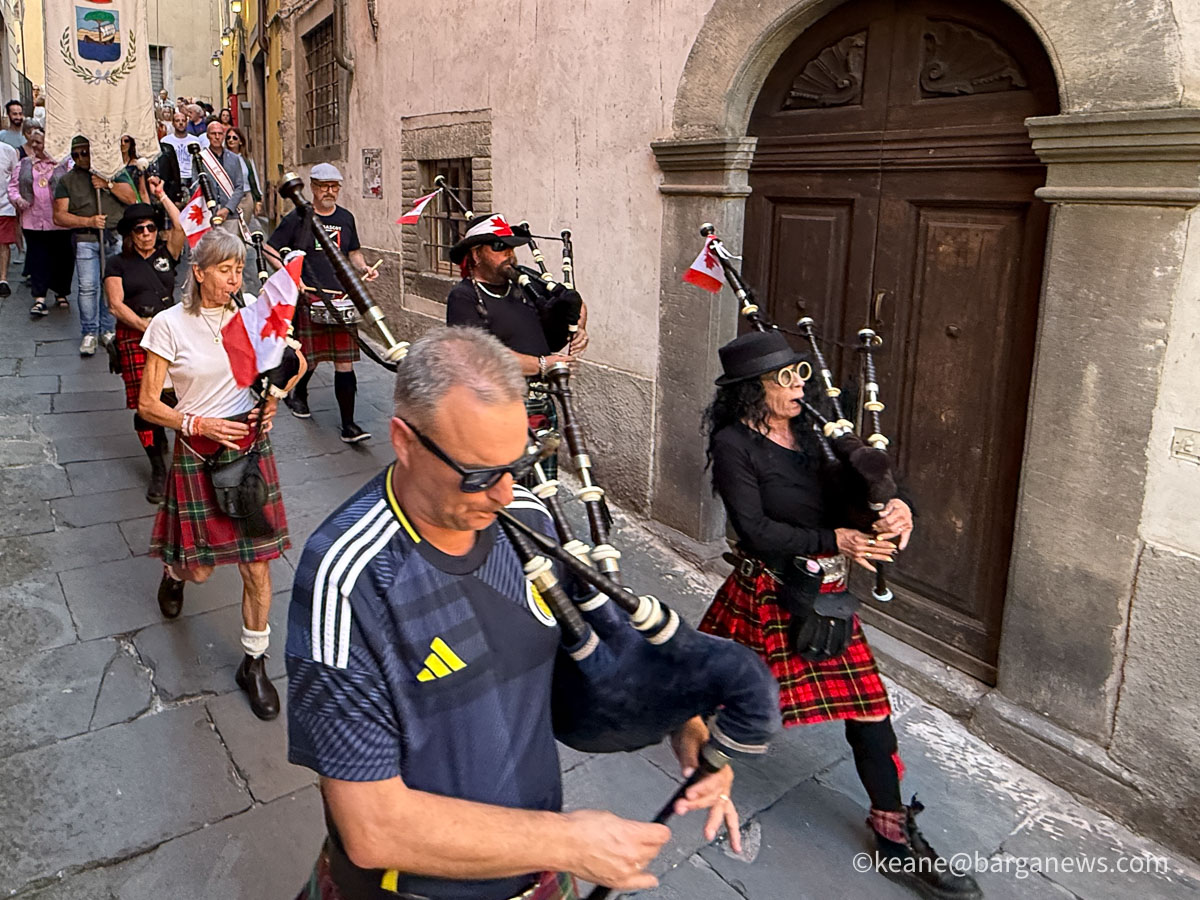
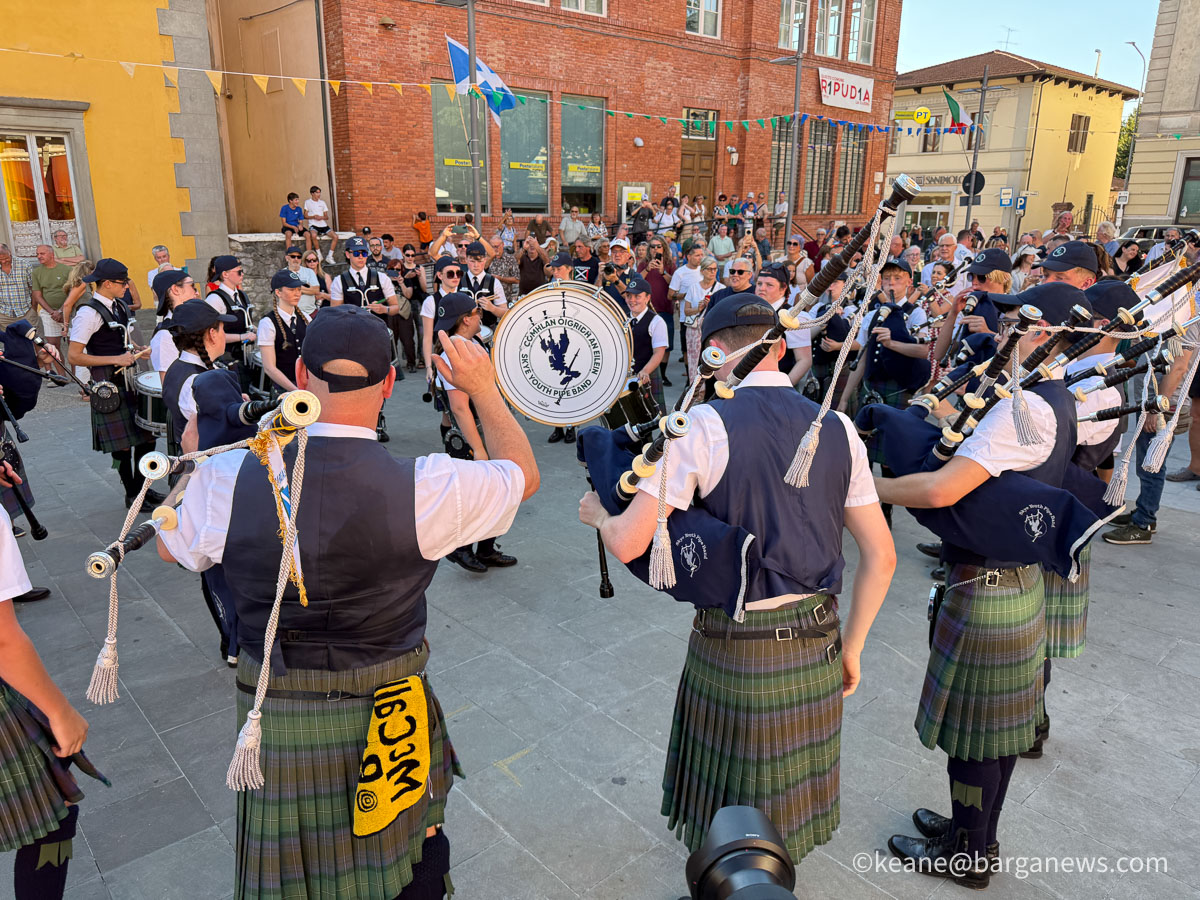
Musicians and dancers moved through Barga in a travelling parade, with the Isle of Skye Youth Pipe Band and Skye Highland Dancers joined by the Docs and Socs Pipe Band from British Columbia.
Bagpipes in Barga are no longer quite the unusual sight they once might have been.
The relationship between Barga and Scotland created by generations of emigration means that Scottish accents, kilts and pipes have all found a surprisingly natural home in this small Tuscan city.
But when a pipe band comes through the narrow streets of Barga Vecchia, the effect is still difficult to ignore (full article here)
The evening programme broadened the musical picture beyond pipes and drums.
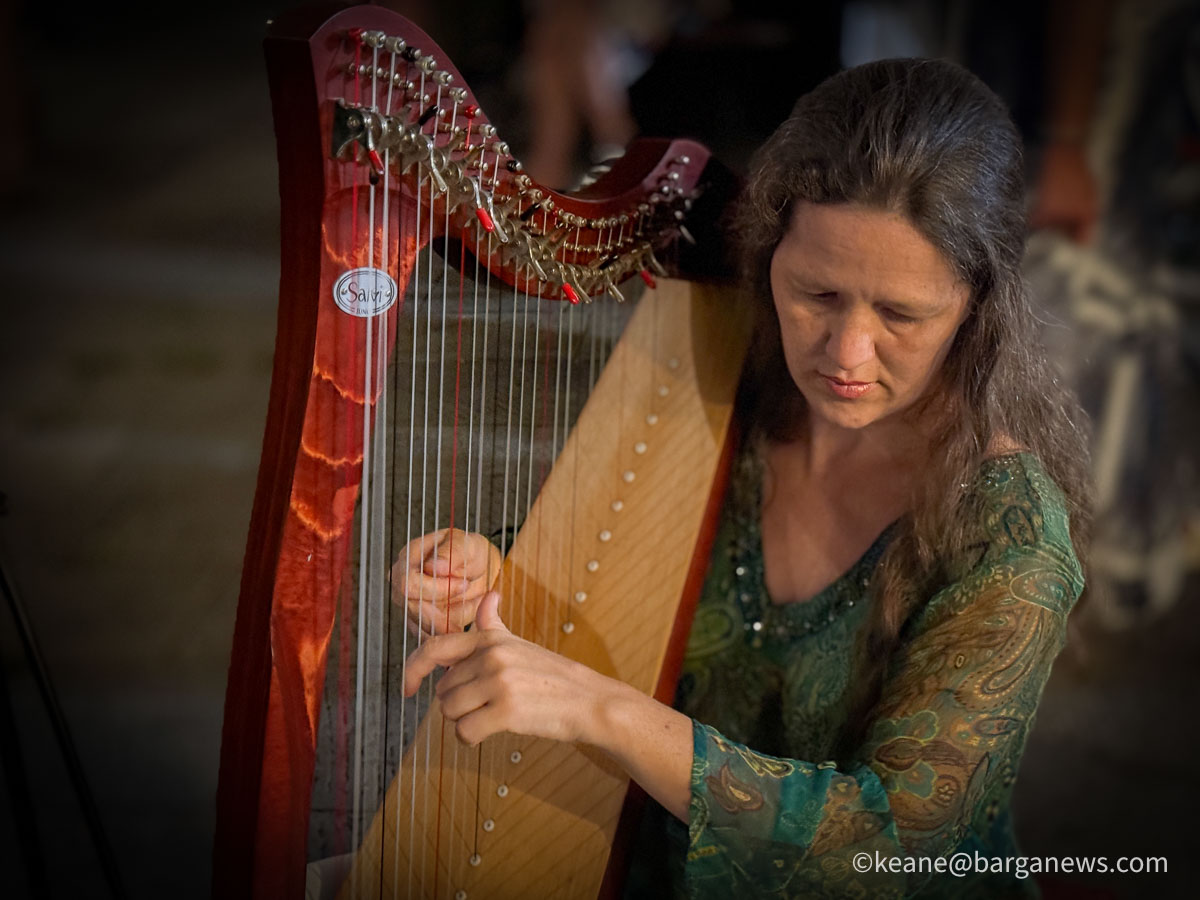
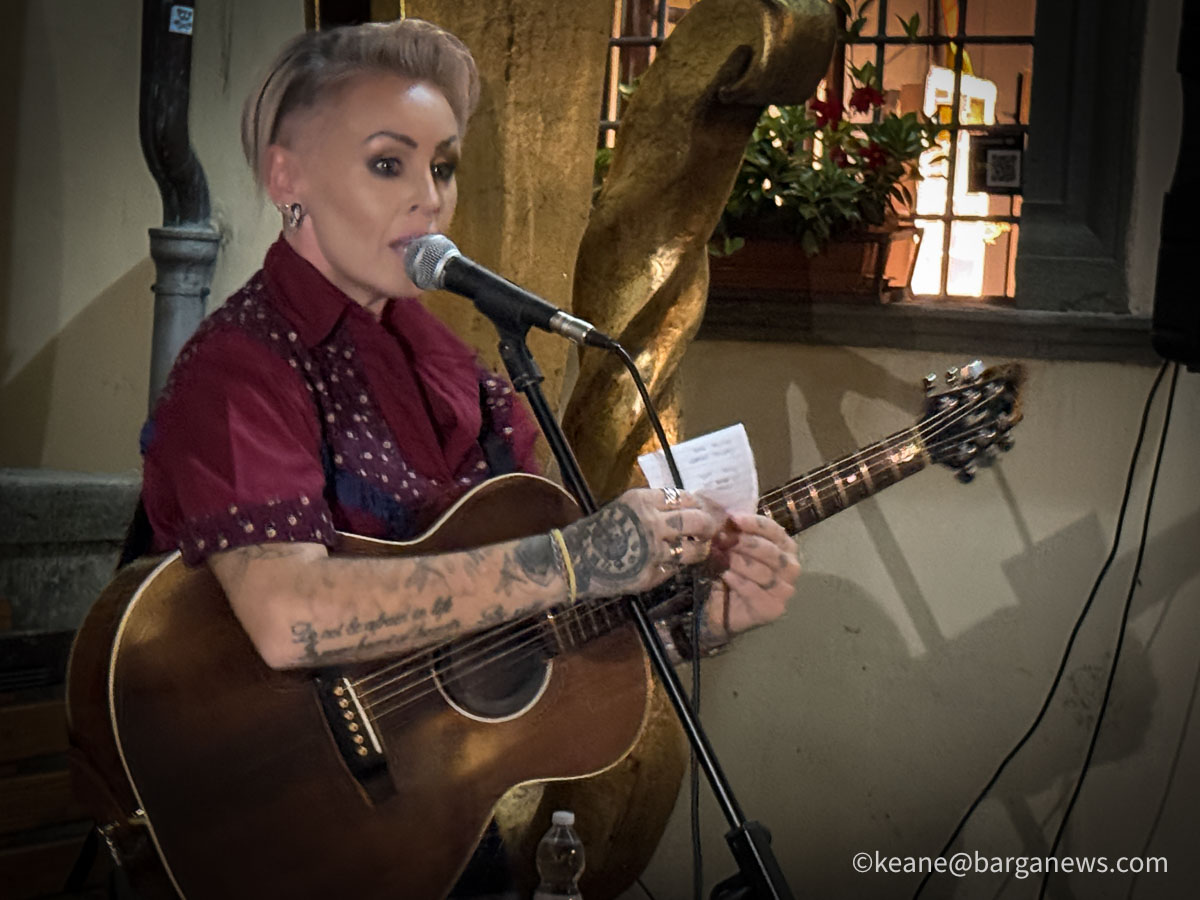
Scottish singer-songwriter Jill Jackson performed in Piazza Salvo Salvi, while Piazza Angelio offered a rather different Scottish sound with a Celtic harp concert by Anna Livia Walker.
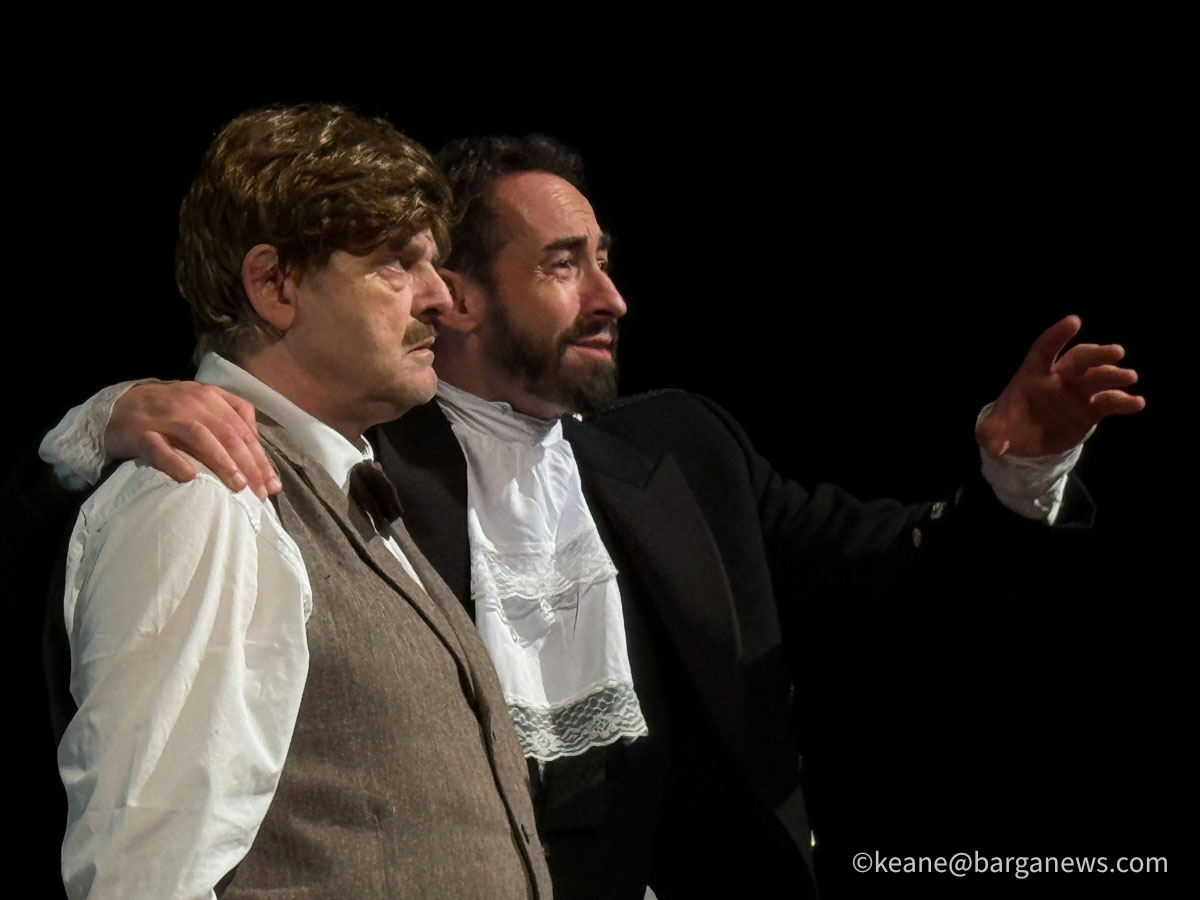
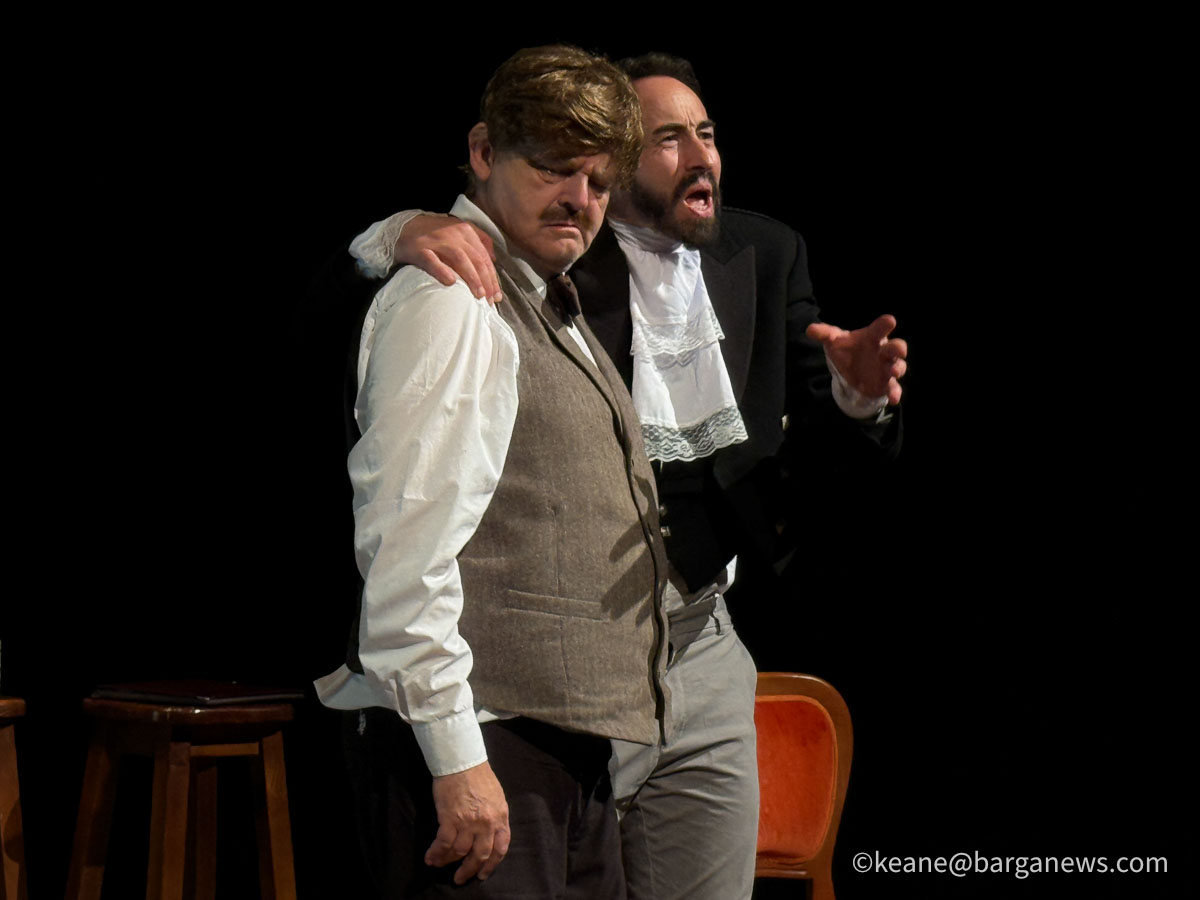
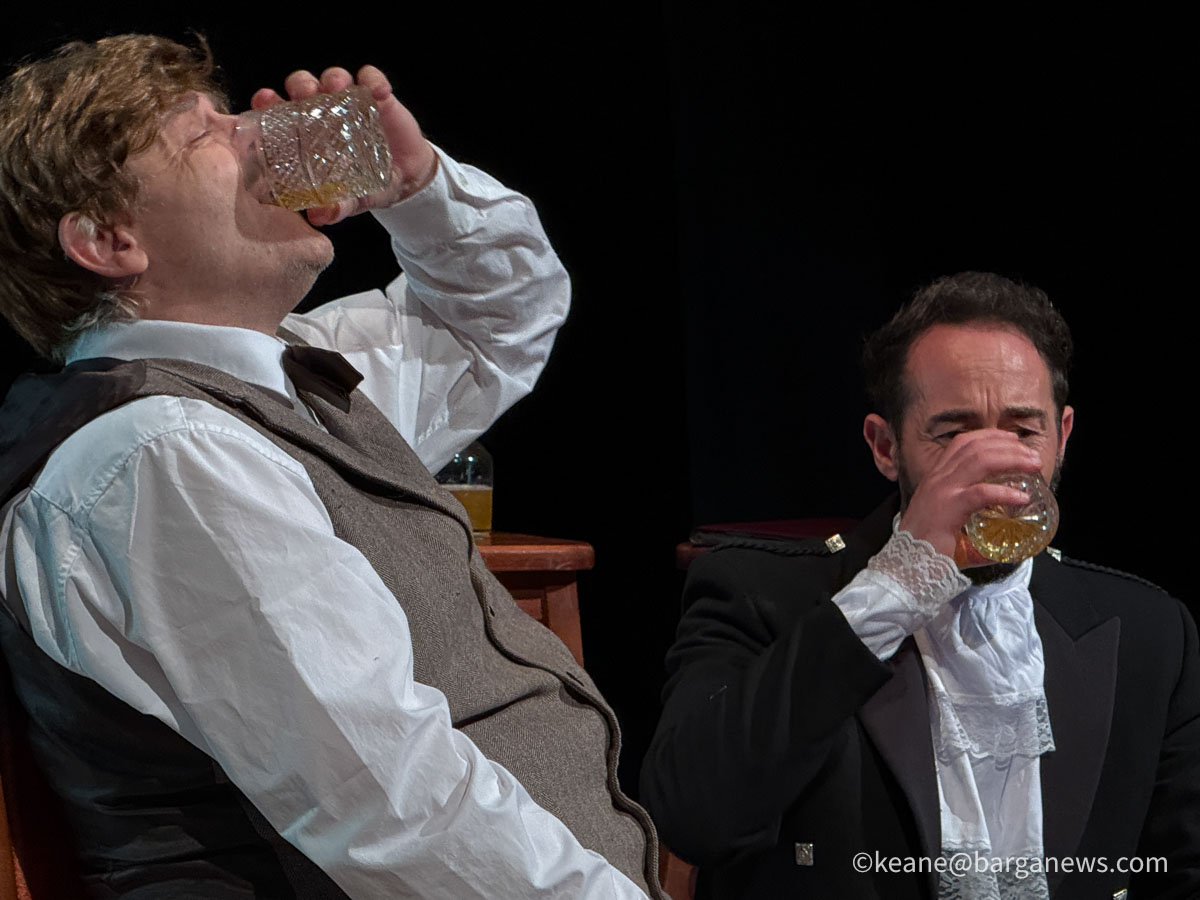
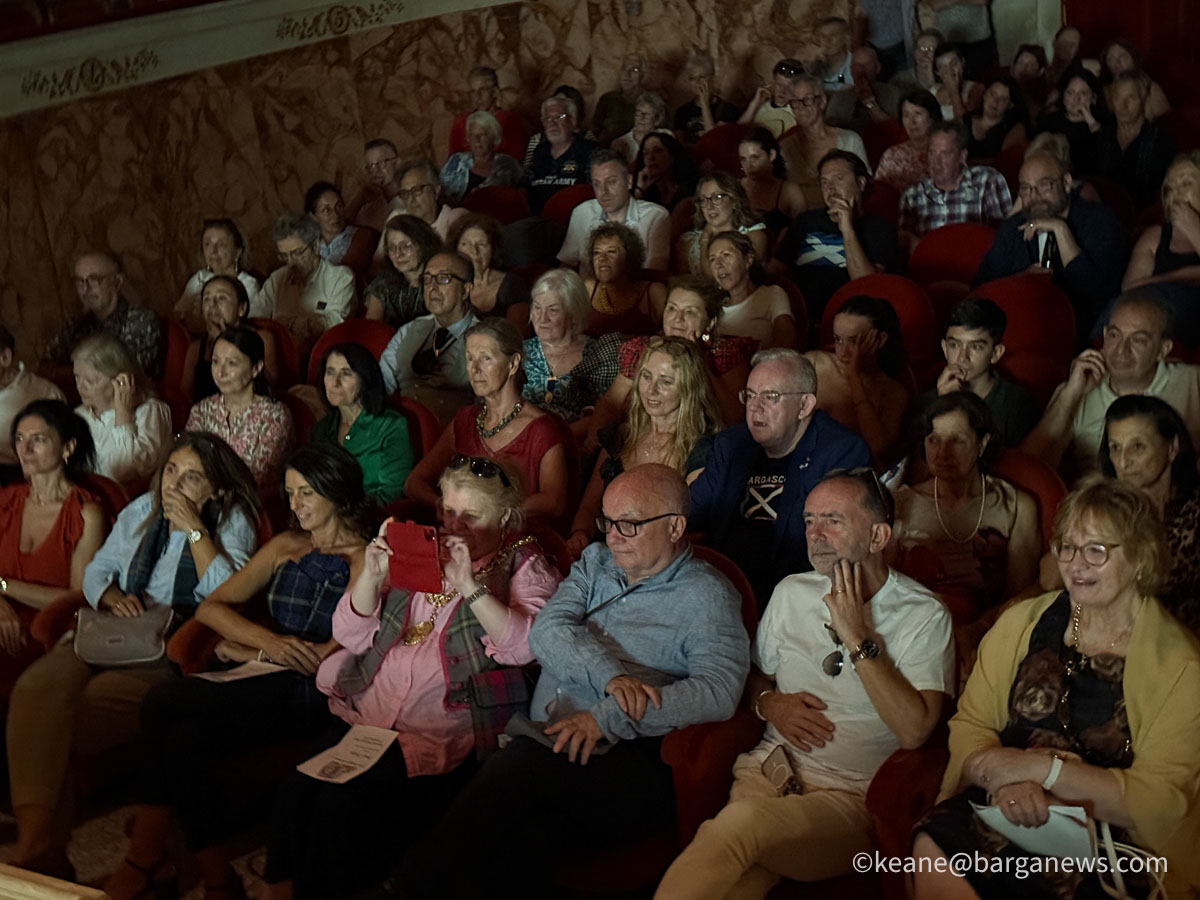
The day ended at the Teatro dei Differenti, where Scotland and Barga met in another way.
Lorenzo Novani and Hilda De Felice presented “Robert Burns e Giovanni Pascoli – The Badly-Behaved Poets’ Society”, bringing together two poets separated by language, country and history but both closely associated with the places from which they came.
It was an appropriate meeting for Barga.
Burns remains one of the defining figures of Scottish culture, while Pascoli’s presence is woven deeply into the cultural identity of Barga and Castelvecchio.




Il Barga Scottish Festival si è riversato nelle piazze il 4 settembre, quando cornamuse, tamburi e danze delle Highlands hanno riportato nel centro storico un suono inconfondibilmente scozzese.
Dopo il benvenuto ufficiale ai gruppi ospiti del giorno precedente, questo è stato il momento in cui il festival è diventato visibile — e soprattutto udibile — a tutti in città.
Musicisti e ballerini hanno attraversato Barga in una parata itinerante, con la Isle of Skye Youth Pipe Band e gli Skye Highland Dancers, affiancati dalla Docs and Socs Pipe Band della British Columbia.
Le cornamuse a Barga non sono più una presenza così insolita come potevano esserlo un tempo.
Il legame tra Barga e la Scozia, nato da generazioni di emigrazione, ha fatto sì che accenti scozzesi, kilt e cornamuse abbiano trovato una casa sorprendentemente naturale in questa piccola città toscana.
Ma quando una pipe band attraversa le strette strade di Barga Vecchia, l’effetto continua ad essere difficile da ignorare.
Il programma serale ha ampliato il panorama musicale oltre le cornamuse e i tamburi.
La cantautrice scozzese Jill Jackson si è esibita in Piazza Salvo Salvi, mentre Piazza Angelio ha proposto un suono scozzese piuttosto diverso, con un concerto di arpa celtica di Anna Livia Walker.
La giornata si è conclusa al Teatro dei Differenti, dove Scozia e Barga si sono incontrate in un altro modo.
Lorenzo Novani e Hilda De Felice hanno presentato “Robert Burns e Giovanni Pascoli – The Badly-Behaved Poets’ Society”, mettendo a confronto due poeti separati dalla lingua, dal paese e dalla storia, ma entrambi profondamente legati ai luoghi da cui provenivano.
Un incontro particolarmente appropriato per Barga.
Burns rimane una delle figure fondamentali della cultura scozzese, mentre la presenza di Pascoli è profondamente intrecciata con l’identità culturale di Barga e Castelvecchio.